


In 1865, the engineers responsible for London’s new sewage network built a pumping station at Crossness in south-east London. The structure moved human waste. It was equipped with ornamental ironwork in red, cream and gold. Painted arches. Decorative columns. Cast iron throughout, because cast iron was the building material and the decorative material simultaneously. The ornament was not applied to the structure. It was the structure.
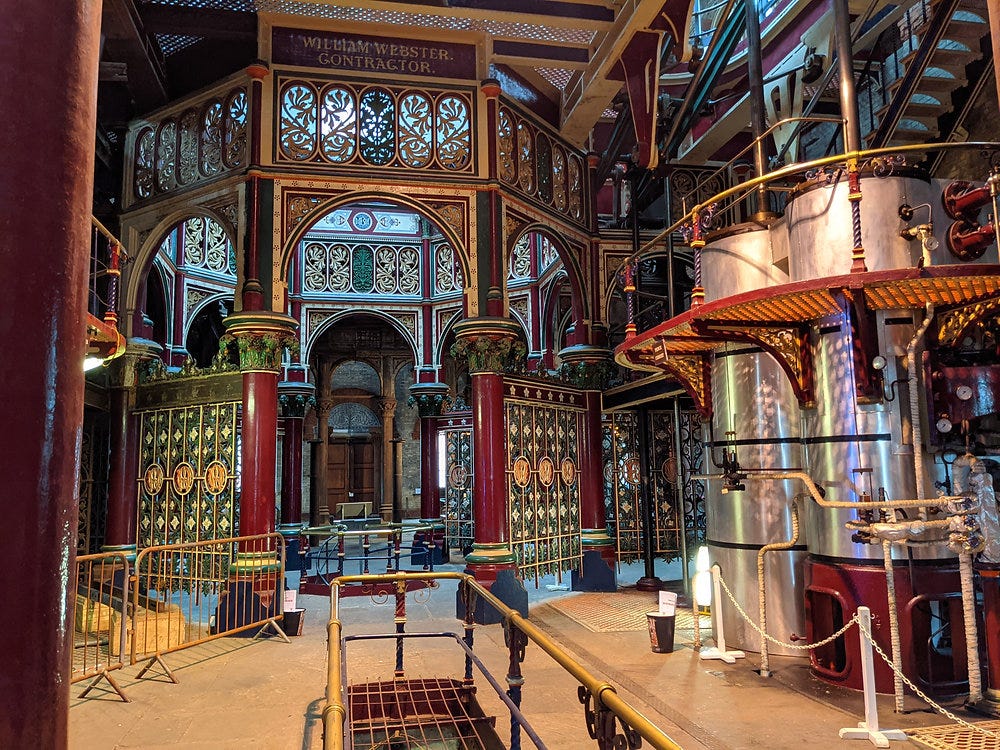
The men who designed Crossness believed the workers inside it deserved to work somewhere beautiful. That belief required no argument at the time. It was the default position of European craft culture across several centuries. You built things properly. You built them to last. You built them for the people who would use them, not for the people who would sign the invoice.
Forty-three years later, Adolf Loos published an essay that began, correctly, with a diagnosis of everything that had gone wrong with that tradition. Sixty years after that, every glass office block in Europe was built in his name.
He would have hated them.
Because Loos was not arguing against beauty. He was arguing against ornament that pretended to be beauty without carrying the craft and necessity that once gave beauty its legitimacy.
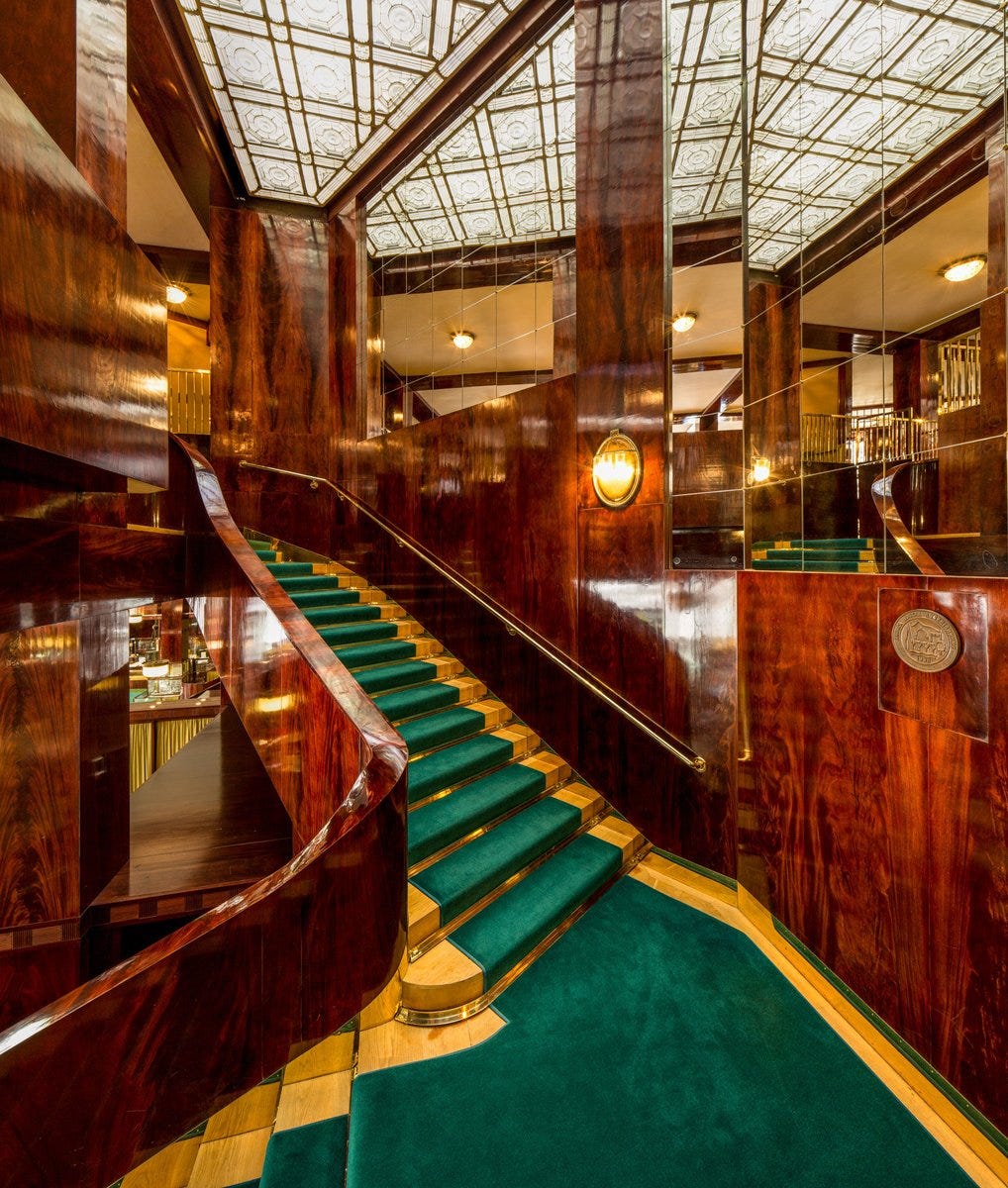
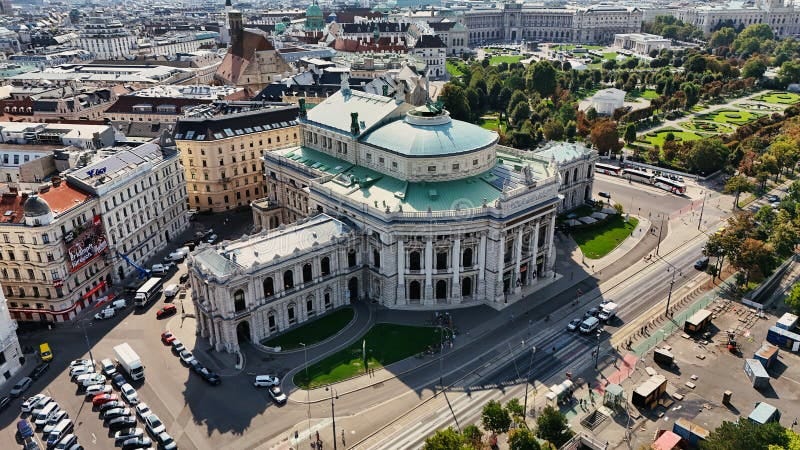
Vienna in 1908 was full of buildings that performed. The Ringstrasse, built at the Emperor’s instruction from the 1860s onwards, lined the inner city with neo-Gothic town halls, neo-Renaissance opera houses, neo-Baroque parliament buildings. Plaster columns on terraced houses. Applied Gothic arches with no structural logic. Ornament that signalled a standard the object did not meet, because the ornament was applied to a surface that had not earned it.
That is what Loos named kitsch. Not ornament in itself, but failed ornament that tried to pass itself off as beauty. Decorations as a social performance, and the imitation of a standard rather than its achievement.
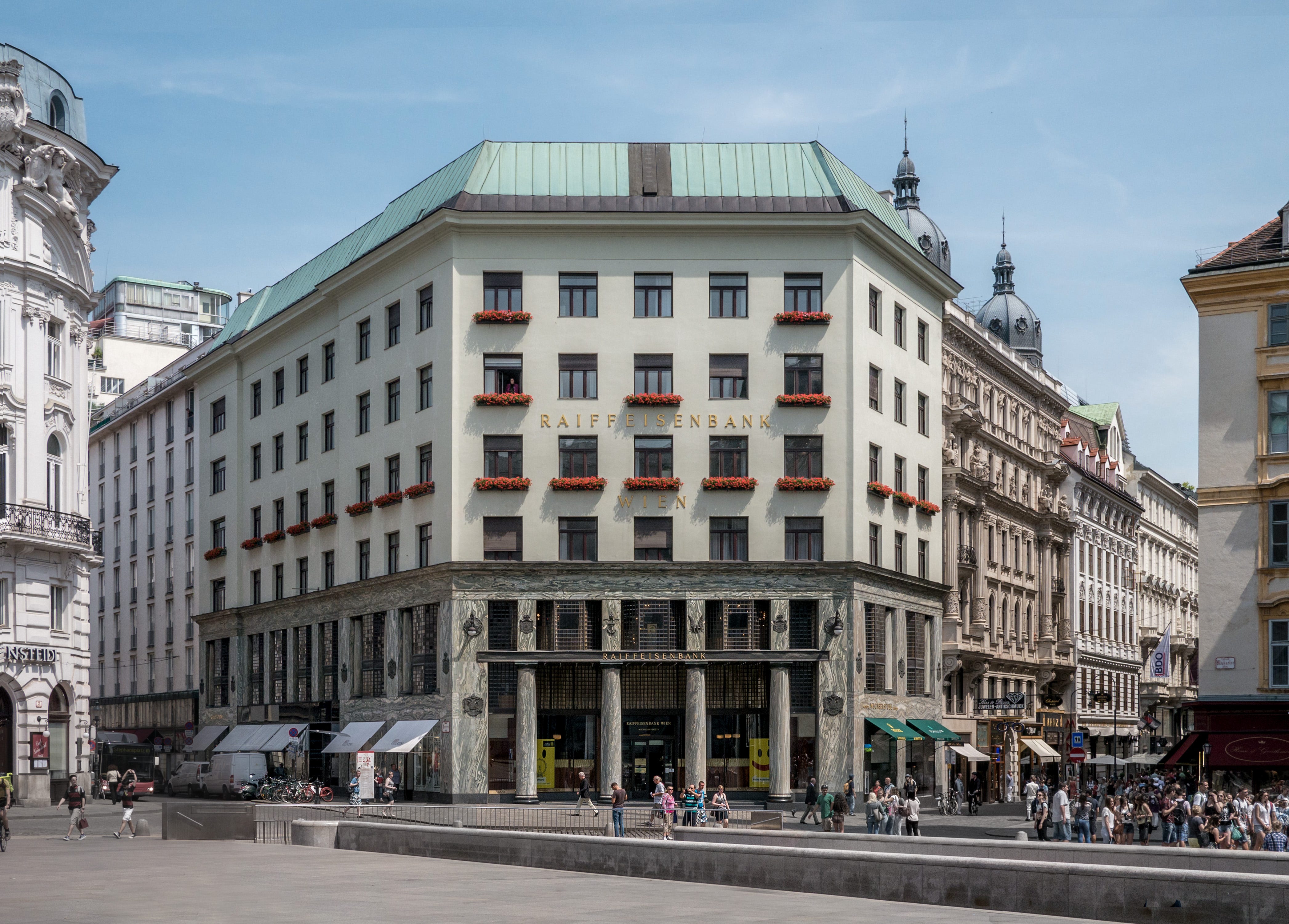
Ornament and Crime, published in 1908, made this diagnosis with precision. His own buildings made the same argument in built form. The Goldman and Salatsch building on Michaelerplatz, completed in 1911, was clean, restrained and carefully proportioned. No applied ornament, and honest materials throughout.
The Emperor Franz Joseph reportedly refused to look at it when passing, not because it was ugly, but because it refused the shared fiction that beauty could be performed without being earned.
Loos was right about what was wrong. He was not arguing for ugliness. He was arguing for integrity: honest materials, honest craft, honest function. In doing so, he was defending a narrower but stricter idea of beauty itself, one that could not be separated from how something was made.
What he did not anticipate was that his argument would be read by people who heard the diagnosis and missed the principle, and then quietly changed the target.


Walter Gropius founded the Bauhaus in Weimar in April 1919. He had read Loos. He understood that applied ornament without craft integrity was dishonest. But he drew from this a further conclusion that Loos never made: that ornament itself was the source of the dishonesty, and therefore beauty itself, understood as anything beyond strict function, had become suspect.
This was the turning point. The Bauhaus did not simply reject ornament. It began to treat beauty as something that had to be justified by utility. In practice, that meant stripping away anything that could not be defended in functional terms. Beauty ceased to be something embedded in craft. It became something to be controlled, reduced or eliminated.


Loos admired English tailoring, American plumbing, the Thonet bentwood chair. He valued things that did their job with precision and were made with care. In those objects, beauty survived because it was inseparable from use. Gropius’s reinterpretation began to separate them.
The machine became the standard of legitimacy. Where Loos had argued for honesty of material and execution, Bauhaus doctrine increasingly equated honesty with industrial production. The handmade became suspect not because it was dishonest, but because it was unpredictable. Beauty, once tied to skill and attention, was recast as a residue of pre-industrial sentiment.
Le Corbusier completed the escalation.
His Unité d’Habitation in Marseille, completed in 1952, was described by its architect as a machine for living in. Concrete, no ornament, no traditional craft detailing, and reproducible at scale. Le Corbusier called the medieval street a donkey path. He proposed demolishing the historic centre of Paris and replacing it with uniform cruciform towers set in parkland. He presented this not only as efficiency, but as liberation from what he saw as the burden of inherited beauty.


At this stage, the doctrine was no longer simply anti-ornament. It had become suspicious of beauty itself, particularly beauty that could not be reduced to function, diagram or system.
The post-war reconstruction industry adopted this model across Europe because it was ideologically clear, administratively simple and cheap. Rotterdam rebuilt from 1945 by replacing its destroyed historic centre with modernist planning that required decades of subsequent repair. Coventry, Dresden: every European city with a modern centre surrounded by a historic periphery shows exactly where the money ran out and where the doctrine remained intact. In city after city, beauty was treated as something optional at best, and obstructive at worst.
The Bauhaus argument had spread through architectural schools across Europe and North America. By 1960, to design a building with ornament was to invite professional ridicule. By 1970, the more subtle shift had taken hold: to design a building that treated beauty as something intrinsic rather than decorative was increasingly difficult within planning systems that valued efficiency, cost control and replicability above all else.


This is how kitsch changes costume rather than nature. The Victorians performed status with plaster and gilt. The modernists performed honesty with exposed concrete and bolt-on fittings. Different surface. The same tendency to avoid the harder question, which is not ornament versus no ornament, but whether beauty is being treated as necessary or optional.
What was lost was not decoration…
What was lost was the belief that ordinary people deserved ordinary beauty, not as luxury, not as performance, but as a baseline condition of the built world.
The Crossness workers were not aristocrats. The engineers did not build a beautiful pumping station because someone important would see it. They built it because the people who worked there would see it every day, and those people deserved to inhabit a world where usefulness and beauty were not in conflict. The ornament was not an addition to dignity. It was part of it.
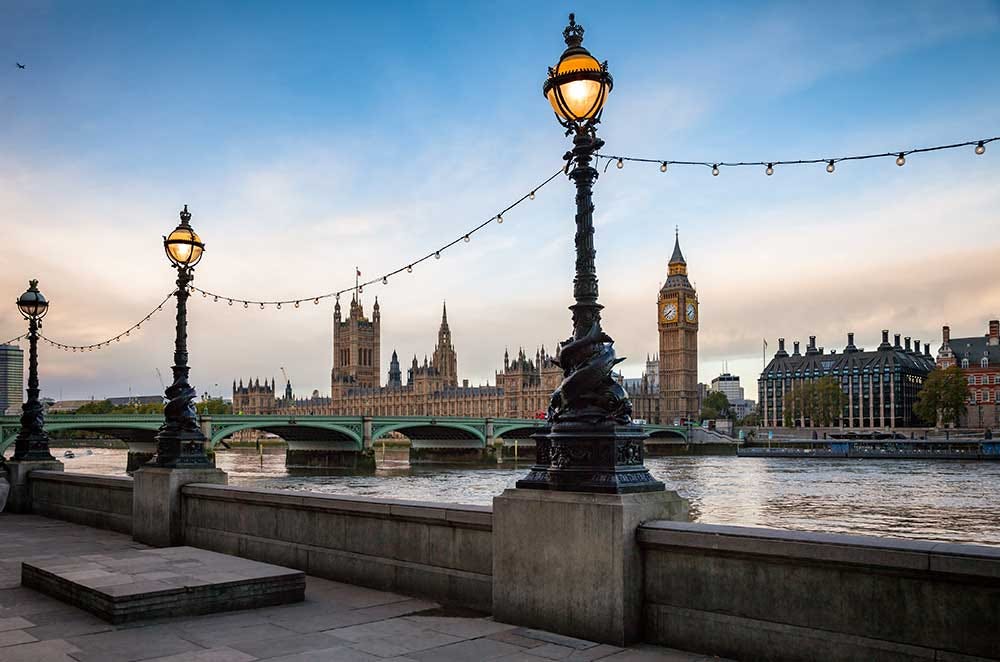
The Victorian lamppost on the Thames Embankment, mass produced and among the first public electric lighting in the world, is decorated with creatures that serve no engineering function. The Victorians saw no contradiction between radical new technology and inherited forms of beauty. The technology was for the function. The beauty was for the world it entered.
The air conditioning unit bolted to every building facade is the clearest symbol of what the modern doctrine produces in practice. The technology is extraordinary. The installation is indifferent. It is placed wherever it fits because making it belong would require treating beauty, even at the level of visual coherence, as something worth planning for. That effort is what the system increasingly declines to spend.
The underpass that cannot be cleaned because no maintenance budget was allocated. The public bench designed to prevent sleeping rather than to support sitting. The shopping centre whose every facade is a fire exit. These are not failures of imagination. They are the correct outcomes of a system that treats beauty as non-essential.
Heritage Standard Member Essay on Saturday:
The 5 questions that tell you whether anything in your built environment was made for you, or made despite you.
For members only: Become a member →
You did not choose this. The decision was made by institutions that inherited a misreading of a correct idea and turned it into a doctrine in which beauty had to justify itself in functional terms. That doctrine was taught, standardised and embedded in planning systems until it became invisible.
Loos’s principle survives his misreaders. But it requires its original tension to be restored: that honesty of material and craft does not eliminate beauty, but makes it possible. The problem was never ornament alone. The problem was the point at which beauty stopped being understood as something built into how things are made, and became something that had to be defended after the fact.
That distinction is still available, and does not require nostalgia, but it requires attention.
—Robbert
FREE Email Course:
Why so many places feel wrong
A 5-day introduction to what changed, and what you can actually do about it
You have walked through a beautiful building and felt something you could not name. Bought something that looked right and felt wrong once you brought it home. And sat in a room that was expensive, tasteful, and somehow empty.
That feeling is not nostalgia or politics: It is recognition.
Something was removed from the things we build and buy, and not replaced.
Most people sense it, but few can explain it…
(Launches next Wednesday)
“The men who designed Crossness believed the workers inside it deserved to work somewhere beautiful. That belief required no argument at the time”
How do you know that the men who designed because they felt “deserved the work somewhere beautiful” seems like that’s a modern interpretation. There could be lots of the reasons why it’s a beautiful building.