


In 1975 a Dutch father still named his first son after his own father, while in 2025 he would nam him after a sound he (and his wife) like.
The name Johannes (John) headed the official list of 1975 with 2,196 new born boys. Jeroen (Jerome) followed with 1,935, then Jan, Dennis, Patrick, Martijn, Richard and Marcel. The name Maria headed the list for new born girls.
In 2025 Noah heads the boys with 883 new borns, followed by Liam, Luca, Sem, Mees, James, Lucas and Sam, and the name Noor heads the girls for the first time.
The 8 leading names of 1975 covered 11,901 boys, in 2025 the 8 leading names of cover 5,528 boys. While the replacement number is much lower than in 1975, the variety of names grew really fast ever since.

The parents of 2025 act on a creed that fits on a greeting card: ‘my child deserves a name nobody else has’.
The creed works… Dutch parents have used twelve thousand names for girls and eleven thousand for boys in 20251. Only one boy in a hundred received the leading name.
Maybe being unique appeals to you too. A lot of my readers are artistic, known with the big thinkers, philosophers and saints. But a name that no one else holds is also a name that no one in the rest of the family holds. For me this is part of the equation why Dutch family culture is so bad in this age.
But all my own personal frustrations aside, in this essay I want to dive in what happened to our kids names. Because it is not only the atheists who use funny names, a lot of Catholic converts/reverts use just as silly names, making their trad life a caricature.
What the Dutch naming system was
Dutch families, and with them ever other European family, named a newborn by a fixed rule. In German cultures the first son took the name of the paternal grandfather. The second son took the name of the maternal grandfather. The first daughter typically took the name of the maternal grandmother and the second daughter took the name of the paternal grandmother. While this rule was not set in stone per se, this is how it functioned for the bigger part of European families.
Catholic families on top of that added a second and a third name and ran the same rule through both lines at once. A string such as Johannes Gerardus Theodorus told anyone that the family was Catholic, and told him which saints and ancestors stood behind the boy. This chain was written into his name. While my father’s family were protestants they used the same string, and often mixed them up, e.g.:
John William Bernard
Bernard William John
William John Bernard
Before Napoleon made surnames compulsory in the Netherlands, a son named Willem whose father was Jan was recorded as Willem Jansz., Willem, son of Jan. And while Jan was such a common name, a big part of Dutch people have ‘Jansen’ as surname, just like its English equivalent: Johnson.
Your name once served as a genealogical document. It placed you in a line of specific ancestors.
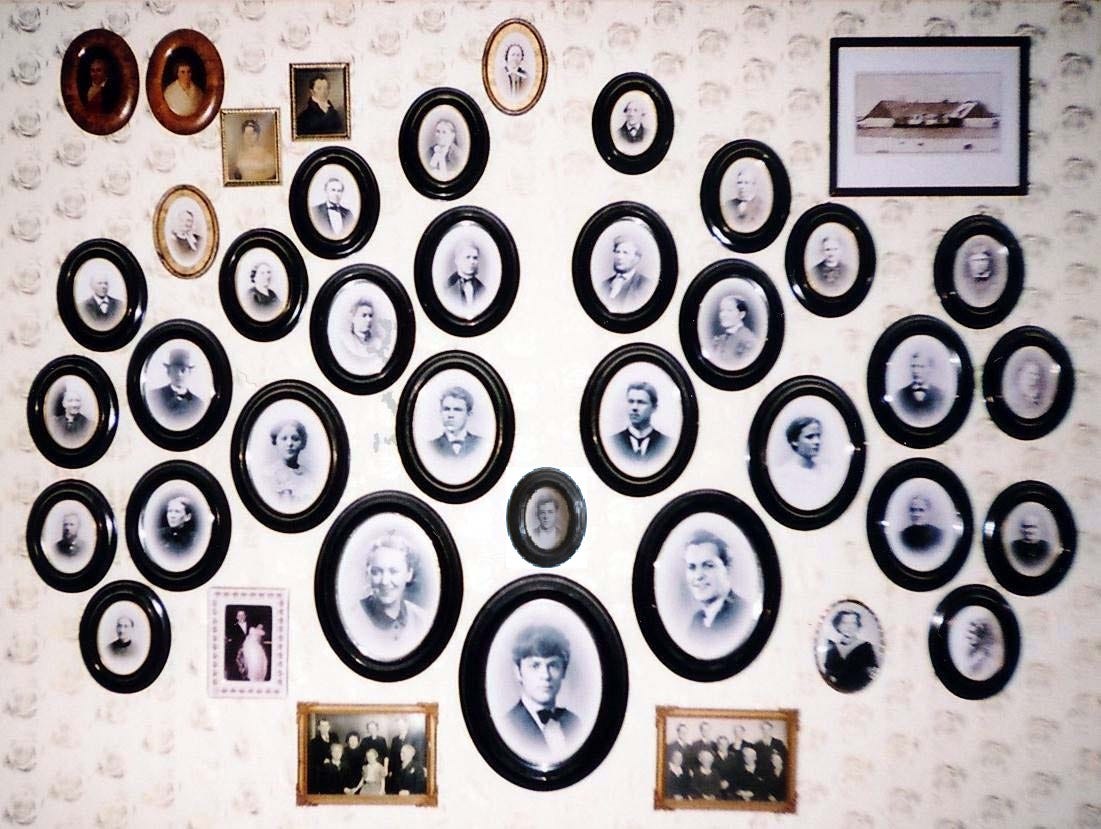
This rule belonged to all of Europe. In London in 1510, 24.4% of boys were named John, 13.3% Thomas and 11.7% William.2
British and Welsh families between 1700 and 1870 followed the same rule, Irish families of the 1800s named the first son after the paternal grandfather and the second after the maternal grandfather, and Scottish families of the same period did the same. In every case the parents did not ‘pick’ a name themselves.
My own second name is Giliam, a Southern-Dutch form of Willem, which is a name that runs through my father’s line across at least three generations.
My mother’s second name is Bettina, after her mother Betty (Elisabeth). My uncle and my grandfather both carried August as a second name. They did not chose these for how cool they sound. Each name placed my family members in a chain of ancestors who came before us and whom we were expected to resemble.

What a kid’s name once did
When a child was still named after a grandparent who had died, his or her name made the claim the old man or woman could no longer make in person: this child belonged to my line and would carry my work forward. That is also the reason why many people have Smith, Cooper, Taylor or Bakker, Visser, Brouwer as surnames. Their surnames refer to the family craft.
For Catholics saint’s name made a same kind of claim. It might have been the patron of the parish where the child was baptised, the patron of the guild his father belonged to… or even the saint whose feast fell on the day he was born.
In each case the saint’s hold on the child came from a place or the date rather than from anyone’s deliberate choosing, and once it entered in the baptismal register, the name became an act of recognition that was at once legal and spiritual.
Yet since Catholics had atleast 3 names, both the family and saint names were included.


In a nutshell: a grandparent’s name set your child in a human line; the saint’s name set him (or her) in a sacred one. Both claims reached them from outside his parents, who were only the custodians of a name, holding it in trust for the next generation.
How was this destroyed?
The Dutch left the churches en masse after the Second World War and Vatican II, and the law followed them. In 1970 a new naming law3 replaced the law of 18034. The old law had held parents to an approved pool of names, yet the new law opened the pool to anything a parent could think of.
The register of 1975 already shows how this break was under way5. Beneath Johannes stand Jeroen, Dennis and Patrick, and the Voornamenbank records that many parents in the 1970s started choosing modern call names, while the register still carried the old one. So the ‘tradition’ only still existed on paper.


By 2025 Johannes, Johan and Jan (all meaning: John) have left the first 40 names of the boys’ list. The 8 leading names of 1975 average 6.25 letters and the 8 leading names of 2025 average 4.0.
The wide stock of Catholic saints survived in pet forms: Teun from Antonius (St. Anthony), Guus from Augustinus (St. Augustine), Joep from Jozef (St. Joseph), Bram is Abraham (The Prophet) and Mees comes from Bartholomeus (St. Bartholomew).
The rule that told a father which saint and which grandfather stood behind his son did not survive in the 1970s secularisation.
Dutch parents now curate sound, spelling and even their mood to build an original identity. The first act a family performs for a child has become an exercise of (bad) taste.
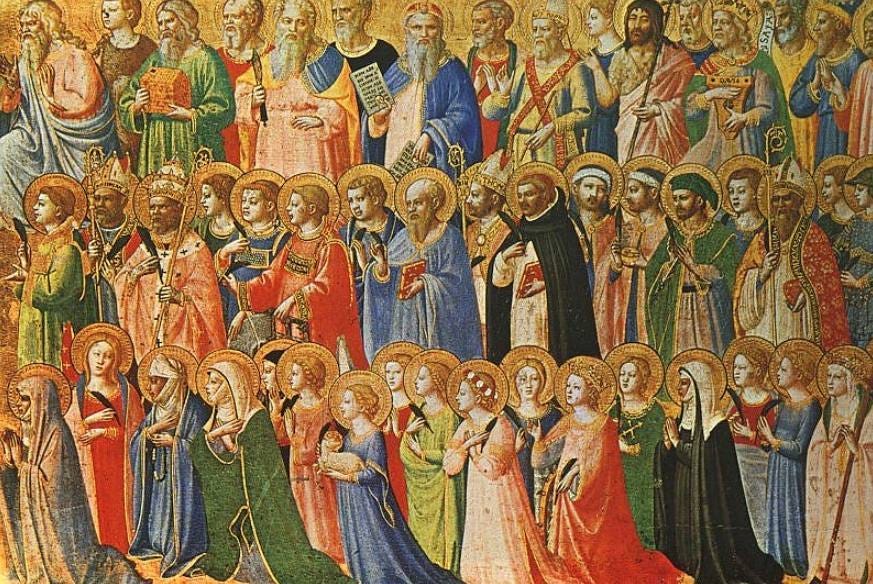
The Dutch list of 2025 would pass for Christian when he checks it… at least 20 of its 40 names come from the Bible, among them Noah, Sem, Levi, Adam, Daan (Daniel), Tobias, Benjamin, Elias, Boaz, Jesse and Abel from the Old Testament. And Mees, Lucas, Thomas and Mats from the New Testament.
Yet the same list carries Finn, Zayn, Mason, Owen, Kai and Milan, so Genesis sits in the ranking besides names from Ireland, Middle East and a British trade guild. The filter that sorts them is 4 letters and a vowel.
And here is the strange part: 4 of the 8 leading names of 2025 come from the book of Genesis. Yet none of the 8 leading names of 1975 did.
The US list of 2024 runs Liam, Noah, Oliver, and the Dutch list of 2025 runs Noah, Liam, Luca. The vocabulary of a faith stayed on the naming list, yet the faith left.
Ask any parent why their boy is called Noah. In 1975 they could still answer ‘after my father’. In 2026 you will hear something like: ‘we just liked it’.
The mistake traditional Catholics and trad revivalists make…
I see this same break of tradition even among traditional Catholics and trad revivalists. They want their sons to carry the name of a saint or historical figure they like. Dutch right-wing politician Thierry Baudet called his son Lancelot after the main character of a Middle Dutch drama. For traditional Catholics it often means: ‘my son will carry the name of a saint I admire’.
So a father picks Benedict for the Rule, Augustine for the Confessions or Philomena because she was fashionable in certain circles for a decade. So a typical baby boy at an SSPX chapel in the US is baptised Benedict Joseph Augustine.
His fathers name? Probably Kevin or Dave. His grandfather? John. However beautiful the name sound, it carries nothing forward. It just announces your personal conversion and your reading list when doing so. It performs lineage and tradition, but transmits none of it.
A name built from your admired saints is still a name built on your own parental preference. The authority moved from the Church calendar and the family line to the spiritual taste of the kid’s parents. The Noah parent and the Benedict parent adhere to the same lack of rules. Each holds it with a different bookshelf or tv-shows.
Paid subscribers receive The Naming Method: the 3 questions, and the order they run in
