


Page four of the SSKN manual on the care of church textiles shows an embroidered vestment under a plastic cover. Mould and coloured stains have spread across the gold work. The caption gives the cause: the plastic protective cover has made the condition worse.
It looks a lot like this Solemn Set I found on the attic of a soon to be demolished Church near Antwerp:
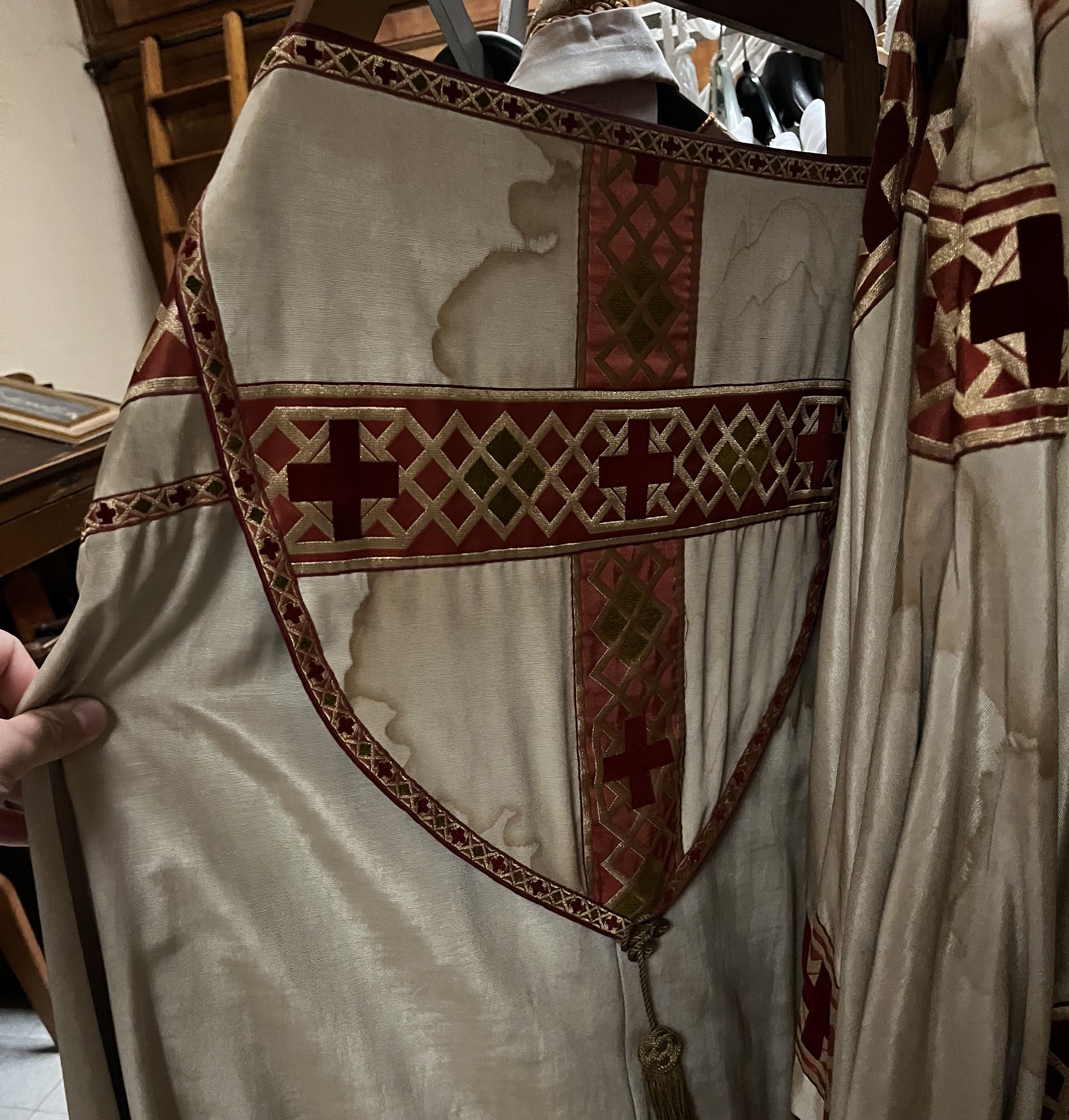
The vestment above was stored away and forgotten about. The volunteer later wrapped it in plastic… Which seems like the right thing to do… Plastic looks clean, it closes, and you can see through it. Yet… it also holds in damp, and a closed bag of damp air is where mould grows best.
The SKKN manual does say the greatest damage comes from careless handling.
Since I hopefully do not have to explain you that you that tossing vestments around, and folding embroideries will damage it… so that is why this article will be about the other harm: Which comes from ‘good’ care… yet with the wrong materials.
A conscientious keeper cannot see that harm, because he is doing what he believes is right. I am a sacristan myself, so I am the reader this guide is written for.
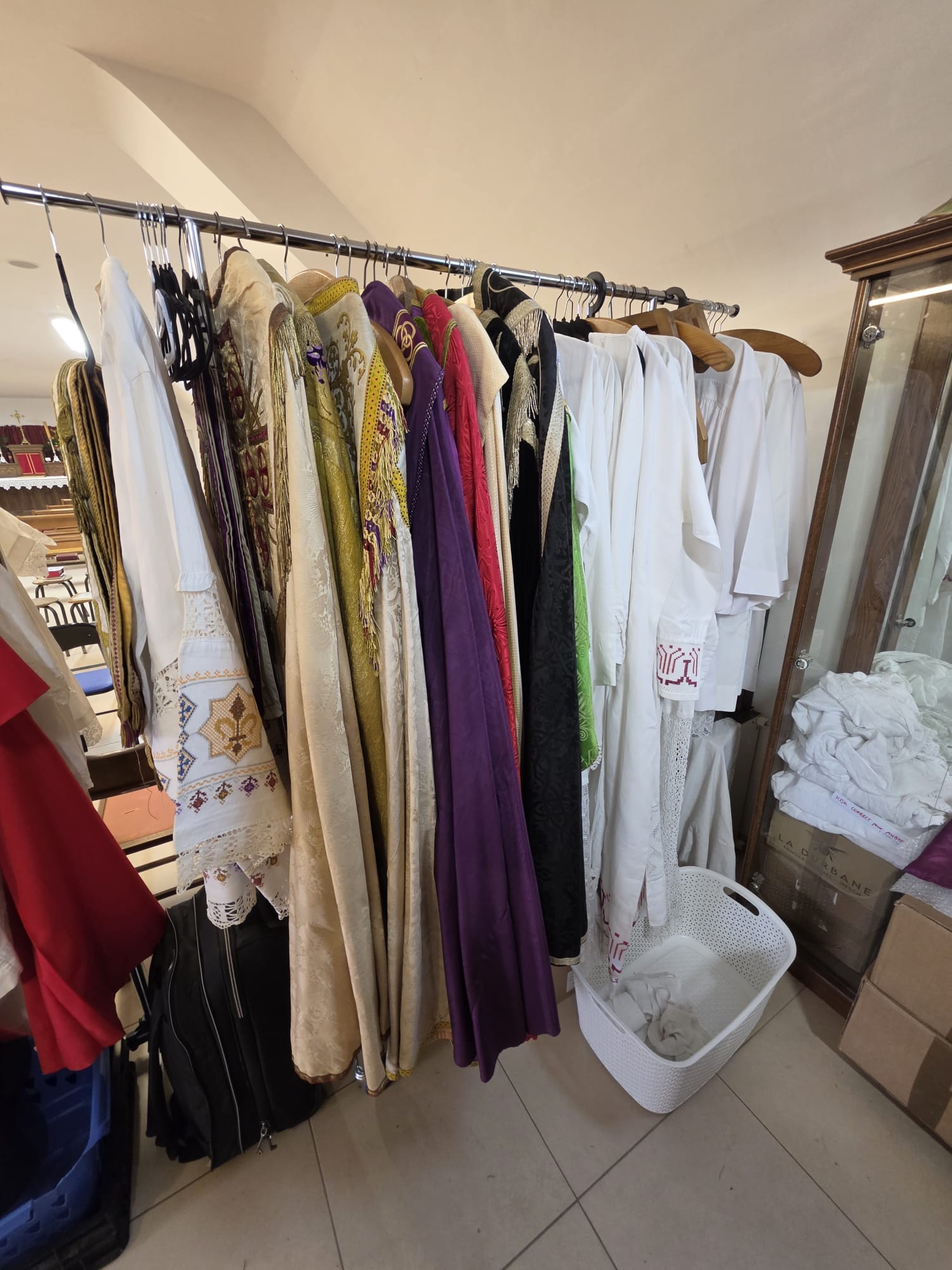
The SSKN manual names 4 habits of the ‘careful’ parish that actually damage the cloth. Plastic holds in damp, and some plastics carry softeners that attack fabric.
Ordinary cardboard boxes give off substances that harm textile, and they are too small, so the vestment have to be folded to fit.
Oak, the wood of so many sacristy cupboards, is acid, and the acid discolours cloth. Mothballs, the old defence against moths, discolour the cloth and harm the people who breathe them.
Each of these is something a good keeper does to a good vestment, and the cupboard that holds all 4 thinks it keeps the cloth, yet ruins it in the same act.
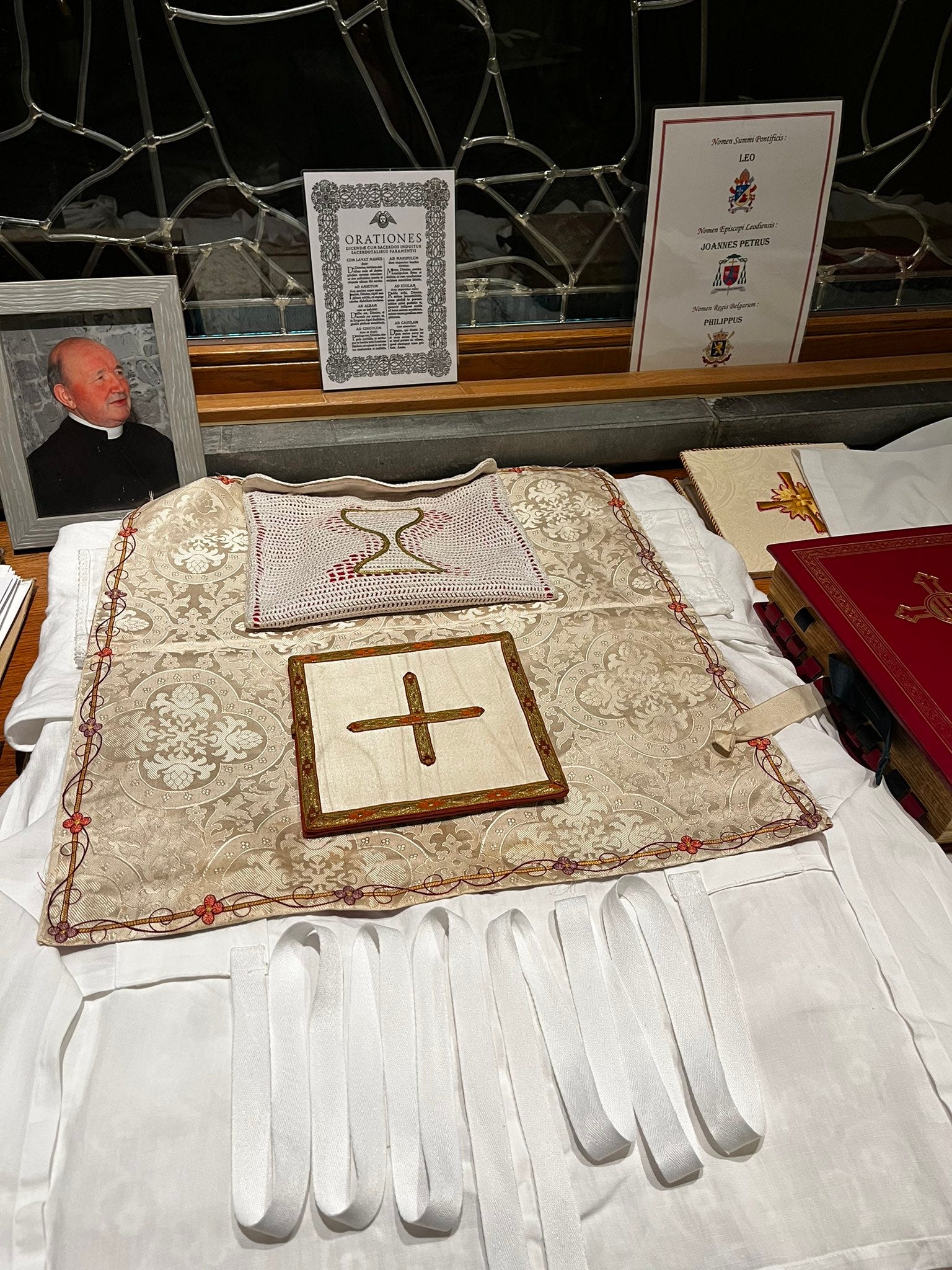
Where the habits end up is the loft. In the forty years before 2005 (the guide is from this year) the liturgy had changed a great deal, the manual says, and much textile fell out of use.
Most of it left the sacristy, which the authors call a relatively safe place, for draughty lofts, where it lay forgotten in crammed cupboards and removal boxes.
A set that leaves use is carried upstairs once, and after that nobody checks it: so it perishes.


Then the clearing of such a loft brings a second danger: Old or damaged textile goes to the incinerator and the good goes to the missions, and whoever holds the keys has to ask what is leaving and why. I am happy to sometimes get very beautiful stuff, that somehow got preserved.
Yet… superficial beauty is a poor test, because what we find old-fashioned and ugly, our children and the generations after them may find beautiful and special.
A set thrown out for its looks is gone forever, and only a textile restorer can assess whether a piece is beyond repair (the one above is, so only the galloons and tassels will be repurposed).
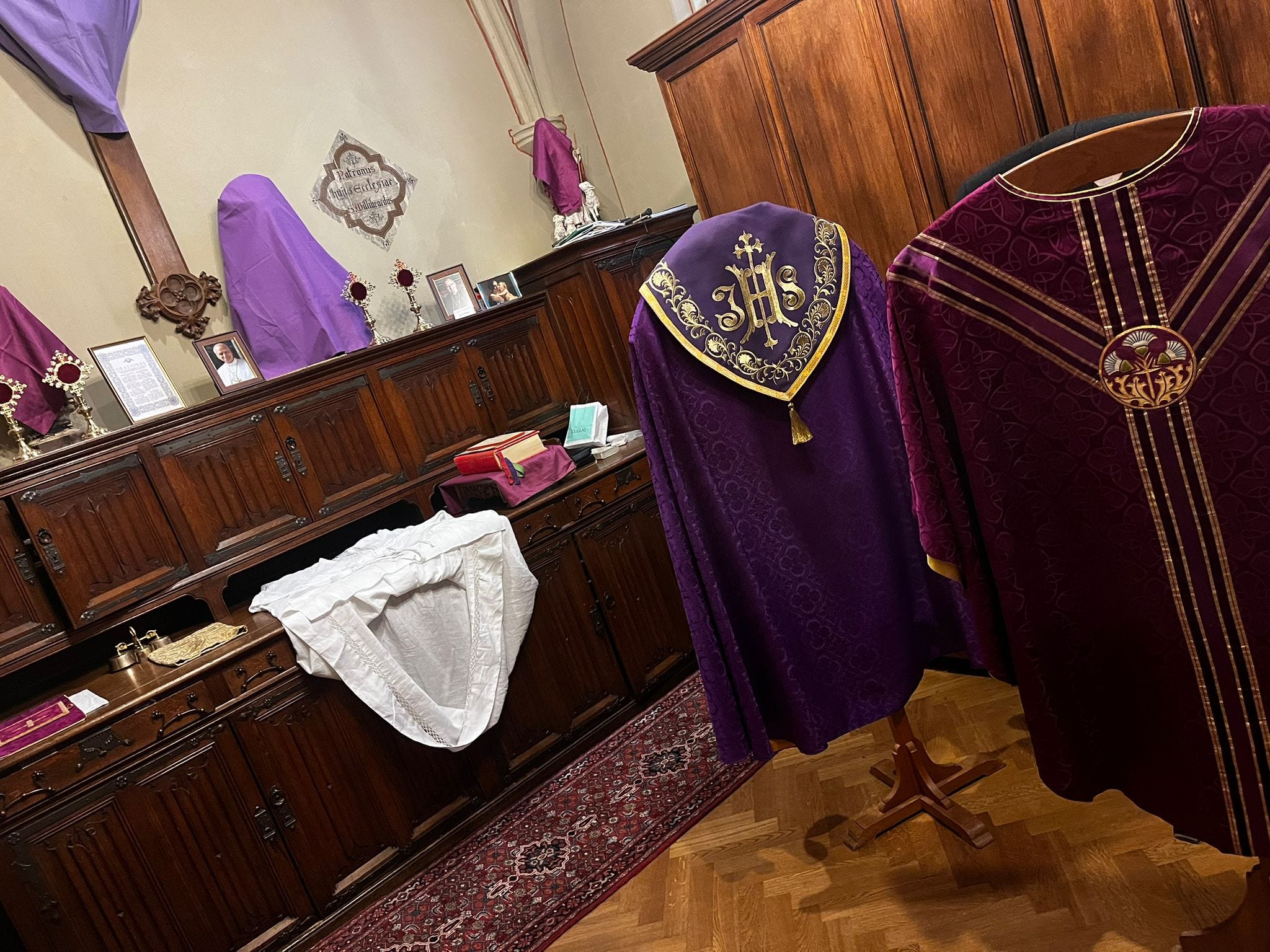
Sunday is the first of Advent, and somewhere a violet set has spent around 6 months in a cupboard that nobody has opened. If that cupboard holds 1 of the 4 (bad habits), the set is already losing perishing.
Below you will find the guide on how to preserve vestments: what to use in place of each habit, the room and figures that keep cloth stable, a padded hanger you can sew in an evening, and what to do when the cupboard opens on mould.
The guide is only available for Heritage Standard members…
Not a member yet? Get Heritage Standard for 40% OFF
Until Monday 30 November, your first quarter of Heritage Standard membership costs 40% less.
Members receive every essay in full, the complete archive, and every new piece for less than a single magazine each month.
The offer closes at 11.59 pm EST on Monday 30 November
