
How brands destroyed quality standards
The cognitive tax of slop: why every purchase now requires unpaid research
A while ago I saw a Burberry advertisement from the 1980s in the Netherlands. I was surprised how many stores stocked it at the time: dozens across the country, not just P.C. Hooftstraat (the Dutch answer to: Fifth Avenue/Bond Street/Avenue Montaigne)
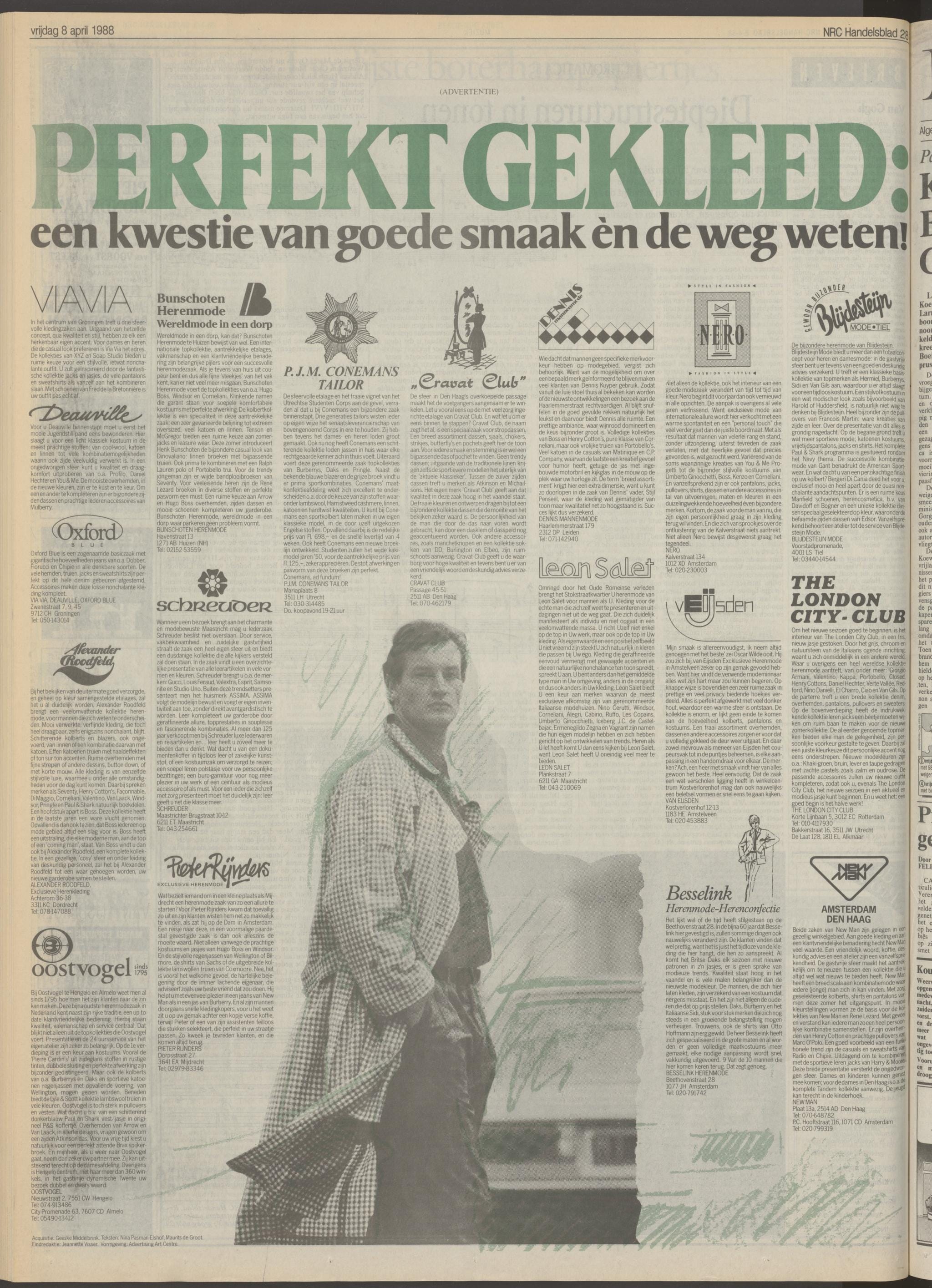
My grandfather was fond of brands like this. He always dressed sharp, even though he was a ‘simple’ mechanic at the Dutch Royal Air Force. He invested in pieces that lasted. The stores where he bought them could repair them. He owned pieces he’d been wearing for over 30 years.
Men like my grandfather never needed to doubt if the trench coat he bought was the Burberry ‘Made in Thailand’ edition or the more expensive Burberry Prorsum ‘Made in England’ edition.
There was only one Burberry back then.
Now you need to research whether the €400 Barbour jacket is still made in Britain or if it is the €150 Romanian version. Both carry the same brand label. But you will spend 4 hours on the internet learning that ‘water-resistant’ means nothing and ‘waterproof ratings might be lies. And also discover half the ‘Italian’ coats are made in the same Chinese factory as the €50 ones.
Your grandparents never had to do this. They walked into a shop, pointed at a coat, paid what it cost, and easily wore it for twenty years.
This essay is about how the destruction of intermediary institutions like guild systems, geographic protections (= enforceable brand reputations) created a cognitive tax our ancestors never paid. We pay for goods plus the mental exhaustion of navigating an economy where trust is impossible and quality is camouflaged by marketing.
Before ISO 9001 Certificates, standards were actually enforceable
The medieval guild system solved a fundamental economic problem: How does a buyer trust a seller when the buyer lacks expertise?
To become a master tailor in 17th century Amsterdam, it required 5 to 7 years as an apprentice, followed by producing a masterpiece, which is an actual garment judged by existing masters.
If you failed their standards, you could not sell under guild protection. The guild controlled who could practice the trade, what techniques were acceptable, what materials could be used for which purposes.
But this was not exclusionary gatekeeping. It was a form subsidiarity: a Christian/Catholic social principle that decisions should be made at the most local level capable of handling them. A guild knew its craftsmen, the craftsmen knew their suppliers, and the customer knew the guild enforced standards.
A wool merchant could not sell inferior fabric to a guild tailor because the guild would discover it. The tailor could not use shoddy stitching, because his reputation (enforceable through guild exclusion) was his livelihood.
There was no need for a customer to understand the difference between worsted and woolen. The guild system made that knowledge unnecessary for buyers. Trust was an enforceable mechanism.
(This is the exact thing that made us great: we built the best ships, made the best paintings, cook the best food, and in general built the best civilisation ever.)
In the 1960s, the 1,200 Harris Tweed weavers on the Outer Hebrides produced about 6.5 million meters of fabric annually. Every meter was woven from pure virgin wool dyed and spun in the Outer Hebrides. Produced by islanders at their homes in the islands. The Harris Tweed Act of 1993 made it illegal to call anything ‘Harris Tweed’ unless it met these exact specifications.
The Act had teeth, since companies were sued, and The Orb trademark was protected. You could trust that Harris Tweed meant Harris Tweed.
Likewise, Barbour in 1894 made waterproof clothing for sailors and fishermen in South Shields. By the 1930s, they supplied the British military and Antarctic expeditions. Their waxed cotton jackets were fully repairable. Barbour maintained a rewaxing and repair service.
A jacket bought at Barbour in 1960 could still be repaired in 1990.
This was possible because Barbour used to control their own supply chain. They knew their suppliers, enforced their standards, and their reputation was a financial liability if they failed.
Geographic indicators work the same way. Parmigiano-Reggiano couldn not be made outside specific Italian provinces using specific methods. Champagne could not be made outside Champagne.
Price used to be a reliable signal, since production costs were real. An €800 coat cost €800 in order to make it with quality materials and skilled labor. An €50 coat cost €50 because it used cheaper materials and faster methods.
The customer did not need expertise to distinguish the two, since intermediary institutions provided it.
The Pattern: Acquisition to Extraction to Collapse
The destruction always happens in stages.
Barbour began producing ‘lifestyle’ lines in Eastern Europe and China in 2001. By 2010, you could buy a ‘Barbour’ jacket for €150 made in Romania, or a ‘Barbour’ jacket for €400 made in Britain. Same brand. Completely different products. The customer had to find out what the difference was himself.
Aquascutum, founded 1851, was acquired by Hong Kong-based YGM Trading. Production moved to China. The brand that invented the waterproof trench coat for British officers in the Crimean War now makes mass-market coats in the same factories as H&M.
Same with Jaeger, a 127 years old brand that collapsed in 2017. The private equity firm Better Capital acquired them in 2012, extracted value. They closed the British manufacturing, and moved production to Asia. And when demand collapsed, they shuttered it.
This is the pattern every time: Heritage brand makes less sales. Private equity acquires it. Production moves offshore. Brand equity gets extracted through ‘new vision.’ And finally: a complete collapse or zombie survival of the brand
Harris Tweed weavers numbered 200 by 2009. A steep downfall from the 1,200 in the 1960s. The Act still protected the name, but it could not protect the industry from Asian textile dumping and EU ‘free trade’ policies that prioritised cheap imports and margin optimalisation over our local economy.
It was the European Union that destroyed regional protections while claiming to protect them. Their geographic indicator laws protect local foods. But no such enforcement exists when Chinese usurp European brands, and flood our market with their plastic cars. Or when Amazon usurps European ecommerce retailers with their junk.
The managerial state chose global markets over subsidiarity. Brussels technocrats could not enforce local standards because they did not know local craftsmen. France and Italy just saved their food sector, but not their other craftsmen.
Guild knowledge has been replaced with ISO 9001 certificate standardised audit checklists, that measure nothing* about actual quality, rather procedures and checklists.
Progressive ideology completed the destruction with ‘democratisation of luxury’. Everyone deserves design(!), everyone deserves premium quality! The result is Italian design from Bangladesh, premium prices for Chinese production, and ‘heritage’ stories for Instagram dropshipper brands launched last year.
Modern globalisation is optimised for margin, not quality. That is why they flood our continent with infinite migrants, and brands need tons of marketing to hide their lack of quality. Brands like Prada, Louis Vuitton, Gucci: all famous brands that used to have extremely high quality standards. Now it is overpriced garbage no one should buy.
Global supply chains made accountability impossible. A coat could claim ‘Italian design’ while manufactured in Bangladesh, using Turkish fabric made from Indian cotton. When the coat failed, who was responsible? The brand? The factory? The fabric supplier?
Nobody. Which meant the customer became responsible for knowing which failures to expect. Same in politics. Same in customer service. Nobody is responsible for anything anymore.
Price stopped signaling quality. Manufacturing a coat in China cost €15 whether you sold it for €50 or €800. The difference was marketing budget and psyopped real estate prices in ‘exclusive’ shopping streets.
Standards became voluntary. Brand names became marketing assets detached from production reality. Same with ‘personal brands’ and influencers—unlike true artists, they never produced value or quality.
Quality became impossible to aspire to because quality has no enforceable definition anymore, besides some ISO norms.
I remember when I bought my first pair of Bottega Veneta loafers in 2016. Back then Bottega Veneta had very high quality standards. But it got ruined too in 2018 due to a new vision by their creative director: they are still recovering from that.
Manufactured Memories
The 2010s brought direct-to-consumer brands claiming to ‘cut out the middleman.’ Everlane, Shein, Warby Parker, and hundreds of startups promised ‘radical transparency’ and ‘no markup.’
What they actually did was eliminate the last remaining quality control that retailers provided. Department stores had buyers who visited factories, checked production runs, rejected shipments that failed standards. Direct-to-consumer brands eliminated that layer and pocketed the difference.
‘No markup’ actually meant ‘no one checking’ if the coat fulfills its purpose (keeping you warm).
Simultaneously, dropshipping destroyed even the pretense of brand integrity. You could launch an ‘Italian heritage’ brand from your apartment in Mumbai, order samples from Alibaba, create a Shopify store with sepia-toned AI photos of the Italian countryside, and claim your grandfather was a Milanese tailor. You could then ship directly from a Chinese factory to customers.
There is no penalty for lying anymore. Influencers promote anything for some quick cash. Amazon does not verify ‘made in Italy’ claims. I know this, as I almost bought sheep shearling gloves… until a customer review revealed it was not real sheep shearling, but synthetic garbage.
Sellers just shut down and relaunch under a new name the next day.
‘Sustainability’ replaced durability as the marketing term. Bigger brands stopped claiming their coats would last decades. Instead the now push ‘recycled materials’ and ‘carbon-neutral shipping.’ Whether the coat fulfills its purpose; to keep you warm, became irrelevant if it was made from ‘ocean plastic.’ An ecological disaster, leeching microplastics into our tapwater.
LVMH ruined the entire luxury market. Besides Louis Vuitton and Moët (one of the worst champagnes), they acquired brands like Loro Piana in 2013. Loro Piana had been a family company since 1924, sourcing the finest vicuña and cashmere, maintaining relationships with individual herders in Mongolia and Peru.
After each LVMH acquisition, product quality declined subtly, enough that customers noticed, but not enough that lawsuits followed. Heritage brands become a hype brands, prices increase, and quality declines.
Algorithm-driven fast fashion made even ‘luxury’ disposable. Zara releases 500 new designs weekly. Clothes designed not to last a season, but until the next trend drops online.
And trade associations… they are the modern perversion of guilds, yet fail to enforce standards. They serve lobby functions and offer consultancy: nothing more than that.
What should have been done?
Europe should have enforced geographic protections. Customs should have seized fake ‘Italian’ goods from Guangzhou. Governments should have fined shops claiming ‘British heritage’ while shipping from Shenzhen.
Luxury brands should have resisted private equity, like how Chanel or Brunello Cucinelli operate.
Craftsmen should have formed private certification systems when EU regulations killed regional protections. The Harris Tweed Act worked because it had teeth.
Consumers chose cheap over good. The result is omnipresent slop.
You can still find genuine quality. But finding them requires expertise. And most people can’t afford this. So they accept slop and spend hours researching which slop might be slightly less sloppy.
The cognitive tax compounds daily. Every purchase requires research. Every claim requires verification. Every ‘premium’ product might be rebranded slop.
That’s the cost of destroying subsidiarity and replacing it with global markets managed by technocrats who know nothing.
-Robbert
The guild system made expertise unnecessary. Now you need it.
Your grandfather trusted Barbour because the remnants of guilds enforced its standards. You now search YouTube videos because those intermediary institutions are dead.
The Taste Sprint will not help you pick better coats, but teaches you to see what guild masters saw. So you stop confusing vanity with actual craft.
In just 7 days you learn to…
Day 1: Articulate why something works (not just that you like it)
Day 2: Trace lineage (distinguish continuation from appropriation)
Day 3: Spot 10 details you’d normally miss
Day 4: Compare across eras (see what’s essential vs decoration)
Day 5: Curate with constraint (force yourself to think, not grab)
Day 6: Write 200 words explaining what you see
Day 7: Measure how much your eye sharpened
What you get:
21-page workbook with examples
Daily exercises + worksheets
The ‘Sacred vs. Profane’ framework from Heritage Standard essays
Reading list
Who this is for: Anyone tired of borrowing taste from the internet, brands, influencers, or ‘what’s popular.’ Whether you buy watches, furniture, clothes, or just want to understand why most modern stuff' everything feels fake.
Get The Taste Sprint* here (Just €29)
*Free for paid subscribers
Further Reading:
On guild systems and economic trust:
Sheilagh Ogilvie, The European Guilds: An Economic Analysis (Princeton, 2019)
Steven L. Kaplan, The Bakers of Paris and the Bread Question, 1700-1775
On brand decay:
James Surowiecki, ‘The Decline of Brands,’ The New Yorker, 2014
Dana Thomas, Deluxe: How Luxury Lost Its Luster (Penguin, 2007)
On heritage and fake heritage:
Harris Tweed Authority, official certification standards
On craftsmen maintaining standards:


"Consumers chose cheap over good."
A lot, definitely, but the luxury market seems to be dominated by a kind of Emperor's New Clothes mentality where the target market is desperate to pay way over the odds for (clearly inferior) Veblen goods, simply to give the impression of prosperity. The people with the money to support true craft seem hellbent on spending their money primarily on $15 items plastered with $800 of logos. Sad.
This article cuts to the heart of a serious modern dilemma: the dissolution of the sacred in labour, a crisis foreseen with prophetic clarity by Thomas Carlyle. I recall his ideas from memory, and so may not be interly exact, but the essence is still there.
Carlyle, writing in the early nineteenth century, identified the free market as a force of desecration, stripping work of its spiritual and communal worth. His diagnosis precedes Marx’s theory of proletarian alienation—not as a materialist critique, but as a lament for the loss of organic hierarchy and meaningful craft. The worker, severed from the dignity of creation, is reduced to a functionary of the “gig,” a mere cog in the machinery of mass production. The market, in its democratic levelling, does not liberate; it degrades, elevating the “cheap and nasty” as the inevitable triumph of quantity over quality.
Carlyle, a staunch elitist, insisted that only a true aristocracy—bound by duty and vision—could shield the masses from the ravages of unchecked commercialism. That is both consumerism and rampant marketing tapping into base desires. Your portrayal of the craftsman and his patron exemplifies this lost ideal: a relationship not of transaction, but of mutual recognition and moral order. Yet the modern age, in its relentless pursuit of efficiency and scale, 'the line must go up', has wiped out those ties, replacing them with the cold calculus of exchange.
Here lies the paradox: the very managerial state that might, in theory, defend local producers and cultural heritage against the homogenising forces of capital is itself a leviathan of standardisation. It does not preserve tradition; it administers its dissolution, replacing the organic with the bureaucratic, the sacred with the procedural.