


In Part I of this guest series for Heritage Standard, Hilary White, founder of The Sacred Images Project traces the historical path that produced a striking modern Catholic phenomenon: ‘papolatry’; the tendency to treat whatever the reigning pope says as the surest test of orthodoxy. She draws from years of reporting on Catholic and political affairs, and on her wider work in faith, art, history and culture. It begins with the shift from medieval Christendom’s overlapping authorities to the absolute sovereign state, and the parallel pressures that gradually reshaped the Church’s own self-understanding.
Papolatry and Popesplaining
A peculiar idea is abroad among Catholics today that would have been almost incomprehensible through much of Christian history: that the surest test of Catholic orthodoxy is slavish agreement with whatever the reigning pope happens to say. It’s been called “papal positivism1” or sometimes just “papolatry” - the worship of the pope - and it is baffling, strange and contradictory, but I think by now we all know what it is. Simply put: “Whatever the pope says is true, because the pope says it.” And it doesn’t seem to matter whether he says exactly the opposite thing the next day, and then again the day after that. The agreement seems to be that reality itself is under papal authority and can be altered at papal whim.
This goes considerably beyond the traditional requirements of obedience to legitimate authority, adherence to the defined doctrines of the Church and communion with the Bishop of Rome. A much more radical assumption has developed: that the Pope himself is, in practice, the source and measure of Catholic truth.

We see it every day on social media, where self-appointed “popesplainers” - many of them laymen - spend their days constructing intricate justifications and defending them like a mother bear. And the trick is applied to every papal utterance, all, apparently, held to be of equal weight. If he changes an emphasis, Catholics must change the emphasis. If he offers a novel interpretation of Scripture, that interpretation becomes the Catholic interpretation. If he contradicts his predecessors, or even perennial doctrine, elaborate arguments must be constructed to demonstrate that no contradiction occurred. And if the evidence of our own eyes suggests otherwise, we are told that the defect lies in us.
We’ve certainly been seeing it very brazenly since March 2013, but the advent of the Church’s Bergoglian captivity was only the point at which the pretenses were simply dropped. It’s been going on, for those with eyes, for quite a while. Since the reign of John Paul II there had been a carefully managed public image shield where the papacy’s most obvious deviations from traditional Catholicity were meticulously painted over with public statements from the Vatican’s press office and other official bodies. We had cover, at least officially. But that time is long gone.
I’m not going to spend any time defending the observable fact that it’s happening. If you’re still back there, this isn’t addressed to you, and you can go back to your scroll. What I am going to attempt here is a historical investigation, to see if we can trace what is happening now to any one event or historical or philosophical trends.
I think what we are seeing is the end result of a transformation that took centuries: from contemplative medieval Christendom, through political centralisation and institutional siege, and the massive and horrifically destructive upheavals that went with them, to a bureaucratic conception of Christianity in which preserving the machinery of the Church gradually became confused with the purpose for which the Church was founded.

So in this three part series, we’re going to trace that transformation forward through history: the creation of a new world order through what historians call the Early Modern period. Starting from the complex overlapping organic structures of authority in medieval Christendom, through the rise of the absolute sovereign State, the Revolution and the nineteenth-century assault on the Church. We’ll look at the Church’s Ultramontanist response and the triumph of papal centralisation at Vatican I. From there we’ll follow the story into the twentieth century, through the Modernist crisis, Vatican II and the strange post-conciliar combination of institutional collapse and ever greater dependence upon Rome.
There was no single moment when anyone decided to create what we now call papolatry. What we’ll find instead is a series of responses to successive crises, each comprehensible in its own circumstances, whose cumulative effect was to transform the Pope from the supreme guardian of the Catholic Faith into, in the popular imagination, its source and measure.
The birth of the sovereign state
Something modern people assume as if it’s an iron law of the universe is that humanity is naturally divided into “nation states,” with “governments,” and that these entities are as a god-given reality of how human beings have always and will always order their voluntary groupings, at least since we made it through the last Ice Age.
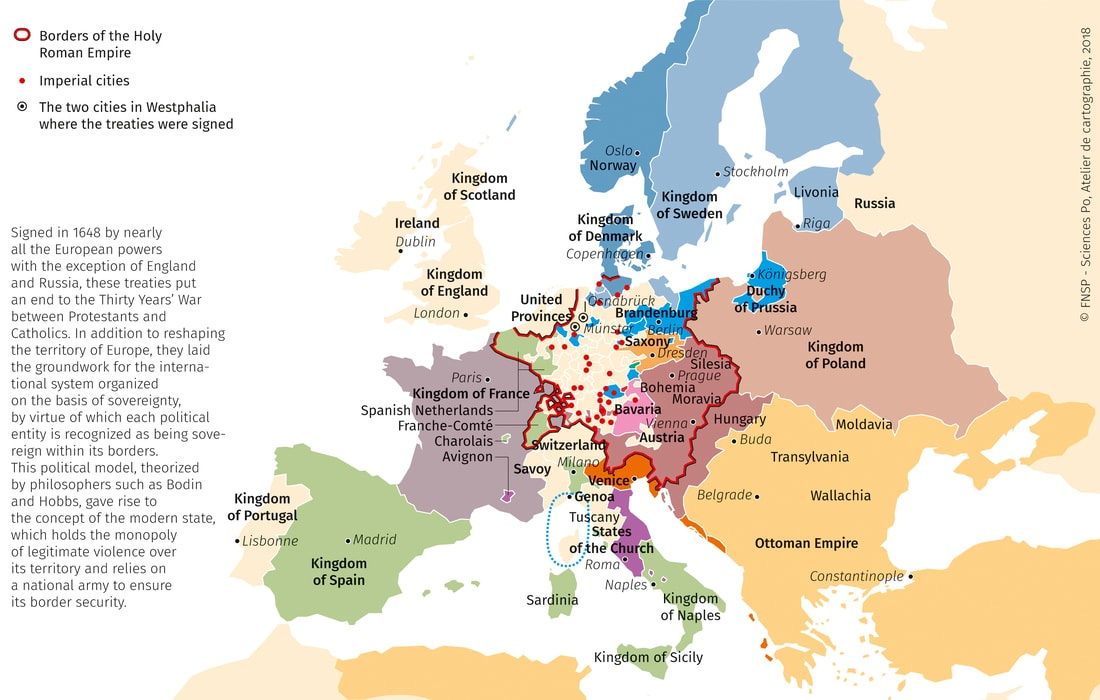
But our concept of the sovereign nation-state that is the foundation of our entire global organisational framework, is a comparatively recent political invention, a product of what we call the “Early Modern”2 period. Our common assumption that every square inch of geographical territory on the planet must belong to one or another sovereign “state” exercising final and exclusive authority over everyone within its borders, would have seemed very strange to a medieval European.
Our medieval ancestors understood political authority as something distributed among many layers of overlapping institutions, jurisdictions and communities, each with its own rights, duties and legitimate sphere of authority. Monasteries held their own lands and legal privileges. Chartered towns possessed liberties that kings could not simply abolish at pleasure, and the guilds and confraternities within them had theirs. Universities, cathedral chapters, religious orders, principalities, duchies, city-states and corporations possessed genuine legal personalities and rights. The Holy Roman Emperor might claim one kind of universal authority while the Pope claimed another. Neither exercised anything resembling the comprehensive administrative control of a modern state’s government.
Like nearly everything else bad about the world, the new idea came directly out of the French Revolution. And they got it, paradoxically, from the Ancien Régime they overthrew and tried to exterminate.
A new kind of king, with the power of God
Medieval kingship was an office embedded within a legal, moral, religious and customary order that the king did not create and had no power to overthrow. Kings (or their literate advisors) understood that the same power that made them kings also constrained them. It was not until the development of absolutist monarchy that this understanding began to change. In seventeenth-century France, particularly under Louis XIV, sovereignty was increasingly imagined as something singular, indivisible and concentrated in the person of the monarch.
The intellectual roots of this transformation lay partly in late medieval nominalism3 and voluntarism4, which weakened the older conception of an objective moral and legal order within which rulers were constrained. The medieval political order certainly had government, coercive authority, law, taxation, kings, courts and armies. What it did not ordinarily have was the modern conception of the state as the single, territorially exhaustive, sovereign corporation from which all legitimate public authority ultimately derives.
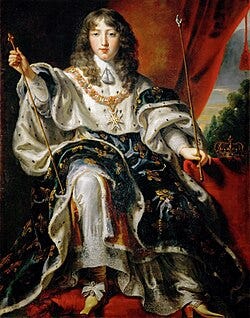
By the seventeenth century, the new theories of sovereignty, associated especially with Thomas Hobbes, had recast political authority as absolute, supreme, indivisible and ultimately concentrated in a single sovereign power - the State. The famous phrase attributed to Louis XIV, L’État, c’est moi, “I am the State,” (a thing no medieval king or even emperor could have conceptualised) is probably apocryphal, but expresses with wonderful economy the political transformation taking place. The king was ceasing to be merely the highest authority within a complex social order and becoming the embodiment of a new abstraction: the sovereign State.
This was the point at which public institutions and political life started being centralised. Local privileges and competing jurisdictions became inconvenient because they represented rivals to and limits upon the sovereign power. Administration, taxation, law and military power were drawn toward the centre. The nobility was domesticated and finally eradicated as a political force.
The State is King
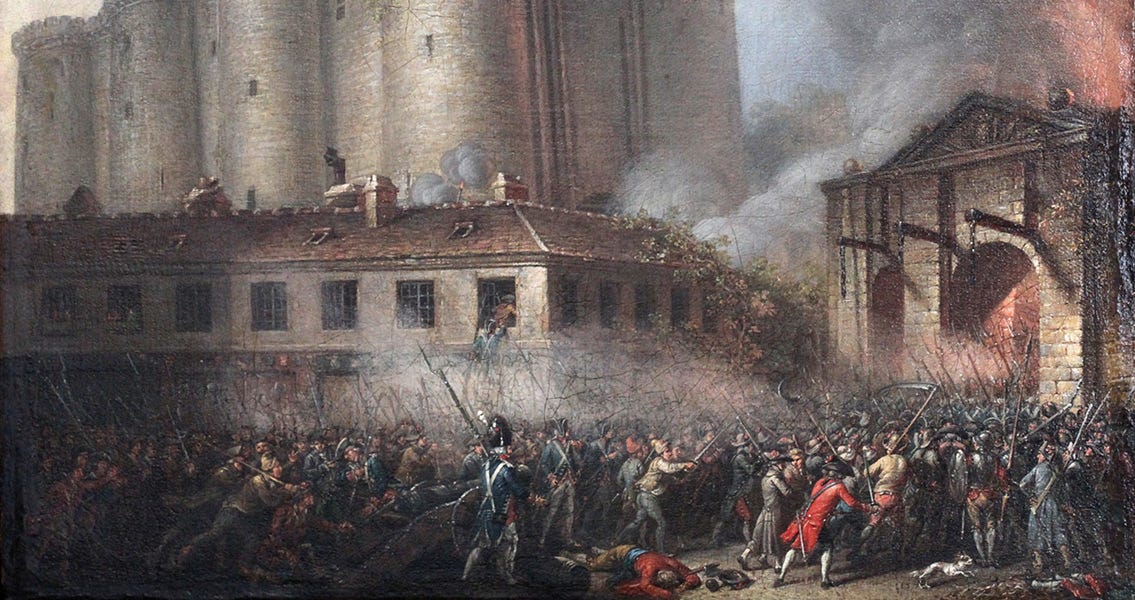
Then came the great apparent rupture of 1789; the French Revolution executed the king and at least attempted to physically annihilate the nobility. In its institutionalised atheism, it repudiated the theological justification for monarchy but it eagerly embraced the increasingly absolutist conception of sovereignty that the monarchy had created for itself.
It absorbed and transferred it to its new conception. Sovereignty would now belong to “the Nation” or “the People,” an entirely abstract notion disconnected from any actual living representative. And under the Nation, all bodies within the state were subordinate and subject. Revolutionary France pushed centralisation much further than the Bourbons had ever managed. Ancient provinces were swept away and replaced with administrative departments. Guilds and corporations were abolished. The Church itself was subordinated to the State, and any priest who refused to “jure” was executed or exiled.
And “Nation States” have been exalted as supreme powers ever since. Just as divine right mandated absolute obedience to a monarch, the modern nation-state demands ultimate allegiance (expressed in conscription, taxation and the concept of national identity) to the new, abstract sovereign entity. The idea finding perhaps its final form in Mussolini’s slogan, “Everything in the State; nothing outside the State; nothing against the State.”
The long siege and final shattering of Catholic Europe
Christianity originally made an astonishing claim about the purpose of human life: man was created not merely to obey human and divine laws but to become holy, to become a new kind of being able to participate, as an adopted heir of God, in the divine life. The Eastern Fathers called this theosis, or (shockingly) “divinisation”5. In the West the tradition spoke of sanctification, eventually called the “Transforming Union”, a fundamental alteration of the individual, in conformity to the “image of God”. The vocabulary varied, but the point was the transformation of all human beings into saints.
This was not originally as it is thought today, an eccentric hobby for unusually excitable nuns. The monastic and ascetic tradition was the foundation of Christian life, and understood that life as an ascent toward union with God. These ideas sit right at the foundation of Christian civilisation. The Desert Fathers, Benedictines, Carthusians, Cistercians and later the great mystical schools all developed systematic methods of prayer and asceticism ordered toward this end.
But institutions under prolonged existential threat change, and beginning in the late Middle Ages, Latin Christendom entered a succession of internal crises from which it never recovered that slowly moved the entire Church away from that exalted purpose. The intellectual fragmentation associated with late medieval nominalism weakened the old Aristotelian/Thomist synthesis of faith and reason. Renaissance humanism increasingly turned the European imagination toward man and the material world. Then the “Reformation” shattered western religious unity altogether.
Then came the wars. We tend to discuss the Protestant revolution as though it were a kind of intellectual tennis match, with theological disagreements involving pamphlets, competing sermons and disputations. Europeans experienced it rather differently. Churches were destroyed, monasteries dissolved, property confiscated, populations massacred or displaced and entire territories forcibly transferred from one confession to another according to the religion of their rulers.
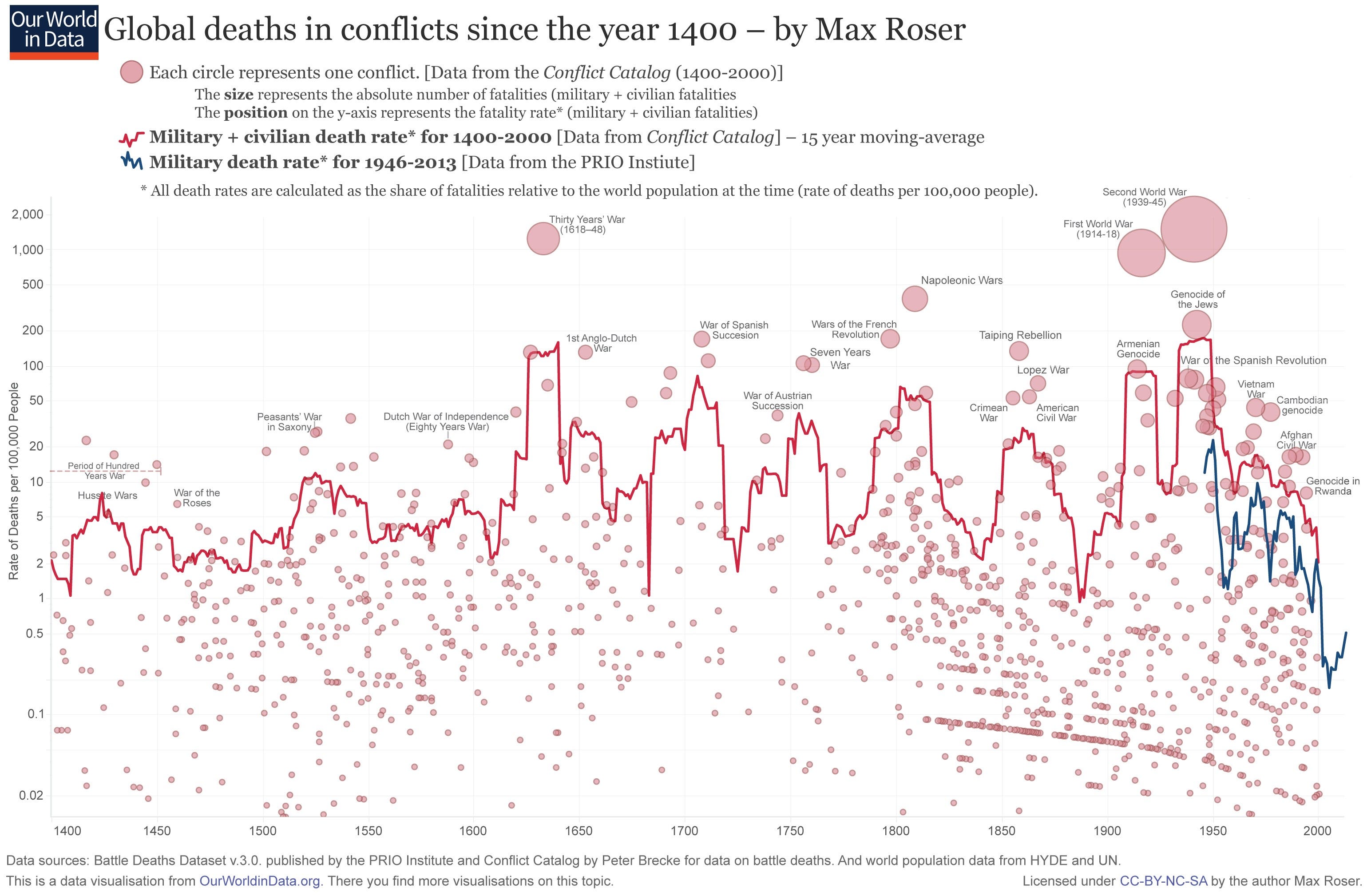
The Thirty Years’ War devastated Central Europe on an almost unimaginable scale. It was, until World War I, the most cataclysmically ruinous example of “total war” the world had ever seen with previously unknown levels of mass civilian deaths. That conflict and its consequences will require a series all on its own, but for our purposes here, it is enough to understand the profound psychological effect of thirty years of religiously inflected slaughter on European political thought. The determination that nothing like it could ever be allowed to happen again became one of the great forces driving the development of the modern sovereign state.
It was at this time that governments began discovering that monasteries represented enormous concentrations of wealth-generating land and economic assets, as well as a totally unacceptable level of institutional independence. Henry VIII’s destruction of English monasticism was only an early and particularly spectacular example. In succeeding centuries, suppression and secularisation systematically destroyed monasteries across Europe.
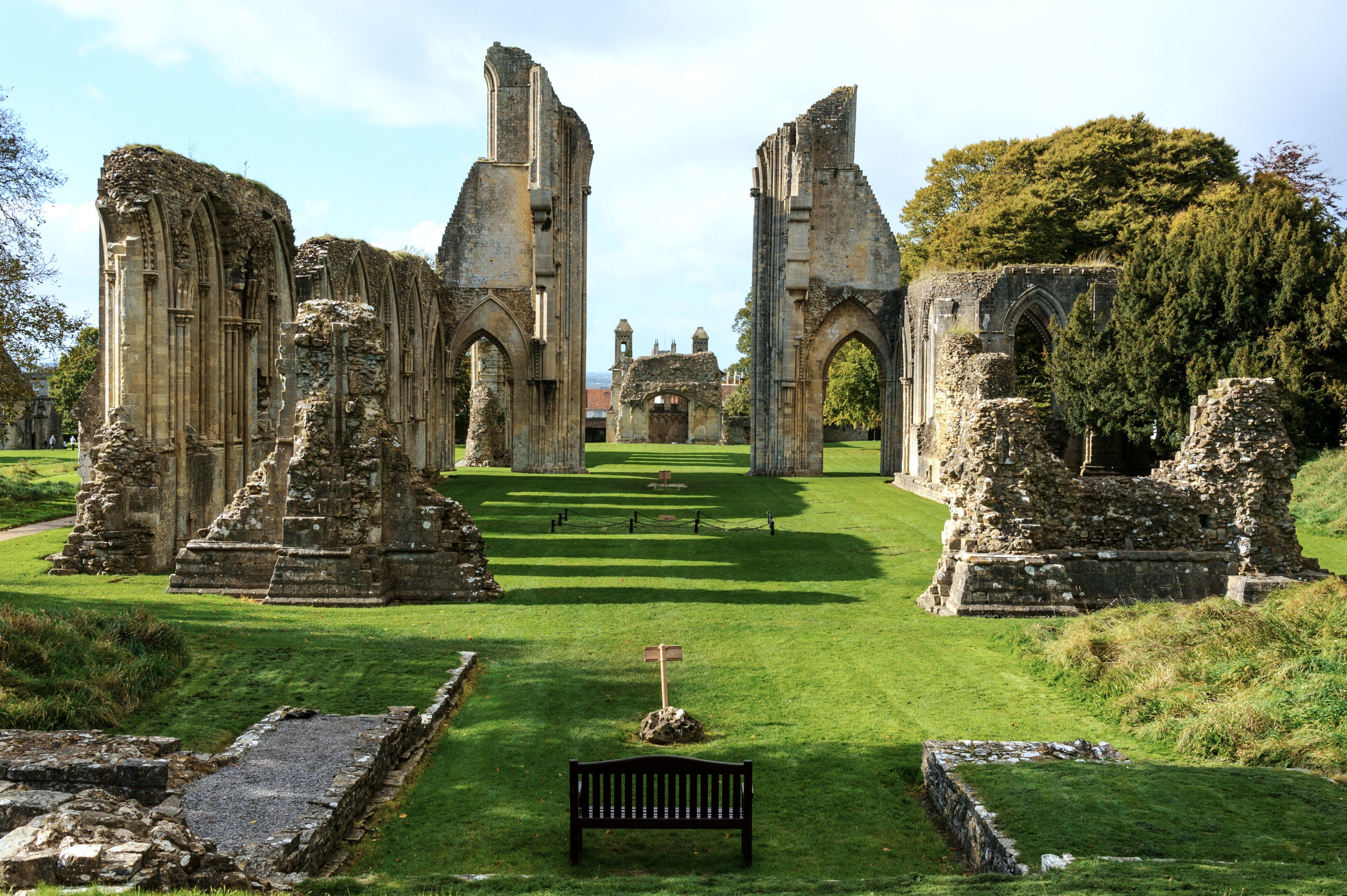
And in that frenzy of grand-scale robbery, something much more important than property disappeared. Monasteries had been the physical infrastructure of contemplative Christianity, as well as the stabilising root system of Christian civilisation. They were the locus points where our civilisation could allow someone to spend forty or fifty years pursuing the pure purpose of human existence. Most histories of the destruction of the monasteries focus on the economic or political fallout, the dispossession of masses of peasants and artisans, and redistribution of farmland and other revenue-generating assets. But monasteries were spiritual generators in which the most demanding forms of Christian spiritual life had been cultivated and transmitted. In spiritual terms, the damage was more like the destruction of a country’s energy infrastructure.
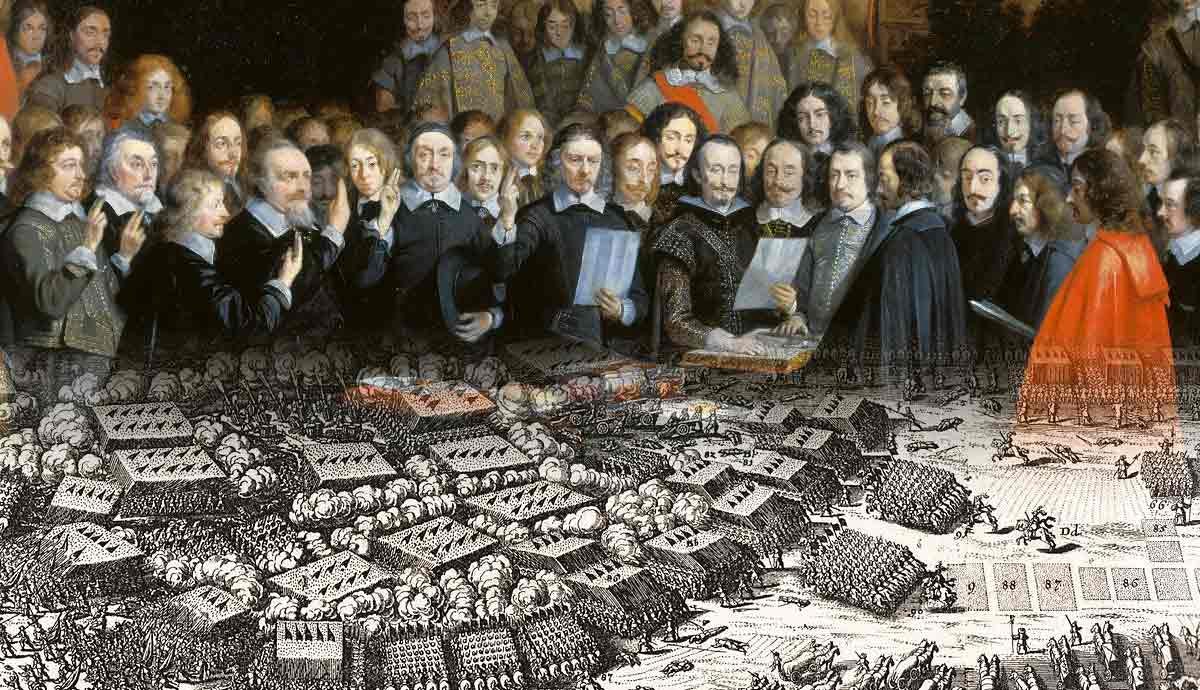
By the middle of the 18th century, Europe, that had been veritably carpeted with monastic lands, had completely changed hands. With that destruction and theft, Rome understood the Church was faced with an entirely different problem from that confronting the ancient Church of the Fathers. The new reality was an existential threat, the real possibility of total extinction.
When an institution is fighting a multi-century war for its very existence, it stops training Olympic athletes of the spirit and starts mass-producing obedient foot soldiers who are given a simplified set of rules and told that deviation from the rules has eternal consequences. This weaponised theology was pointed outward against the Protestant heretics of course, but also inward against the faithful. The pursuit of deep holiness by individuals came to be seen as a potentially dangerous occupation and was inevitably replaced by a desperate rear-guard defense of the bureaucracy as the primary purpose of being a Church.
A Church in survival mode
The Counter-Reformation was extraordinarily successful for the institution in many respects. The Council of Trent and subsequent movements and reforms clarified doctrine and canon law, reformed corrupt institutions and standardised the education of clergy. Its famous proponents6 evangelised vast territories and ancient institutions and produced saints of the highest order.
But under all that reforming zeal, a new kind of ultra-institution was accelerating a grand process of standardisation and centralisation, very much mirroring what was going on in the secular polities. For the faithful, the point of being Catholic now was to be taught exactly what they must believe and exactly what they must do, with rigorous, often militaristic precision.
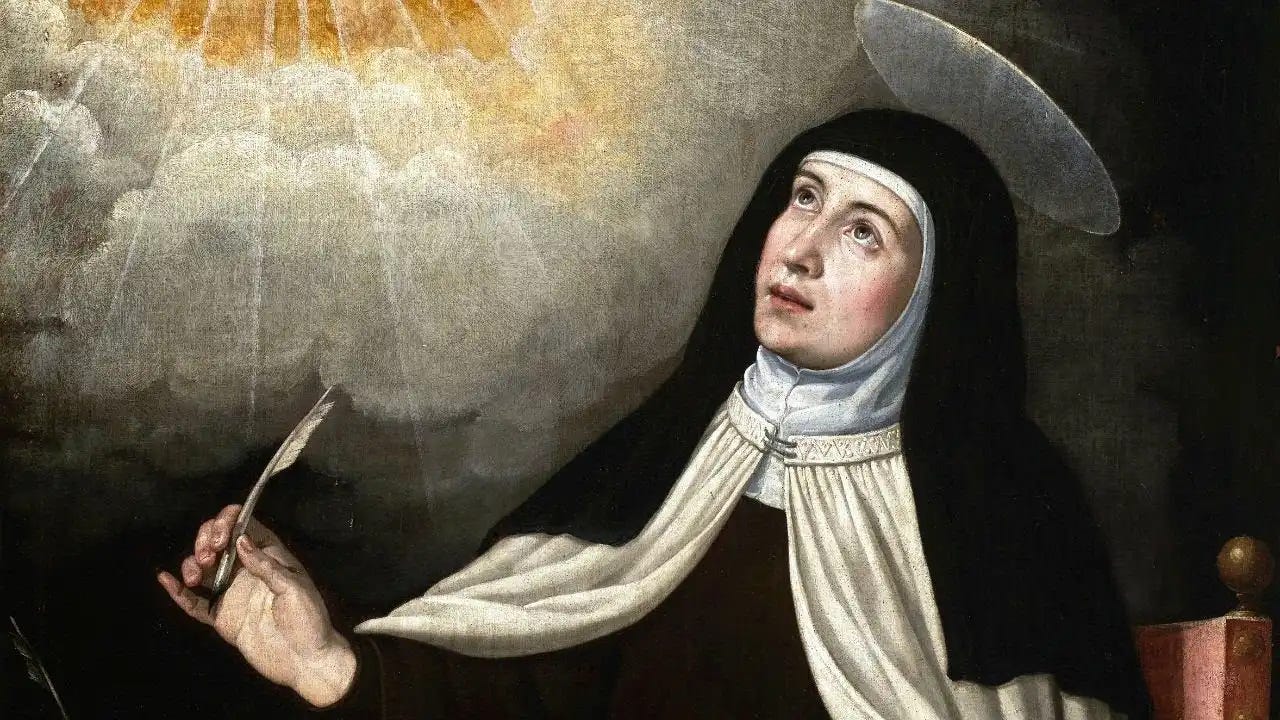
Mystics are notoriously difficult to bureaucratise. Their claim is not to possess an alternative revelation but to have entered deeply into the reality toward which the institutional forms point. But within that deep reality, the institution recedes into petty irrelevance, along with the rest of the world. They therefore have an uncomfortable tendency to expose the difference between the means and the end. And an institution fighting for its survival, surrounded by enemies, the exposed difference presented a public relations problem that could not be resolved.
Next week, in Part II, Hilary will continue by showing how nationalising governments, the French Revolution, Napoleon and the loss of the Papal States drove the nineteenth-century Ultramontane response. And whar the definitions of Vatican I were: producing a papacy of formally unlimited jurisdiction that had, almost simultaneously, lost the last of its temporal power.
The credit must be given: “papal positivism” was first coined about 2005 by my friend Dale Price, back when we were all innocent young Catholic bloggers addressing what we were watching on the news. Dale, a lawyer, has since sadly given up blogging and lives a quiet, anonymous, normal life.
The Early Modern period covers roughly 1500 to 1800. It represents a titanic super-revolution in every aspect of life for all of Christian society. Historians usually connect it to particular epoch-making events: the printing press, the fall of Constantinople, the “voyages of discovery” to the New World, and the Protestant “Reformation”.
Nominalism is a foundational metaphysical theory asserting that universals and abstract concepts do not have independent, objective existence outside of the human mind. It is usually understood in opposition to Aristotelian Realism, that a universal property like “redness” or a category like “humanity” exists as a real, objective entity.
Thinkers like Duns Scotus and William of Ockham argued that God’s will is absolutely free and unconstrained by anything, including human concepts of reason. Under this view, actions are not inherently good or bad; rather, something is “good” simply because God wills it to be so. This is still held by Islam.
Saint Athanasius of Alexandria in his 4th-century classic treatise, On the Incarnation, wrote: “The Word was made man, in order that man might be made divine.”
Sts. Francis de Sales, Robert Bellarmine, Charles Borromeo and the Carmelite reformers Teresa and John come to mind.

This is excellent. Looking forward to the follow up.
Here's to hoping you might consider in the trajectory of Papolotry the thoughts of Frs. Romanides, Zizioulas and of course Kallistos Ware, Alexander Schemann and John Meyendorff, all of whom wrote on your topic. https://www.johnsanidopoulos.com/2021/11/father-john-romanides-his-life-and.html?m=1
https://www.mystagogyresourcecenter.com/search?q=Zizioulas&m=1