


The word craft has been captured by aesthetics.
Say it aloud and the image arrives uninvited: a workshop with good light, a man with calloused hands, wood shavings on the floor. The craft is recognisable by its props. It signals something about authenticity, about resistance to abstraction, about a life lived in contact with real things.
This is not formation, but a costume.
The mistake is treating craft as a category of material. As if the difference between a craftsman and a knowledge worker is the substance their hands touch. As if writing, software development, or marketing are somehow exempt from the same demands that make cabinet-making serious.
They are not…
A craft is not defined by its material. It is defined by the presence of a standard external to the practitioner: one that answers back regardless of his intentions, that cannot be negotiated away by consensus or softened by encouragement. A bad joint opens. A bad argument collapses. A bad piece of code fails in production. A bad campaign produces silence where response should be.
The material varies, but the structure is identical.
Which means the question of formation applies equally to every domain. And the failure of formation is equally visible in every domain: in the writer who has never been seriously edited, in the developer who has never worked under a master who could read his code and name exactly what was wrong, in the marketer who has optimised for metrics that connect to nothing real.
There is fragments in every field.
What real formation looked like
The guild did not teach a skill. It produced a person.
The apprentice who entered a Flemish weaving workshop in 1480 did not pay for access to information. He submitted to a structure. He worked under a master whose reputation was staked on the quality of what left the workshop. He was corrected, repeatedly, by someone with no interest in flattering him. He was held to a standard he did not set and could not renegotiate.
The progression from apprentice to journeyman to master was not a curriculum. It was a relationship with a standard, sustained over years, mediated by someone who had already met it. The journeyman spent years working in different workshops precisely because exposure to one master was insufficient. He needed to encounter the standard in multiple forms, under different hands, before he could be trusted to embody it himself.
When he finally produced his masterwork, it was not assessed by his teacher. It was assessed by men who had never met him and had no reason to be generous.
The Paulaner monks who brewed beer in Munich from 1634 onwards were not pursuing craft as identity. Their rule required labour. The discipline of the work, the submission to physical constraint and to standards of quality that predated them, was inseparable from the formation of the person performing it.
The beer was excellent because the structure that produced it demanded excellence. Excellence was not the goal, rather the evidence.


Both models share the same architecture:
A standard external to the practitioner.
A corrector with standing to correct.
Time sufficient for the standard to be internalised rather than merely performed.
A community that can verify the result.
Remove any one of those four elements and what remains is not formation. It is education, at best. Performance, at worst.
What passes for formation today
The weekend course offers information delivered to a group of strangers who will never see each other again, assessed by no one, held to no standard the instructor is himself required to meet. It is useful the way a good book is useful. It is not formation.
The online cohort (Discord etc.) adds social pressure and peer accountability to the same structure. This is an improvement, yet not sufficient. Peers cannot correct you in the way a master can, because they do not yet embody the standard themselves. The blind cannot lead the blind toward sight.
The certification course offers a credential. Which is to say it offers the appearance of a standard having been met. In most cases, the standard is designed to be meetable. A standard designed to be meetable by the people paying to meet it is not a standard, but a transaction.
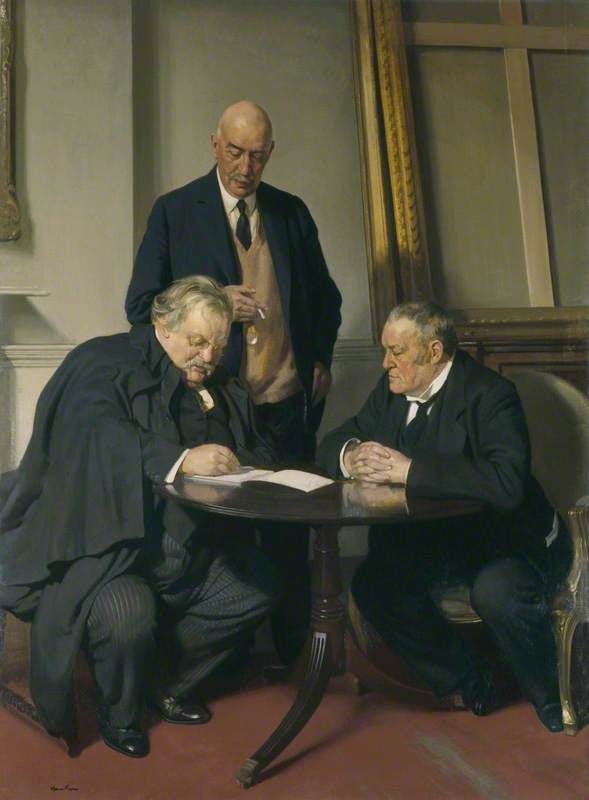
The mentor who never corrects you is not a mentor. He is just part of an audience. Encouragement without correction is flattery. And flattery does not form, it only confirms whatever was already there.
None of these are fraudulent, exactly. They transfer information, build networks, and provide structure where none existed before.
But they do not produce the thing the guild produced, the thing the monastery produced, nor the thing every serious formation structure in European history produced… which is: a person who has been genuinely changed by sustained contact with a standard he did not set.
The reason they cannot is not cynicism or incompetence. It is structural. Real formation requires a corrector with genuine standing, a standard that cannot be softened, and time long enough that the practitioner cannot simply endure the correction without internalising it.
Those three requirements are expensive, slow, and uncomfortable for everyone involved. They do not scale, and do not produce good marketing copy.
And so they are replaced by things that do…
You now have the diagnosis. You know what real formation requires and why most of what passes for it today fails the test. What remains is the practical question: how do you evaluate what is actually in front of you — across any field, at any price point?
The framework below gives you four criteria you can apply immediately to any teacher, workshop, or discipline. Not organised by material. Organised by whether the standard is real.
The framework continues for paid subscribers.
