


Heritage Standard is a paid publication for those who inherited a civilisation but not the instruction manual. Every week: a free essay naming what was lost, and a paid essay showing what to do about it. (This is a paid post)
The first time I stood at a hive with him, I was wearing full protective gear, gloves stiff and unfamiliar, the veil slightly clouded by my own breath. He had none of it.
He is ninety-two years old and has been keeping bees for longer than most people I know have been alive. He learned from someone older than himself, who learned from someone older still. The knowledge did not begin with him, and it will not end with him.
He moved through the apiary without hesitation, not as a display of confidence, but with the ease of repetition. The bees did not ignore him. They adjusted to him, as though his presence were already accounted for.
He did not explain what he knew. He showed it in decisions that would have been invisible to anyone without the context to see them. When to open a hive, when to leave it alone, how to read the mood of the colony before anything had visibly changed.
He returned every season because the work required it. Not when it was convenient, and not when he felt inclined. Over time, that requirement shaped him.
I have not met a freer man.
The problem is not loneliness but the absence of obligation
Most people describe their condition as loneliness, but I would say that is not precise enough. Loneliness is a feeling. And feelings fluctuate. The more stable problem is structural.
You do not feel alone because you lack options. You are that way because there is very little in your life that requires you to be present at a particular place, at a particular time, regardless of how you feel about it that day.
Over the past fifty years, the institutions that once created those requirements have either been dismantled or reduced to voluntary participation. The parishes, the guilds, the association, the regular shared meal, the fixed gathering tied to a calendar rather than preference. What remains are choices, and choices, however abundant, do not bind.
The result is a form of life in which almost everything is optional, and therefore very little holds.
What obligation actually does
Obligation is often treated as a burden, something to be minimised or escaped. That interpretation misses its function.
The word itself derives from the Latin obligare, meaning to bind. Not to imprison, but to fasten one thing to another in a way that creates continuity.
A person who is bound in this sense is not constrained so much as located. There is somewhere he is expected to be, people who notice whether he arrives, and consequences, however small, if he does not.
Remove that structure and what remains feels like freedom, but behaves more like weightlessness. It becomes difficult to commit, difficult to build, and difficult to be known in any stable way.


What we lost
For most of European history, obligation was embedded in ordinary life.
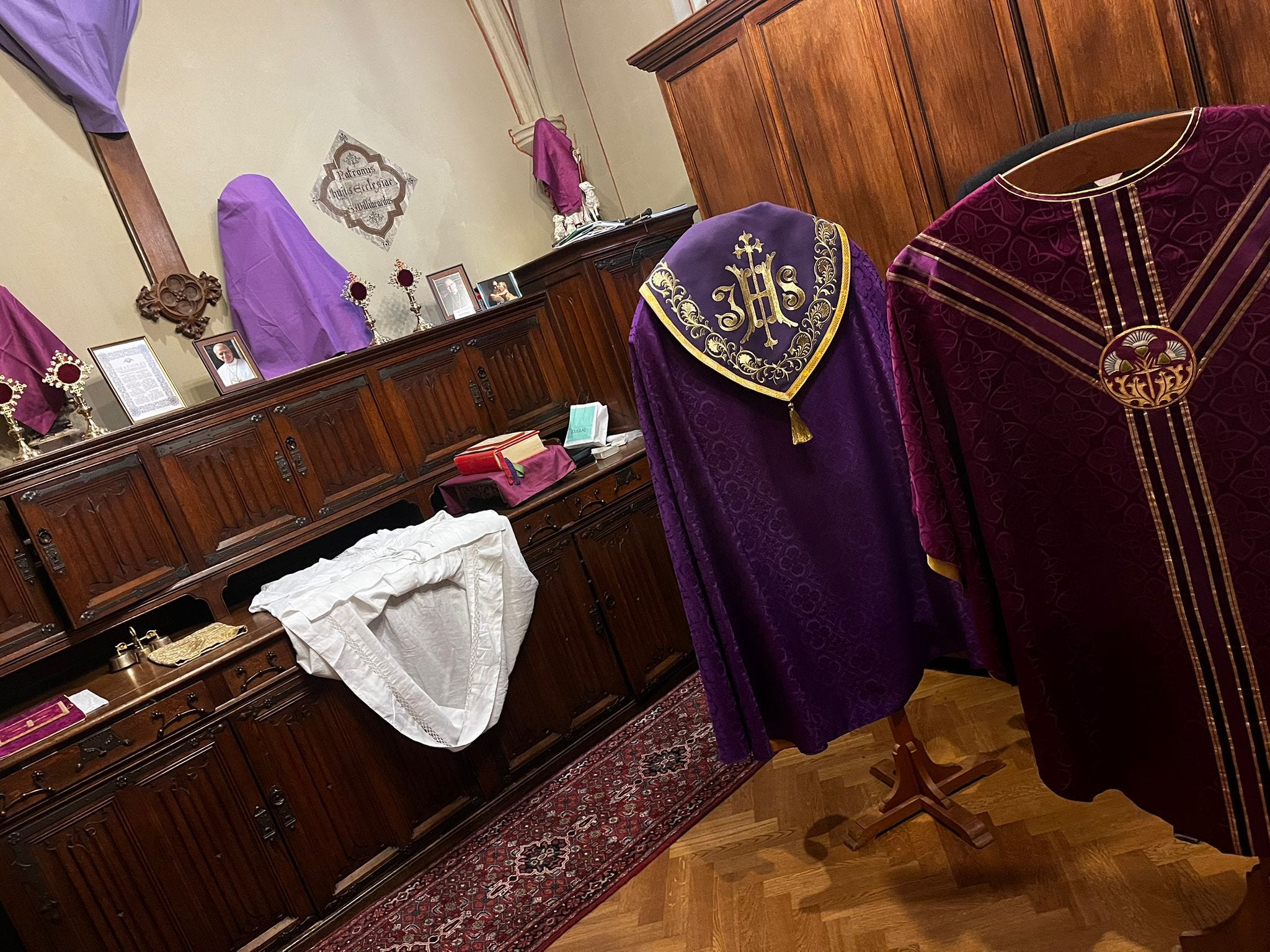
The parish structured time through a shared calendar of attendance and observance. The guild structured work through standards that could not be unilaterally redefined. The confraternity structured social and charitable life through repeated, accountable participation.
Membership implied requirement. One did not attend when it felt meaningful. One attended because that was what belonging entailed.
Across the eighteenth to twentieth centuries, these structures were first weakened and then, in many cases, removed. Legal reforms dissolved guilds and curtailed religious institutions. Cultural shifts reframed obligation as something suspect, something in tension with personal freedom. What survived was the language of community without the corresponding cost.
We retained the appearance, but discarded the mechanism.


The Result in Practice
Consider the last week of your life in its ordinary detail.
Not the highlights, but the structure of it.
Where did you have to be, regardless of how you felt about it? Who was expecting you in a way that would have registered if you failed to appear? What, in your current life, depends on your continued presence rather than your intermittent interest?
It is possible to move through an entire week with no real answer to any of these questions.
If that is the case, the issue is not emotional. It is structural. There is too little in your life that binds you to anything beyond preference, and preference does not hold under pressure.
You do not need more options. You need something that does not yield to them.
There are still a small number of structures capable of doing that. Most people will not choose any of them, even when they recognise the need.
If you are going to, it has to be deliberate.
