

Kitsch is King?
How Sentimentality Replaced Catholic Worship

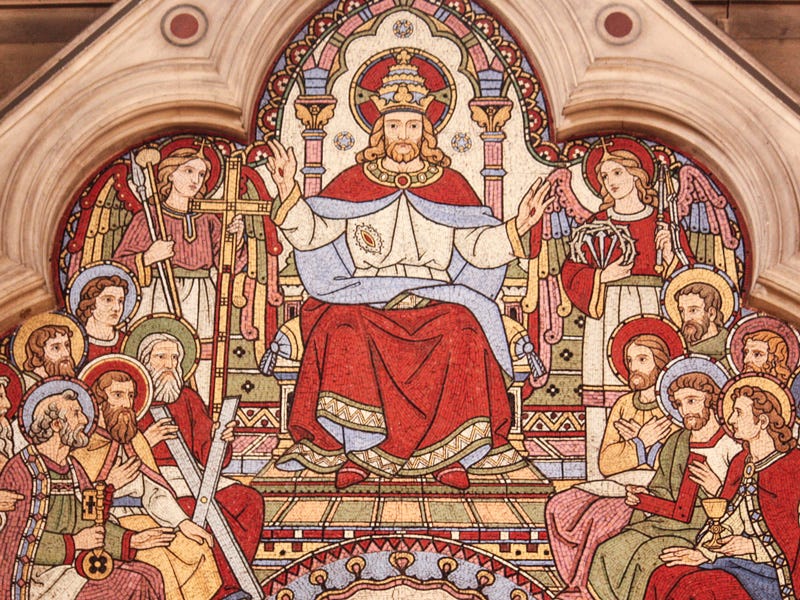
This Sunday, Catholics will celebrate the Feast of Christ the King.
At least those using the pre-1969 calendar. The modern version is Catholic kitsch. I’ll get to that…
Everyone’s talking about a Christian revival. But when you walk into a church, you hear hymns that sound like pop songs. Sanctuaries that look like stages. It’s a mood the Apostles wouldn’t recognise: soft, casual, and sentimental.
Everyone proclaims “Christ is King.” Catholics. Protestants. Groypers. But instead of kneeling, they just want to feel good about God, but more so about themselves.
But the original Feast was never sentimental. It was a declaration that no ideology, parliament, or culture stands above the throne of Christ.
A Forgotten Kingship
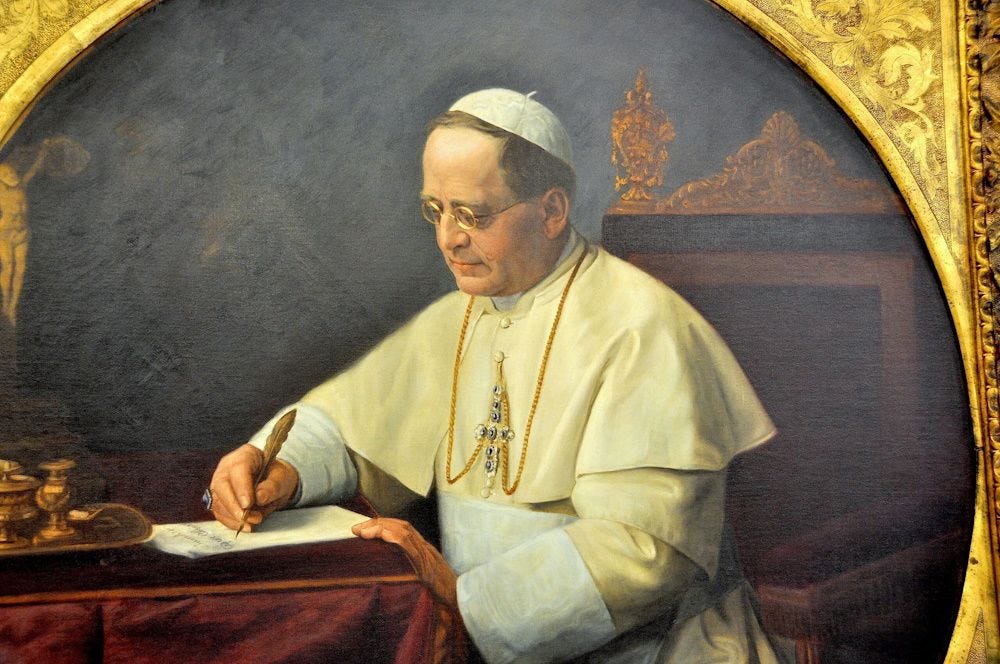
The Feast was instituted in 1925 by Pope Pius XI through Quas Primas. It was just after the Great War, and Europe was drunk on nationalism, socialism, and fascism. Governments demanded the loyalty once owed to God. Like they still do, but only worse.
The Feast was a means of resistance. Back when the Church still dared to criticise the world.
“It has long been a common custom to give to Christ the metaphorical title of ‘King’… but we must go further.” - Pius XI, Quas Primas, 1925
The Pope meant it literally. Because Christ doesn’t reign only over hearts but over all laws, economies, and nations. His reign is there, whether governments and people acknowledge it or not.
Nowadays religion is seen as private and the public as neutral. But neutrality does not exist. Christ either reigns or someone else does.
The Feast of Christ the King was the Catholic Church’s last public act of resistance.
A big “No” to the modern world’s attempt to dethrone God.
The Modern Betrayal of the King
The placement of the feast on the last Sunday of October was deliberate. The feast is held on the Sunday before All Saints. Meaning: His kingship is to be proclaimed NOW. Before the feast of His victorious souls in heaven. After All Saints’ Day comes All Souls’ Day. The sequence declared His reign over both the living and the dead.
Vatican II ruined this Feast when Paul VI moved the feast to the final Sunday of the liturgical year. His reason was to highlight Christ’s an eschatological kingship. Meaning His reign at the end of time. Which is Protestant theology.
The classic Feast shouted that He reigns now. After Vatican II it became someday. Or maybe He’s not there at all, we can’t know.
The feast became kitsch, as it’s a pleasing imitation of a doctrine, but emptied of its militant nature.
Kitsch Christianity Mirrors the World
A King does not consult, but commands. Christ is King of all things, so worship and liturgy too.
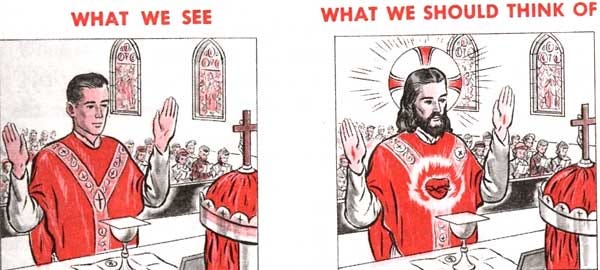
Traditional Liturgies, like the Tridentine Mass, the Ambrosian Rite, Lyonnais Rite, Mozarabic Rite etc. embodied this truth. There are fixed rubrics, prayers and orientation. A single priest is acting in persona Christi. Every gesture he makes confesses that God is sovereign and man is subject. Or a tool of God, in the case of a priest.
When the Novus Ordo (New Liturgy) came in 1968 the authors claimed to have recovered primitive simplicity (Ressourcement). But in reality, they produced a liturgy that mirrored modern democracy:
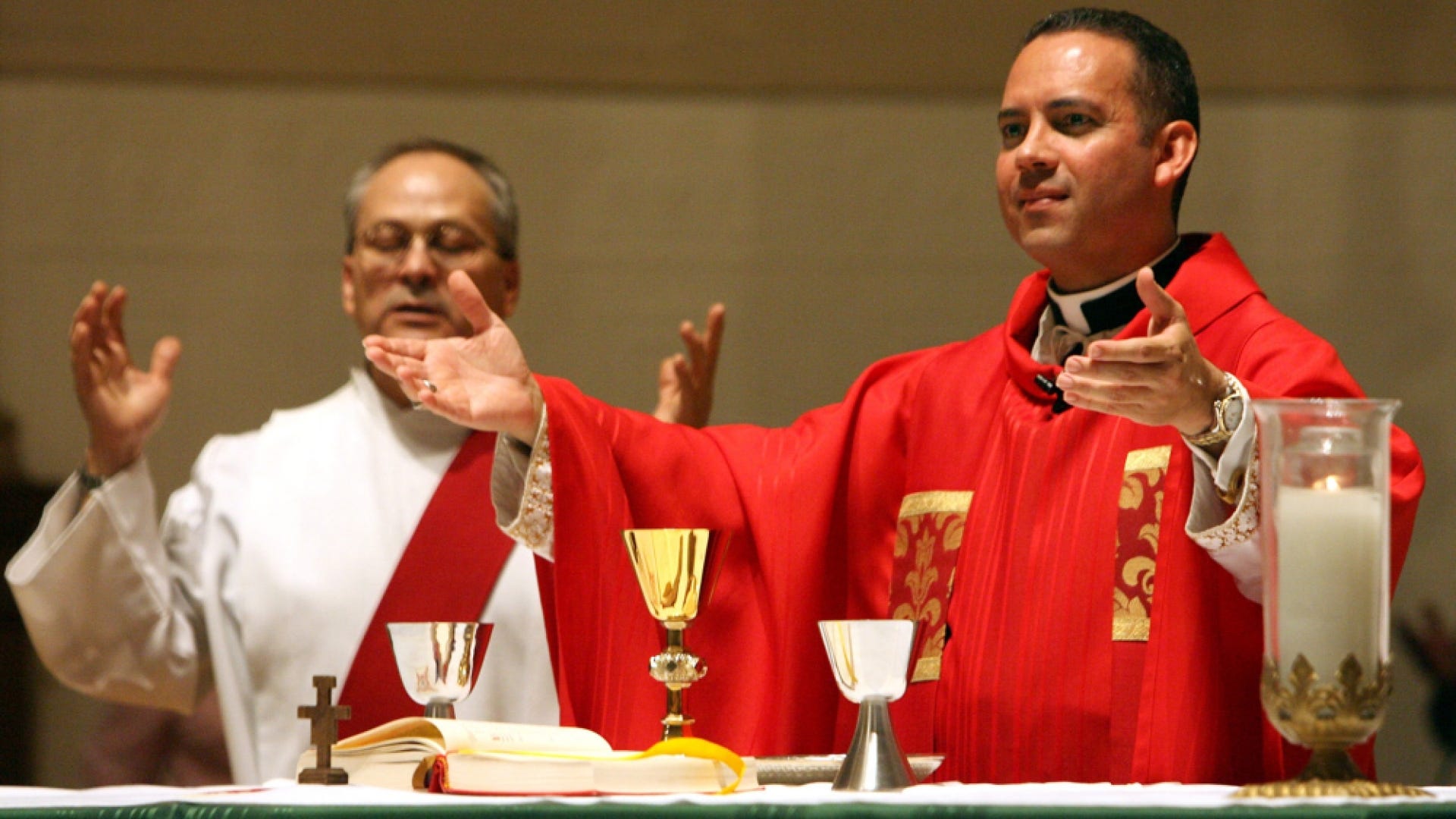
• The priest facing the people, with a worship service that became a performance.
• The altar became a supper table, and the sacrifice softened into fellowship.
• The vernacular was introduced and laity “actively participate” by walking through the Church during the service to greet each other.
Liturgy became man-centered. The same thing happened in Protestant churches, where the pulpit and the sermon of a man (or woman nowadays) is the main point.
Catholic worship ceased to form the faithful and began to reflect them.
The Rise of Catholic Kitsch
I see the state of Catholicism as the state of the world. Later I’ll explain how Kitsch Catholicism relates to Protestantism.
But first the basics of Catholic Liturgical Life, which is: Lex orandi, lex credendi, lex vivendi: the law of prayer is the law of belief and the law on how to live. Yet when the form of prayer changes, the belief changes with it.
In Traditional Rites God is transcendent and to be appeased. In the new rite they pray for an accessible and affirming God. But you cannot pray one way and believe the other. That’s also why post-Vatican II conservatism is a scam.
And thus Catholic kitsch: a religion reshaped in the image of sentiment. And of course there’s been kitsch before: like Lourdes Statues etc. But those did not aim to crack down traditions.
Kitsch is not just having bad taste, but it’s form separated from truth. Real art and real liturgy conform to reality. Kitsch on the other hand conforms reality to our desires.
The traditional Christ King feast declared: Conform yourself to Christ’s kingship.
While the modern feast declares: Christ conforms Himself to your feelings.
Inversion is the soul of kitsch.
Hypersentimentalism and the Religion of Feeling
Modern Christianity has confused sentimentality with devotion.
It’s followers expect worship to comfort us, the music to move us, and preaching to affirm that God likes us just as we are. That’s why in modern Catholic Churches we can barely speak of sermons, they’re rather a chit-chat about what was on the news.
It’s all about being pleasant. Nice. Build on intentions. But a hypersentimental faith is not love. Faith turns into self-admiration with hymns through sentimentalism.
Because love adores the Good even when it hurts the ego. Sentimentality, on the other hand, loves the self and calls it being spiritual.
A culture that fills sanctuaries with guitars empties confessionals. The worship becomes emotional therapy, and repentance feels like bad vibes.
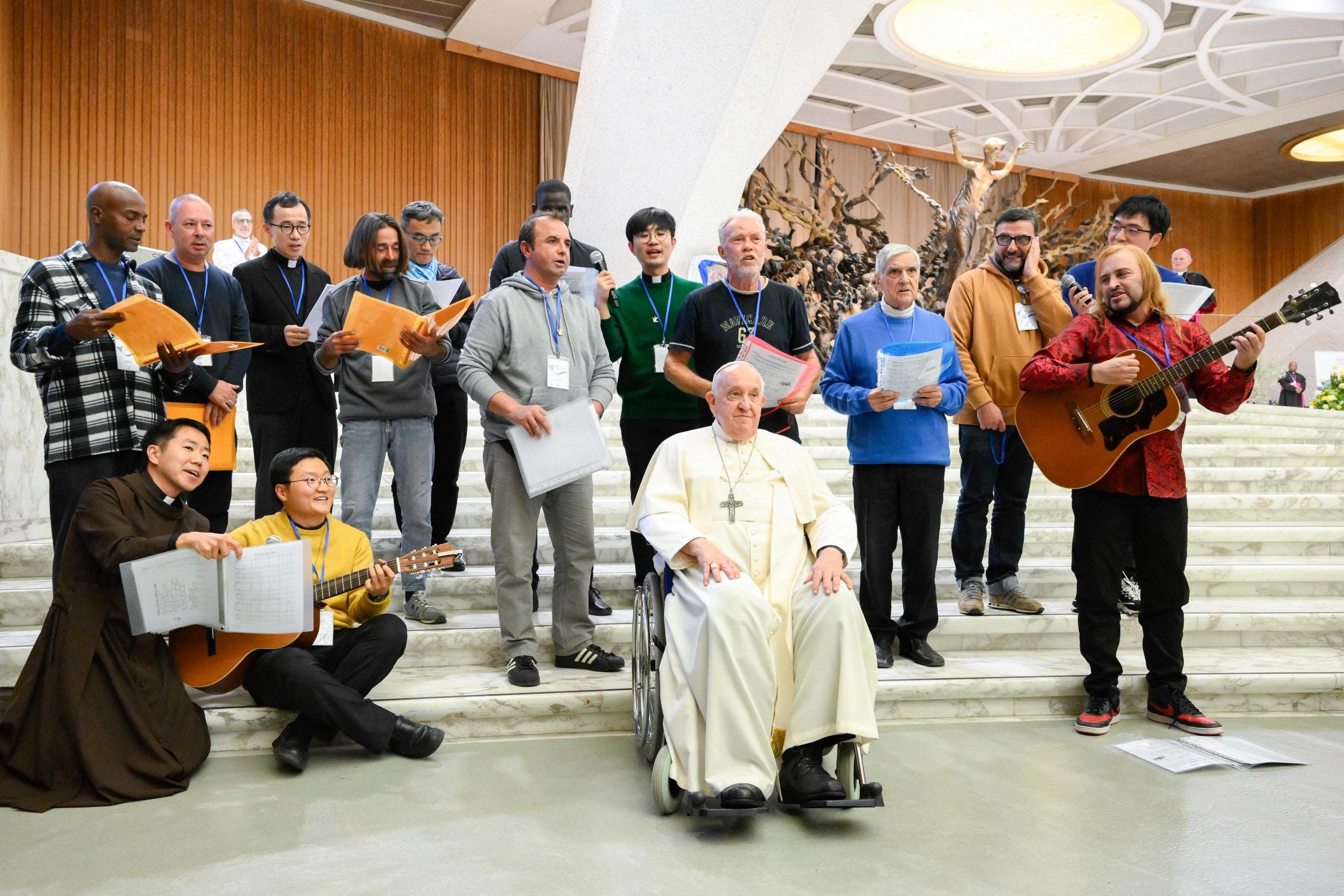
Our God of Calvary is not “nice.” He is holy. And His holiness always burns before it heals.
The Protestant Roots of Catholic Kitsch
Protestantism not only disenchanted worship, but disenchanted the world.
It denied that matter could be sacred. That stone, linen, gold, and wood could carry spiritual meaning. It's rupture extended far beyond the church walls.
As I said before, nationalism too became kitsch once identity was divorced from inheritance and embedded tradition.
In the same way polyester flags pretend to represent a nation (while being made in the factories of its cultural enemies), so too do felt banners and acoustic guitars pretend to represent Catholic worship. But they echo Protestant aesthetics.
In both cases, the sacred has become just a style (the reverent Novus Ordo). But style without substance is kitsch.

What We Actually Lost
Latin, lace and gold are the least important things that were lost. That’s why I hate terms like ‘the Latin Mass’. While Latin has it’s importance, the main crisis is in the liturgy and practice of the faith.
We lost:
1. Propitiation: God’s justice is satisfied through sacrifice: fasting, penance, being silent, controlling your impulses. A modern man finds this offensive.
2. Adoration: Worship owed because God is God, not because it feels uplifting, or because you understand it.
3. The Divide between Sacred and Profane: When the altar rail vanished and lay hands touched the Host, sacrality became familiarity. And what’s familiar breeds contempt.
4. Hierarchy: The priest acts in persona Christi, as a mediator, not a host. If you remove that, and install laity for communion distribution, readings etc., the liturgy becomes a community meeting.
5. Formation Beyond Comprehension: The old rite formed souls through posture and silence. While the new rite seeks immediate emotional clarity, therefore forms nothing deeper than emotion.
The Metaphysics Beneath the Ruins
At root we’re not in a liturgical but metaphysical crisis.
Where traditional Catholicism learned that God is the measure of all things. And modernity that man is the measure of all things.
When man becomes the measure, worship should please him to be considered “authentic.” So the liturgy adapts to his mood, rather than conforming him to grace.
It’s the Promethean inversion, where man storms heaven, demanding that God speak his language, share his tastes, reflect his emotions.
But Christ, Our King declares these words in the Our Father:
“Thy kingdom come, Thy will be done.”

The Traditional Mass as Antidote
The cure for kitsch is not nostalgia but truth.
Traditional Liturgy refuses to flatter you. It will not ask how you feel. You’re commanded to kneel.
Because it teaches through form:
• God is transcendent: Silence and Liturgical language (like Latin) proclaim the Otherness of the Divine.
• You are NOT the center of the universe: The priest faces God, and not you.
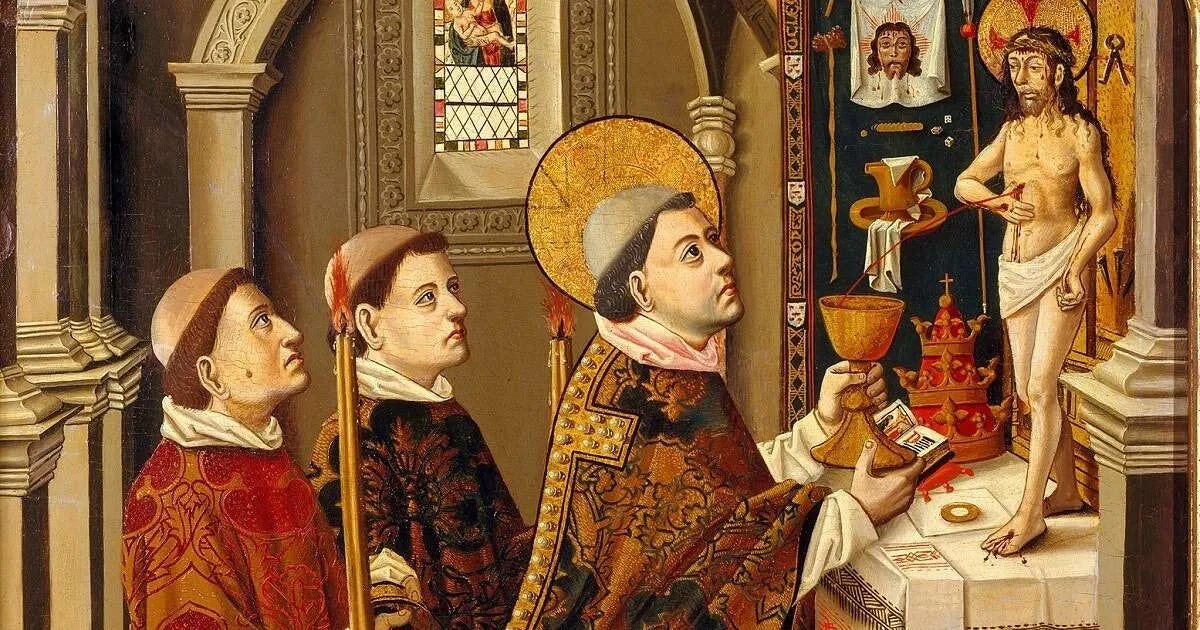
• The altar is Calvary: The Mass is sacrifice, not a supper with friends.
• The hierarchy is to be respected: The priests’ mediation is sacramental. It comes from God Himself.
• We owe God our worship: Our own feelings are irrelevant. Submission and obedience is what faith is.
Liturgy is not there to soothe your emotions. It trains our souls. It re-orders us to reality. And it makes kitsch impossible because it refuses to make you comfortable.
The Restoration of Kingship
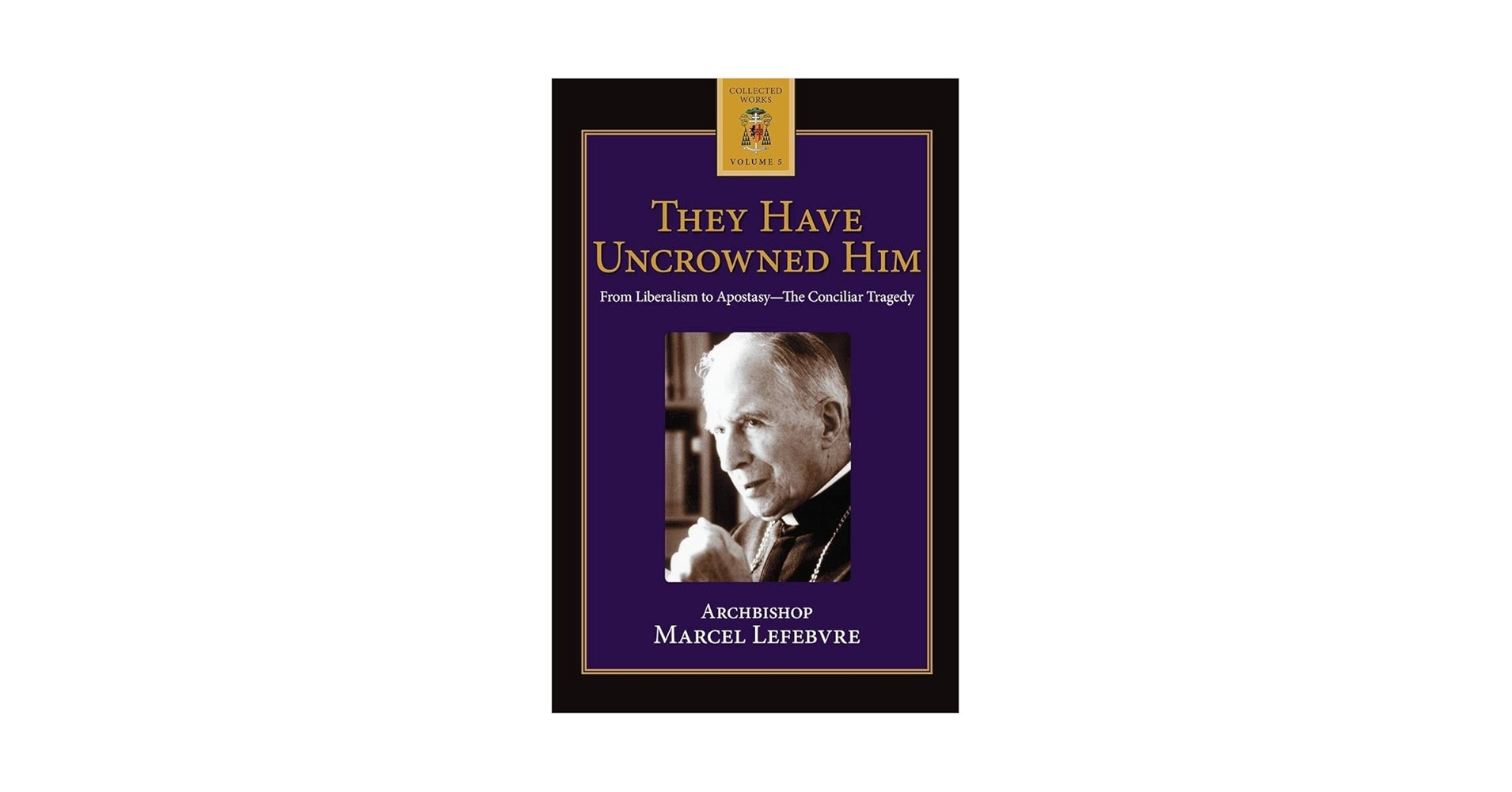
Quas Primas was the Church’s declaration of war on secular liberalism. The new feast, moved and softened, and became the Church’s gesture of détente.
But if Christ does not reign in our sanctuaries, He will not reign in our cities. Nor in our hearts. The world cannot believe in a sovereign God when His own people worship as if He were their peer. We see this happening with royal families too, once they’re too close to the people, they lose their power.
So every sentimental hymn that turns the Mass into self-expression is a small act of anarchism against the Kingdom of Christ.
The Mass is not where you express who you are. It is where you forget who you are before Who Is.
-Robbert