Have you ever walked through the old quarter of any European city; Amsterdam, Bruges, Bologna, Edinburgh etc. and felt something you could not name? And when you crossed into the postwar expansion that feeling reversed…?
There was no training required for this. The body registers it the way it registers the difference between a quality shoe and a cheap one before you gave looked at the sole.
Then some doofus tells you the glass tower is interesting. Innovative! That beauty is subjective! Your preference for old buildings is just nostalgia, sentiment, and your inability to accept change.
But you cannot argue back. You have the instinct, but lack the language.
That language exists, and is not that hard…
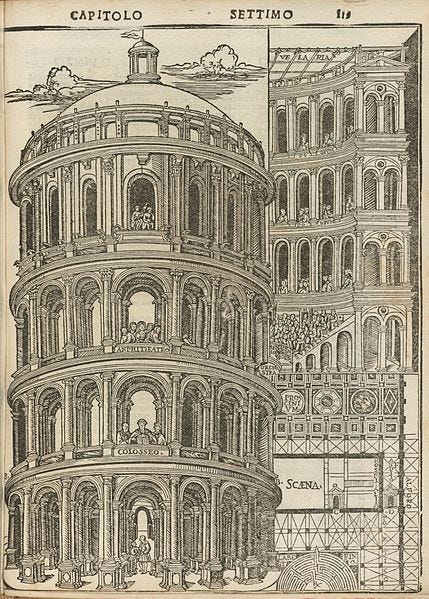
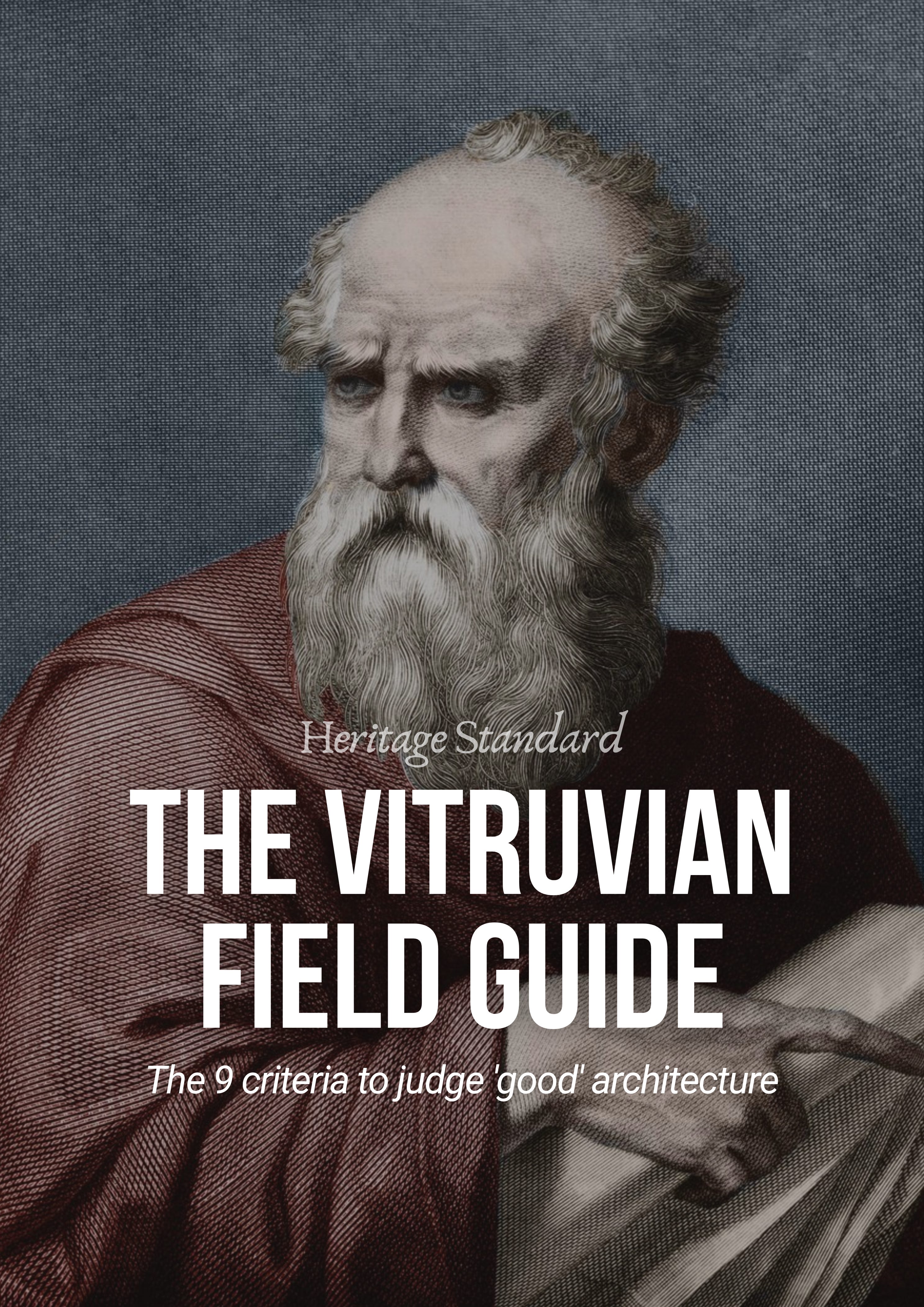
In 25 BC, the Roman architect and engineer Marcus Vitruvius Pollio wrote De Architectura, the oldest surviving architectural treatise in the Western tradition. In it he named three criteria by which any building could be judged: firmitas, utilitas, venustas. Which loosely translate to: strength, usefulness, and beauty.
Every European building tradition for the next two thousand years: Romanesque, Gothic, Renaissance, Baroque, Neoclassical etc. worked within these terms or argued directly with them.
They are not a matter of taste and preference. They are a standard.
Most modern art styles did not evolve from this tradition.
Ornament was declared dishonest. Permanence became reactionary. Beauty became suspect. Architecture was reduced to an idea and industrial process.


The buildings that followed are the buildings you already recognise.
You were not wrong to feel what you felt. You were simply missing the basic vocabulary.
The Vitruvian Field Guide below learns you that vocabulary: nine observable criteria derived from firmitas, utilitas, venustas. Each is a question you can ask while standing in front of any building, in any city, without training.
The criteria follow. (Become a member.)