


I tried to say the Rosary alone on a Tuesday and lost the thread by the third decade. Not the words… I have the words by rote, but the shape of the thing, the reason a grown man kneels by himself in an empty flat and moves beads through his fingers rather than reaching for the podcast that would fill the same fifteen minutes with less friction and no cost. My hand went toward the phone on the nightstand before I caught it. Three seconds. That is the whole confession.
There is an icon of Our Lady of Perpetual Help in my room, given to me by Fr. De Beer, and I noticed, the way you notice a wound once the adrenaline drops, that I dust it more often than I ask for her perpetual help. I own the icon, but have not built the practice of strong devotion to it.
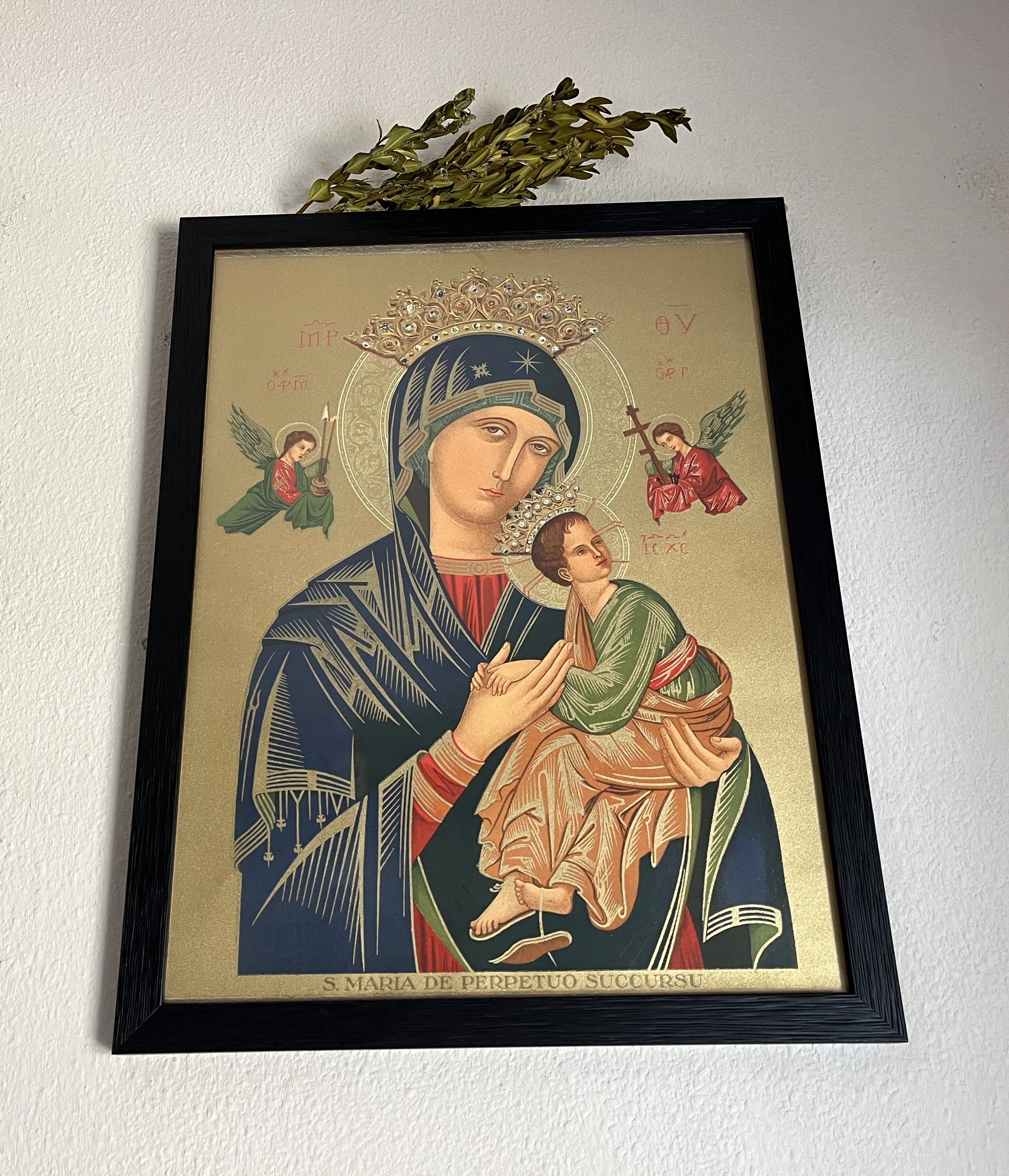
This is a part that should sting more than it does. I have no wife or children, so no household of my own yet to disappoint.
Bu I am running an experiment on an audience of one, and I still cannot hold a fixed discipline through a single ordinary evening. If the practice cannot survive contact with nobody but myself, it will not survive contact with a wife’s exhaustion, a child’s fever, a Tuesday that runs late.
A man already leading a family does not get my excuses. He has crossed a threshold I have not yet, and the people around his table are watching him fail or win in real time.
This is a 6-step practice I myself will use to prepare for this…
First, the mechanism
Belief without practice cannot survive the next generation. It survives the man who holds it, but dies in his children, because he handed them a conclusion instead of a habit, and a conclusion is exactly the thing a grown child feels free to reconsider. This is why a lot of children of ‘trad’ parents eventually leave the Church.
This gap is not laziness, and is not even personal. It is the output of a life (married or not) that has stopped choosing its content on purpose and started defaulting to whatever costs least effort to install: e.g. the algorithmic feed instead of the fixed evening rite, the food delivery app instead of an inherited recipe, the therapeutic vocabulary of self-care instead of the older vocabulary of duty and station.
None of these defaults announced themselves as replacements, they arrived dressed as convenience. And convenience is precisely the register in which a household, or a single man rehearsing for one, stops transmitting anything on purpose.
The same week I lost the thread of my own Rosary, Spanish authorities were reporting roughly fifty thousand crossings into Ceuta in a single day, the largest movement of that kind the enclave has recorded.


In August of 1415 a Portuguese fleet of some forty-five to fifty thousand men crossed the same strait in the other direction and took the city by nightfall.
That symmetry is not an argument about policy, but evidence that the weight a serious man feels about the diminishment of his own civilisation is not a private neurosis manufactured by algorithms to keep him agitated.
The numbers are real and they rhyme across six centuries. What has changed is that the man who feels the weight of that rhyme is handed a script in which his own worry, not the condition producing it, is treated as the disorder requiring management.
We are told to examine out anxiety.
Because the pressure that reaches the strait also reaches the household.
A household, or a man preparing to run one, that cannot say why his own traditions, like evening prayer matter, that keeps no fixed hour, follows no calendar shaping his year, and transmits no skill deliberately from one hand to the next, has already lost the argument before any external pressure ever arrives.
Demographic replacement is a downstream problem. A civilisation that can no longer transmit itself is the upstream one, and it was hollowed out silently, by nobody’s decision in particular, long before the man at the centre of it noticed the icon on his own wall had become a decoration.
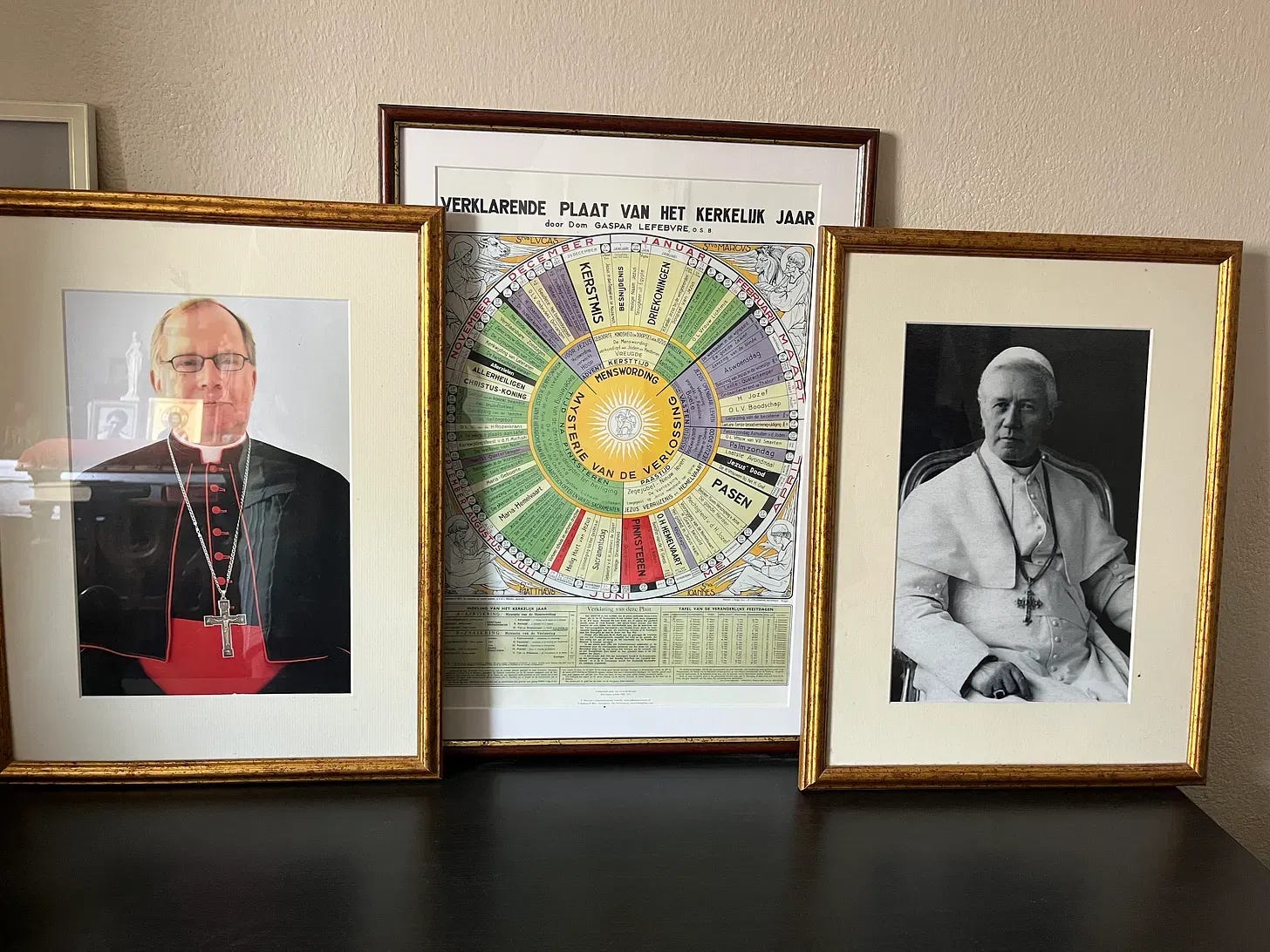
What was a standard that held?
In 1942, a young Irish-American priest named Patrick Peyton, recently cured of tuberculosis and convinced the recovery was owed to the Rosary, began what he called the Family Rosary Crusade.
His method was almost insultingly simple:
One fixed time each evening
One fixed practice: 5 decades of the Rosary, said aloud, together, led by the father
One slogan, repeated until it became structural rather than sentimental: the family that prays together stays together.
Peyton built radio programmes and later television specials around this idea, and he filled stadiums on several continents, drawing crowds in the hundreds of thousands. At a single rally in Manila in 1985, he draw close to two million people.
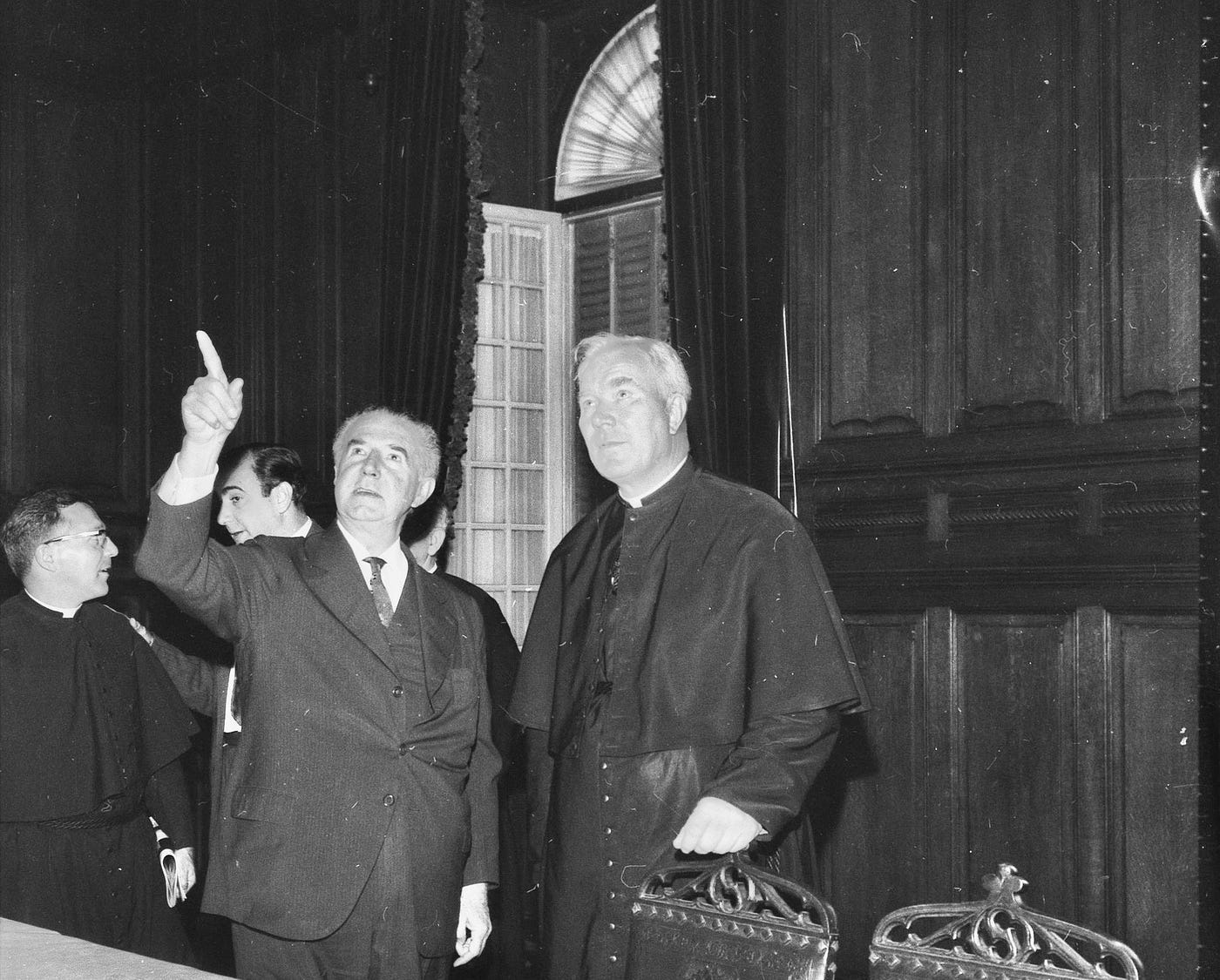
What made his Crusade a standard rather than a sentiment was its refusal to be an optional part of life. He did not ask a father to feel devout. He asked him to pray at a fixed hour with his household present and his voice audible. Whether he felt like it and or not, he did so until the practice became load-bearing rather than decorative. The household traditions did the formation of the children.
Fr. Peyton only supplied the fixed point around which it could organise itself, decade after decade, without requiring each father to invent the mechanism from nothing.
That is the thing missing from my own evenings, and from most of the households I know. It is not the belief, but the fixed point.
So what follows below is a working method I have built to install one, drawn directly from a standard that once produced fathers who did not have to think twice at the bedside.
It is built so that a man can start it alone, before anyone is depending on him.
