
The destruction of communities
How the managerial state wages war on its own people
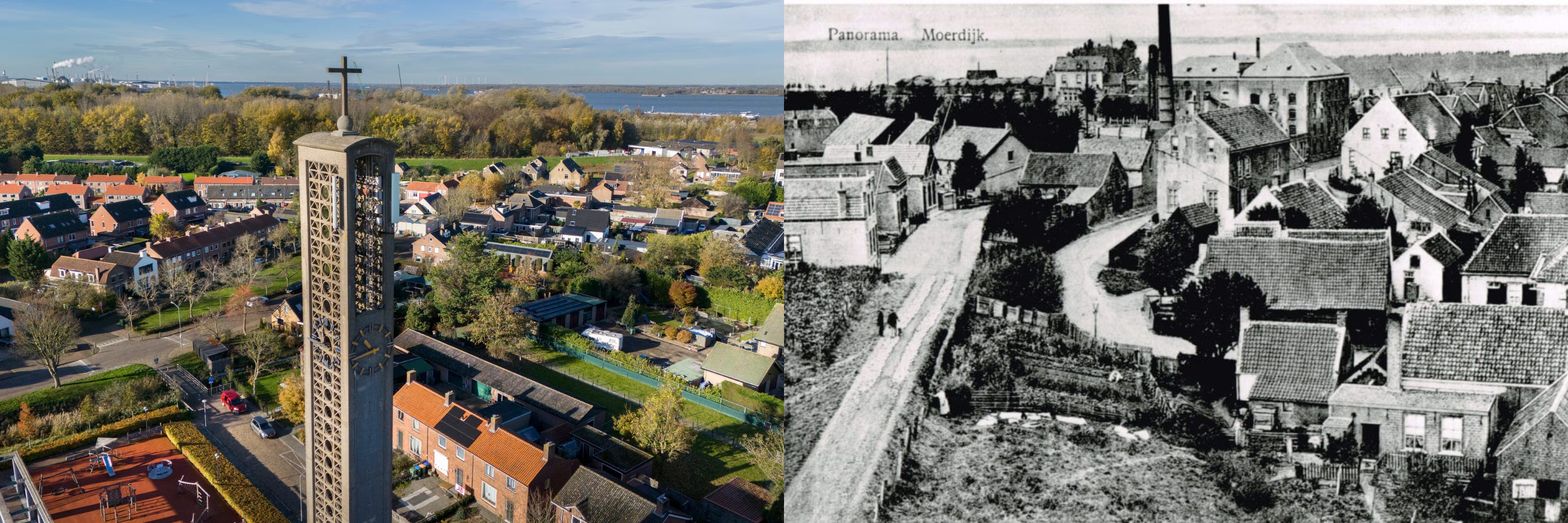
This week it was announced that the village of Moerdijk will be demolished. Its demolition is a Sword of Damocles. Nothing new, but it came unannounced.
Moerdijk has existed since 967, first as Sprangblok. Families have been living there for generations, churches established, graves of their ancestors. But that does not matter to the technocrats. They decided on filling the entire North Sea with windmills, so the village must make room for their terminals.
This is what happens when politicians forget what a community is.
What is a Community?
The modern state has no idea what a community is. And so it destroys them willingly. Since all people are the same. ‘We always have been a country of immigration’ and similar myths they push on us.
A community is the antithesis of managerial thinking.
St. Thomas Aquinas described a true community as:
A place
A memory
A purpose
Pope Leo XIII, in Rerum Novarum (1891), insisted on the importance of “intermediate bodies” between the individual and the state.
And Pope Pius XI, in Quadragesimo Anno (1931), gave this its name: subsidiarity. The principle that decisions must be made at the lowest competent level.
In Christian social thought, a village is not an administrative unit. It’s meant as just a service delivery zone. Municipalities, cities and villlages are place where souls are formed. Its people are shaped by repetition, discipline, and duty to others.
A real community is:
Multigenerational
Rooted in a physical place
Ordered toward the common good, not just personal preference
The modern state does not recognise this. Bottom-up decision making scares the hell out of technocrats. And communities are interchangeable, since they move wherever and whenever they want.
But communities are not interchangeable.
The Village of Moerdijk
Moerdijk is such a real place. It has graves with family names etched in stone. And people who belong to the ground they walk on. They are not just Dutch, they are Moerdijkers.
And that’s what makes this coming demolition so painful. The decision is dressed up in climate language. A lie they’ve been perpetrating for decades. They want to save the country for future generations.
By demolishing one of its oldest villages….
In 1939, the Brabantia Nostra movement built a Mary chapel there. It was a declaration that Brabant was Catholic soil, with a culture worth defending.
Brabantia Nostra was not a nostalgic movement. It was rooted in their province. They published essays, preserved dialects, promoted local dress, and organised lectures across more than a thousand local circles.
As a Catholic movement, their enemy was not Protestantism, but rootlessness. The same kind of poison now imposed on Moerdijk.
The Moerdijker identity is not written down anywhere. And identity is lived. Passed on in habit, voice, soil.
This is what’s at stake. It’s not just about a village, but about a continuity the technocrat state cannot perceive, and so it erases.
The Province of Groningen
But Moerdijk is not the first. Groningen has been sacrificed for sixty years. And whether you agree or disagree with gas extraction: the government fails these people the same way. It’s like Moerdijk, but in a very slow way… This week they had one of the worst earthquakes in years.
The state earned over €400 billion from gas extraction since 1963. All used for social security. Not to improve Groningen, or even compensate them. They now have cracked homes, psychological damage, and decades of waiting for compensation.
There’s no local power. Only technocrats in The Hague blaming newly founded rightwing parties for the policy they made.
The common good is not served.
The Erasure of the Local
Everywhere, the same pattern repeats:
Forced municipal mergers
Infrastructure projects imposed from above
Immigration policies reshaping towns without consent
The political class behind this lives in big cities, studied abroad, and are all frequent flyers, despite climate change.
They do not know the towns they are destroying. As they believe the Netherlands, and the world in general, is a flexible grid of zones and postal codes. It’s not a place with memory and continuity. If you share ‘our’ values, you can be one of us.
Culture is not more than that to them. They really cannot fathom why rightwing people protest against asylum seekers.
They’re the Anywheres (as David Goodhart called them), designing policy for Somewheres they will never meet. And probably even hate them.
The Lessons of Wilmarsdonk
In Belgium, the story is the same. Wilmarsdonk was a village near Antwerp. In 1966, it was erased to expand the port. Only the church tower was allowed to remain.
Today, that tower sits in the middle of a container yard. It has been carefully restored. But it’s too late already. Land surveyors once used the tower as a reference point.
And now newly built neighbourhoods do not have this anymore. That’s what real communities are: fixed points. Not to be moved. Not to be redefined by planning boards.
Cedo Nulli
On the façade of the old rectory in Moerdijk are two Latin words:
Cedo nulli.
I yield to no one.
Not to the sea, not to conquest, and especially not to bureaucracy disguised as virtue.
That motto should be Moerdijk’s war cry for now.
Because its people there are not just interchangeable. They are Moerdijkers.
They bury their dead in that soil. And walk the same roads their grandparents did.
We need leaders who remember that the state exists to serve communities, not destroy them. And that begins by defining what a Dutchman, Brabander and Moerdijker is. That requires generational integration.
And if the political leaders forget, then the communities must remind them:
Cedo nulli.
-Robbert


This is something communists did all the time. Demolish communities that have existed for hundreds of years in the name of progress.