
The last boat to Rottumeroog
How modern conservation kills nature
The wind pulled at jackets on the Lauwersoog dock as students waited for the Noordster. After forty-four years, this was the last crossing to the Rottum islands: the most remote piece of the Netherlands, now sealed off from the public forever.
Schipper Theodoor de Jonge checked the diesel motor one final time. The boat had carried researchers, artists, and anyone willing to understand what the Wadden Sea actually is. But Rijkswaterstaat decided that even twenty-eight people, four times a year, constituted unacceptable “disturbance.” The islands would become a “reference area”, which is a place where bureaucrats could monitor what happens when humans disappear.
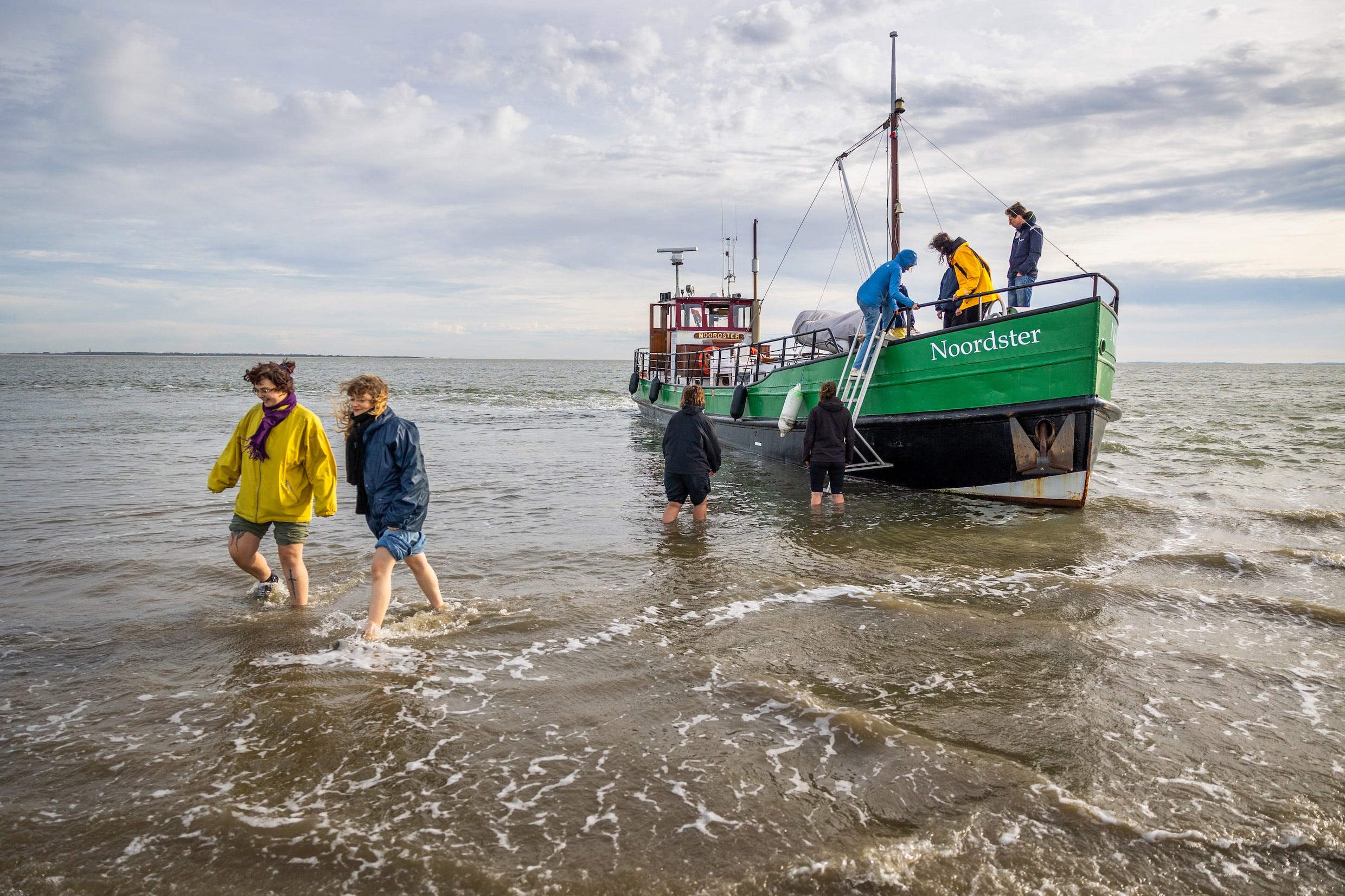
The students went to the Engelsmanplaat instead. They saw a seal. They took photos. The boat returned to harbor and will rust in Zoutkamp until someone buys it. De Jonge said it’s good this way. But his words carried no conviction.
This is Dutch nature conservation in 2025 means: sealed rooms where nothing lives but what the state permits. Managed by people who confuse sentiment with stewardship.
This story was published in Trouw, a Dutch newspaper this week. It saddened me, as again this a part of how the elites want to unroot us from our environment.
A Managed Wilderness
When the Zuidelijk Flevoland polder drained in 1968, water collected in the lowest point. Birds arrived. Frans Vera, a young ecologist at Staatsbosbeheer, saw an opportunity. He proposed that large grazers could maintain the landscape. He swa that natural processes, and not human management, should shape the terrain.
In 1983, Vera personally selected thirty-two heckrunderen from across Europe. He watched them enter the Oostvaardersplassen with “wildness still in their genes.” This was nature in its proper form. Eighteen konikpaarden followed in 1984. Forty edelherten arrived in the early nineties.
His idea was simple: the ecosystem would regulate itself. Abundant years meant growth. Lean winters meant correction through natural selection. International ecologists praised the result. The Oostvaardersplassen would become the equivalent to Africa’s Serengeti. A proof that Europe could host dynamic nature.
By 2017, five thousand animals grazed the area. But the park Vera imagined never materialised. Instead it is barren ground where starving beasts searched for scraps.
Sixty percent of them died in the winter of 2017-18. The bird populations the area was meant to protect vanished. And the small mammals, the native grazers, were outcompeted to extinction.
Then the activists arrived. Demonstrators organised funeral processions for dead animals. Farmers’ wives planted crosses for fallen deer. Heckrunderen were compared to concentration camp victims. Someone sent Vera a photoshopped image of himself in Staatsbosbeheer uniform giving the Hitler salute, captioned “Mein Kamp by Franz Vera.” Available as a poster.
The attacks escalated. In March 2018, Vera received an anonymous letter threatening his grandchildren with violence unless he publicly renounced his work. He went silent.
The province capitulated. Under pressure from activists who fed the animals, cut the fences, and threatened forest rangers, Flevoland commissioned the Van Geel report.
Its conclusion matched what the province wanted: mass culling to prevent ‘suffering’. Healthy deer were shot. Konikpaarden were relocated. The ‘natural processes’ Vera championed were declared incompatible with Dutch sensibilities.
Vera withdrew to his attic and spent a year writing 228 pages of ecological and legal analysis. In 2019, the court sided with him. The province had violated Natura 2000 regulations. The culling order was destroyed.
It did not matter, as new permits were issued. Different ecologists produced reports reaching different conclusions. And the shooting resumed.
In 2019, for the first time since 2006, no white-tailed eagles nested in the Oostvaardersplassen. The bird Vera had championed since childhood, extinct as a Dutch breeder since the Middle Ages until it returned to his reserve, was gone. Driven out by the chaos of the new management during breeding season.
Two Failures
The Oostvaardersplassen collapsed twice.
First, as Vera’s experiment: a theory imposed on reclaimed seabed that produced a barren moonscape instead of parkland. Second, as a reserve, when they surrendered to activists who confused their feelings about animals with concern for ecosystems.
In both failures nature was treated as something other than what it is.
Vera was right that Dutch nature management had become gardening: manicured, controlled, and expensive. But he was wrong to think that releasing animals in a fenced polder constituted restoration of natural processes. You cannot create wilderness by a declaration. The Oostvaardersplassen were never wild.
The activists were right that watching animals starve is ugly. But wrong to think that preventing starvation constitutes nature conservation. Their victory did not produce better conditions for animals, but even more bureaucratic control: permits, culls, and relocations. All the machinery of management they claimed to oppose.
The Nitrogen Lunacy
The same confusion now suffocates the entire Netherlands. The ‘stikstofcrisis’ frames nitrogen as an ecological threat requiring emergency measures. The real threat is the threshold itself.
In 2003, Agriculture Minister Cees Veerman imposed nitrogen limits on Natura 2000 areas. By 2019, the ‘disturbance’ threshold had dropped to 0.005 mol/ha/year. Which means: 0.07 grams of nitrogen per hectare per year. Building a house requires a permit at this level, so does moving a cow.
While Germany uses a threshold 4,000 times higher, and their nature ‘magically’ survives.
The Advisory board ‘Meten en Berekenen Stikstof’ calls the Dutch standard “false precision.” And it is theater, but one with enormous consequences: €93.5 billion in blocked construction, farmers exiled from ancestral land. And nature areas that expand through bureaucratic conquest rather than ecological necessity.
In Overijssel, the Lemselermaten Natura 2000 area will grow from 56 to 124 hectares. Nineteen reports totaling 1,279 pages justify this. Bulldozers will scrape topsoil, demolish trees, and fill streams. All meant to “restore” soil that was fine until experts decided it needed improvement.
A local dubbed the consulting firms behind these reports ‘the nature maffia’. The name stuck because these are not scientists. It are contractors who know which conclusions pay. Retired ecologists, like my beekeeping teacher, called them out. But agencies ignore guys like him, and so do local governments.
The Vatican Followed
Even Rome surrendered to the lunacy. In 2015, Pope Francis published Laudato Si, 191 pages calling for ‘ecological conversion’ without once mentioning contraception or procreation, the Church’s true teaching on creation.
Jeffrey Sachs, who advocates population control, spoke at the Vatican symposium before the encyclical. Hans Schellnhuber, who presented it to the press, has stated Earth’s ‘carrying capacity’ is under one billion people. Current population: eight billion.
Hypothetically he’s right. A distributist world with one billion people living Sanctifying lives (cultivating land, building communities, ordering existence toward God) is superior to eight billion living as swarms in overpopulated cities. But Schellnhuber and Sachs do not propose sanctified living. They want contraception, abortion, state-enforced sterility. Fewer people through immoral means to sustain their immoral systems.
Francis condemned abortion in one paragraph, then spent the document calling for a ‘world political authority’ with power to ‘sanction’ polluting nations. He proposed that developed countries accept ‘decreased growth’. Economically I agree, we need to get rid of our growth fetish. But not framed in Malthusian terms that treat people as tradable commodities. The Pope gave these wicked men a platform without challenging their methods.
The encyclical treats creation not as a gift revealing divine order but as a problem requiring global management. This is pantheism in papal robes.
But the Church knows better. Monasteries did not ‘restore nature’. They cultivated it, by clearing forests, draining swamps, planting orchards, and building fishponds. Their way of life produced smaller populations naturally: celibacy, delayed marriage, ordered communities. Their land grew more fruitful.
Archbishop Lefebvre advised the faithful to return to the land not to ‘rewild’ it but to work it. The earth is not sacred. It is the stage where we work out salvation.
The Main Problem
What connects the sealed Rottum islands, the Oostvaardersplassen disaster, the nitrogen regulations, and Laudato Si?
The belief that humans are the problem.
The conservationists sealing Rottumeroog think twenty-eight visitors four times yearly constitute a massive disturbance. The activists who destroyed Vera’s project think watching animals endure winter constitutes cruelty. The bureaucrats calculating nitrogen to three decimal places think human presence constitutes contamination. The clergy hosting Jeffrey Sachs think human population constitutes catastrophe.
All of them are wrong. Humans are not a disturbance. We are part of creation.
The Dutch coastline, the polders, and dikes are not wounds. Our ancestors did not destroy the Netherlands by building it. They made our soil habitable. And when they wanted beauty, they did not lock it away. They built parks for people to walk, planted trees where people could rest. They understood that nature separated from human life becomes museum or laboratory.
Modern conservation offers neither beauty nor utility. It offers control over land, development, creation itself. Success is measured not by flourishing but by absence: fewer people, less activity, more emptiness.
I hated the Oostvaardersplassen at first. I thought the people behind it must be sadists. But Frans Vera spent forty years building an ecology based on process rather than management. Bureaucrats did not allow him to make it flourish. And activists destroyed it by demanding management based on sentiment rather than process. The province complied. The court briefly intervened. And nothing changed.
The pattern repeats itself again and again. When they sealed Rottumeroog, they claimed protection, yet produced absence. When activists unintentionally forced the Oostvaardersplassen culls, they claimed compassion but produced bureaucracy. When the state imposed nitrogen thresholds, it claimed science but produced tyranny.
Modern conservation conserves nothing. It manages. And what it manages, it kills.
We need humans working land, raising animals, building communities, leaving their children a world that is cultivated, and not sealed off.
This is what’s meant by stewardship. It’s what the monasteries and farmers always practiced.
The Noordster made its last crossing because bureaucrats decided our presence was unacceptable. The students just wanted to learn about seals. They did not learn what they might have on Rottumeroog. Such remoteness is not sanctity, and a place no one can see serves no one.
Schipper de Jonge said it’s good this way. He’s lying. And we should stop pretending otherwise.
-Robbert


