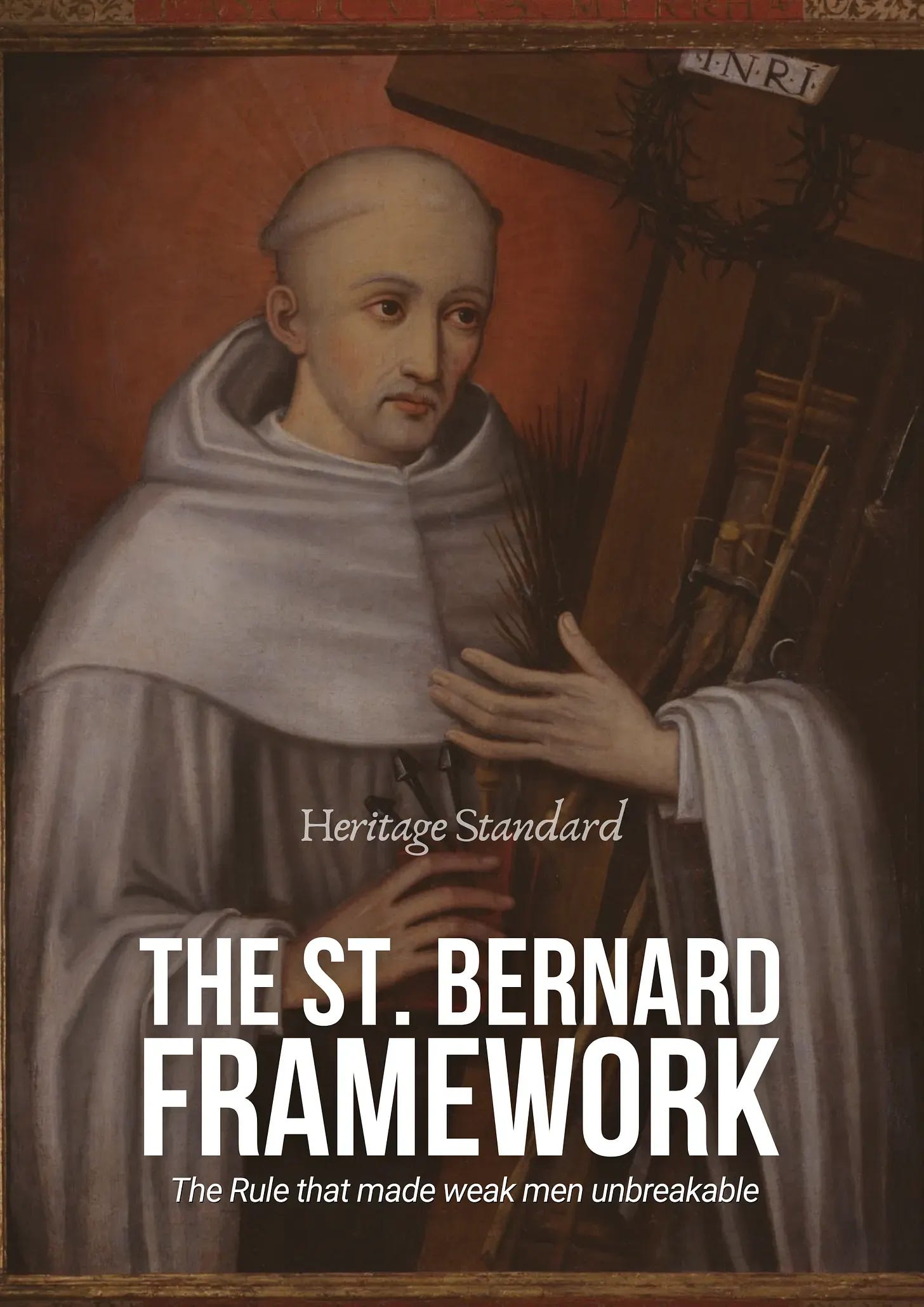
St. Bernard of Clairvaux, twenty-five years old and physically frail for most of his life, began the recovery of a broken monastic rule with a walk into the poorest valley in Burgundy and thirty exhausted men behind him.
I am not a monk, but I do own a monk’s breviary. Once bought with the same confidence you have when just read something serious about discipline, certain that owning the object was the solution.


I made resolutions around it more than once: Prime before the day starts, Vespers before and on every Sunday. Each time the resolution held for a few weeks and then faded. Not through any deliberate decision to stop but through the ordinary erosion of a Sunday afternoon running long, then waking up late on Monday, until the ribbon markers had not moved in a week and I was pretending not to notice.
This is not a story about failing to keep a resolution. I have kept many resolutions. I have lost weight and got a sixpack, hit cold showers, fasted mornings, and structured the week. But what I could never keep is the reason for any of it. The forms hold for a season and then dissolves, not because I lack the willpower but because nobody handed me the mechanism I was supposed to protect. I own the book the monks prayed and red from from. But I do not own the house they prayed inside.


That is the specific shape of the fatigue I want to name, because I think it is yours too.
You may have tried the systems, 5 a.m. routines, strength programmes, groups/masterminds that meet twice and dissolve, or even switched between parishes.
Each one of these gave you a form. Likely none of them gave you a house to put the form inside. So the form wore out, as forms do when nothing structural is holding them up, and you were left assuming the fault was yours. It was not entirely yours.
You inherited a ruin and were handed a trowel with no instructions for restoring what the building once looked like.
I want to tell you about thirty men who inherited a ruin of their own, in a monastery that had already gone soft before any of them arrived, and about a standard that spread across continental Europe for reasons almost nobody tells you correctly.
What produced the softness
Softness is not mysterious and it is definitely not a modern disease alone. Cîteaux, the abbey Bernard entered in 1112, existed because the great Benedictine houses of the previous century had already loosened. Cluny and its daughters had grown wealthy, ornamented, and comfortable. The Rule of St Benedict was still read aloud in the refectory. But it had simply stopped being obeyed at the points that cost anything.
The fasting eased. Manual labour was delegated to servants so the choir monks could sing longer offices in finer vestments. The form might remained intact, but the friction the form was built to generate had been engineered out of it entirely.
This is the part men my age skip past, because we assume decline always requires villains. But it rarely does… Cluny did not abandon the Rule through malice. They abandoned the costly clauses one comfortable decision at a time, each one defensible by itself, none of them fatal alone, until the accumulated ease had produced an institution that looked identical to its founding, yet functioned nothing like it.
Saint Bernard was born into the third or fourth generation of that slippery slope. He did not create the softness, but arrived after it was already load-bearing.


Neither did you create yours.
If you were catechised in a modern parish, if you were catechised at all, you have already absorbed a century of the same accumulated ease: doctrine retained as language, obedience quietly optional, the ascetic clauses edited out because nobody wanted to be the priest who mentioned them.
You were not handed a broken Rule. They gave you the ordinary residue of a good thing, which I call the Zombification... We have to spent our adult life trying to feel discipline through a dead corpse that pretends it is alive.
A standard that actually held
In 1112 Bernard entered Cîteaux, a small and struggling reform house that had kept the full austerity of the Benedictine Rule at the cost of almost failing to attract new members. So he brought thirty men with him, most of them from his own family, exhausted noblemen who had spent their lives on horseback and in courts and had nothing left that resembled a formed interior life.

Three years later he was sent to found Clairvaux, a daughter house in a valley so poor it was called the Valley of Wormwood before the monks arrived. He was twenty-five. He was, by his own later admission and the testimony of those who knew him, physically frail for most of his life, undernourished by his own excessive early asceticism, a man whose body worked against him rather than for him. He was not a natural specimen of strength, and neither were the thirty who followed him. What they had was the Rule, restored in full, at the points where it actually cost something.
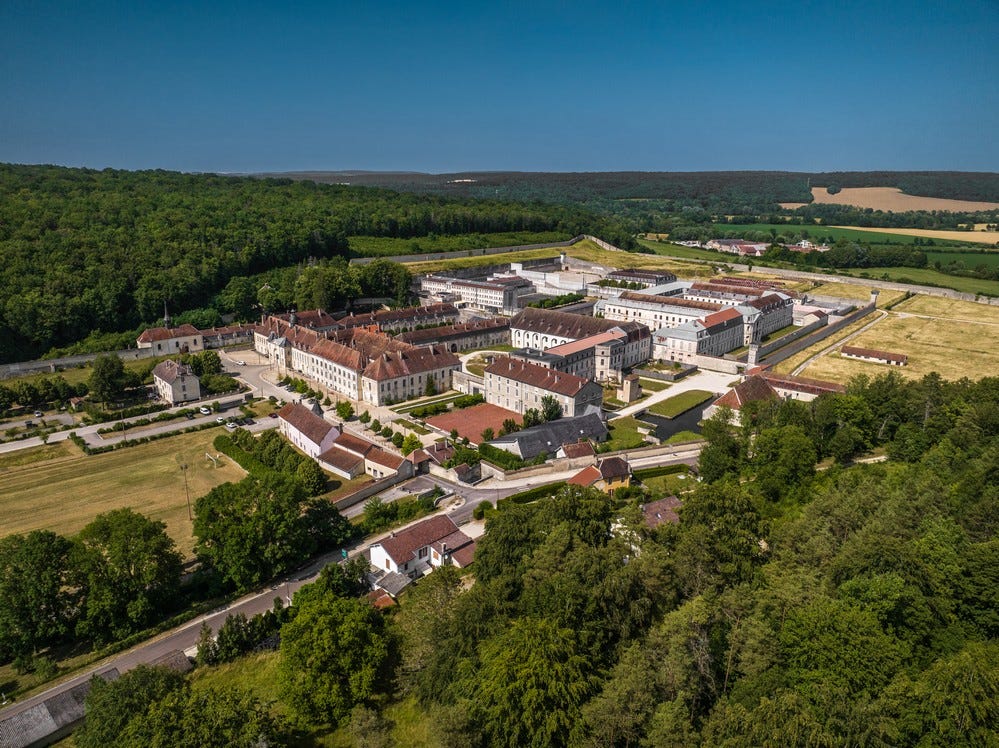
Bernard himself refused every promotion the Catholic Church offered him. He was proposed for at least two bishoprics.
He turned both down and stayed an abbot, a man with no formal jurisdiction beyond his own valley, and became in practice the most consulted figure in twelfth-century Europe. Popes wrote to him for counsel. Kings altered policy on his word.
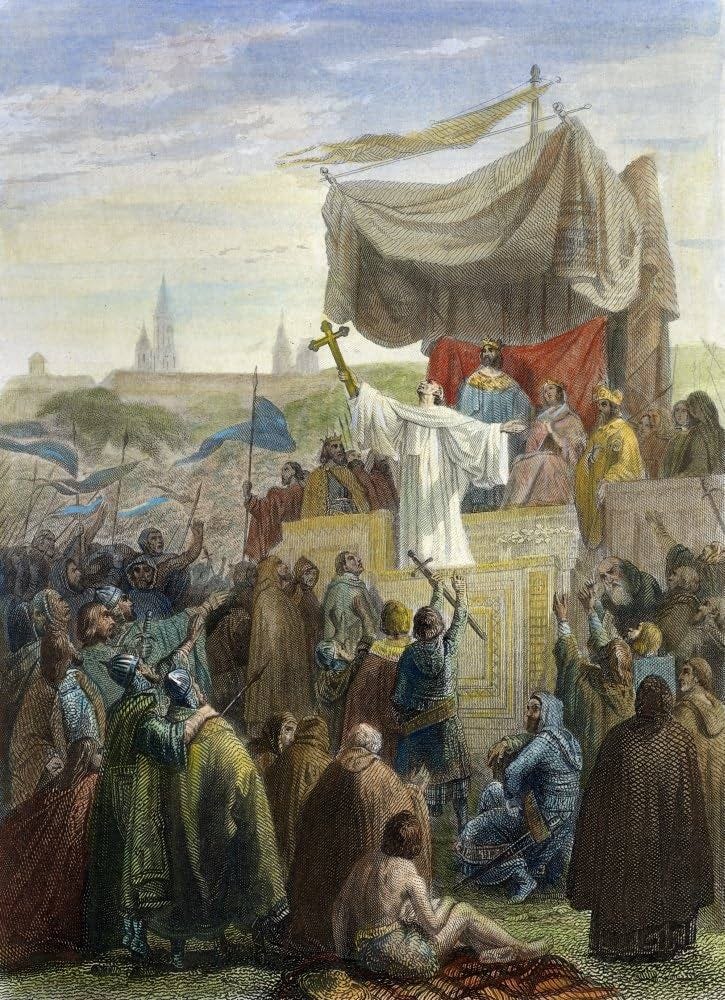
He preached the Second Crusade at the Pope’s own request and mediated a Papal schism that had split the Catholic Church for years. None of this came from his title. It came from the fact that a restored standard, kept at cost, produces an authority no idle appointment can counterfeit.
Here is where the story you have probably heard gets it wrong, and where the actual mechanism becomes worth paying for.
The popular version says St. Bernard’s personal discipline and force of will multiplied outward, abbey by abbey, until 68 houses stood as monuments to one man’s austerity.
That is just a satisfying story. But not how it happened. The real mechanism by which a single valley’s restored Rule became a continental standard has nothing to do with willpower spreading by imitation, and everything to do with a specific structural problem that hundreds of already-existing communities were desperate to solve.
Once you see what that problem was, you will recognise it, because you are living inside a version of it right now.