


A sign went up on Verwooldsweg in Enschede, a city in the east of the Netherlands…
It said a Marian chapel was being built on the property and would stand open to anyone who wanted to visit. Thirteen months later, last Sunday 4 October 2026, Hetty and Dick Hammink (Dick is a normal Dutch name) opened the doors of the ‘Boskapel’ (Forest Chapel) on their own land. The inscription above the entrance reads Anno 2026.
Their chapel is open daily from 9am to 7pm.
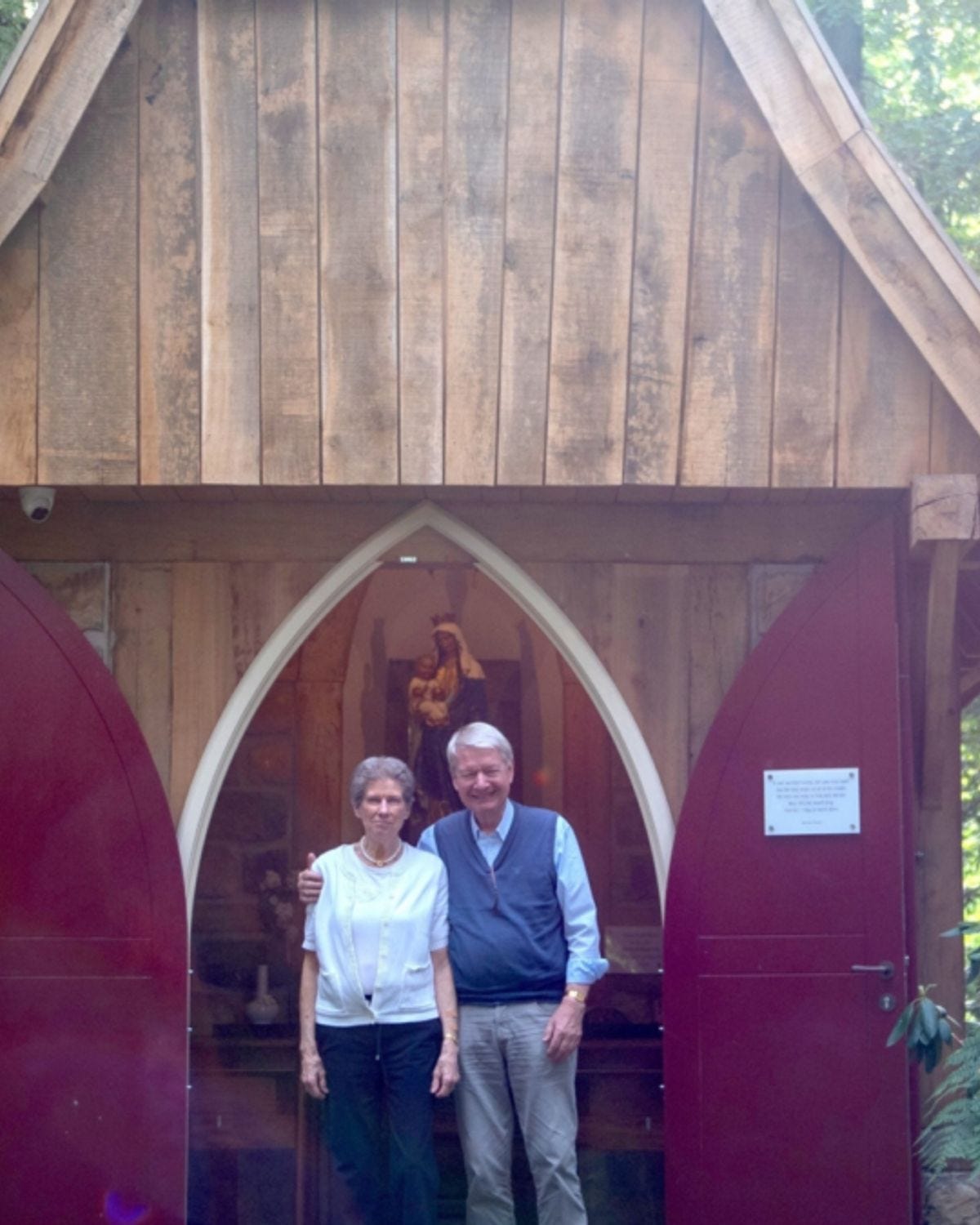
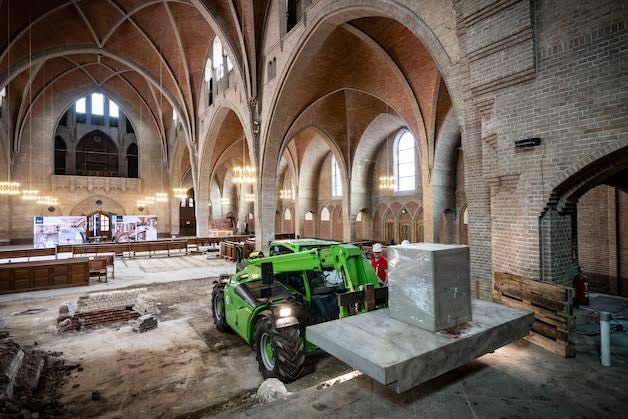
The real story is told by the materials. Built from left over stone from a shed project, which formed the walls. The oak came from the wood behind the house. The altar was recovered from a closing church from Oldenzaal.
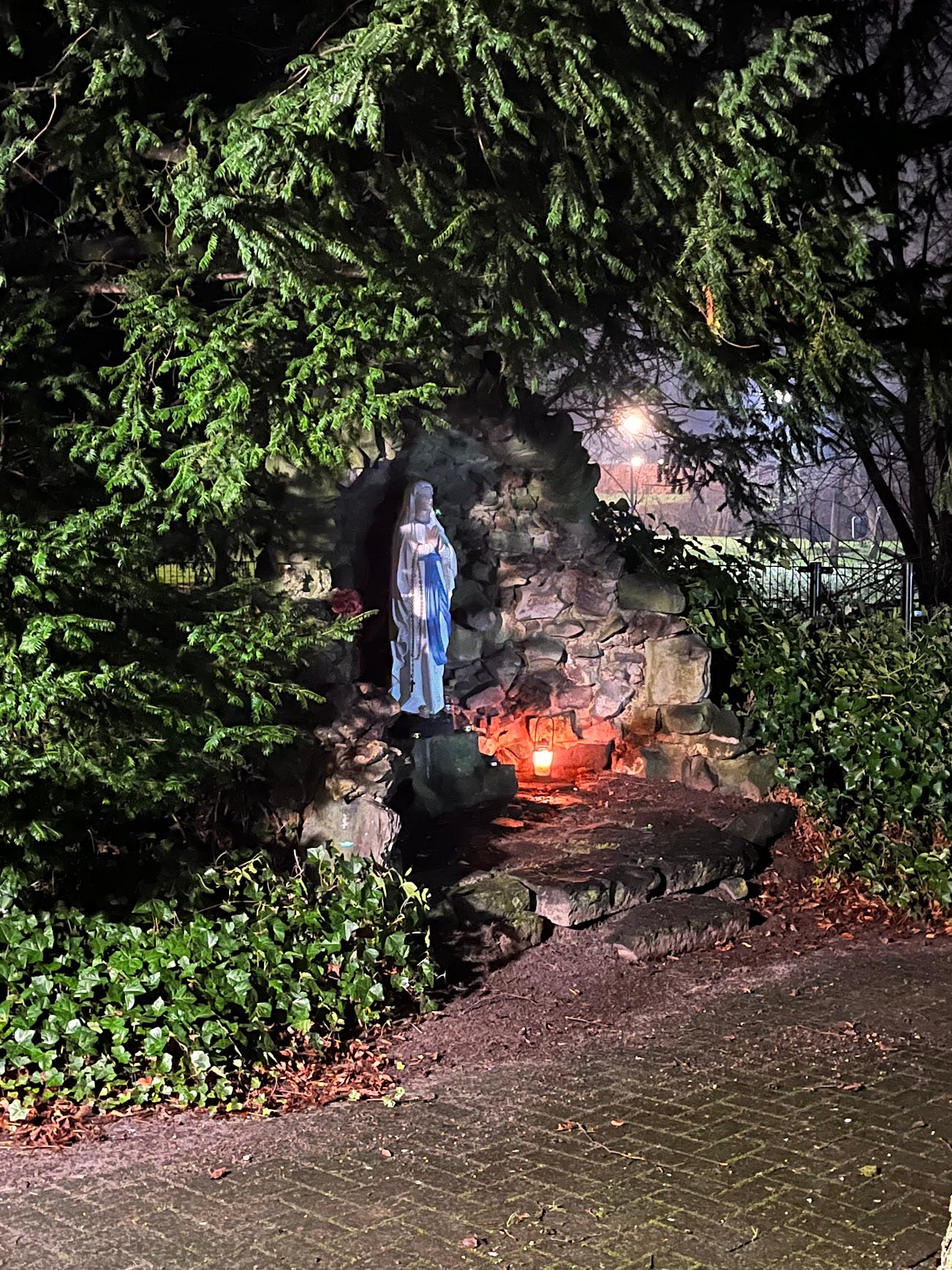
A statue of Mary from Germany, repainted by hand. Their son-in-law drew the plans and secured the permit. A local craftsman named Remco Wiggers built it. Dick painted the doors himself.
The regional paper called it ‘a fairy tale hut’1 and ‘a small contribution to a better world.’
But that description misses what actually happened. The Hammink Family did not build a fairy tale. They took sacred objects that had been sitting idle, or worse, sitting in an antique shop, and put them back to work.


Why buid a chapel, while everywhere in the Netherlands Churches are closing?
More than a thousand Catholic churches have already been demolished or closed across the Netherlands since 1970. Some became bookshops, others became supermarkets. And the rest stand empty with scaffolding around them, waiting for a developer to decide what a Church is worth as square metres.


There are many photographs of old church interiors where the benches have been pushed up against a wall, and you can still see a pale outline on the wall where a cross used to hang. A single picture like that tells you more than a long list of churches that have been turned into shops, flats or offices.
The thing is that people did not simply stop believing all of a sudden. Many still light candles, and many still want their children baptised.
What broke down was a system that could do 3 jobs at the same time:
It put holy things in a place where ordinary people could get to them
It kept the church door open at the same time every week so people knew when to come
It passed both of these on to the next generation without anyone having to ask for them.
Closing a church is now easy and ordinary: a bishop can shut one down, rent out its rooms for storage, and nobody objects much.
But nothing works in the other direction… There is no pressure, sense of shame, or public expectation that would push a bishop to build a new church.
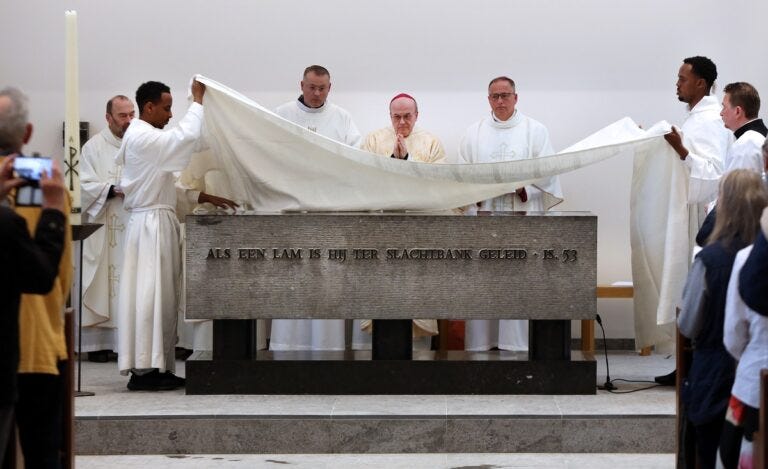
So churches can disappear without anything replacing them… and even if they do the set-up is that they can function as multipurpose spaces.
In the past, a community without a church would have been seen as a disgrace that someone had to fix, yet that feeling no longer exists.


Why what the Hammink Family did matters…
The chapel itself came about in a surprisingly simple way. Because the Hammink family built it on land that was already theirs. So no need to ask a landlord, and no committee that could say no. Even the building permit, Dick said afterwards, came through faster than he expected, since a small private chapel on your own ground asks very little of the local council… it is basically a shed, in some places it does not require a permit at all.
They dug an electricity cable through their own garden and pay for it out of their own pocket. For the walls they hardly needed to buy anything: a pile of stone from an old shed had been lying on the property for years, and was waiting to be used.
A local craftsman built the chapel, and he made it his own responsibility to get it right.
The altar was rescued from the Trinity Church in Oldenzaal (my guess) that closed last year, just before it would have gone to auction, while the statue, damaged and by a maker nobody knows, turned up for sale online and was bought, brought home and given fresh paint.


Every day of the week the door stands open for 10 hours. Since October, letters have been arriving from people who have stopped by, and although there is hardly proof of a movement, it does show that the chapel is being used. The locals are extremely happy with it.
But it remains a place for private prayer rather than a parish, and that difference matters, because ordinary believers cannot do everything a parish does. Its main purpose is to bring an idea of Catholicism back to life.
What the locals can do is go to a place where they can meet God, or Mary, without the barrier of entry a parish might have. We cannot save all Churches, but the Hammink family shows you can at least take the altars and statues… and use them as they were intended!
Tradition: The construction of chapels by laity
None of this is new… It seems new, because people have forgotten how it used to work. Roadside chapels, guild chapels, war memorial chapels and chapels on family estates were never planned by Church leadership. They were built by whoever owned the land and wanted to give the world a holy place it could use.
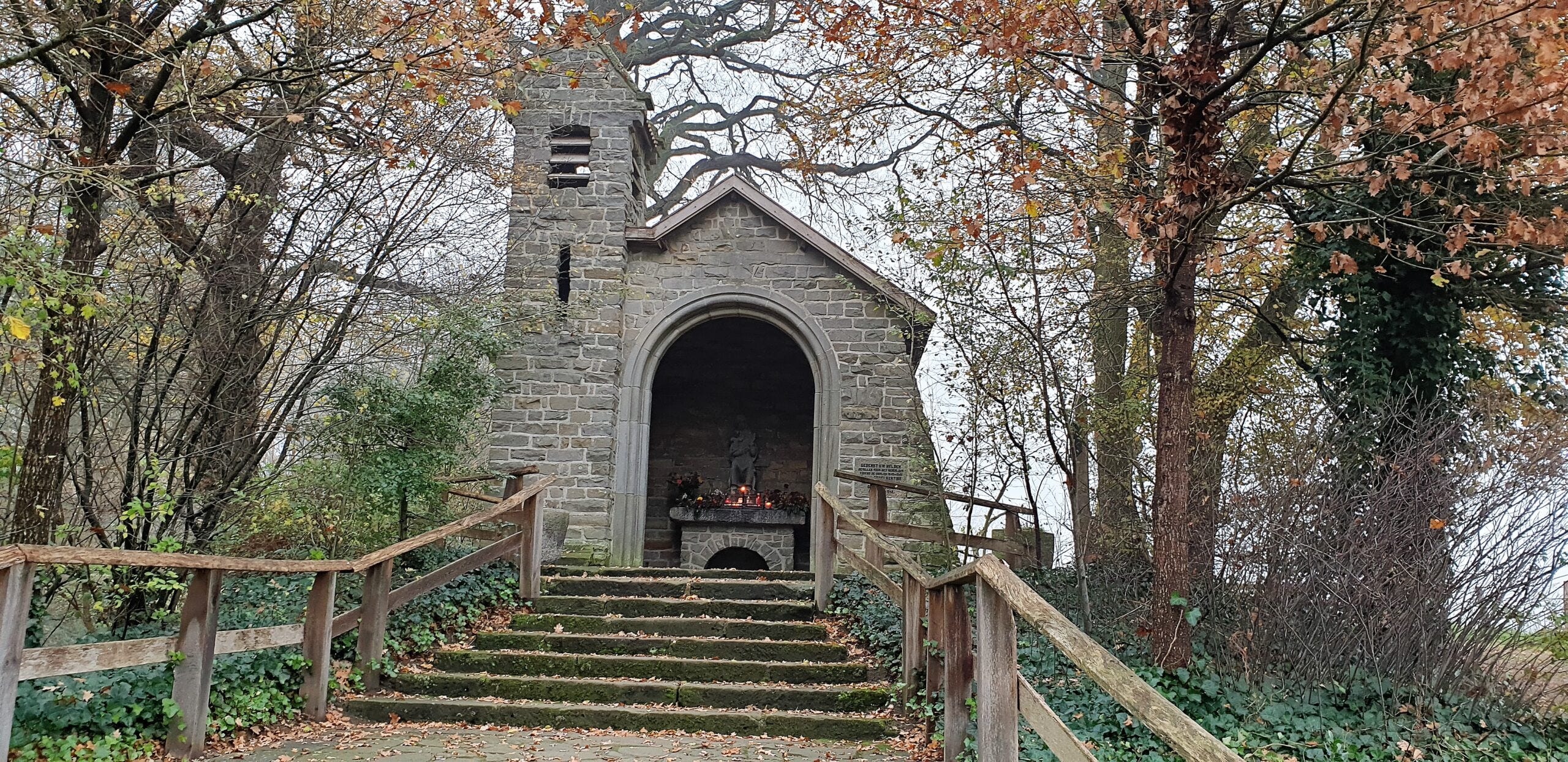
On a hill above Oldenzaal, a few kilometres from the Hamminks’ home, is the Tankenberg chapel. Locals built it in 1948, where they could see it from their houses, to remember 3 of their men being killed during the German occupation.
Nobody in that village waited for a decree from the Church. They were grieving, had a hillside, and were willing to build. Almost eighty years later the Hamminks did the contemporary version: they owned land, got a permit, reused old church objects and kept fixed opening hours.
The only new idea? Repurposing objects from a closed Church.


Why most people will not do the same
For most people the obstacle is not money or taste. It is how we nowadays think about the land under our house.
If you plan to sell your house one day, you cannot build anything permanent on it, let alone a chapel, because fewer buyers would want it and neighbours might object to a shrine next door.
The same thinking stops people planting a beautiful garden that takes 20 years to grow, or an orchard for a grandchild not yet born, or any project that pays off only after the mortgage is paid.


The Hammink Family could build because they probably do not see their land as something to sell. The fact that their son-in-law was so involved makes me think it is not just a temporary thing.
They showed a starting point, and today taking that action is rarer than altars, oak, stone or old statues. The willingness to stay misses. The chapel walls were built from leftover bricks from a previous project. The obstacle is not the cost but the lack of a multi-year plan for your life.
Klaus Schwab was right when he said ‘You’ll own nothing and be happy’ — because happiness nowadays is measured in purchasing power. Nothing is permanent, everything is ‘rented’. Not in a way of the ancients; stewardships, but like a storage-box. Houses are like stocks: sell them when the price is high enough.
5 steps to build your own chapel
Anyone who wants to do this needs a plan, and the steps must happen in order.
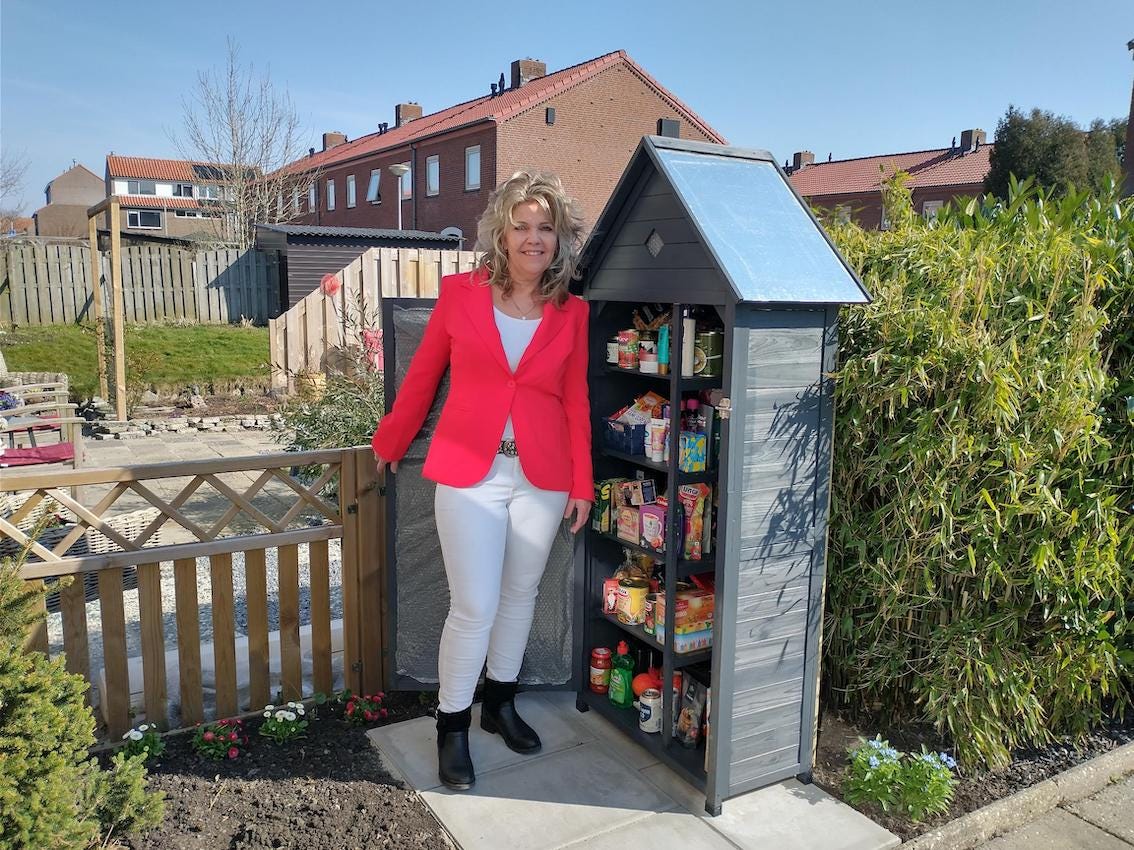
First, start with land or house you will still own in ten years. Anything built on rented land disappears when the lease ends, and anyone thinking about selling will always find a reason to wait. You do not need need a multi-thousand acres lot for this.
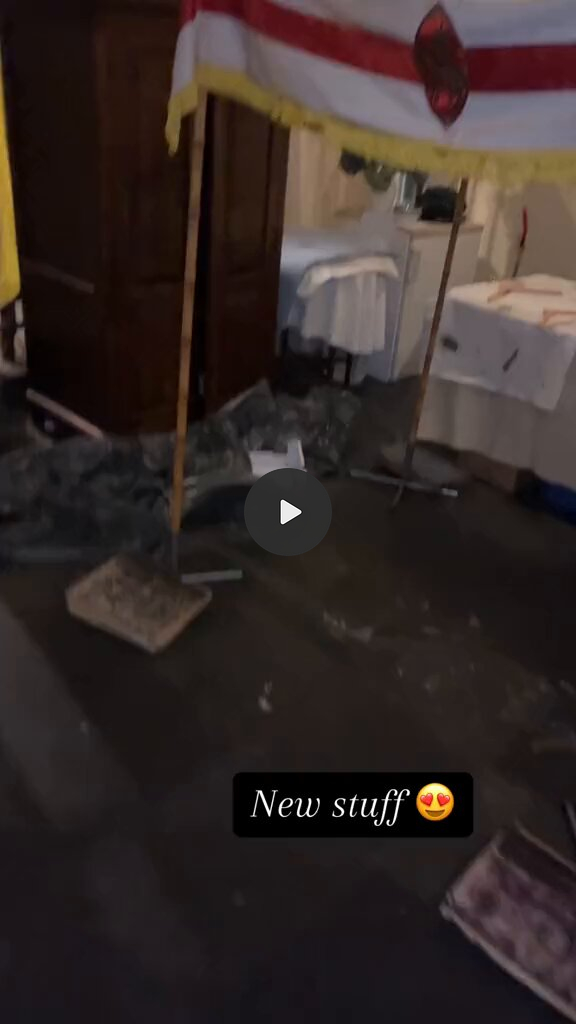
Second, rescue old things before buying new ones (How? Read it here): Altars, statues, kneelers, maybe even church benches and altar rails. These objects leave closing churches constantly and either end up on market places, sold for way too high prices in antique shops or in the bin. A rescued object only counts if it is used for its real purpose again. A statue in your hallway as decoration is profane too. The goal is not to own it but to put it back to work for a community.
Third (if it applies for your council): get the permit before digging. Paperwork done in the wrong order leads to disputes. Passersby should be able to use it.
Fourth, open the door. A locked private chapel is a personal hobby. A chapel hidden deep in your garden is only useful if a priest celebrates Mass there, or you organise prayer hours. A chapel opened every day is done for everyone, which is the difference between devotion and decoration.


Fifth, keep it simple and unchanging: a candle, somewhere to kneel. Let people discover it first, before adding events, a newsletter or social media accounts. The Hamminks took thirteen months to build their chapel. The harder task will be keeping it open on an ordinary day years from now, long after the novelty has gone.
A chapel is not built to be photographed, and one built for the camera has already failed. But a photograph of a chapel that is genuinely in use can carry it further than any parish newsletter. If people start sharing pictures of yours, find them and thank them. Answer every comment and every message, because each reply is a small act of apostleship: it tells a stranger that the door is open and that someone still keeps it.
Remember: Most secular people nowadays do not know any better, no one ever taught them anything about religion. For most people nowadays it is a blind spot. They know Church buildings once served a purpose, but they cannot fathom what it exactly was.


What remains if your prelate and parish fails…
Nobody from the Archdiocese came to the Hamminks with a plan or a budget. They built the chapel themselves, on their own ground, in a time the Dutch Church has largely stopped building. They did the one thing that makes it more than a private project: they opened the door and kept it open.
This will not bring back the parish church down the road, and it was never meant to.
I care about saving those great buildings too, and I hope to write more future essays about how that might be done. But revivals rarely begin with Cathedrals. They begin with (underground) chapels used by a small group of ordinary people, long before anyone in authority notices.
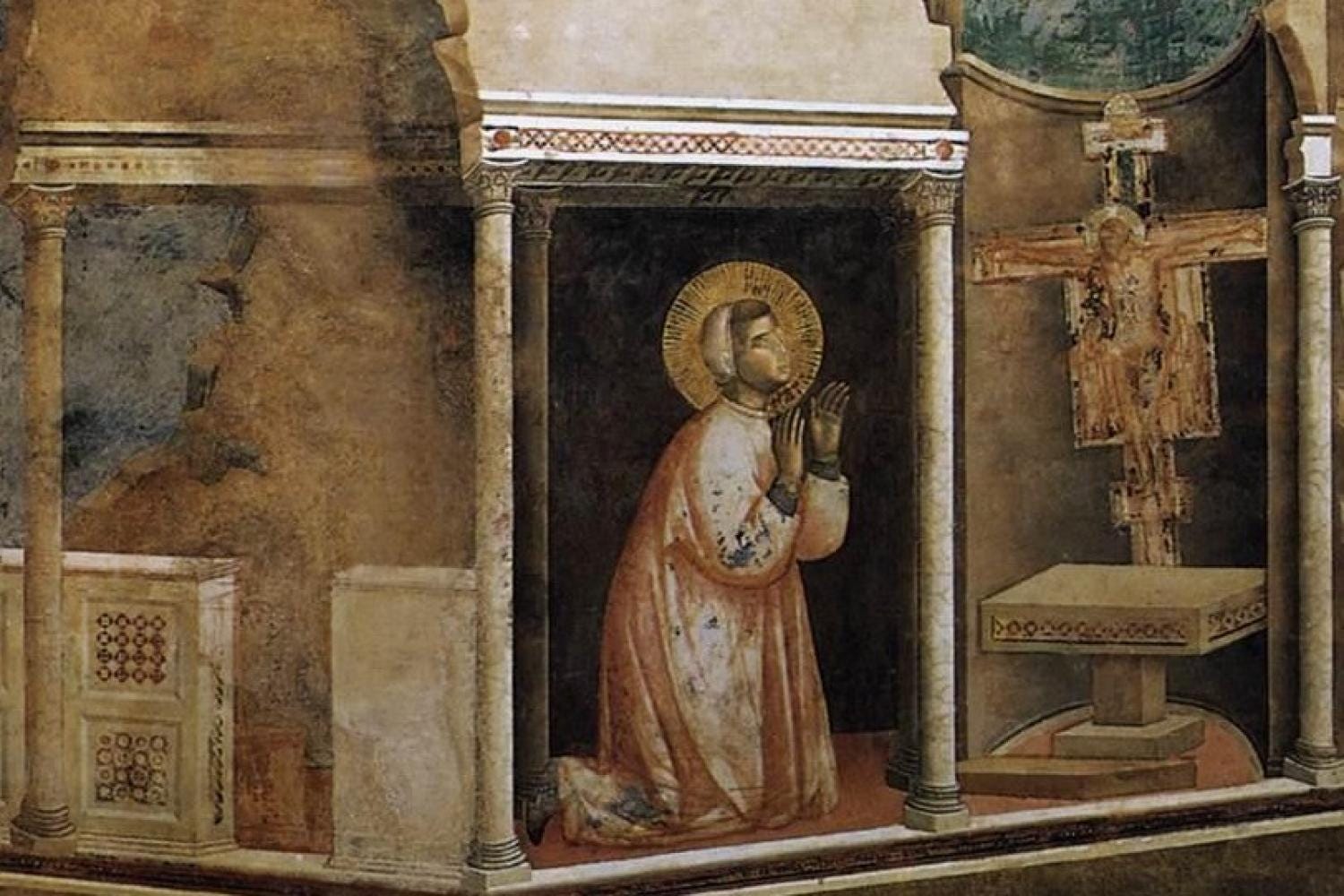
Some 820 years ago, a young man named Francis was praying in a small, crumbling chapel outside Assisi when he heard Christ speak to him from the crucifix: ‘Francis, go and repair my house, which, as you see, is falling into ruin.’
He took the words literally. He begged for stones and rebuilt that little chapel with his own hands. Only later did he understand that he had been asked to help renew the whole Church, and that is what Saint Francis of Assisi went on to do.
He began with one small building and a pile of stones, just like the Hamminks did.
—Robbert
Further reading…


Op eigen grond in Enschede openen Hetty en Dick een sprookjesachtige Mariakapel voor iedereen: ‘Onze bijdrage aan een betere wereld’ - 1Twente - https://www.1twente.nl/artikel/6330240/op-eigen-grond-in-enschede-openen-hetty-en-dick-een-sprookjesachtige-mariakapel-voor-iedereen-onze-bijdrage-aan-een-betere-wereld?fbclid=IwdGRjcAUwG2ZleHRuA2FlbQIxMQBwZG9mBWZkaWQWUPvLkKuEYVXqsKEsgnCeWb9tuC_AUHNydGMGYXBwX2lkCjY2Mjg1NjgzNzkAAR41IC1p4IDKsUN0d43BDDTd8x-cHPTtXUAS6axTWp2fn6c0_TlMeyl3QZE8fA_aem_hSGGCG-Iibnrp8MLNU_POw