
Tradere: what we are getting wrong about tradition
And what tradition actually means in every day practice
When I wrote Death to Nationalist Kitsch a lot of you were wondering what tradition means. You often get blamed for live action role playing if you talk about tradition at all. Even people on the right struggle with it…
The problem, both right and left, is the modern idea of tradition: Where tradition as something to be updated when it no longer ‘serves’ us. But that is all consumer mindset: measuring everything by convenience and efficiency.
Real tradition serves what is higher than us, not what is useful to us.
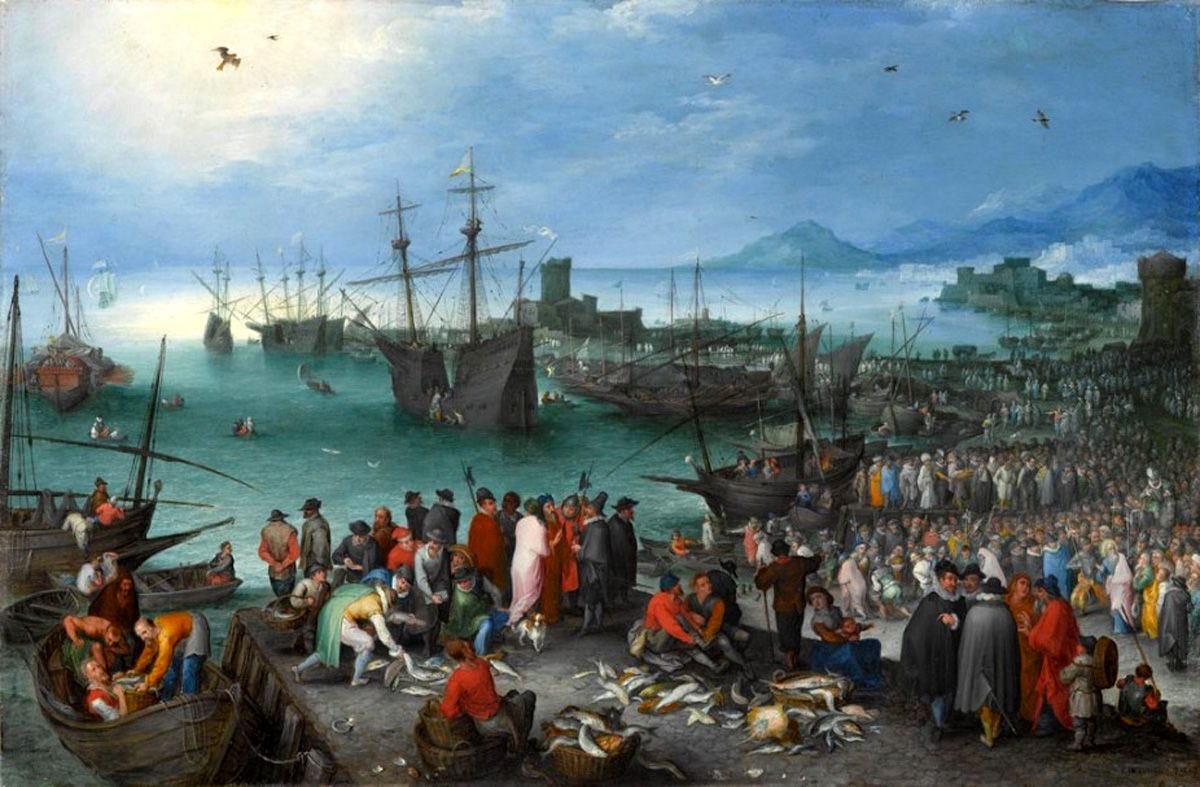
Tradition comes from the Latin tradere: to pass on. Tradition = continuity. Which is found in daily rituals and embodied knowledge.
You can see it in localised production, or in repurposing styles, spaces and tools until they blend into the present.
Tradition is humble. Rooted in service, sacrifice, and repetition. But also tied to a specific group, place or craft. And it transforms through discipline and repetition. It should be just ‘there’, it should have no need to announce itself.
Modernists argue that traditions evolves. That it is just a bunch of habits that can be updated when they no longer serve a purpose. Which is my problem with modernisations in Catholic Practices of the 1960s, it serves self-interests, not God.
I will go deeper into religious traditions in future newsletter. For now let is take the tradition of the white wedding dress:
The white wedding dress began as a display of wealth, as white was a color only the rich could afford to wear once and discard. When European Queens began wearing it, it became a symbol of purity and status.
Yet now every woman who slept around in her twenties wears it when they are ‘ready to settle down’. The white wedding has no meaning to most people anymore. It is just a costume you wear at ‘that day’. Completely stripped of context, and repeated without meaning.
This is not just about wedding dresses. The entire West has become completely unrooted from what we are. Few can define what a Dutchman, Englishman, or German actually is anymore.
Millions of immigrants arrive from thousands of miles away and are told they are “just as Dutch” or “just as British” as families who have been here for centuries.
As much as I am against the integration of foreigners: the people who believe in it have nothing to integrate to. It is all gray matter, internationalised western ‘culture’. Which is is consumerism, legal paperwork, and vague talk about ‘values.’
The immigration crisis is not that foreigners will not adopt our ways. But that we no longer have ways worth adopting. They bring their own tribal cultures, which at least still exists, while we have reduced ours to flags, slogans, and arguments over symbols.
When you lose the rhythms that shaped your grandparents’ hands, something in you begins to drift: You either become a rootless liberal that feels at home anywhere, or a nationalist who mistakes symbols for substance. And if you are the latter, you are surrounded by people who think tradition means buying the right books, attending the right events, consuming the right social channels.
The War on Aesthetics
Without purpose, traditions decay into culture war symbols. Take Sinterklaas: a Dutch holiday where Saint Nicholas arrives with helpers called Zwarte Piet.
For years we have fought about the appearance of Zwarte Piet (Black Pete). Americanised progressives reduced it to ‘blackface’. And nationalists dug in, obsessing over keeping him black, without any other explanation than: ‘This is how it always has been’.
It is true that the black colour was part of it, but the ‘tradition’ we want to preserve nationally is the Sinterklaas Tradition of Amsterdam. Which also happens to be the first city to abandon Zwarte Piet.
Nobody stops and asks: Does anyone still know WHY we celebrate Sinterklaas?
They do not know what it is really about. The whole fight became an outrage over the aesthetics while the tradition was already hollowed out and its substance already dead.
That is what happens when tradition becomes ideology. Then you will fight over the costume instead of preserving the practice.
I am anti-utilitarian. A tradition is not a utility, rather a devotion. Not there to serve us, but to shape us. They cannot be performed by the use of symbols, and costumes when the the thing that shaped it: religion, mysticism, culture or ethnicity (culture is partly genetic) is out of sight.
Without any of these elements it becomes loud, arrogant, supremacist and nostalgic. Which is exactly what we are seeing with most right-wing movements nowadays.
The saddest part is that our ‘resistance’ to ‘preserve’ tradition has a standardised kitsch aesthetic all around the West.
The same Spengler quotes, the same architectural memes, the same outrage about degeneracy. From Europe to America to Australia: ‘traditionalists’ consume the exact same aesthetic package and soundtracks. (We do not hate globalisation enough.)
I believe the future of tradition is not in museums or symbols. It will be in the hands of those who rise before dawn to tend the living things that outlast them.
Where to start…
Maybe you were expecting a 5-step answer, but I cannot give you a full answer on this. I have not ‘figured it out’ everything myself. Tradition is like watering a tree. Only after much patience and repetition it shows up and can be known.
You do not need a manifesto, but practices to do everyday. Father Naaijkens, a Dutch priest said: ‘A tree that is constantly moved cannot grow’. Which means that all things worth preserving and growing take time and practice.
So to make it tangible, choose one thing to start with every day:
1. Learn a craft: is essential. Tradition requires repetition to master and cannot be bought. And as odd as it might sound, this is how tradition enters your mind. It is why priests, nuns and monks pray their daily prayers at set times. I commit to beekeeping as a craft.
2. Build something that lasts: Like a garden you tend, a book collection you curate (which you actually read), or an object you restore. It needs to be something that requires maintenance. I am a sacristan in a church for example. I help maintain the vestments and save liturgical art from closed churches. I document what I do, so I can pass on the work to my successor.
3. Stop consuming: If you cannot make it or maintain it yourself, think twice before owning something. Rather buy one good thing and care for it properly instead of ten cheap things you will throw away.
4. Find your people locally: Connect with local craftsmen, farmers, or even traditional menswear stores (if you still have them in your city). People that sell you meat, produce and dairy directly. Build relationships over years through shared practices, not shared opinions. Since tradition is passed person to person. This is how I learned beekeeping.
All of this will take time. But with time the realisation of what being ‘traditional’ is will start to make sense. It is just like starting a business: people who have done it before can give guiding principles, but they cannot do it for you.
You must dive in the rabbit hole yourself.
And you will not master it in six months. Maybe not even in 6 years. But real consistency develops over the years. By making consistent choices, repeated, until they become who you are.
So stop posting, collecting aesthetics and performing identity. Start with one practice. Do it for a year, and then add another, and another, etc.
-Robbert


