


Ignorance has done more damage to our Holy Mass than any enemy. A retreat about the Sacrifice of Holy Mass (Usus Antiquior) showed me what it was about. But it is still the tip of the iceberg, the true mystery of Holy Mass cannot be fully uncovered in our current state. Yet… that does not mean we should not try. This will grow our love and appreciation for Holy Mass.
In this series I will give you a report of what I learned and the treausres the New 1969 ‘Mass’ stripped away.
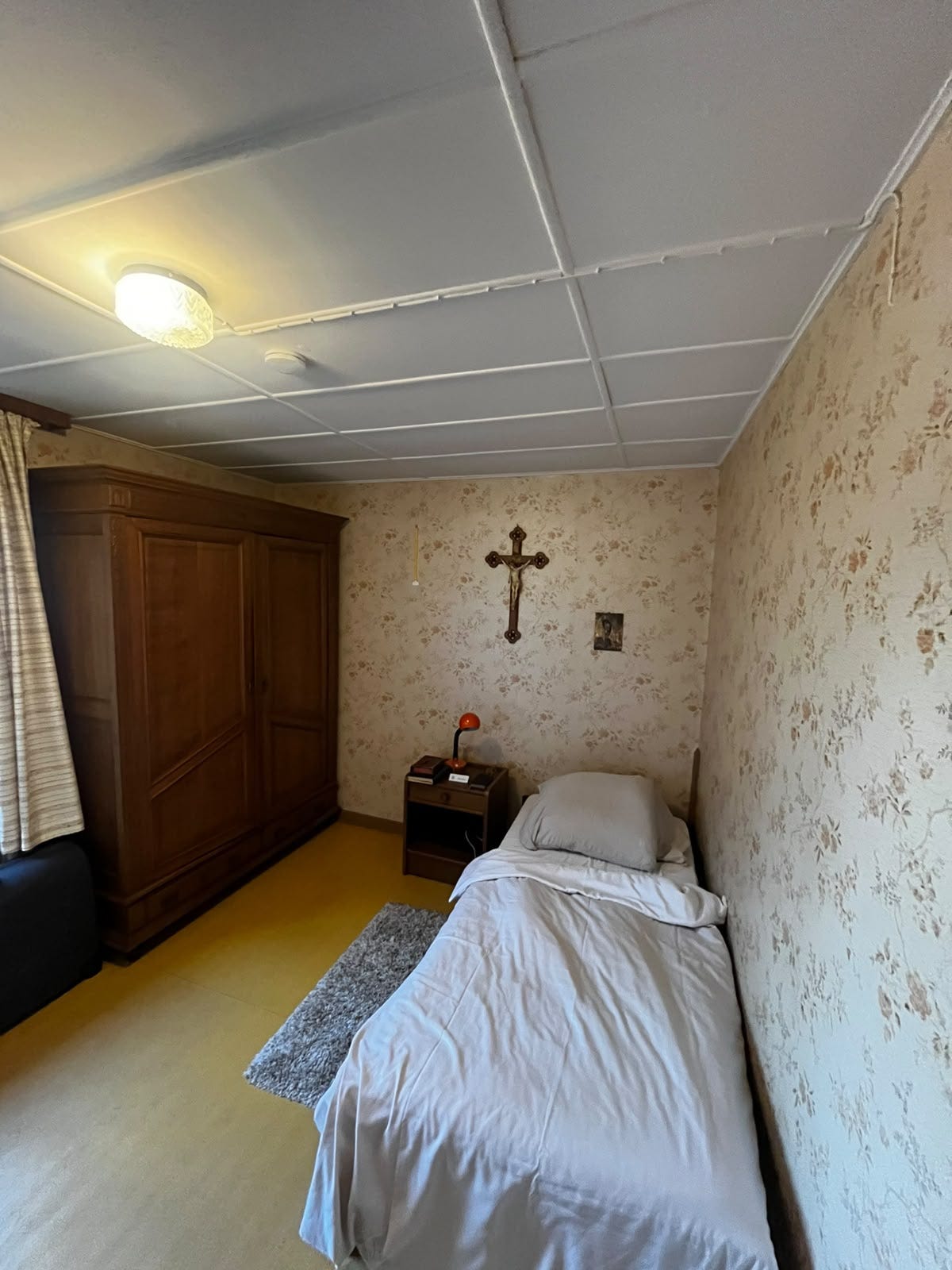
In October I spent six days at a retreat modelled on the one the Society of Saint Pius X, a society of traditional priests, gives its seminarians before they are ordained deacons. I came home certain that many Catholics attend Mass every Sunday without knowing what happens in front of them.
The retreat took place in Steffeshausen, a village of a hundred and seven people on the left bank of the Our, in the small German-speaking east of Belgium. Its name goes back to 1214 to a noble named Verric de Stevenshusen, whose family held the land until the fifteenth century. The village once counted twenty-one farms, today just one remains.
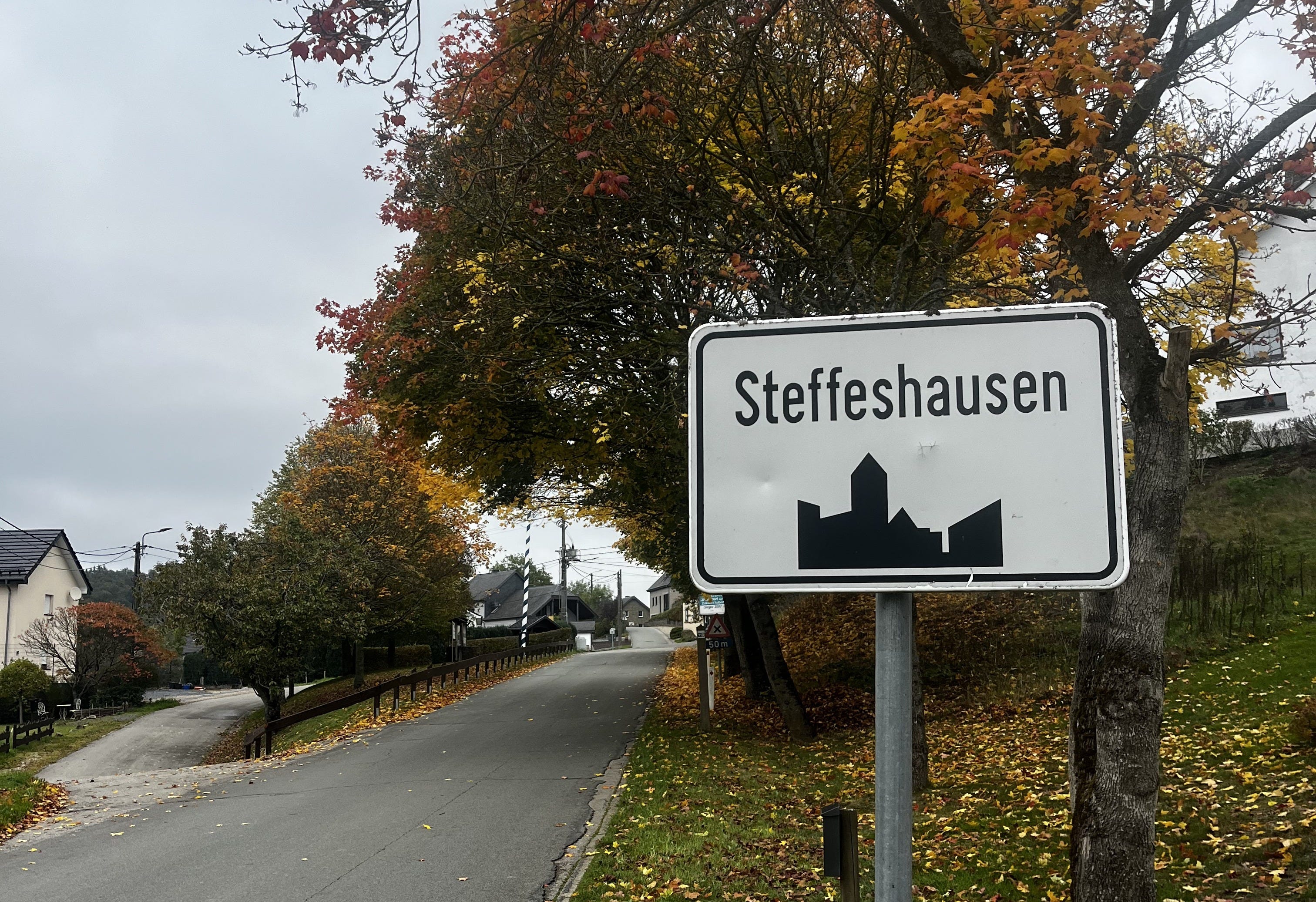
What is unique for its size is its two churches: 1. Church Saint Peter, thought to date from the twelfth century, and 2. The Sacred Heart, consecrated in 1991.
Father Paul Schoonbroodt built the second from donations. He came to the village as a priest in 1970, and kept the Mass of the old rite when the Novus Ordo arrived.
Unwilling to say this new liturgy he lost his parish, and was excommunicated in 1988. He said the old Mass in his own church until he died in 2012.


The theme of the retreat was the Holy Sacrifice of the Mass. The priests taught it one part at a time, with the reason each part stands where it stands, and after each teaching we made a lectio divina, a slow and prayerful reading, on what we had heard.
This report opens a series of five parts. A part appears every Sunday and every Wednesday until the fifth arrives, and all five collect in the Liturgy section of Heritage Standard.
A retreat is a stretch of days set aside for silence and prayer. It wears us down and sets us at rest, and it leaves room to wonder and to find. The priests described the work of meditation as the work of a satellite: we swing around one point and catch what falls from it. For six days the point was the Mass.
Holy Mass is the central act of Catholic worship. It must be loved, but we only love what we know. Our priests named ignorance of the Mass as the greatest damage of our time. ‘The treasure lies buried in the field.’
Our Lord Jesus Christ spoke about this in a parable, a short story with a meaning: ‘The kingdom of heaven is like unto a treasure hidden in a field. Which a man having found, hid it, and for joy thereof goeth, and selleth all that he hath, and buyeth that field.’ (Matthew 13, 44)
We walk across that field every Sunday, and so little is taught about it. Without depth we are not ready to fight for our faith and culture. Nobody showed us what we hold, and the treasure stays under the soil.
The word culture comes from the Latin noun cultura, which means ‘tilling’, ‘growing’ or ‘cultivation’. The Mass is the cultus at the centre of our culture
Cultura descends from the verb colere, which means ‘to tend’, ‘to till’, ‘to cultivate’, ‘to care for’ and ‘to inhabit’.
The same verb gave Latin a second noun, cultus, which means ‘care’, ‘reverence’ or ‘worship’. It is the root of the English word cult, and the Church still uses it in the phrase cultus Dei, the worship of God. The tending of the earth and the tending of the altar share one origin, since the earth was given by God.
The consequence for liturgy is that a culture has never been a collection of (dis)tastes. Culture is something tended: a field worked every year, a rite repeated every (Sun)day, and in both cases a thing handed on to the next generation who would care for it.
What grows untended is wilderness, and a culture that is no longer tended reverts to it.
The opening prayer, the Veni Creator1 we sang, asked the grace of teaching us to know the mystery of the Sacrifice. The sacrifice of Mass is the death of Jesus Christ on the cross, which the Church teaches Holy Mass makes present on the altar.
The Catholic Church calls Mass the mysterium fidei, Latin for: the mystery of faith, and the words stand inside the consecration of the blood, the moment when the priest speaks the words of Christ over the chalice filled with wine.
The German word for loneliness is Einsamkeit2 and then there is Zweisamkeit, literally translated: solitude for two persons. And that is exactly the way we are meant to stand with God.
The Roman empire and the altar
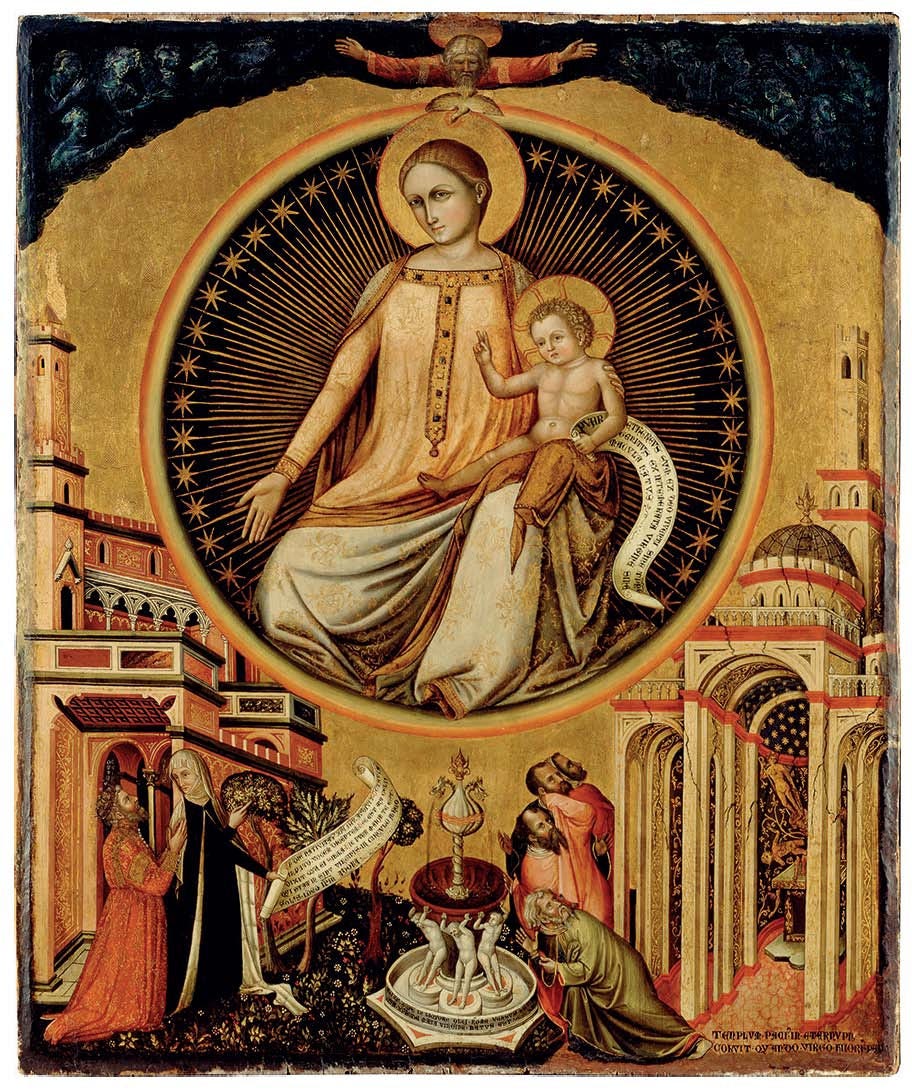
The retreat began further back than the altar. We were taught that God prepared the Roman Empire for his own coming, since its roads, its law and its single administration carried the new faith faster than any movement of its age. Tradition holds that Augustus, the first emperor, saw a vision at the Ara Caeli, Latin for ‘the altar of heaven’, on the spot where the church of Santa Maria in Aracoeli now stands on the Capitoline hill in Rome. It is one of my favourite churches in the city.
Few people who have seen an altar can say what it is. The altar is the table at the front of a Catholic church on which the priest offers the Mass. The word comes from altare, the place where the highest of heaven joins divine things on earth. Latin had a second word, ara, for the altar of incense to pagan gods, and the Church passed it over for that reason.
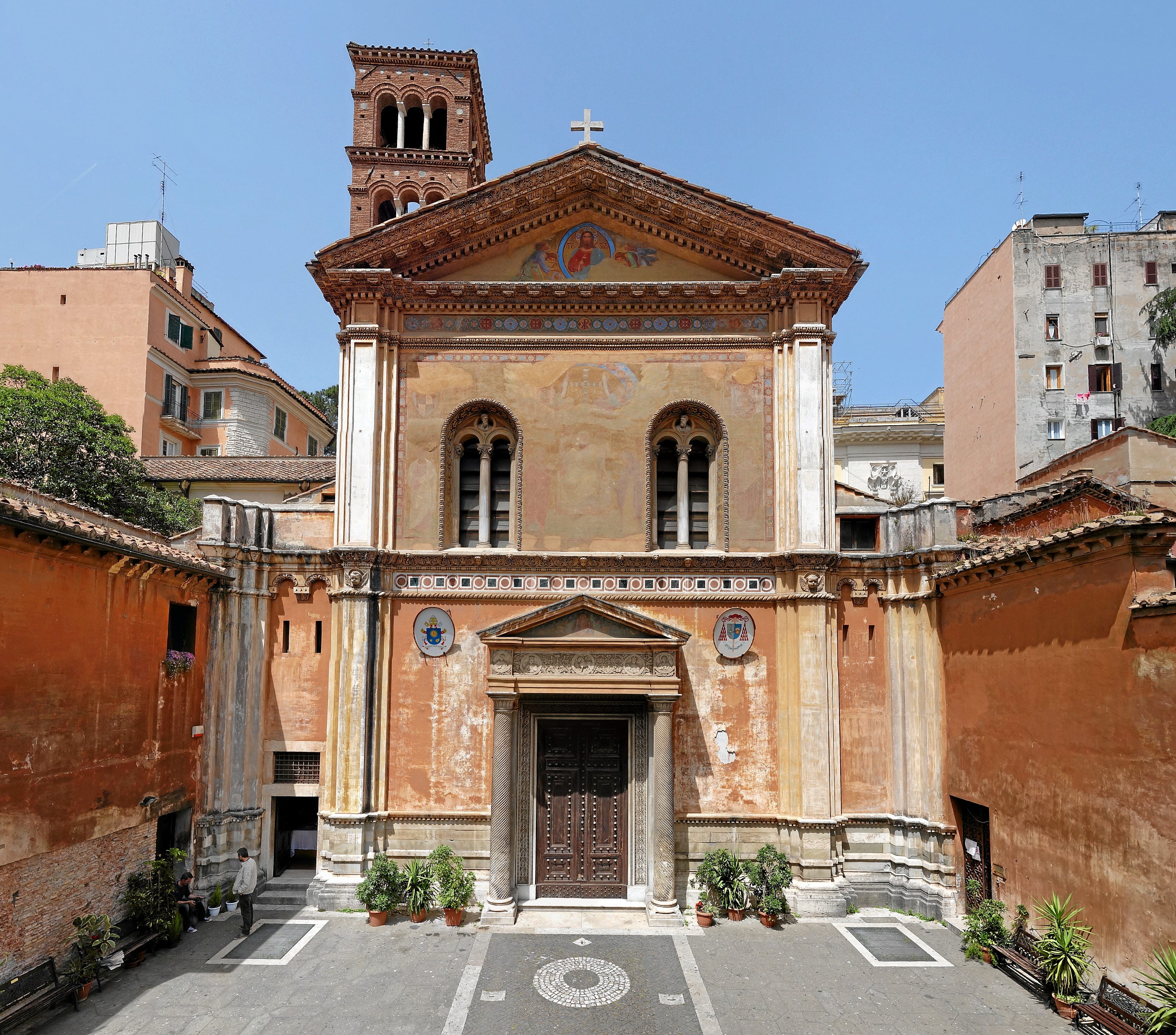
The first altars were wooden tables that deacons, the men ordained to assist the priest, carried from house to house, as the Ark of the Covenant, the chest that held the tablets of the law, was carried through the desert. In Rome the church of Santa Pudenziana marks the house of the senator Pudens, where such a table was set up regularly, and it is one of the oldest churches of the city.
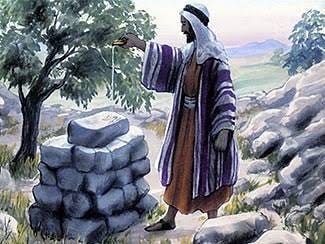
Wooden altars held until the fifth or sixth century, and then stone took their place, following the altars that Abraham, Isaac and Jacob built, the fathers of Israel.
Jacob had slept with a stone under his head, and in the morning he ‘took the stone which he had laid under his head, and set it up for a title, pouring oil upon the top of it.’ (Genesis 28, 18) A title here means a pillar of remembrance, and the oil on its top is the pattern the Church follows when it anoints an altar.
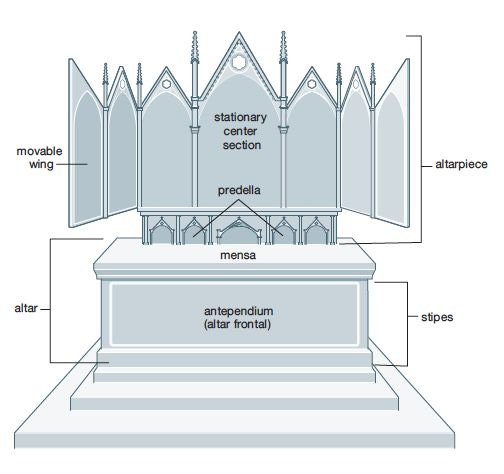
The top of the altar is called the mensa, Latin for table, and it must be one piece of stone. If that stone breaks, the altar loses its consecration, the blessing that sets it apart for God. Beneath the mensa often stand four pillars that support it, and the retreat taught that they stand for the four places in the New Testament where the words of consecration are written down: the Gospels of Matthew, Mark and Luke, and the first letter of Saint Paul to the Corinthians.
Paul gives the words over the bread: ‘And giving thanks, broke and said: Take ye and eat: This is my body, which shall be delivered for you.’ (1 Corinthians 11, 24) Over the cup he gives the second half: ‘This chalice is the new testament in my blood.’ (1 Corinthians 11, 25)
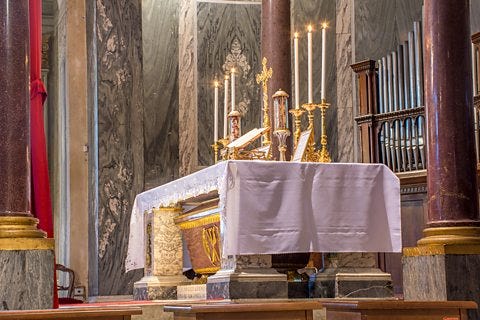
Five crosses are cut into the mensa, one for each wound of Christ: two hands, two feet and the side. The Latin saying Altare Christus est means the altar is Christ. The steps that lead up to it number three, for the Trinity and for Calvary, the hill of the crucifixion, or five for the wounds, or seven for the sacraments, the seven rites through which the Church gives grace.
A small cavity in the stone holds relics, the remains of martyrs, the Christians killed for their faith, and every altar requires one. The Church draws this from Revelation (or Apocalpyse), the last book of the Bible: ‘I saw under the altar the souls of them that were slain for the word of God, and for the testimony which they held.’ (Apocalypse 6, 9)
The altar is the mystical Golgotha, the Aramaic name of Calvary, and for that reason removing the altar stone ends its consecration.
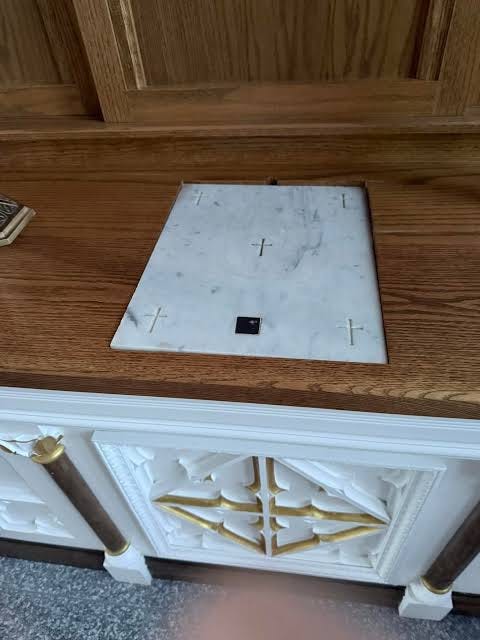
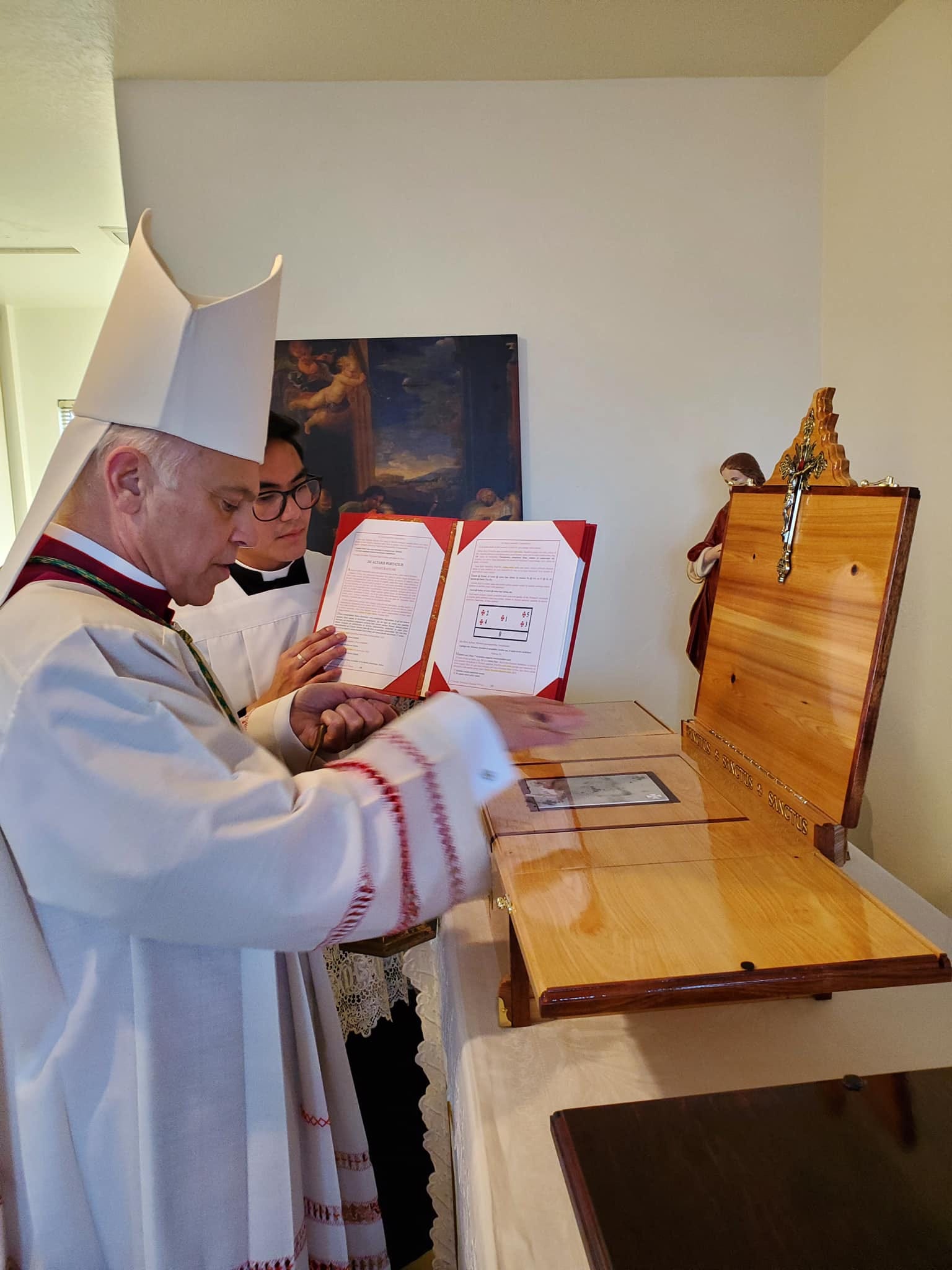
A consecrated church needs at least one stone altar, and the anointing is the rite in which the bishop marks it with chrism3, a consecrated oil. In most modern churches (built post 1969) the altar is a table that was blessed and never anointed.
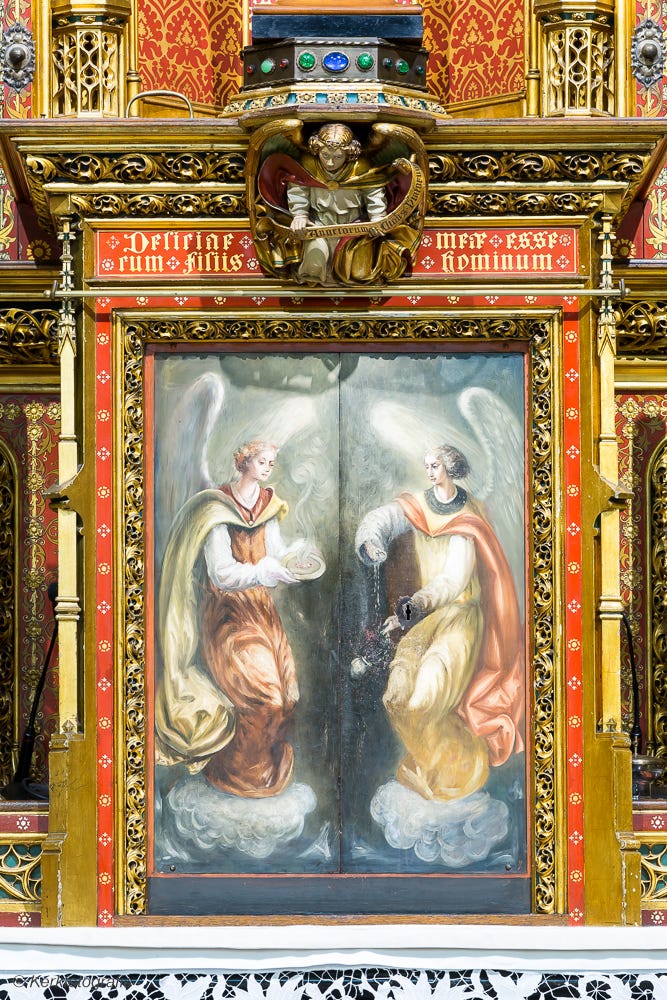
At the consecration of the Mass, the bread and wine become the Body and Blood of Christ. For the first thousand years the consecrated bread, which we call the Blessed Sacrament, rested in a tower beside the altar. The Fourth Lateran Council, which met in 1215, set it in the wall of the church, and the Council of Trent, which met between 1545 and 1563, placed the tabernacle, the locked box that holds the consecrated bread, at the centre of the altar. The placement follows the doctrine, since Christ comes to the altar through the consecration.
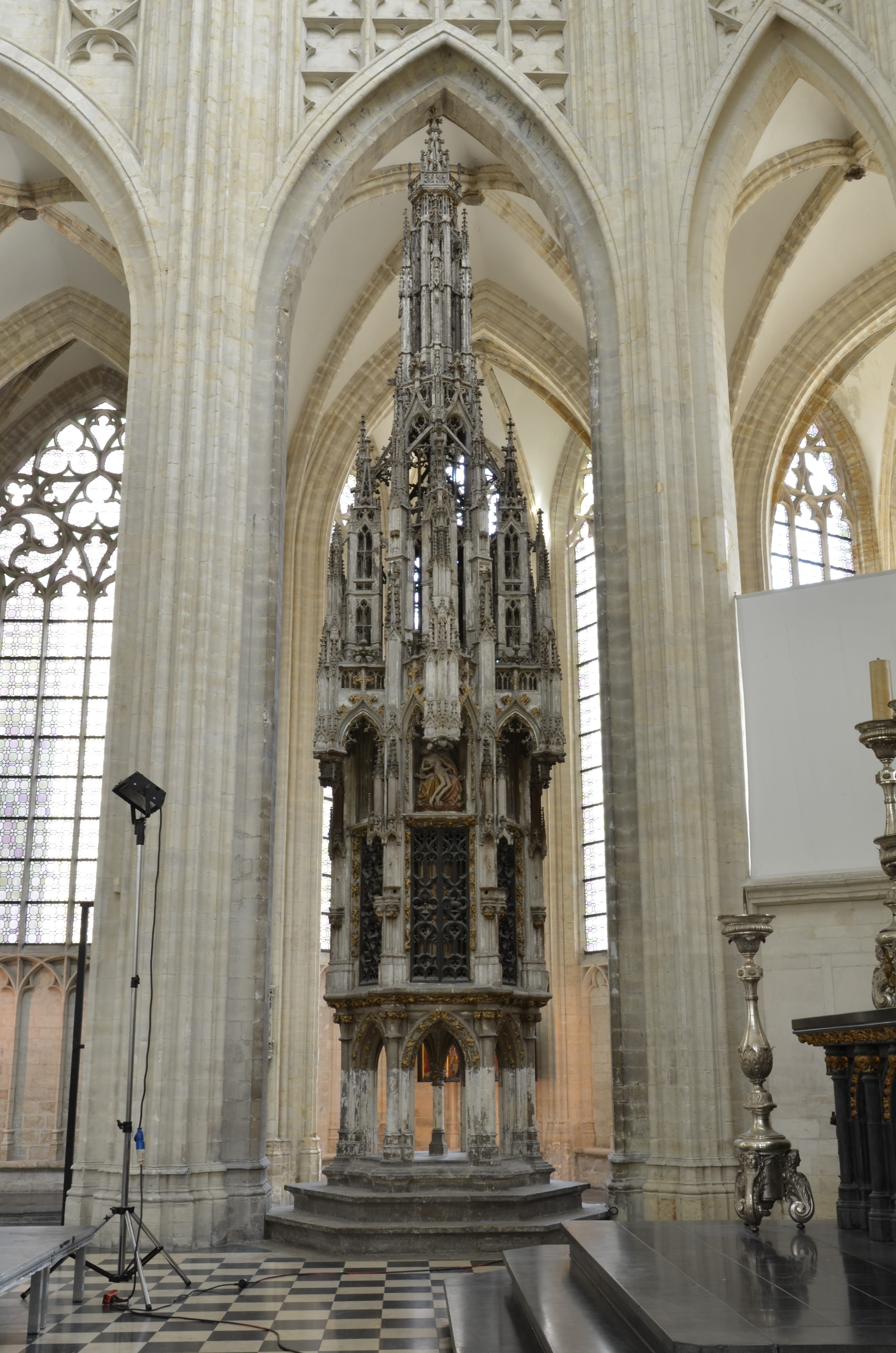
During Mass, the bread and wine become the Body and Blood of Christ. For the first thousand years this consecrated bread, which we call the Blessed Sacrament, rested in a tower beside the altar.
The Fourth Lateran Council, which met in 1215, set it in the wall of the church. The Council of Trent, which met between 1545 and 1563, placed the tabernacle, the locked box that holds the consecrated bread, at the centre of the altar. The placement follows the doctrine, since Christ comes to the altar through the consecration.
In many modern churches the tabernacle has left the centre of the altar for a niche at the side, and nobody kneels to it on the way in.
Tradition credits Pope Sylvester, who became pope in 314, with the rule of three cloths on the altar to catch the precious blood, as we call the consecrated wine. On Maundy Thursday, the Thursday before Easter, the altar is stripped bare, a sign of the ingratitude that met the sacrifice. The cloths are linen, the most luxurious of fabrics and the hardest to get white.
In many modern churches a single short cloth lies on the altar, where the Church prescribes three that hang to the floor.
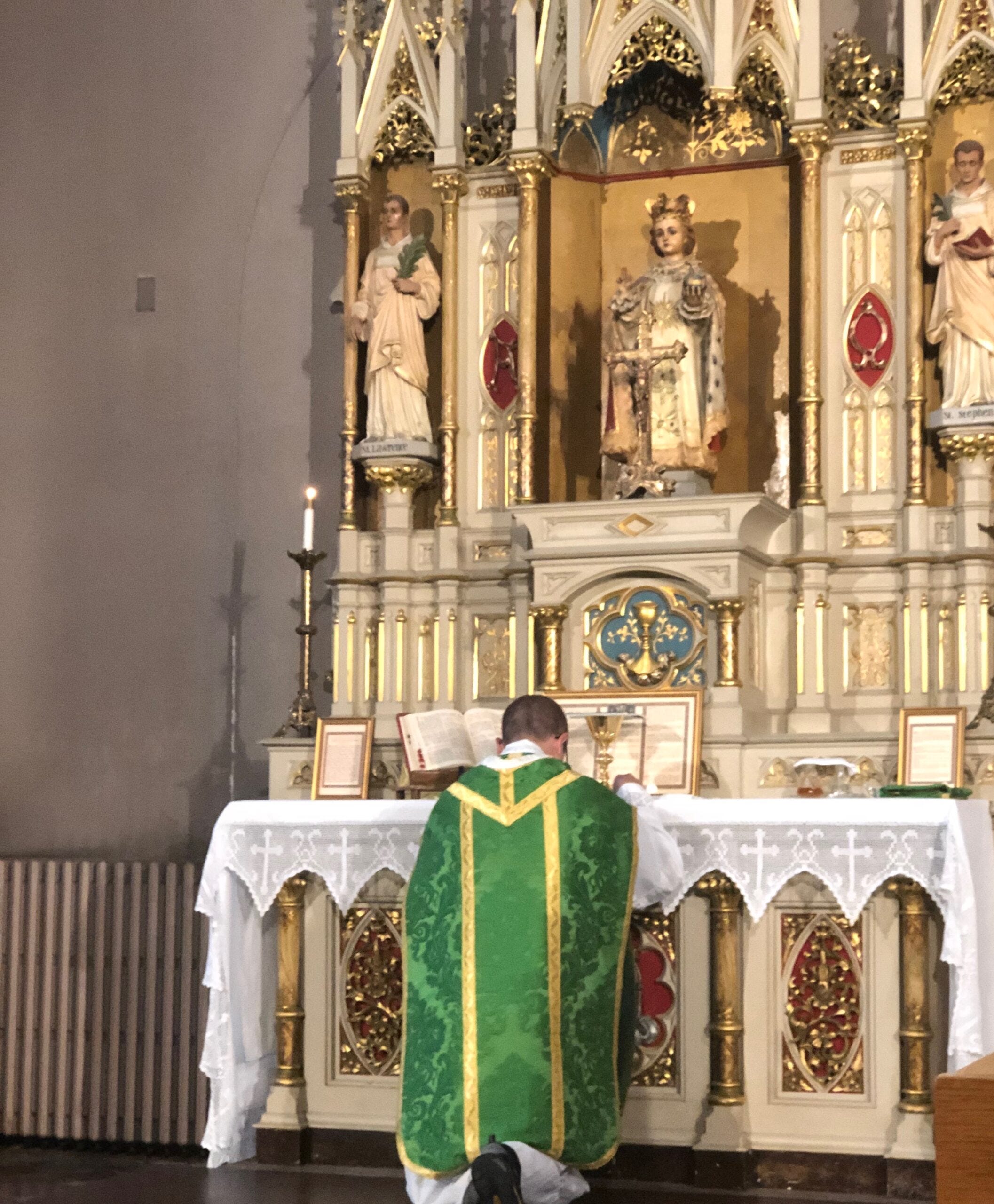
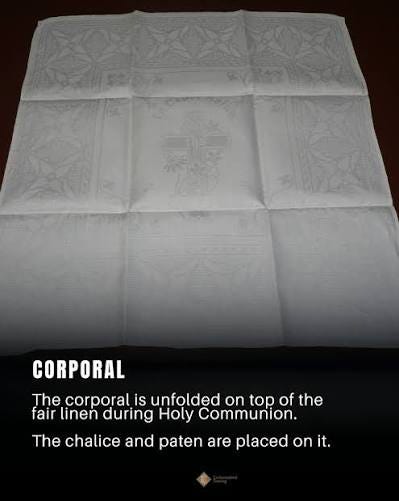
On the cloths lies the corporal (only during Mass) a square linen cloth on which the chalice and the host rest, the host being the consecrated bread.
It has nine sections: the chalice at the centre, the host below it, and the sections around them can bear the ciborium, the covered cup that holds the hosts for the communion of the people.
Candles, and what replaced them
Saint Jerome, who translated the Bible into Latin in the fourth century, taught that candles celebrate joy. The wax was once beeswax, and was pure, because worker bees were believed to be virgin. The wick symbolises our obedience and the flame is the way mankind burns.

At a pontifical Mass, a Mass said by a bishop, seven candles stand with seven acolytes, the servers who carry them, and the rule is fixed: candlesticks stand before the flowers. The priests set Abraham and Isaac beside the candle, the father who offers what he loves, since Abraham was ready to sacrifice his son at the command of God.
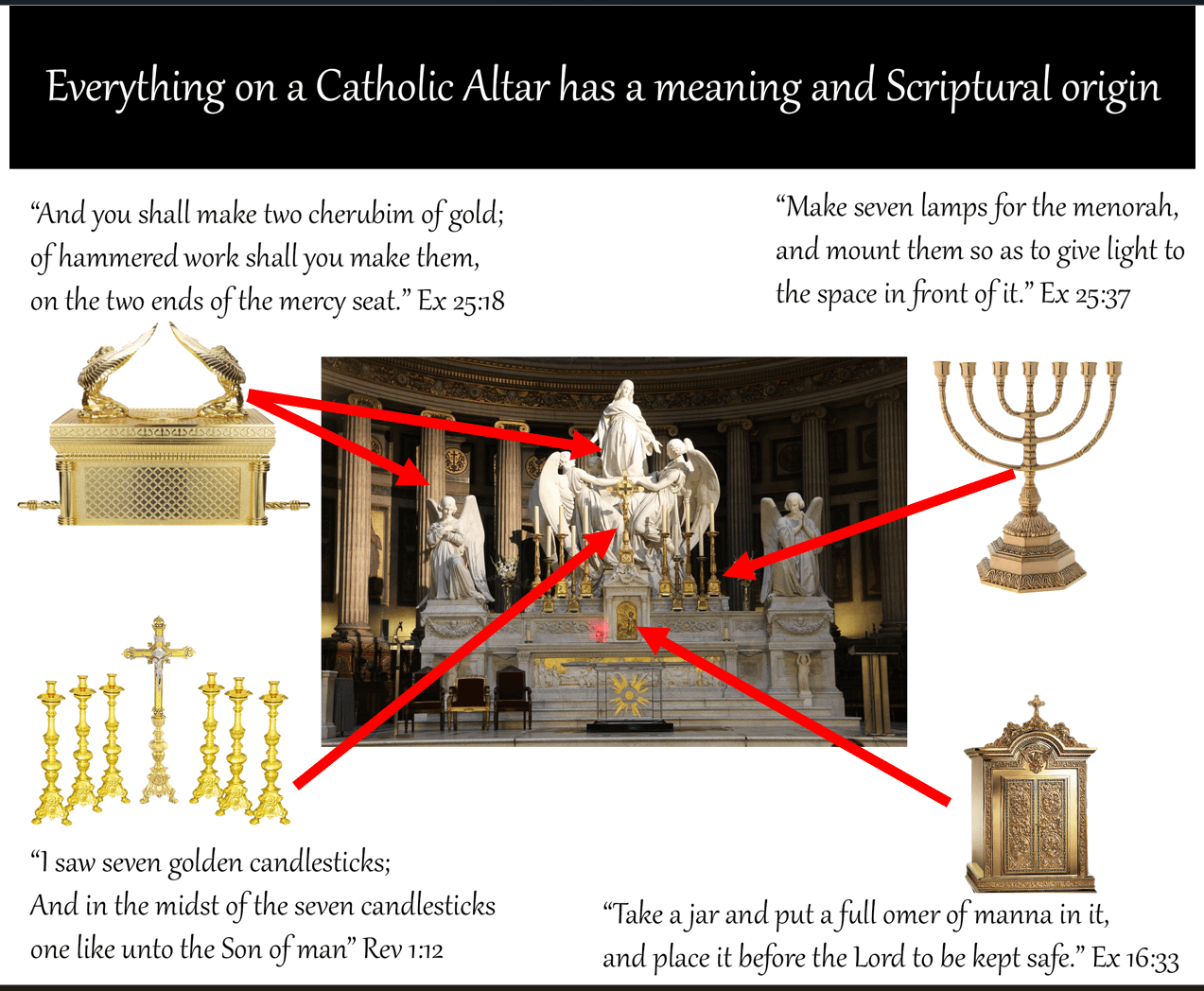
The sanctuary lamp, the red light that burns near the tabernacle to show that Christ is present, is kept in odd number, a love on fire.


The modern Church has forgotten much of this order, and the decoration that replaced it follows taste. Each item in the old order had a reason for being there.
You will see plants on many altars, which are strictly forbidden, since the cut flower symbolises Christ (pure, virgin) and ourselves (withering). And many other disordered things a person with an eye for liturgy and symbolism would get really mad about.
When I see such things in Churches; e.g. plants on the altar stone, you can be 100% sure that I will remove them. God will not be mocked.


The chalice
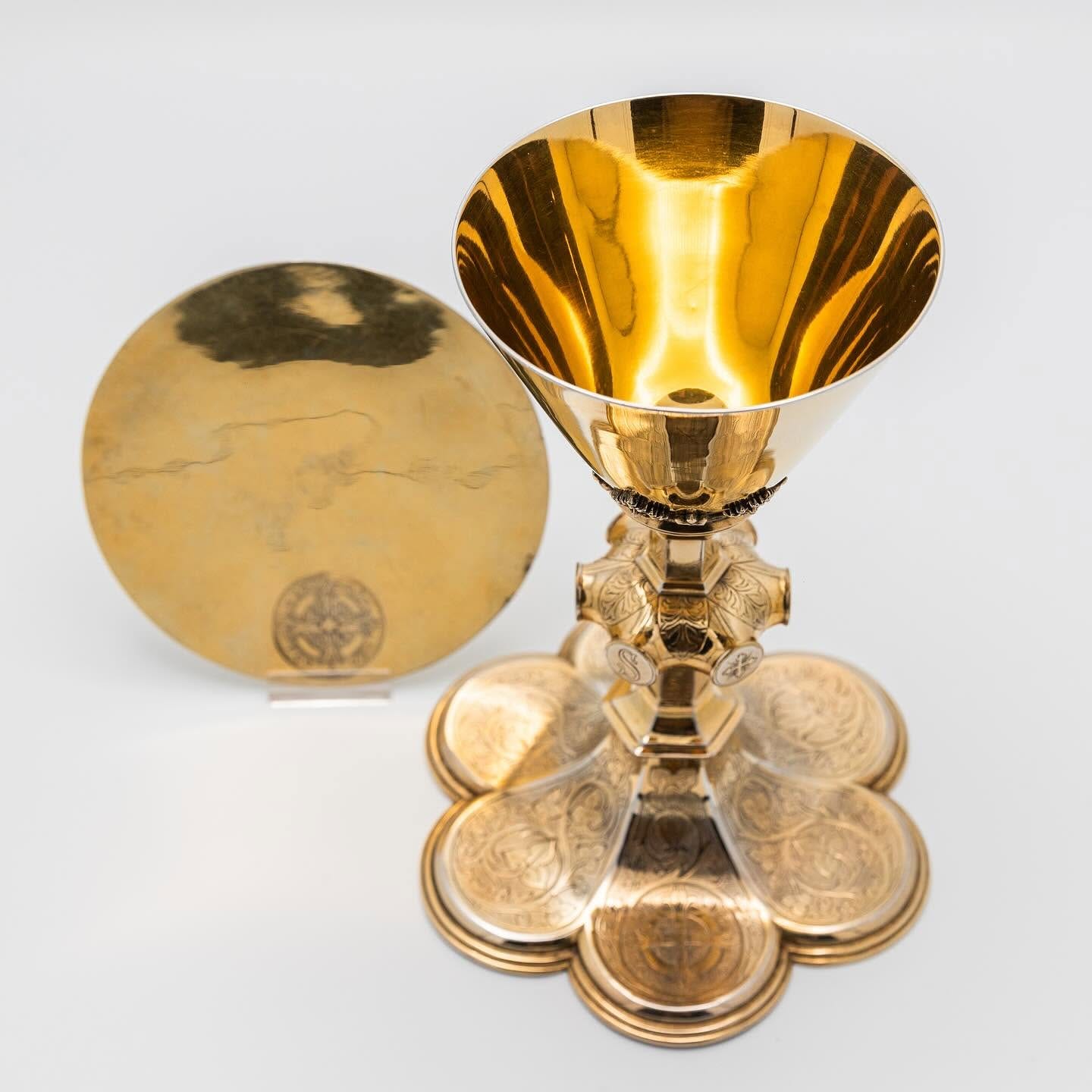
Together with the corporal and paten, the chalice is the most important object (not species!) for Mass. It is the cup that holds the wine, and the paten is the small plate that holds the bread. The Mass is a sacrifice when both kinds are consecrated, bread and wine, and no sacrifice exists without the second.
In the sacrament either kind holds the whole Christ, and the whole Trinity, Father, Son and Holy Ghost, is present in the host, yet the sacrifice asks for both. The Western Church once offered one great loaf, as the Eastern Churches do.
In the case a priest dies during Mass, another priest must finish his Mass. Laity are not obliged to receive communion (did someone tell this at your local Novus Ordo parish?), yet every priest who says must receive communion himself.
The cup of the chalice should be gilded inside at the least, and within the Society of Saint Pius X, the society of traditional priests that gave the retreat, this cup must be at least solid silver. The idea of all this ‘luxury’ is that the priest is handling with the must precious Sacrament, a tin cup is not worthy.
Both chalice and paten are anointed with chrism. The paten bears a cross, and laid over the chalice it becomes the stone across the tomb of Christ.
The vestments
Vestments are the garments a priest wears at Mass. The Old Testament lays down strict conditions for what a priest wears.
Aaron, the first high priest of Israel, stood in the place of God, and the priest stands in the place of Christ, which is the reason his garments are made with the utmost care.
In many churches the linen and silk have been replaced by polyester, cut for cost (which is why I am against cheap polyester vestments with ugly shapes).
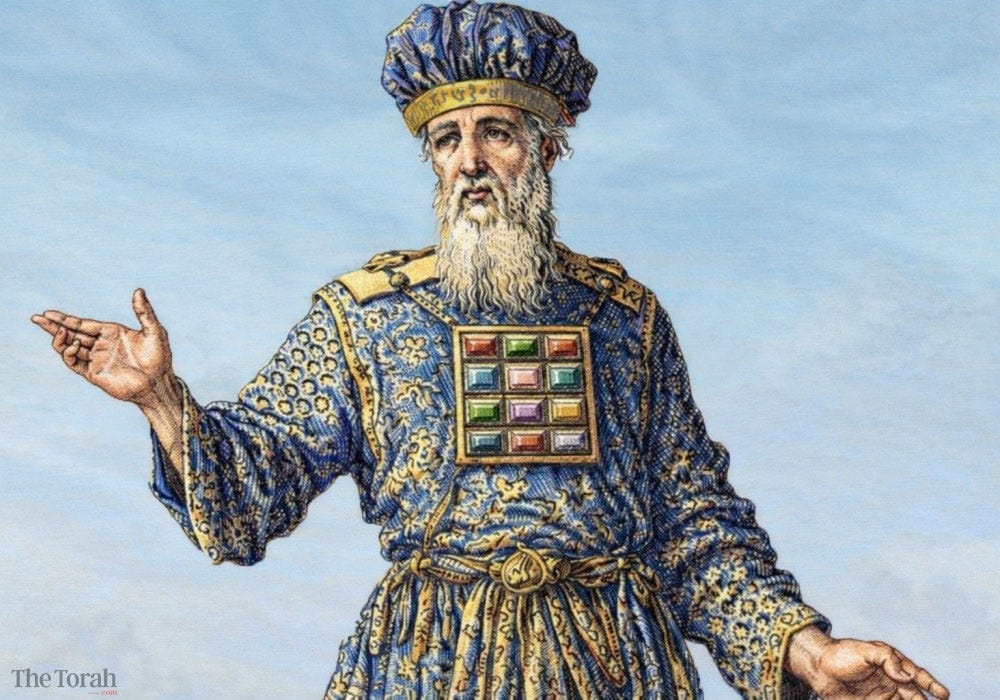
Since Pope Stephen, liturgical garments may not be worn outside the liturgy (modern Churches ignore this for most part: priests hear confession in chasubles sometimes).
The alb and the chasuble, the long white robe and the outer garment, come from earlier ages, and until the twelfth century no strict rules governed them. The East preferred white, and Clement of Alexandria, a Christian teacher of the second century, speaks of garments white and plain. Pope Innocent fixed the colours: white for purity and joy, red for kings, martyrs and the feasts of the Passion, the suffering of Christ, green for hope, violet for earnestness and penance, black for death and sin.
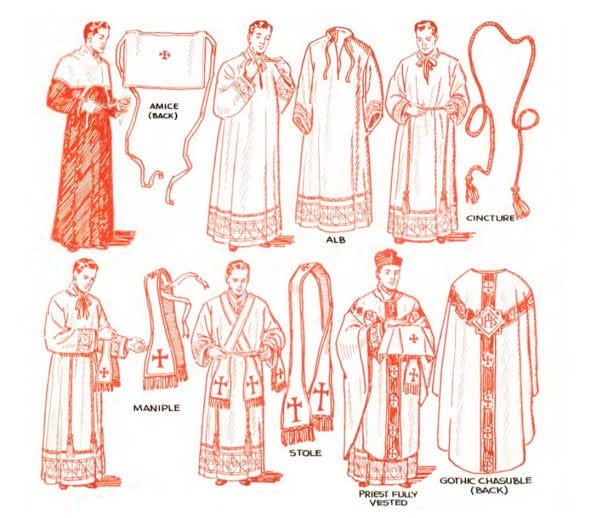
Each garment recalls a blow. The amice, a linen cloth laid on the neck and shoulders, recalls the mockery of Christ before the high priest, and it serves as the helmet of the letter to the Ephesians, where Saint Paul tells the faithful: ‘Put you on the armour of God, that you may be able to stand against the deceits of the devil.’ (Ephesians 6, 11)
The helmet itself comes six verses later: ‘And take unto you the helmet of salvation, and the sword of the Spirit (which is the word of God).’ (Ephesians 6,17)
The alb, the long white robe, recalls the robe in which king Herod mocked Christ: linen for holiness, purity and self-denial. The stole is the long narrow band worn round the neck, and it is the cross laid on the shoulders.
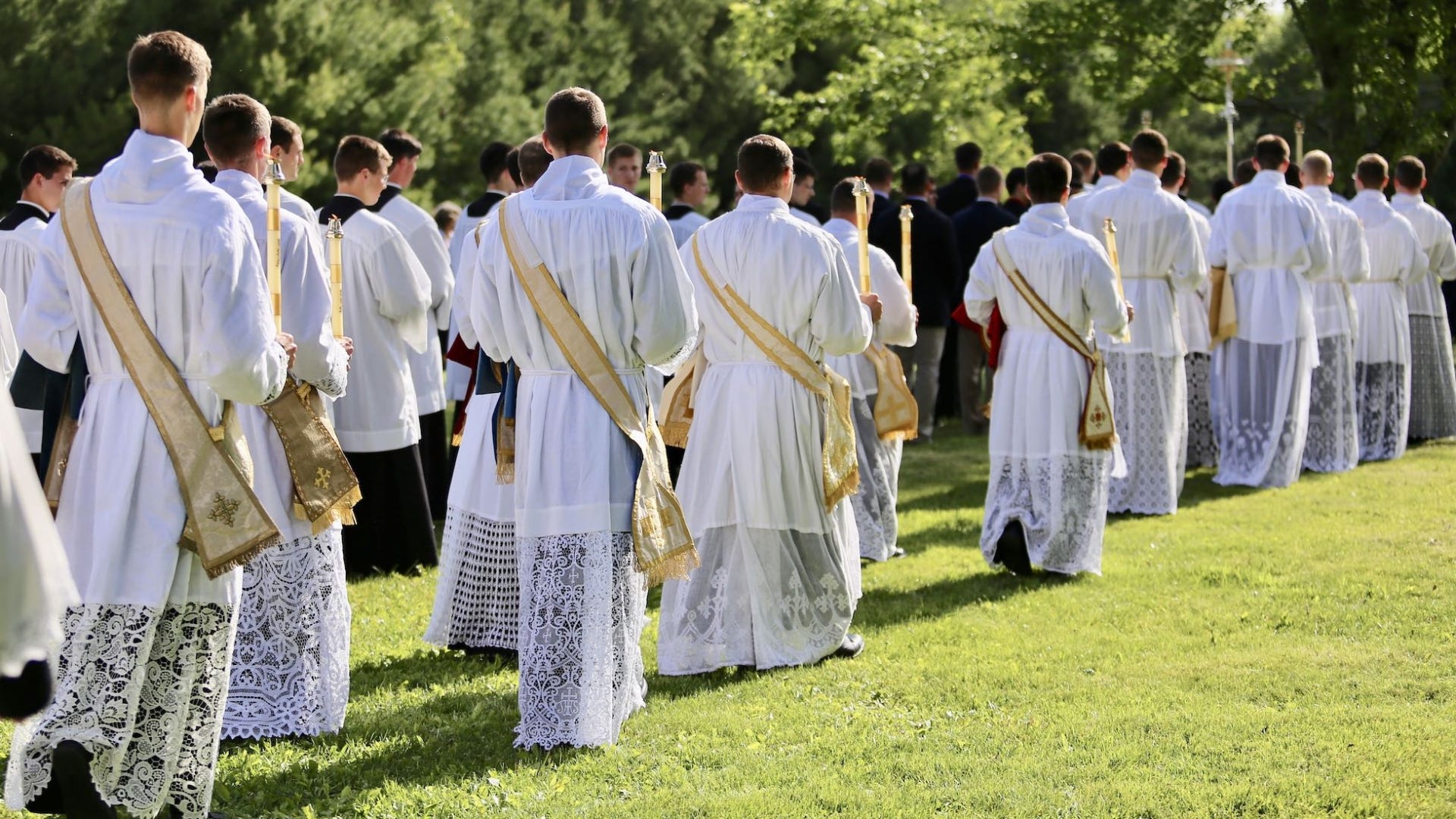
A deacon wears it across one shoulder, half the burden. A priest wears it crossed on the chest: the whole burden. A bishop wears it hanging, the full weight of the Ordo, the order of the clergy (Deacon, Priest, Bishop).
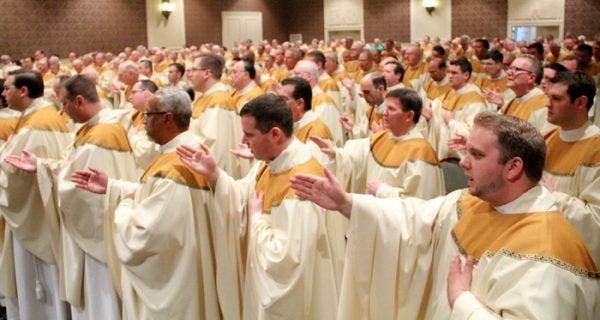
A helmet implies a fight, and the retreat counted the fights. Every Mass is an attack on Satan, and concelebration, where several priests say one Mass together at one altar, lowers the number of Masses and so lowers the number of attacks.
Why a sacrifice?
The retreat answered this from the top: God is the centre, and we depend o Him for every breath. We show friendship in deeds, so the body must honour God as well as the mind.
A community that is visible needs a liturgy that is visible, a public form of worship. Sacrifice is universal, and the priests held that Adam offered before the fall. Reparation, the making of amends for sin, belongs to it. The letter to the Hebrews says it plainly: ‘And almost all things, according to the law, are cleansed with blood: and without shedding of blood there is no remission.’ (Hebrews 9, 22) Remission is the forgiveness of sin.
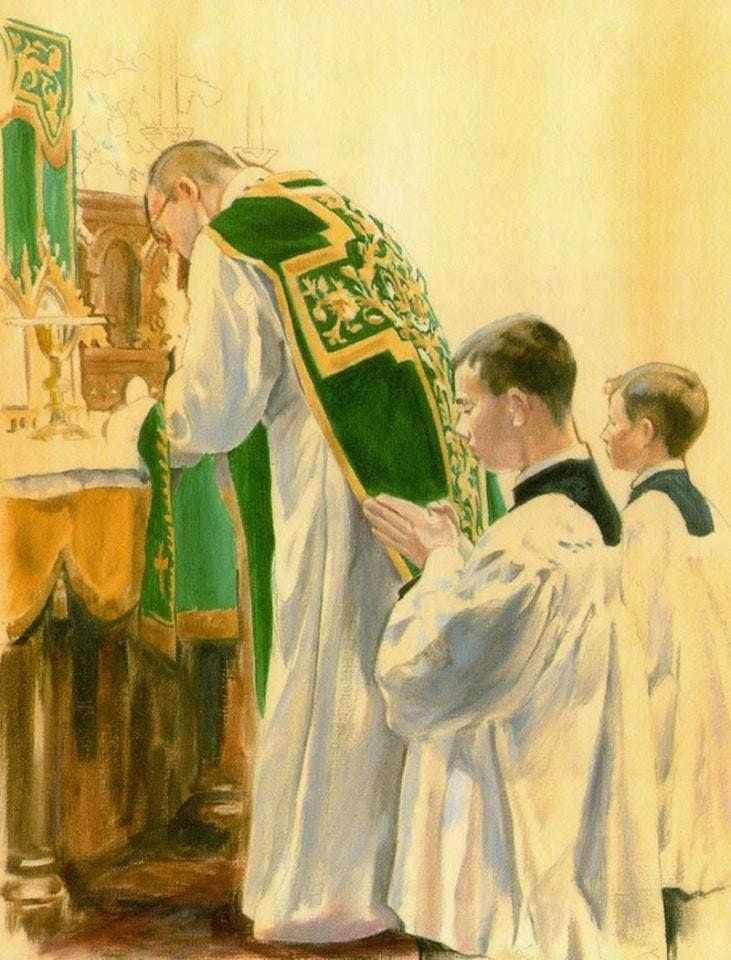
The priests gave me, a layman, the whole matter, as they would give it to a deacon, because we fight for what we know. The meditation began with adoration, which means kneeling before God in silence, and thought came after.
The retreat week put a question to each of us: What character am I at the Way of the Cross? The sacrifice of the Mass is the sacrifice of the cross, and a crowd gathered around that cross: Mary Magdalene in repentance, the Pharisees, the religious party that opposed Christ, the centurion, the Roman officer who watched him die, the soldiers who cast lots for his garments, and the thief who hung beside him and asked for forgiveness.
The thief said to Jesus: ‘Lord, remember me when thou shalt come into thy kingdom.’ (Luke 23, 42) And Jesus answered him: ‘Amen I say to thee: This day thou shalt be with me in paradise.’ (Luke 23, 43)
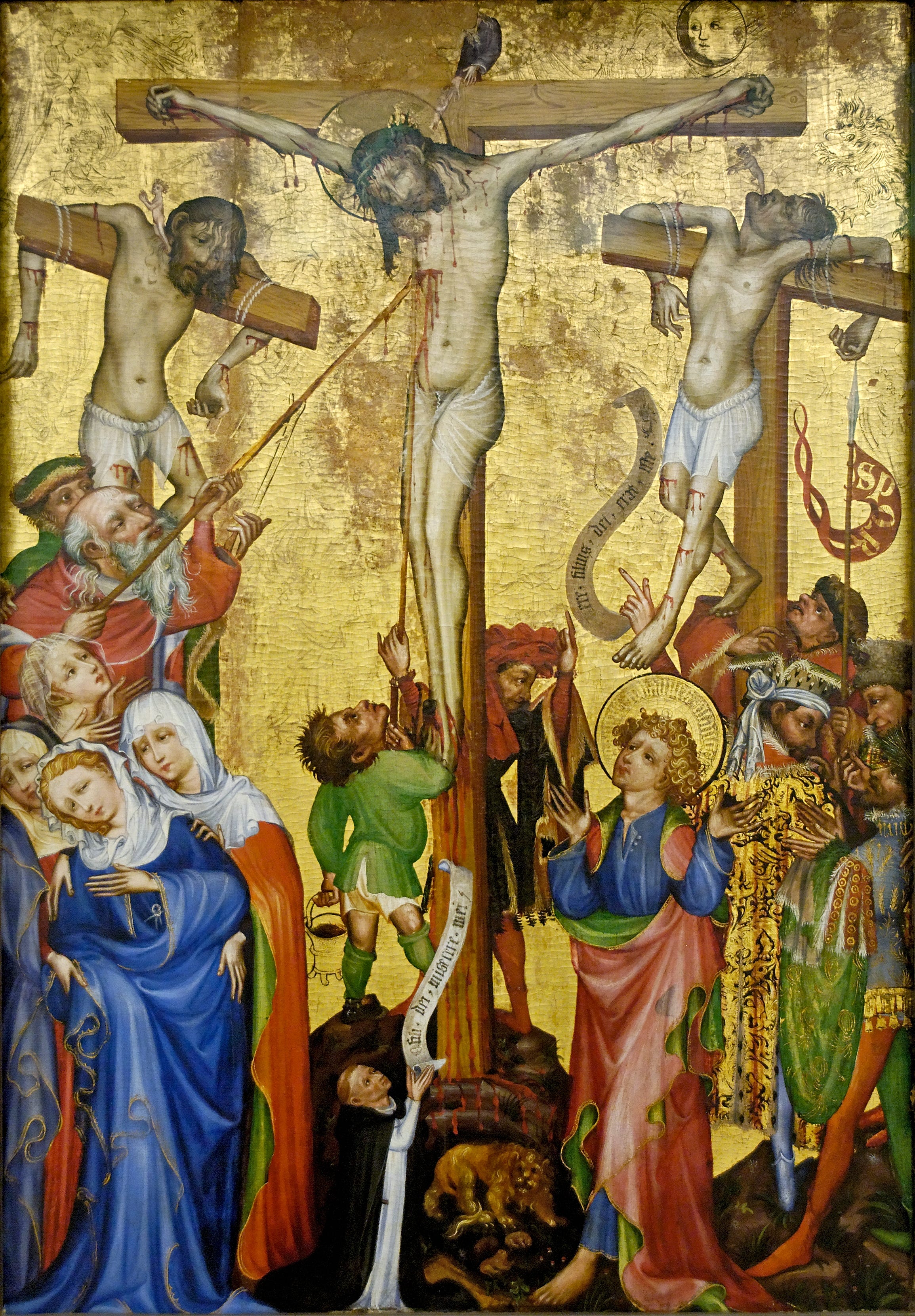
The priest at the altar stands at that cross, and so do we who kneel before him. The priests asked which of them each of us is.
On Sunday the priest will walk to the altar in an amice, an alb and a stole, and you will see cloth.
Next Saturday, the Member report gives the six steps of meditation we were taught, from adoration to fruit, and the full table of vestments, each matched to its moment in the Passion.
The altar in your parish is a stone with five crosses and a martyr under it, or it is a table with flowers on it, and nobody has told you the difference.
—Robbert


Veni Creator Spiritus (Latin for "Come, Creator Spirit") is a 9th-century Catholic hymn that invokes the Holy Ghost
The German word Einsamkeit (meaning "loneliness" or "solitude") comes from the surface analysis of einsam (lonely/solitary) combined with the nominalizing suffix -keit (similar to the English suffix "-ness")
Chrism is a consecrated oil made from a blend of pure olive oil and sweet-smelling perfume or balsam.