


At some point in the 1950s, an engineer at Ferrari proposed adding rear seats to one of the company’s production cars.
Enzo Ferrari rejected it.
He called the rear seats of any GT ‘seats for the dog.’
This was not an aesthetic objection, but a structural one: every Ferrari had to justify its existence as a driver’s machine first.
Anything that diluted that focus was removed before it reached production.
That constraint held for decades.
The new electric Ferrari Luce has five seats, four doors, and was designed by the man who made the iPhone.
Enzo Ferrari died in 1988.


Porsche: when success changes the object
Ferry Porsche built the first Porsche in 1948 because no existing car met his requirements. The result was the 356: a minimal, lightweight, and mechanically direct. It was built from necessity rather than segmentation.


The early 911 continued that logic: Rear-engine layout, low weight, and no insulation from the driving experience. The car was designed to transmit information from road to driver without interference.
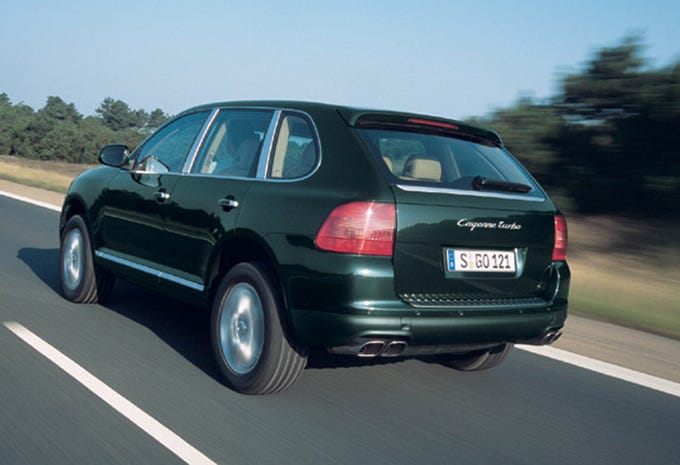
Then… on the verge of bankruptcy Porsche launched the Cayenne in 2002.
It was a commercial success that saved the company financially. But also a structural departure: a heavy, high-riding SUV designed for comfort, space, and market expansion rather than mechanical purity.
The 911 remained in production, but it was no longer the centre of the system. It became one product among many rather than the definition of what Porsche is.
Rolls-Royce: engineering as personal standard
Henry Royce built cars under a constraint that was personal rather than procedural: nothing left his workshop unless it met his definition of correctness.
Contemporary accounts describe him rejecting parts that other engineers considered finished. His standard was not ‘acceptable.’ He wanted it ‘correct,’ and correctness was not negotiable. Colleagues noted that poor workmanship produced a visible reaction in him… a level of discomfort that went beyond professional disagreement and into physical aversion.
That standard defined early Rolls-Royce engineering. Precision was transmitted directly through a small chain of engineers trained under those who had absorbed Royce’s expectations first-hand.
After his death in 1933, that chain continued for a period through institutional memory. The standard persisted because the people who held it were still present inside the organisation.
Eventually, they were not…


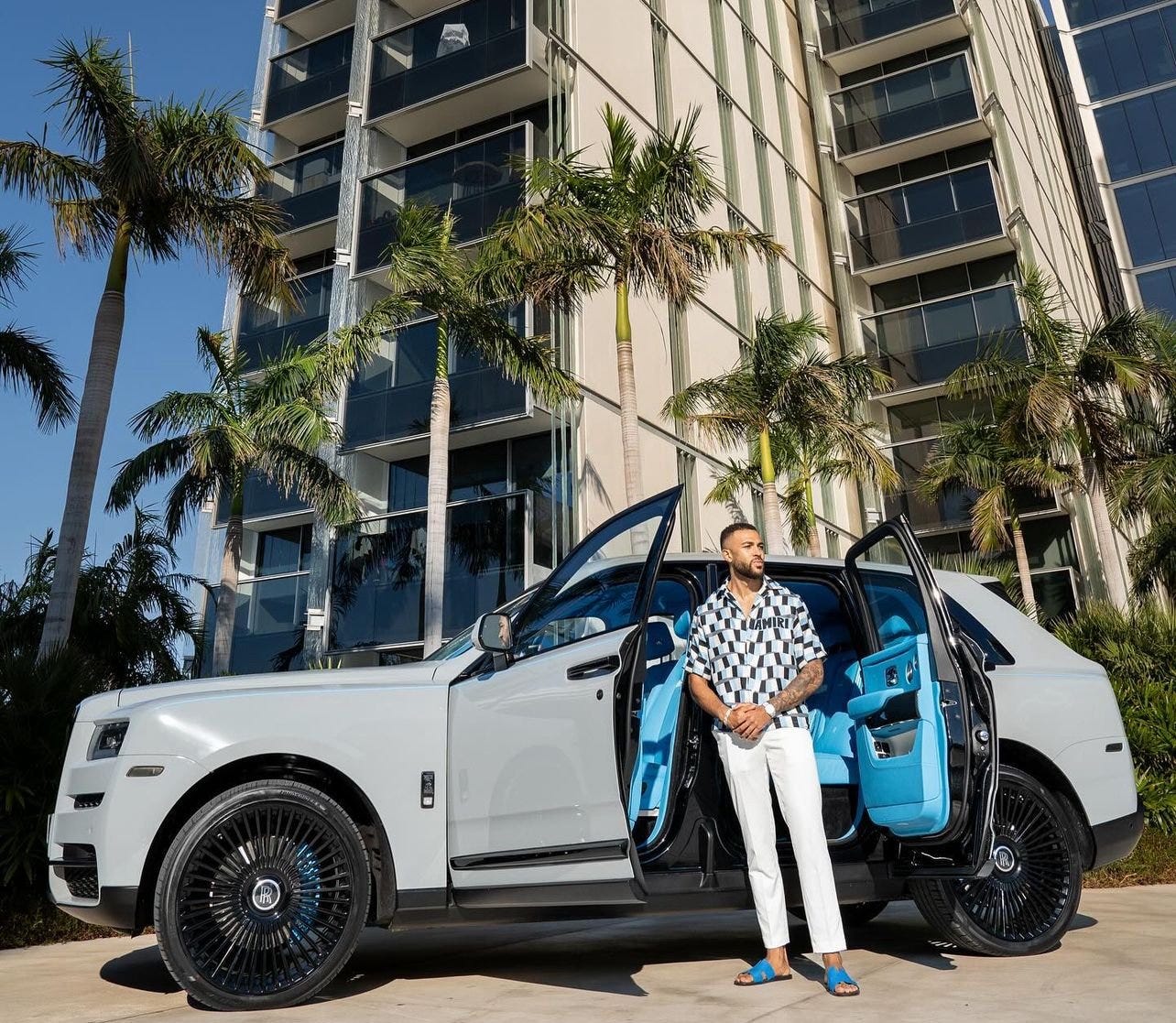
In the modern era, Rolls-Royce operates under BMW ownership as a global luxury brand rather than a closed engineering lineage. The Cullinan SUV; weighing over 2.6 tonnes, reflects that shift clearly: a vehicle designed not around mechanical necessity, but around the expectations of a global luxury market that prioritises scale, comfort, and visibility.
Patek Philippe: continuity under market pressure
Patek Philippe is unusual because it still retains family ownership and a long-cycle craft system in Geneva. It continues to produce mechanically complex watches that require years to complete and services pieces made in the 19th century.
Internally, their craft system still exists. Externally, the watch market has changed.
The Nautilus ref. 5711, a steel sports watch designed by Gérald Genta in 1976 had a retail price of approximately €30,000 before discontinuation. On the secondary market, it reached approximately €120,000, with authorised dealer waiting lists stretching into years.
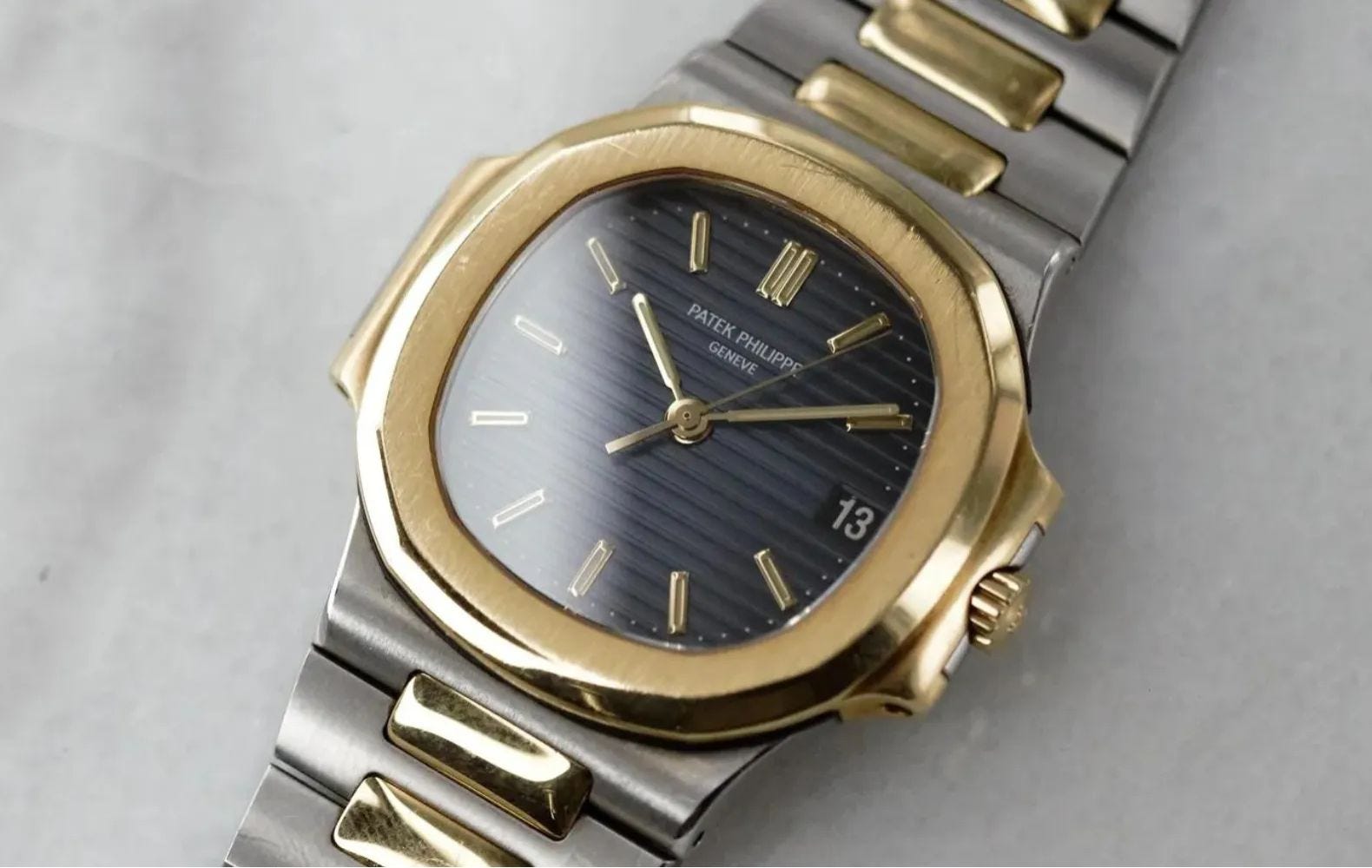
Patek did not manufacture this speculative condition. But it did not correct it either.
A watch designed to represent generational time increasingly functions as a short-term tradable asset. The object remains mechanically intact. Its relationship to time does not.
Swatch and the compression of luxury
The most recent development is not in the objects themselves, but in how they are translated into mass culture.
Swatch collaborations with Omega, Blancpain, and other luxury watchmakers compress high horology into plastic, mass-produced objects that reference the aesthetics of mechanical precision without carrying its constructional constraints.
To some buyers, these products function as entry points into luxury systems. To others, they appear as simplified replicas of objects whose meaning depends on material discipline that has been removed.


This is not a question of taste. It is a question of whether the constraint still exists in the object or has been translated into branding.
When the Audemars Piguet CEO cites increased Google searches for “mechanical watches” following Swatch collaborations as evidence of success, the metric being measured is attention, not craft continuity.
Search interest does not indicate the preservation of the system that originally produced the object.
The structural shift
Across Ferrari, Porsche, Rolls-Royce, and Patek Philippe, nothing has simply degraded.
Ferrari still builds fast cars. Porsche still engineers precise vehicles. Rolls-Royce still produces highly refined automobiles. Patek Philippe still produces some of the most complex mechanical watches in the world.
What has changed is where the standard lives.
In earlier systems, the constraint was embedded inside the object itself. Repairability was determined by construction method. Durability was defined by material limits. Performance was governed by mechanical tolerance. Longevity was structured into the design from the beginning. The object enforced its own standard, and that enforcement was visible to anyone who knew how to look.
In modern luxury, those constraints increasingly exist outside the object: in brand narrative, heritage storytelling, controlled scarcity, and price signalling. The object no longer guarantees the standard. It represents it. That difference matters because representation can be scaled independently of enforcement. A narrative can expand globally without changing the object it describes. A material constraint cannot.


What this actually costs the brands
Most people assume the buyer is the one who loses here. They pay a premium for a name that no longer guarantees what the name once meant. Which is true, but it is not the bigger problem.
The bigger problem is the brand’s reputation. Every one of these companies is spending the founder’s reputation to fund its growth:
Ferrari’s refusal to build a four-door car is the asset the Luce is borrowing against.
Royce’s obsession with correctness is the asset the Cullinan is borrowing against.
Porsche’s insistence on building only what he actually wanted to drive is the asset the Cayenne has been borrowing against for twenty years.
You can only borrow against a reputation for so long.
Mr. Ferrari cannot refuse the Luce, just as mr. Royce cannot send the dashboard back, and mr. Porsche cannot say he would not have built this. The account gets spent and nothing goes back in. Every product that contradicts what the founder stood for is a withdrawal from something that cannot be replenished.
At some point the buyer notices. The Cullinan buyer who finds out that Rolls-Royce engineering is now BMW engineering with different bodywork is not just disappointed. He tells people online.
The Nautilus buyer flipping his watch at four times retail is not honouring what Patek built. He is showing everyone watching that the watch’s value has nothing to do with what it was designed to mean. Once that is visible, it does not become invisible again.
The brands that come through this intact will be the ones that find someone willing to say no the way the founders said no.
Not a heritage director, or a so-called brand guardian... but someone who is genuinely bothered by the wrong answer and has enough authority to kill it.
Those people are harder to find inside large organisations.
Their structure does not reward refusal, it rewards the next quarter’s revenue.
If you want to go further, this Saturday’s Member’s essay expands this into a practical directory: The Living Standards Guide — which heritage brands still have living standards inside them, and how to tell before you buy.


What remains
Enzo Ferrari could refuse a proposal before it reached a drawing board. Royce could reject a component that every other engineer in the room considered finished. Mr. Porsche could insist on building the car that did not yet exist and find no one with the authority to stop him.
When they were gone, the companies they built had to decide whether to find someone else willing to do the same thing, or to manage the legacy of the refusal instead. Most chose the second option. It is easier and it pays better, at least for a while.
Some objects still enforce their own standards without needing anyone to insist:
A watch with a strict in-house service culture.
A material that ages honestly and shows you exactly how it was treated.
These things are still out there and they are not hard to find once you know what you are looking for.
Most of what is sold as luxury today is not that. Their history might be real, just as craftsmanship that founded the brand. But it is no longer guaranteed is that anyone inside the company is still refusing the wrong answer on the founder’s behalf.
That is what you are actually paying for when you buy at this level: Not the object, or the name, but the refusal. And it is worth checking whether it is still there before you spend anything.
-Robbert
Very interesting history, as always here. Was quite sad to read, though. Like a listing of obituaries for great luminaries of yesteryear. The root of all evils, as the Bible warned us ....
Very well written, thank you