


It is evening, you are sitting on your driveway. In the car, engine off, and the keys still in your hand… the burning porch light is the only thing on… death silence… because 20 minutes ago you said something to your wife that upset her… she went upstairs without another word… And you? You are running back the movie of what just happened, what you could have changed… It is like checking how deep a wound went.
Then the stone cold thought arrives: you said a version of this same sentence in March. And before that, last year November. You used different words, but the meaning was the same. And her face on her when it hit looked the same as well.
So you apologise in the morning… You always do so, and you honestly mean it every time… there is an actual regret sitting in your chest that feels like a stone. But give it three weeks and the same thing happens again.
Maybe you take this to confession on Sunday, to a friend on Wednesday, or to therapy Thursday at four. Or maybe you just tell your wife that you are sorry and hope that is enough. She nods, your friend nods, and your therapist does too.

They tell you that feeling makes sense. You feel relieved, you walk out lighter, but your lightness survives barely a day.
Nobody in all those conversation actually asked you a hard question. Nobody wrote anything down of value.. or actually remembered what you said last time you told them the same thing.
For most people forgiveness is just that: soft, brief, and recurring. And they decide the failure to keep it is theirs alone.
But it is not only yours. Men a century ago broke patterns you repeat on a loop, yet were not stronger men than you. What was different is how they walked out of a room. They were built different by it. But somewhere in the last hundred years something has changed, and almost nobody can tell you the year it happened.
The age-old standard
Saint Ignatius of Loyola built a system for forgiveness while recovering from a cannonball wound at Loyola in 1521, and eventually printed it as the Spiritual Exercises in 1548.

In this exercises a particular examen tracked 1 named fault (or flaw) twice a day, at fixed hours. And it is very specific in what that fault or flaw is… not ‘I was abit short with her’ … but: ‘I raised my voice at seven this morning over the dishes, because I secretely hate my job and have nowhere else to let go of my frustration: logged at noon, logged again before bed.’
Saint Francis de Sales carried the same tool into ordinary households. In 1609 he published a book for a working layman with a marriage and a trade, because spirituality is not just for monks in a cell. And loads of confraternities carried it through parishes across Catholic Europe for two centuries after that.

At the centre of it where men who did not rotate: the same confessor, month after month, who remembers what you did last time. This confessor did not just hear the fault, but tested it…
He asked you questions underneath every other question, like: did the sorrow survive past the church door, or did it end with the absolution itself?
He gave you a specific penance, that fit your specific fault or flaw. Because a man grading his own resolve with the same mind that produced the failure will always grade himself generously.
Yet… his sin was forgiven in full, every time. What the confessor added sat beside the forgiveness, never inside it: he gave a second pair of eyes on the one question that decides whether a pattern breaks.
He knew if the resolve was real, or when it was a sentence you had learned to say well.
When you take that second pair of eyes out of the room, the forgiveness might still land exactly as designed.
But the pattern stops being watched by anyone but you…
Why most men shun confession nowadays
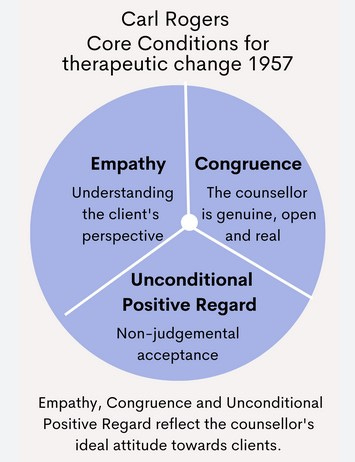
In 1961 Carl Rogers published Client-Centered Therapy, miles from the nearest confessional, and aimed at clinical psychologists, not priests. His method meant that the counsellor withholds judgement entirely, reflects your own words back at you, and trusts you to find an answer of your own with no verdict handed down.
(AKA: the method of almost all modern-day mental health practices…)
It rapidly spread through American graduate psychology across the next decade. Not much later it walked straight into Catholic seminary formation through the pastoral counselling courses training the men who would later sit behind the confessional.
It created a generation of seminarians learned that judgement wounds a man more than his fault does. So they learned to listen instead of press.
The Vatican’s own revision of the penitential rite in 1973….
