


The discipline that cost forty-nine Christians their lives in 304 AD, reduced to the one promise you can actually keep.
I do not check my phone during Mass. Most Sundays I am not in the pew at all. I serve, or act as master of ceremonies, which should mean the hour asks everything of me and leaves nothing over for a phone. And yet on the Sundays I am not scheduled to serve, I set up a tripod and film it for our church’s Instagram, tell myself I am capturing it for people who could not be there, and miss lines of the homily thinking about the crop.
Sunday itself has not always fared better. I have answered tweets Sunday morning. I have taken a weekly call for my old business on a Sunday evening, telling myself it was just that once. It was not.
I call this Zombification: a practice that still moves, still has a name, still happens on the correct day, with the cost quietly removed. The Mass still happens. I am even there, phone on a tripod, capturing it for people who are not.
It is not the moment I keep losing. It is my own word. I have promised myself Sunday before and broken the promise before, and each break filed the same evidence: you do not follow through. That is why the next resolution starts weaker than the last one did.
The reading of the Martyrs of Abitene in 304 as courage is correct and also not the point. Diocletian made Sunday assembly a capital offence. Forty-nine people in a small house in what is now Tunisia gathered anyway and were arrested together.
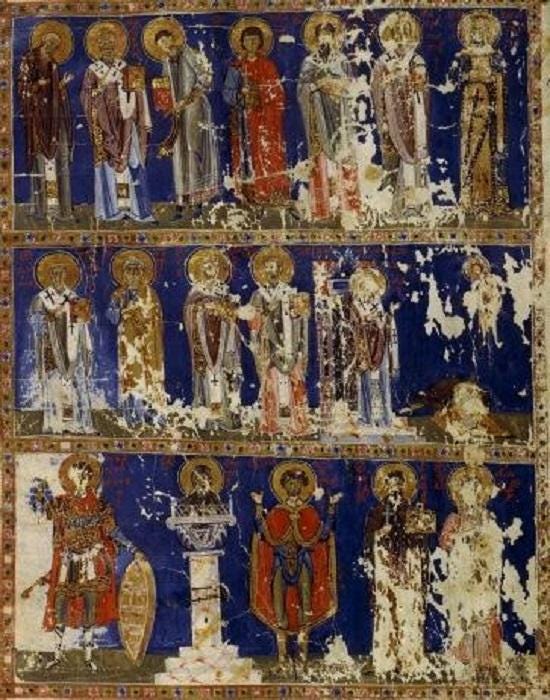
Under interrogation, a man named Emeritus, in whose house they had met, said: sine dominico non possumus. Without the Lord’s Day, we cannot exist.
These martyrs had nothing larger to compromise on. No monastery, no diocese, no room to trade one concession for another. One act, held completely, with nothing behind it.
The Sunday was not part of the institution. The Sunday was the entire institution. That is why an empire with soldiers and courts could not talk it down. It could only kill the people holding it.


Forty-nine people died to keep one day set apart. Now a closed shop for a single afternoon reads as an outrage. The instinct that made Sunday sacred and the instinct that makes its absence unbearable are the same instinct, aimed at opposite ends.
You did not lose your Sunday rest, you lost the possibility to control your own time…
