


The first essay of this guest series for Heritage Standard mapped the birth of the modern sovereign state and the Church’s long defensive turn toward centralisation. The second essay followed that trajectory through Ultramontanism and the solemn definitions of 1870.
In this concluding part, Hilary White, founder of The Sacred Images Project, examines what followed: how a carefully limited doctrine of papal infallibility, the post-conciliar collapse of intermediate institutions, and decades of weakened catechesis hardened into the practical assumption that the pope cannot meaningfully be wrong.
The result is the “papal positivism” (or Mottramism) visible today. An outcome no one at Vatican I intended, but one that follows with grim consistency from the historical path the series has traced.
Unsettled questions remain unsettled - the “Inopportunists” at Vatican I
The perennial argument over how power is structured in the Church was definitively answered with the 1870 victory of Ultramontanism, but it doesn’t yet explain how that becomes the peculiar psychological phenomenon we are seeing today. Catholics in the 21st century are treating the Pope as a kind of continuously operating, quasi-divine Delphic Oracle whose every opinion requires assent, which was surely never the intention of the Definition’s drafters.
Pastor Aeternus defines a very specific doctrine of papal infallibility and very extensive papal jurisdiction. It does not say the Pope is always right. But the defeat of Gallicanism and competing ecclesiological models does leave Rome overwhelmingly dominant throughout the Church.
The Italian occupation of Rome caused the Council to be suspended in 1870 after it had dealt with the nature of the papacy, but before it had completed its larger treatment of the Church and how the papacy relates to it. The Church was left with a solemnly defined doctrine of papal primacy and infallibility but no similar definitive treatment of the episcopate and how it related to the Church on one side and the papacy on the other.
A look at the minority opinions at Vatican I shows that the danger of misunderstanding the definition was perceived at the time. A substantial minority accepted some form of papal infallibility but argued that defining it formally at that time, and in that way, was “inopportune,” fearing that it would create serious problems down the line. At the preliminary vote on 13 July, the division was significant: of 601 fathers, 451 voted placet, 88 non placet, and another 62 placet iuxta modum, essentially yes, but with qualifications or requested amendments.
The non placet and placet iuxta modum voters were worried about the larger ecclesiological implications, particularly the relationship between papal authority and the legitimate authority of local bishops, as well as relations with other Christians and the potential reactions of hostile anticlerical governments. Some also feared that a formal definition would be understood more expansively than its carefully intended limits. Some inopportunists even left Rome before the final solemn vote rather than publicly vote against a definition they knew would pass and to which they intended, once promulgated, to submit.
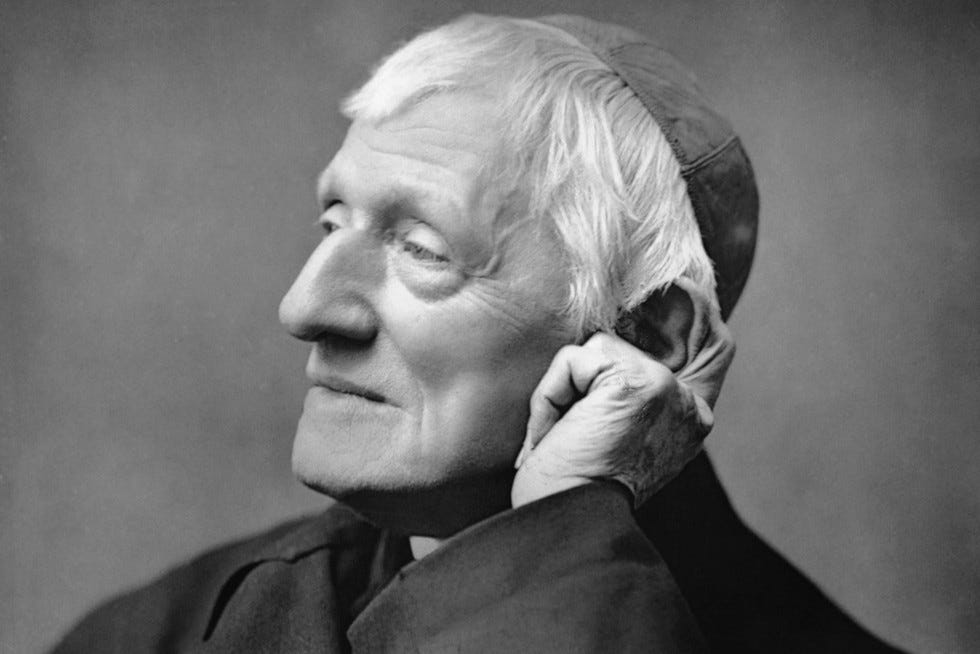
These inopportunists included John Henry Newman, although he wasn’t a council father. Newman believed in papal infallibility, but thought its formal definition unnecessary and feared what an exaggerated version of the doctrine might do to Catholic life, though in the end he expressed relief at the carefully restricted form of the definition that eventually emerged from the Council.
A meticulously formulated restrictive dogmatic definition is one thing, but its reception in the life of the Church is something else. The evidence within Catholic culture since then shows us that the dogmatic question was settled more successfully than the ecclesiological and cultural questions surrounding it. “The Pope is infallible under these precisely defined conditions” is a considerably more complicated proposition than “the pope cannot be wrong.” Obviously, the general public is not made up of exquisitely trained theological minds, and eventually even a distinction between “The pope cannot be wrong,” and “The pope is always right about everything,” can be lost.
Ultramontanism, and the definition, were popular because Catholics had just spent the better part of a century watching revolutionary and nationalist governments attempting to destroy the entire earthly edifice of the Church. In the same year that papal infallibility was defined, the armies of the new Italian State seized Rome itself and destroyed the thousand-year-old Papal States. The definition arrived in a Catholic culture in which loyalty to the Pope had become an enormously powerful symbol of Catholic resistance to an increasingly rabid and vicious modern world.
Over the following century, the interrupted council’s unaddressed issues would largely be answered. Rome became more administratively powerful and local ecclesiastical institutions became weaker. Communications technology brought the Pope closer to ordinary Catholics, with the Catholic and secular press amplifying his words and making his image familiar throughout the world. His pronouncements became easier to distribute (though no easier to parse) and because of the new infrastructure, easier to implement. The cult of his personality increasingly became inseparable in the popular imagination from the office he occupied.
None of this resolved the serious questions raised in 1870 about the proper relationship between pope, bishops and the universal Church, or about the danger of allowing a carefully circumscribed doctrine of infallibility to expand into a general presumption of papal correctness. Instead, the institutional and cultural development of Catholicism increasingly overtook those questions, causing most of us to forget they were there. What had not been settled theologically was gradually settled in practice.
The result was something Pastor Aeternus itself had never defined: a Catholic culture increasingly organised around the person, pronouncements and authority of the reigning Pope.
Modernism: defined, condemned and then enshrined
By the late nineteenth century, intellectual trends dominating secular academia - historical criticism, philosophical idealism, evolutionary theories of religion, etc. - were seeping into the Church through the work of Catholic intellectuals, often clergy of religious orders. By 1907, the situation was alarming enough, with these ideas circulating inside seminaries, universities, religious orders and among the clergy, that Pius X was moved to issue Lamentabili sane and Pascendi dominici gregis, define Modernism famously as “the synthesis of all heresies” and finally to require the anti-Modernist oath in 1910.
But though Pius X might have defeated organised Modernism institutionally he had no power to eliminate the intellectual currents producing it. By the 1930s and ‘40s a new generation of Catholic theologians was challenging the neo-Scholastic synthesis, and much of the will to stop it was already gone in Rome. By 1950, Pius XII warned in Humani Generis explicitly against theological tendencies he thought are destabilising dogma, relativising Scholastic terminology and introducing dangerous novelties.
By the time of Pius XII’s death in 1958, Rome had spent half a century attempting to contain theological tendencies corrosive to Catholic doctrine. Then came John XXIII, the Second Vatican Council, and the most extraordinary reversal in Catholic theological history. Theologians and the intellectual currents they promoted that had been regarded with suspicion under the previous pontificates suddenly found themselves welcomed into the centre of the Church’s deliberations.
The point is that the revolution came from the top, which, given the enormous centralised structure created during the Ultramontane period, is the only place revolutions can come from anymore. The city walls are impregnable; the only way to get in is if someone opens the doors. Or the windows. The enormous centralised structure created during the Ultramontane period did not disappear when the theological direction of Rome changed. The habits of obedience, the expectation of Roman uniformity and the practical ability to impose decisions throughout the universal Church remained firmly in place.
The machinery of total centralisation built over the previous century to defend the Church against modernity became the machinery through which an accommodation with modernity could be imposed. Catholics had been taught for generations that safety lay in obedience to Rome. When Rome itself became the source of enormous and bewilderingly rapid change, the same instinct remained: if it came from Rome, it must be Catholic.
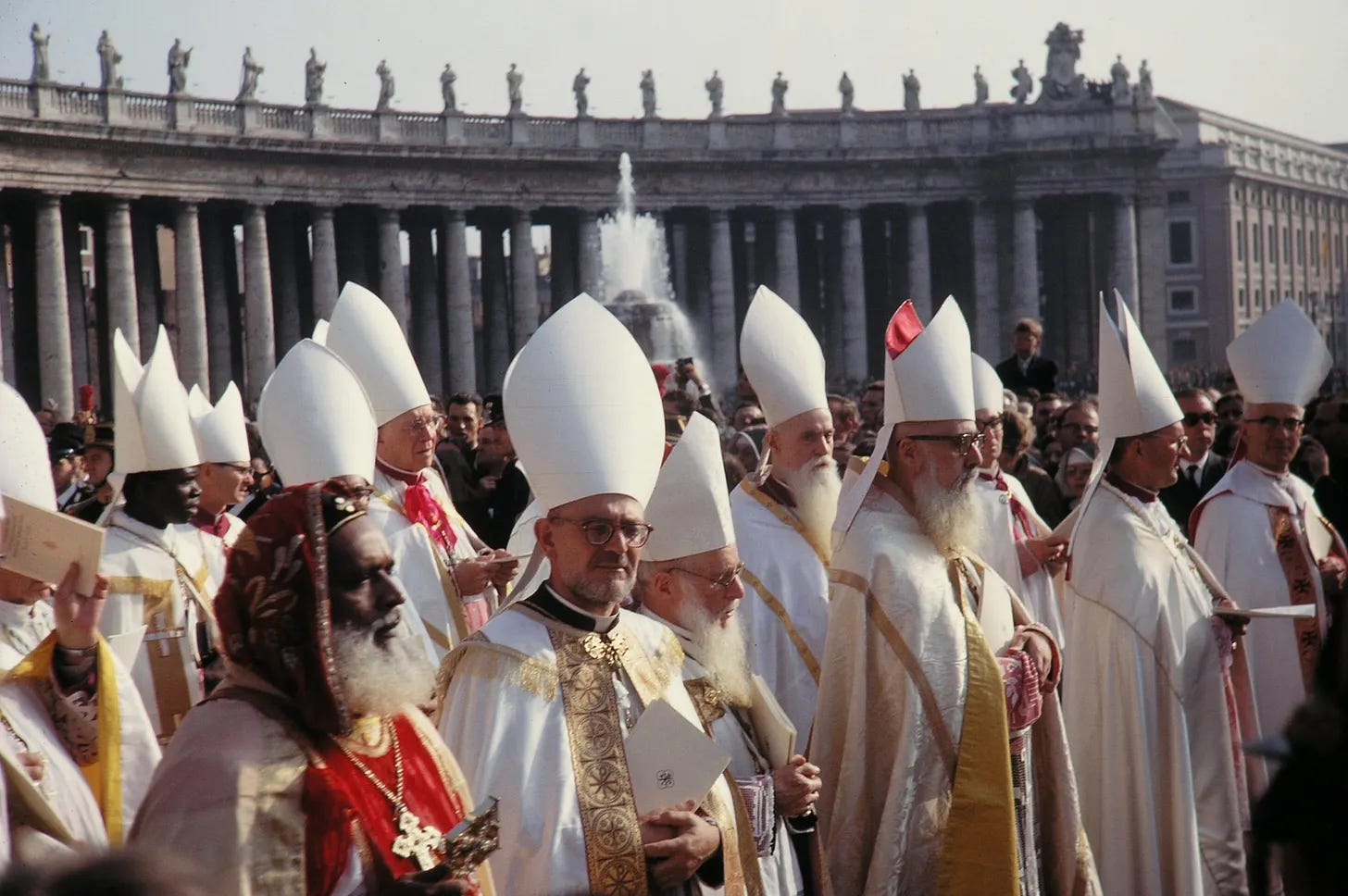
The great conciliar bait and switch: the decentralisation that never was
Vatican II talked a pretty good game about “collegiality” and the “People of God”, but what was really the likelihood of power once gathered together ever being voluntarily relinquished? All the conciliar and post-conciliar noises were intended to sound like decentralisation. But the institutional structure through which the council and its aftermath were implemented remained exactly the same highly centralised Roman system inherited from the Ultramontane nineteenth century.
The council did not restore - was, of course incapable of restoring - the thickly layered network of genuinely independent institutions, jurisdictions and customs that had once limited the practical reach of the centre. Those institutions practically no longer existed. Nor did it return diocesan bishops to anything resembling their medieval independence. The machinery remained in Rome and the focus remained on the person of the pope.
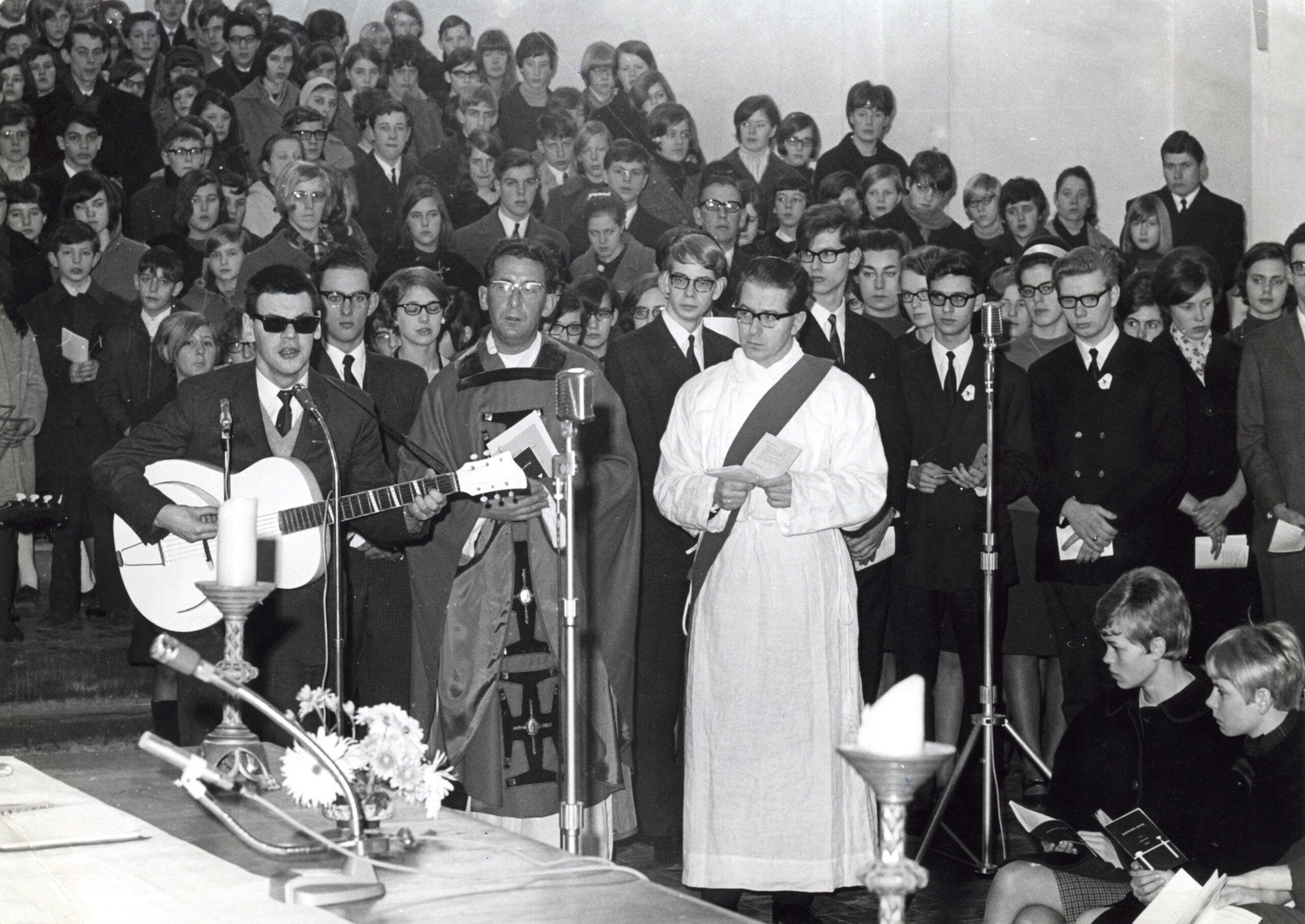
Diocesan structures, seminaries and parish life, not to mention Catholic universities, all became unreliable as sources of sound doctrine. Religious orders imploded or became fountains of theological dissent. Catechetical output completely collapsed into competing heretical factions. And all that is before we even begin to talk about the liturgy. And through all this, and for the next half century, bishops were unwilling or unable to enforce even the Church’s own doctrinal teaching or restor liturgical peace. The result was a peculiar combination of decentralised chaos enforced, or at least tolerated, by a heavily centralised authoritarianism.
With the system set, apparently for all eternity, as a function of one man and his chosen court, none of this could have happened without at least his implicit consent. Local bishops, priests, theologians and liturgists were granted enormous practical latitude to experiment, while the unassailable authority that legitimised the new order continued to flow from Rome. Things that would previously have been condemned as disobedience could now be presented as obedience to the Council, the pope or the mysterious and infinitely adaptable “spirit of Vatican II.”
We certainly don’t need another recitation of the postconciliar collapse, and we’re not going to catalogue the catastrophic results here. But what is now inarguable by the numbers should have discredited the centralised model. Instead, among Catholics trying to remain orthodox, it has only intensified dependence upon the pope.
If nearly all the old institutions have been flattened and what remains are not reliable, where does an orthodox Catholic look for certainty? What’s left? Nineteenth-century Catholics surrounded by hostile revolutionary governments looked beyond the mountains to Rome. Twentieth-century Catholics surrounded by Catholic institutions collapsing from within, having no other options, did exactly the same thing.
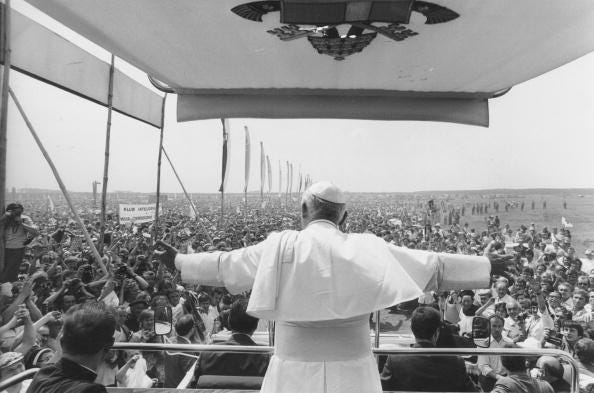
The image of Pope John Paul II on his visit to Sandinista (Communist) Nicaragua in 1983 captures the dynamic perfectly. When organised government supporters attempted to drown out his open-air Mass in Managua with revolutionary chants and banners, an infuriated John Paul repeatedly demanded “Silencio!” to no avail. Finally he raised his papal ferula high above the crowd. For Catholics watching their own institutions succumb to political ideology and theological dissent, the message was difficult to miss: when everything else fails, look to the pope.
The image of John Paul II as a champion of Catholic orthodoxy was enormously powerful, but was largely a image created for him by a left-biased secular western media annoyed by his opposition to Communism and abortion and sustained by his personal charisma, his incredible ability to work a crowd. On the ground, however, the institutional collapse continued mostly unopposed throughout his long pontificate: episcopal conferences, seminaries, universities and religious orders remained riddled with dissent, while bishops who openly tolerated heterodoxy were rarely disciplined.
The striking contrast between the commanding figure presented to the world and the disorder continuing beneath him only strengthened the tendency to separate the pope from the failing Church he was ostensibly governing.
How revolution becomes orthodoxy
Ultramontanism originally made sense as a defensive response to real threats; it allowed the pope to be genuinely independent of the revolutionary State. Rome really did preserve doctrinal continuity when national churches were vulnerable to ideological capture. And after Vatican II, orthodox Catholics really did find themselves unable to trust many of their immediate institutions. But in the end what was an expedient survival strategy has come to entirely displace the Church’s ecclesiological self-understanding.
Catholics have progressively been deprived of all the intermediate structures through which the Faith had traditionally been received, interpreted and lived. Eventually the answer to almost every disputed question became the same. “What does the Church teach?” has transformed into “What does the Pope teach?” Finally even that has dissolved down to, “What does the Pope think?”
The system could function reasonably well while Catholics possessed enough intellectual formation to distinguish dogma from discipline, papal Magisterium from personal prudential judgement, ex cathedra definitions from an encyclical or an apostolic exhortation, and all of these from an interview on an aeroplane. After fifty years of catastrophic catechesis, combined with the more general decline of serious intellectual formation in the West, large numbers of Catholics simply lack the conceptual equipment required to make these distinctions.
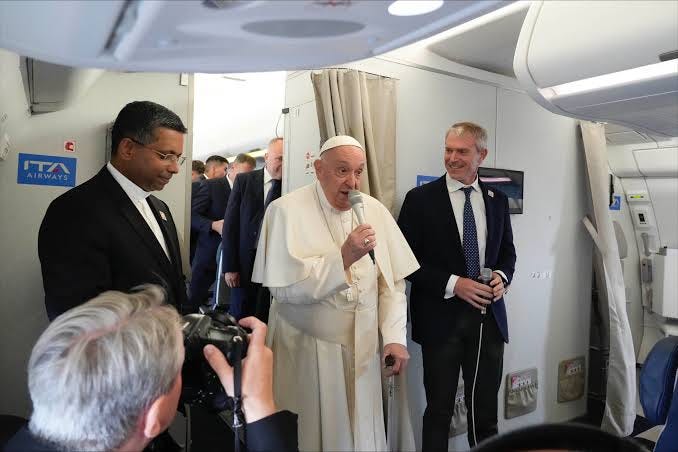
Generations of poor catechesis have left them without much of the theological and historical equipment necessary to judge competing claims, while the one principle that has survived remarkably intact is that obedience to ecclesiastical authority is the highest expression of religious virtue.
The logic is very straightforward for the average online papolatrist pope-splainer: Rome ordered the transformation, therefore resistance to the transformation is resistance to Catholicism. Traditionalists discovered this painfully. The very hyper-papalism many of them had inherited from nineteenth-century Catholic culture was now being turned against them.
The machine built to preserve tradition proved equally capable of dismantling it.
The Final Form: Papal Positivism
This brings us to our present difficulty.
The pope was historically understood as the guardian of a divine deposit he did not create. His authority was immense precisely because it was ministerial, custodial. He possessed authority over the Church, but not sovereignty over revelation, or over reality itself. His rule presupposed certain parameters that relied upon the existence and maintenance of real things, truths, accurate expressions of objective reality.
Under the previous understanding, no pope could make adultery virtuous or “bless” homosexual relationships into moral legitimacy. He could not make divorce and remarriage compatible with the indissolubility of marriage, declare contraception morally good under any circumstances. He could not make abortion or euthanasia acts of mercy, abolish the death penalty as intrinsically immoral, pronounce all religions equally willed by God, or transform the immutable differences of sex into matters of personal choice. He could no more do these things than turn the Trinity into a Quadrinity, add another sacrament or announce that Christ had never risen from the dead.
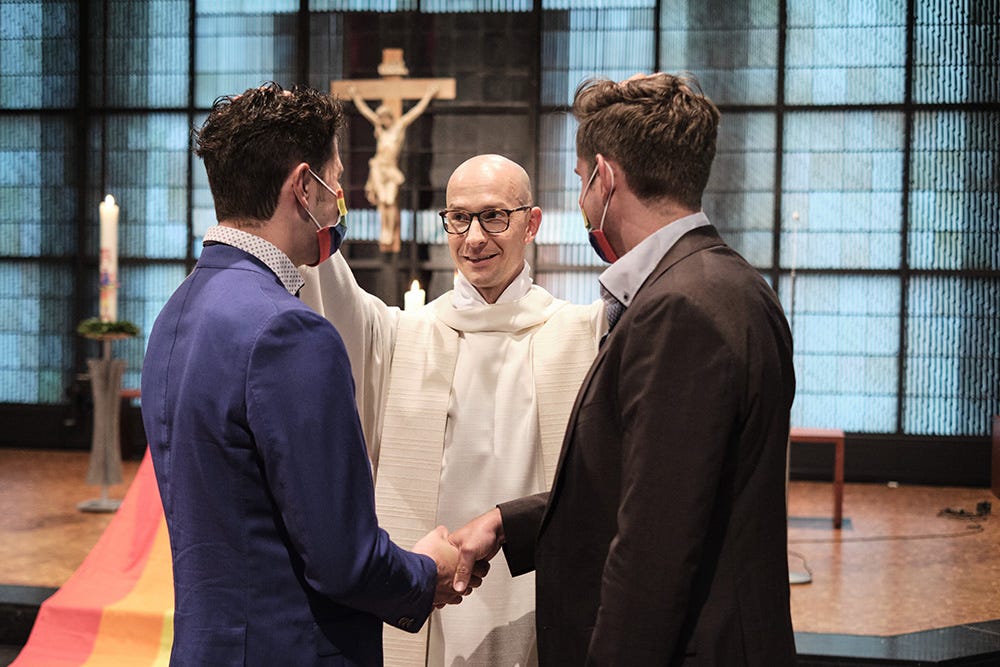
A pope is authoritative because he is charged with preserving and teaching what is true. But the new dispensation, that we can call “papal positivism” simply reverses this relationship and asserts the pope’s personal, godlike power over reality: a Catholic teaching is treated as true because the Pope teaches it.
Once that assumption becomes habitual, there is almost no limit to the mental contortions required of the faithful. If today’s papal statement appears incompatible with yesterday’s, yesterday must be reinterpreted. It is literally orwellian; reality is only what the pope says it is today. It is irrelevant that he said something different yesterday. (And doubly irrelevant if a previous pope said something else… A dead pope is not the pope, is he1.)
If Scripture appears to say something inconvenient, Scripture must be reread, or re-written2. If twenty centuries of the Lord’s Prayer create difficulties with someone somewhere, we must discover that everyone had misunderstood the matter until Thursday afternoon and correct Christ’s words.
And anyone pointing out the obvious discontinuity is simply accused of rejecting the authority of the Pope.
We have watched this mechanism operate repeatedly in recent years. Every controversy produces the same army of papal apologists insisting that the latest novelty is perfectly compatible with everything that preceded it. Or simply, that everything that preceded it must be discarded, because… the pope. The substance of the argument scarcely matters. The conclusion has already been determined: the pope cannot meaningfully be wrong, because if he were wrong the system itself would be endangered.
Mottramism and the principle of non-contradiction
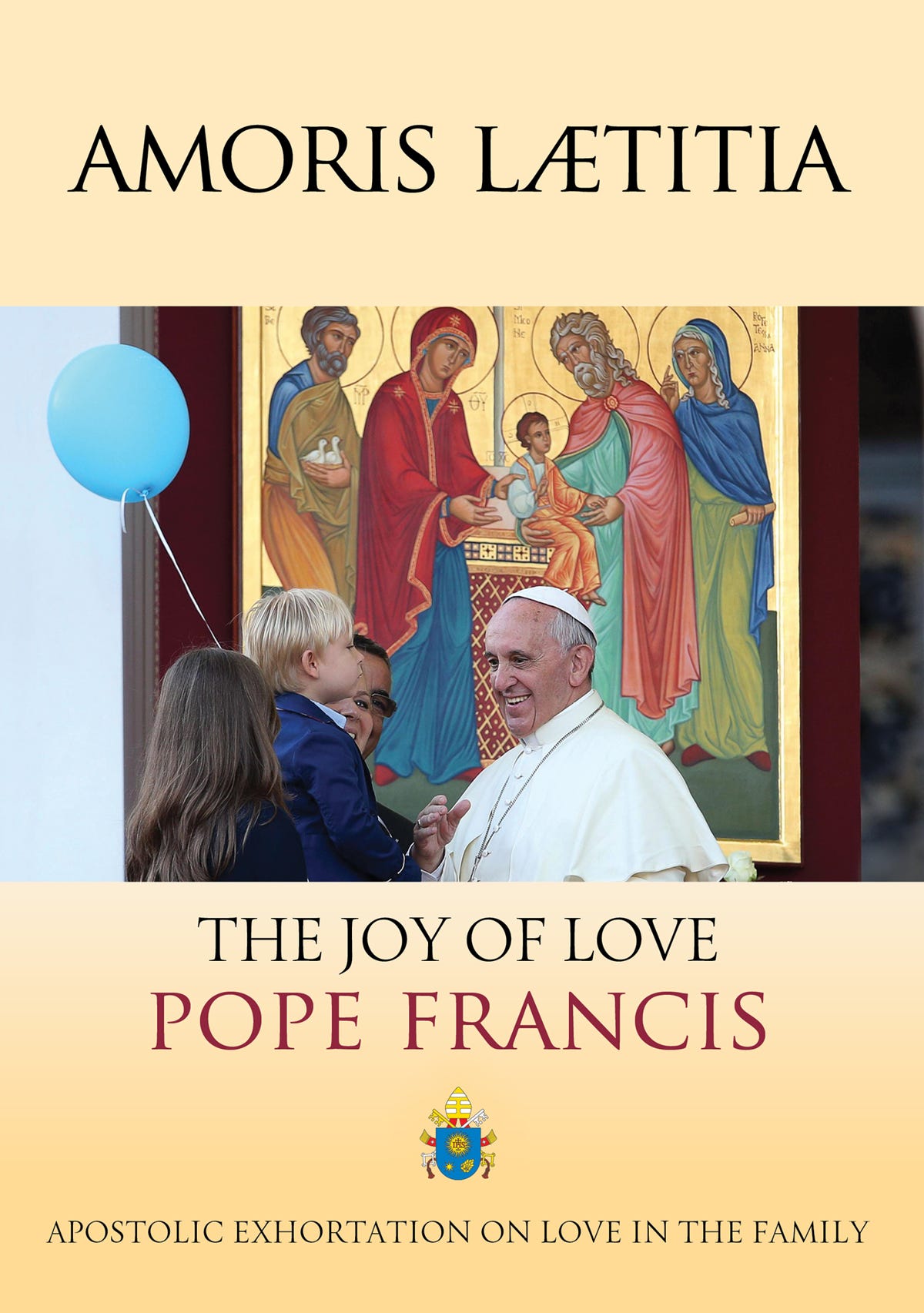
In Brideshead Revisited, Evelyn Waugh gave us a useful illustration of all this. Rex Mottram approaches his Catholic instruction with an apparently limitless willingness to assent to whatever proposition his instructor puts before him.
Then again I asked him: ‘Supposing the Pope looked up and saw a cloud and said “It’s going to rain,” would that be bound to happen?’
‘Oh, yes, Father.’
‘But supposing it didn’t?’
He thought a moment and said, ‘I suppose it would be sort of raining spiritually, only we were too sinful to see it.’
The contemporary version of Papal Positivism is often now called, “Mottramism.” The problem with Mottramism is a joke in Waugh, because his intellectual flaccidity collides with one of the Aristotelian foundations of rational thought, the principle of non-contradiction. It says that a proposition and its contradiction cannot both be true at the same time and in the same respect. Catholic theology cannot dispense with this principle because Catholicism claims to make objectively true statements about actual reality.
If marriage is intrinsically indissoluble, indissolubility cannot simultaneously mean that a valid marriage may also be dissolved. If homosexual acts are intrinsically disordered, they cannot simultaneously become objects of ecclesiastical approval. If the deliberate killing of an innocent human being is always gravely wrong, circumstances cannot transform it into an act of mercy. We can distinguish circumstances, levels of culpability, pastoral responses and applications of principles until the cows come home, but distinctions cannot make contradictions disappear.
This is precisely where papal positivism becomes intellectually destructive. When an apparent contradiction arises, the Mottramist has ruled out one possible explanation before beginning his investigation: that the Pope might simply have said something wrong.
Everything else therefore becomes negotiable. The previous Magisterium may have been misunderstood. Scripture may require reinterpretation. Tradition may turn out to have been more fluid than anyone realised. Words may acquire previously unknown meanings. Historical context may be invoked to explain that a proposition which apparently meant A for centuries actually contained the seeds of not-A all along.
What may not be entertained is the vastly simpler proposition that the reigning pope has exceeded the limits of his office, made a prudential error, taught ambiguously or simply got something wrong.
The Pope is not the point - lex suprema salus animarum
We return then to the question underneath this whole series; the papacy exists for something. So does the hierarchy, canon law, the magisterium and every other ecclesiastical institution. Christianity’s purpose is not the successful maintenance of the ecclesiastical apparatus, and the highest Christian virtue is not conformity to the current occupant of an office.
Truth does not become true because the pope teaches it. The pope has authority to teach because his office exists to bear authoritative witness to the truth.
The Church survived the Reformation, the Wars of Religion, the Enlightenment, the French Revolution, Napoleon, the destruction of the Papal States, nationalism, communism, fascism and two world wars. To do so, it developed a formidable institutional machinery. But Christianity does not exist merely in order that the institution may continue to exist.
The Church exists for the salvation of souls. And salvation, in the deepest Christian understanding, is transformation in Christ, union with God.
I’ve literally been told this by professional pope-splainers online. Not making it up.
Think I’m exaggerating? Take a moment some time to look up the answer to the question, “What is the first and greatest commandment” as given by 1) Christ, 2) Paul VI and 3) Pope Francis.

Excellent, vibrant, east to read! Vintage, classic Hilary White. Thank you for this.
A good confirmation of what Hilary White is teaching here is found in a casual reading of just about any classic devotional book from the Church's history. Take Introduction to the Devout Life for example. You can read this great work from cover to cover and perhaps not be aware that there even is a sovereign pope if you didn't otherwise know.
Is this to be taken as evidence of St. Francis de Sales' disregard of, or possible disobedience to authority? It would seem to be so if we go only by the current day treatment of the pope and his bearing on life in the Church. The mind of the current day Catholic becomes anxious and impatient - it wants to know where you stand on the pope! De Sales didn't pledge fidelity to the pope as part of his method, not even once, why is he even Catholic?