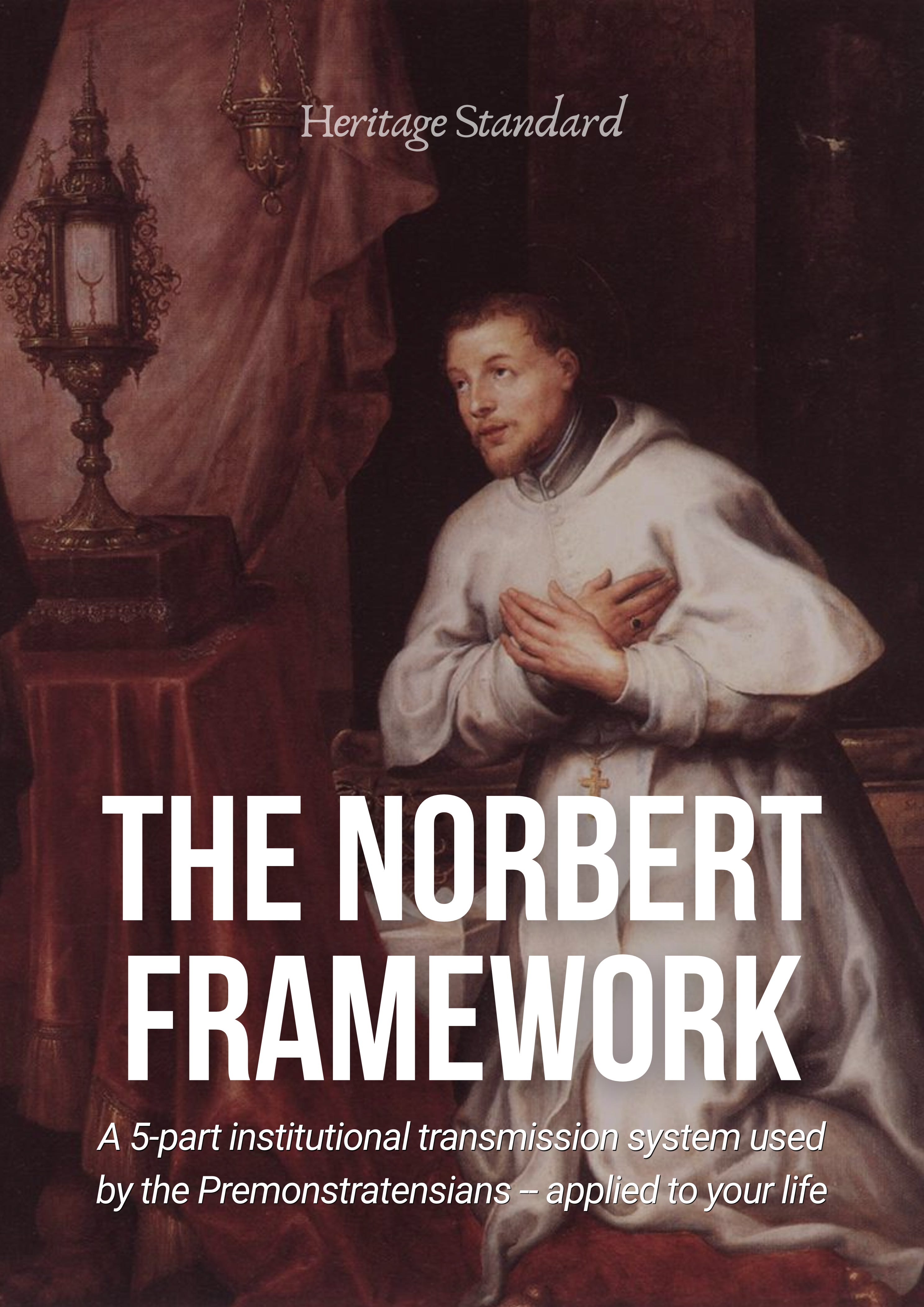
In 1120, Norbert of Xanten was a 44-year-old German nobleman and reformed courtier who had survived a lightning strike. He distributed his inheritance, and founded a small community of canons in a valley in northern France called Prémontré. He had approximately nothing: a forest clearing, a Rule, twelve men, and an idea.
Fourteen years later, his order had more than 100 houses across France, the Low Countries, and the German lands. By his death in 1134, he was Archbishop of Magdeburg, the most strategically significant see in Central Europe, and his canons were the primary instrument of the Church’s expansion east of the Elbe. By 1300, there were more than 500 Premonstratensian abbeys. By the mid-14th century, more than 1,300 houses for men alone, and 400 for women.
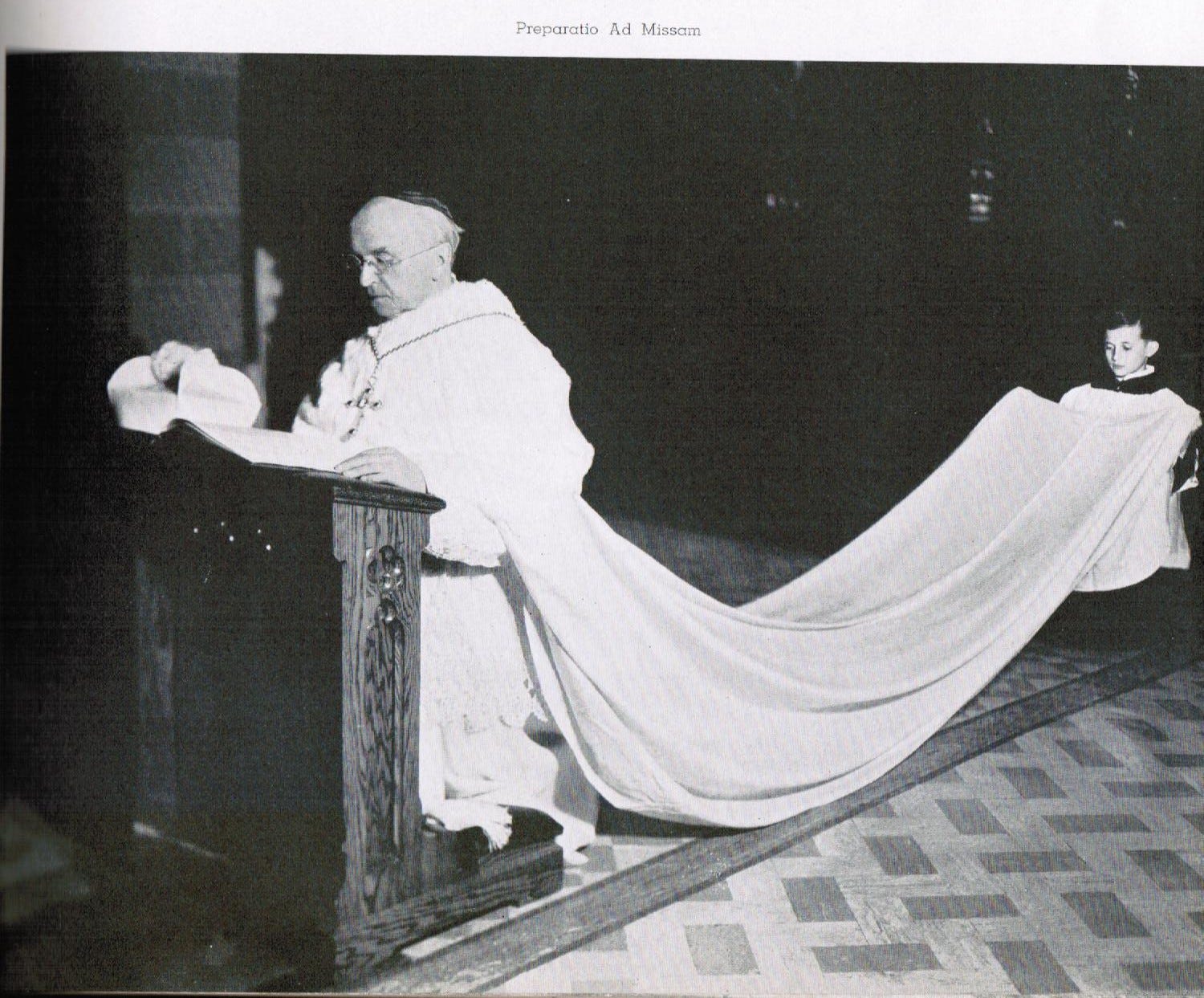
Every medieval town in what is now Poland, the Czech Republic, and the Baltic states that feels like Western civilisation is downstream of that decision in 1120. Their parish church, town layout, drainage system, school, hospital, brewery and every Gothic cathedral east of the Elbe… All of it traces back to one man’s institutional architecture.
This was not missionary enthusiasm. Many men had in history have had the same. He built a mechanism. And whether he knew it or not, when analysed, one finds a specific, replicable, structural system. A system that transmitted a standard across generations without depending on any single exceptional person to hold it together.
Saint Norbert did not produce disciples. He produced an institution. There is a difference: A disciple carries his master’s ideas, while an institution carries the master’s standard long after the master is gone, after hist disciples are gone, and anyone who remembers the master is gone.
The Premonstratensians still exist. They still operate their original charism. Eight hundred and four years after Prémontré, there are Norbertine abbeys on six continents.
The question is not whether his mechanism worked. It clearly did. The question is what exactly Norbert built, and whether you (or we) can build the equivalent… not a religious order per se, but a personal vision applied to whatever inheritance you are trying to build and pass forward.
The answer is obviously yes. The mechanism has five parts. Each part scales down to a person, a household, or small circle. Together they form what I am calling The Norbert Framework — a five-part personal checklist derived from what one man actually did between 1120 and 1134, applied to our time.
This is where the Norbert Framework begins. Members read on.