


Heritage Standard is a paid publication for those who inherited a civilisation but not the instruction manual. Every week: a free essay naming what was lost, and a paid essay showing what to do about it. (This is a paid post)
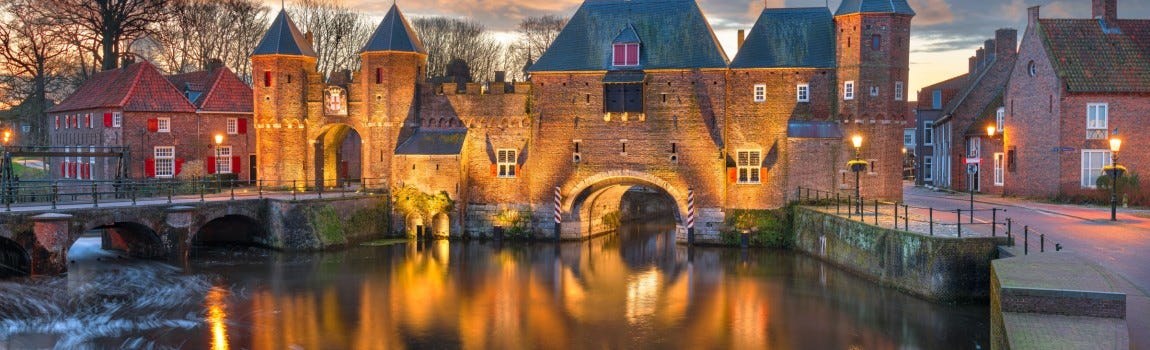
Most people walk through old cities without seeing them.
They see the surfaces, gabled facades, the worn stone, and a market square with its café umbrellas. But they feel something: a vague pleasantness, an ‘atmosphere’, which is tourist language for: I felt something but cannot say what. So they take photographs, and then leave.
Yet… they have not read the city. Only glanced at it.
See, this is not their fault entirely. No one taught them the grammar. And like any language, urban form has a grammar: a set of rules governing where things go and why, who built what and under what authority, which arrangements encode power and which encode submission.
Once you learn that grammar, you cannot unlearn it. Because every historic city becomes a legible document. You will walk through it the way a trained reader walks through a manuscript… seeing not just letters but argument.
In this guide I will teach you that grammar.
It will not be a history lesson. It is a perceptual framework of ten specific things to look for on any walk through a European city that was built before 1800.
Master these ten and you will never again experience a historic city as mere atmosphere. Because you will be able to read it.
Why cities are documents
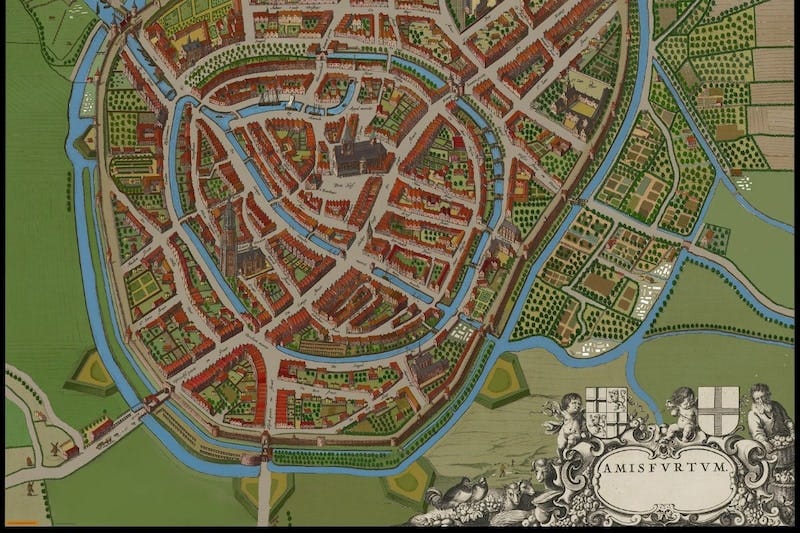
The medieval and early modern city was not ‘planned’ in the modern sense. Back then there was no urban design office, zoning board, or traffic consultants. What there was: a hierarchy of authorities, each with a claim on space, and expressing that claim in stone.
The Church claimed the highest ground and the tallest structure. The guild corporations claimed the main square and the streets feeding it. The civic government claimed a position of oversight: it was literally elevated above commerce, but below God. The merchant class clustered their warehouses along the water.
The poor were pushed to the periphery, which is also why suburbs in European cities are recent and unlovely: the original ‘suburbs’ were where you went when the city did not want you.
Every positioning was an argument. Every building said: this is who we are, this is what we are worth, this is where we stand in the order of things.

When you learn to read these arguments, a city stops being just an atmosphere and starts being a book written in stone across five or six centuries by people who were convinced that physical space should make the social order visible.
But the moderns dismantled this. They did it in two moves: First, industrial urbanisation in the 19th century threw up housing at speed with no logic except density.
Then 20th-century planning ideology, convinced that the old city was irrational, demolished and rationalised what remained. Le Corbusier called the winding medieval street a ‘donkey path.’ He wanted to replace it with straight lines and rational blocks. In several European cities, he got his wish.
The 10 things to look for…
1. Where is the church?
Start here, this is the first question and it organises every other answer.
In every European city built before the Reformation the principal church occupies the highest ground available. Where the ground is flat, the tower compensates: it rises to claim vertical dominance the terrain denies.
In Utrecht, the Dom tower at 112 metres was the tallest structure in the Northern Netherlands for nearly four centuries. In Chartres, the cathedral is visible from thirty kilometres across flat farmland. But these were not accidents of taste. They symbolise theological arguments in stone.
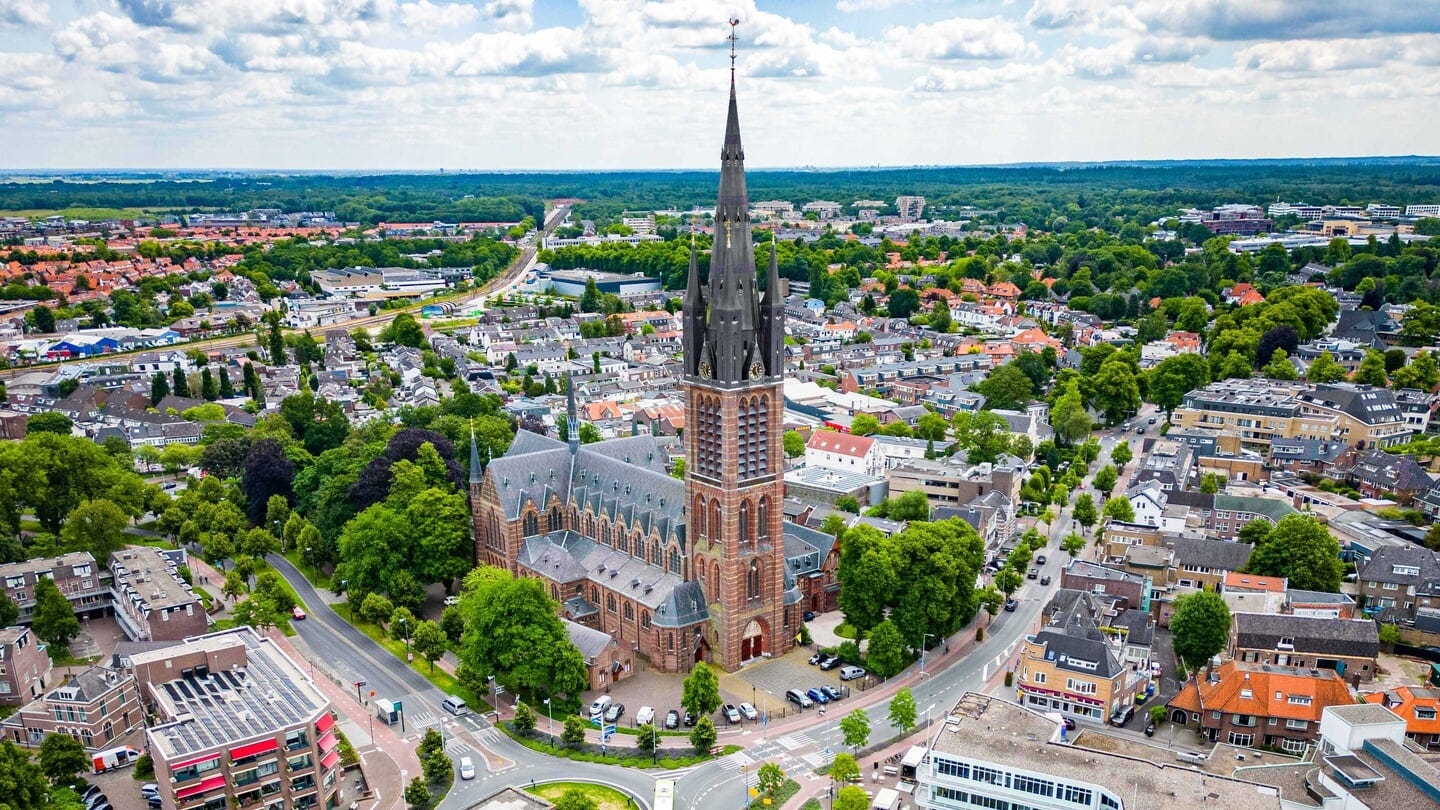
The Church has always been the ordering institution of European civilisation. It predated the city in most cases: villages clustered around a chapel, towns around a parish, cities around a cathedral. The placement of the church was constitutional. Every city existed in the shadow of the Church, which meant under its protection, within its frame of meaning, oriented by its bells and liturgical calendar.
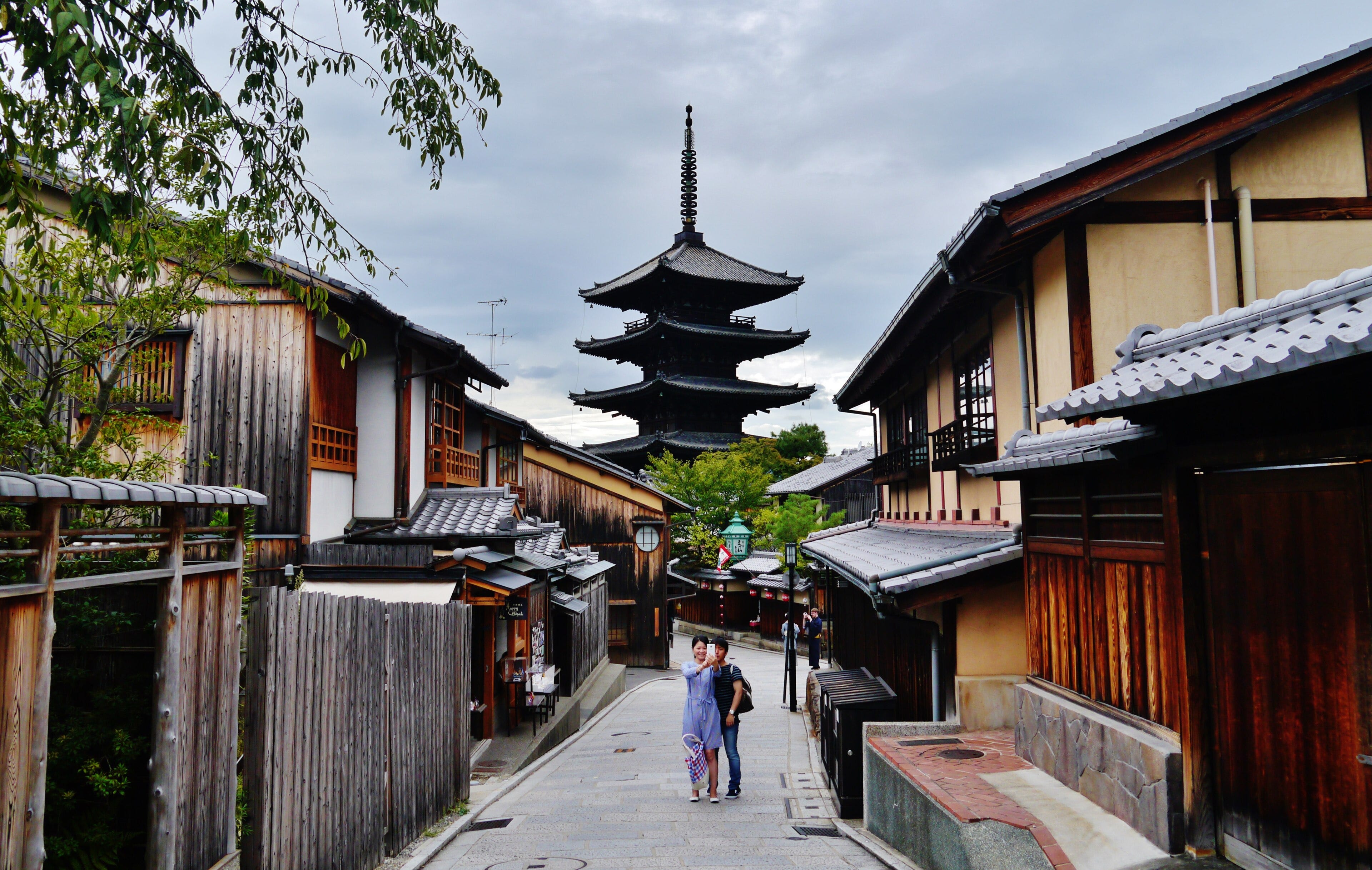
When you enter a historic European city, find the church first. First note its position. Then look for whether it occupies a hilltop, a raised platform, a clearing. And note how the surrounding streets feed into it: usually the widest, most processional streets point toward the cathedral or principal church. Those streets were not designed for traffic. They were designed for processions.
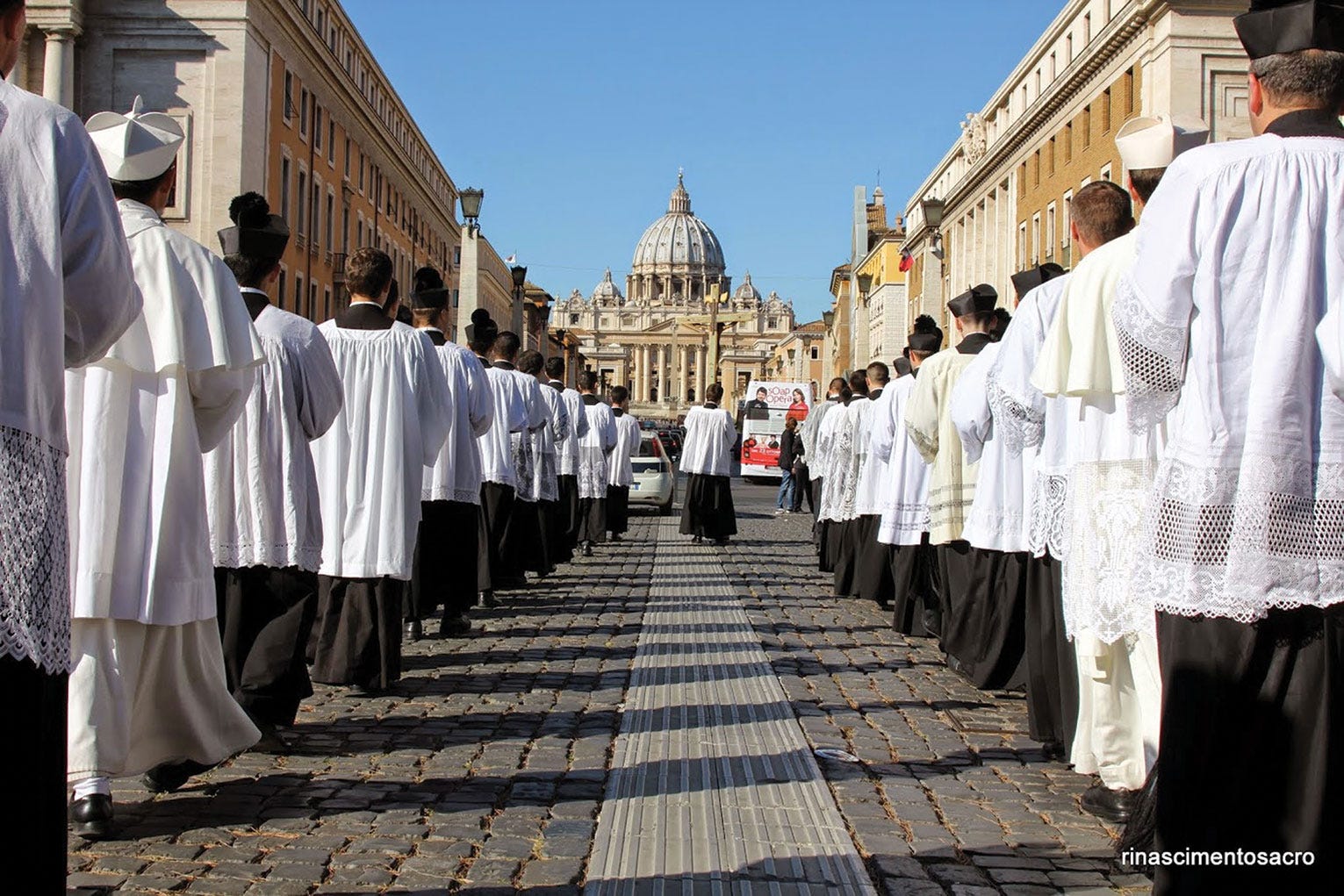
The procession is the key: Corpus Christi processions, Rogation Day processions, funeral processions, royal entries. The city was a stage for enacted community, and the processional route was its central axis. Where the streets fan out from the church, you are looking at procession geometry.
Questions to ask yourself: Is the church on elevated ground? Which streets lead directly to its main portal? Where does the processional route run?
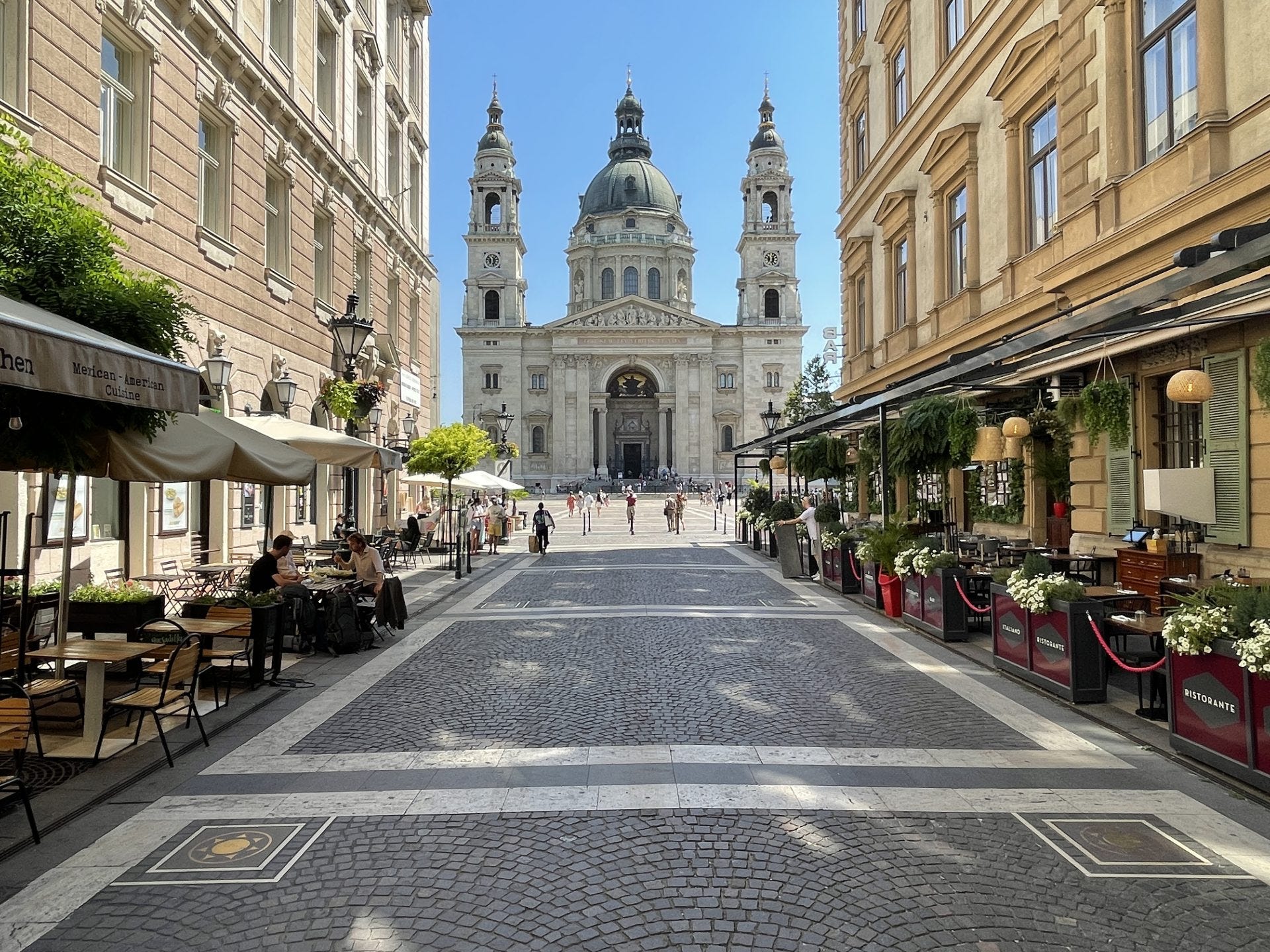
2. The Market Square: commerce under God
The market square is always adjacent to the church. Usually within direct sight of the church tower, often sharing the same open space or connected by a short direct street.
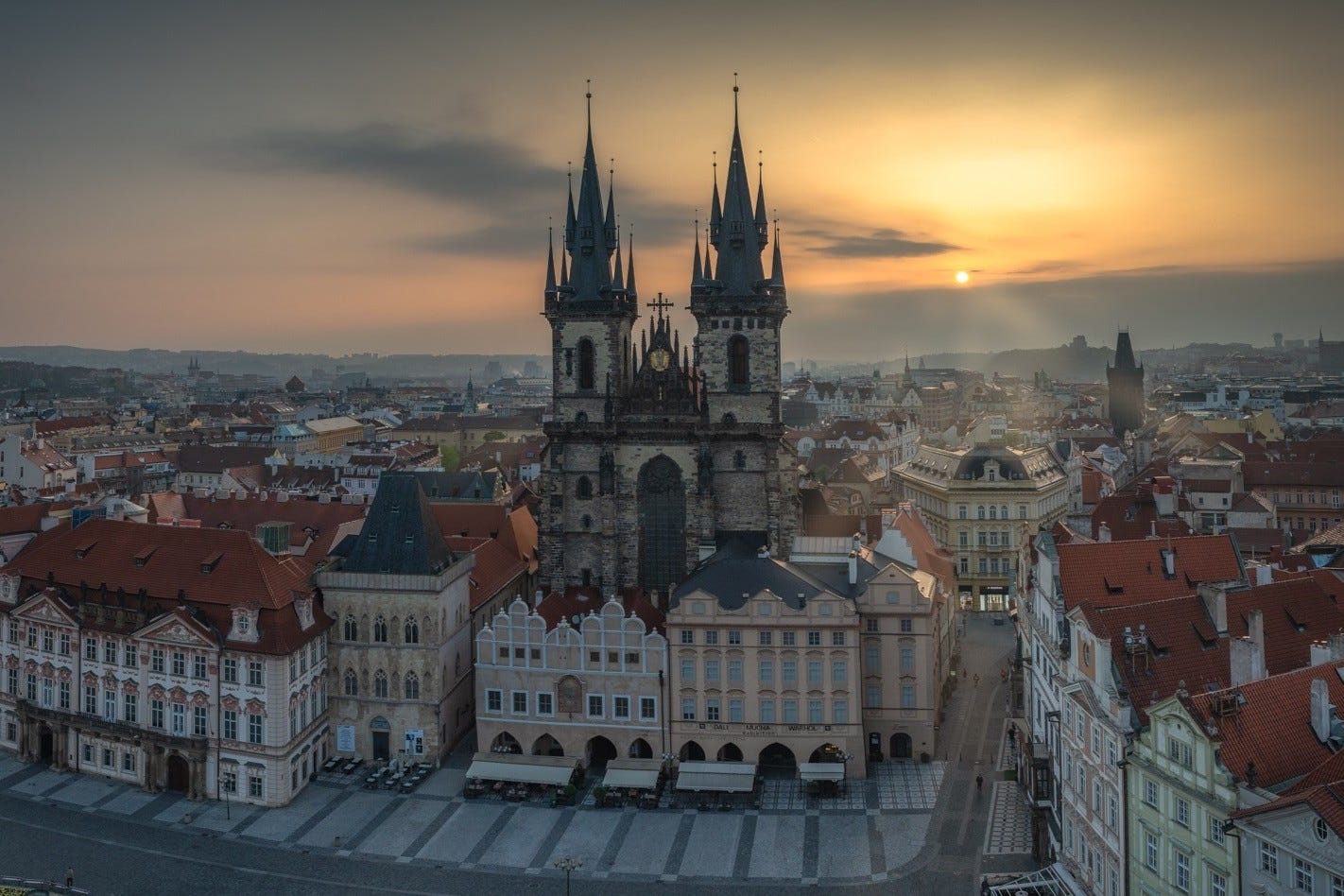
Commerce in the medieval and early modern European city was not a secular activity. It operated under ecclesiastical oversight: under guild regulation, under oaths sworn before God. The market was held on feast days when the surplus population drawn into the city by the feast created a customer base for the fair.
The church bell regulated market hours, and its porch was where contracts were witnessed and disputes adjudicated.
When you find the market square, first look at its shape. It is almost never a pure rectangle. It evolved organically: a widening of the main street, a clearing before the church portal, a space that expanded as the market grew. The irregular polygon is the signature of organic development. The perfect grid is the signature of imposition: Roman foundation, post-war reconstruction, or 19th-century Haussmannisation.
Look at what surrounds the square. You will find: the town hall or weigh house (civic authority present at every transaction), the guild houses (corporate bodies with regulatory power), the principal church (divine sanction for commercial activity), and the main inn or hostelry (the market requires lodging for travelling merchants). All four authorities present in one space. The market square is not a shopping area, but a constitutional document.
Questions to ask yourself: What faces the market square? Where is the weigh house? Is the church portal visible from the centre of the square?


3. The Guild House and hierarchy of trades
The guilds were the corporations of pre-industrial Europe. Regulatory bodies with legal authority over an entire trade. To work as a baker, a butcher, a weaver, a goldsmith, a surgeon in a European city before 1800, you needed guild membership. The guild set standards, controlled prices, trained apprentices, and cared for its sick and elderly members. It was simultaneously a trade union, a quality authority, a welfare state, and a religious confraternity.
Their buildings reflect this authority:


The most powerful guilds were typically drapers, goldsmiths, and butchers, whose wealth was greatest. Often built on the market square itself or on its primary approach street. Lesser guilds occupied side streets feeding into the square. The spatial hierarchy of guild houses maps the economic hierarchy of the city’s trades with remarkable precision.
In Bruges, the Poortersloge and the guild houses of the Tanners, the Boatmen, and the Fishmongers are all positioned within a compact area around the Burg and the Market. The entire commercial and civic life of the city legible within a ten-minute walk.
In Antwerp, the guildhalls on the Grote Markt are ranked by the size of their facades. The more prosperous the guild, the wider the building, because the street front was commercial property and width was wealth.
When you look for guild houses, look at their signature: stepped or curved gable (Flemish and Dutch cities), ground-floor arcade for covered trading, a guild emblem carved above the entrance. You will see scissors for tailors, a boot for cobblers, scales for merchants, a caduceus or ‘gaper’ for apothecaries.
Many still survive as restaurants or municipal offices with their emblems intact and unread.
Questions to ask yourself: Which guild houses still stand? Which face the square directly versus a side street? What trade emblems survive above the doors?


4. The Town Hall: civic authority and its limits
The town hall was never the highest building, was never on the highest ground. This is deliberate.
The town hall represents civic authority. The self-governing merchant class that won, through charters extracted from feudal lords between the 11th and 14th centuries, the right to manage their own affairs.
That right was real and hard-won. But it operated within a frame set by the Church, and the positioning of the town hall acknowledges this.
In most historic European cities, the town hall faces the market square and stands beside or opposite the principal church. It is civic authority and divine authority in dialogue, neither subordinate to the other in the daily business of the square, but the church tower always rising above the town hall roof.
The vertical hierarchy is maintained even when the horizontal arrangement suggests equality.
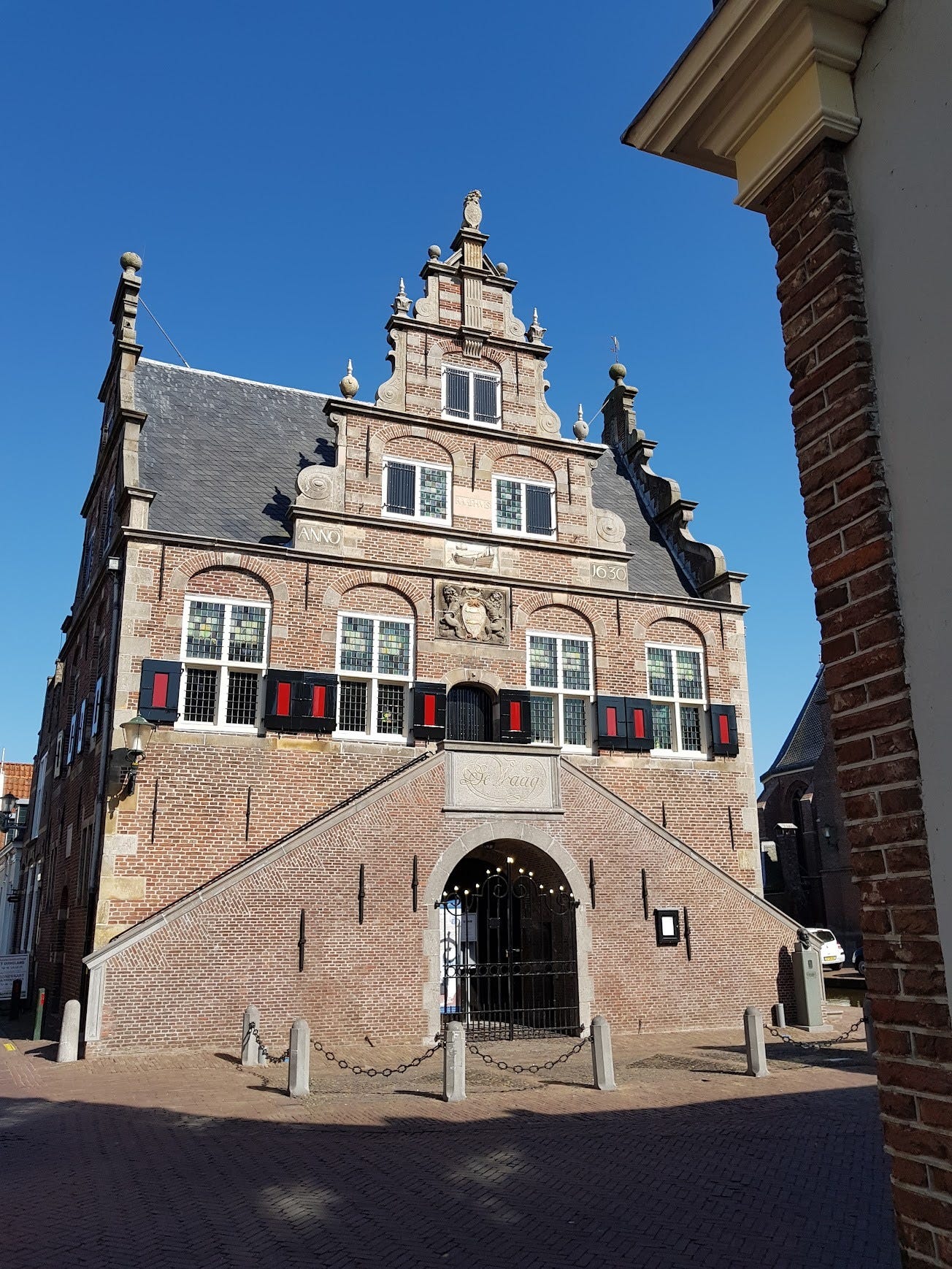
The town hall facade is the civic face of the city. The medieval town hall typically features: an open arcade at ground level (the ground floor was public space, the loggia was for public announcements, judgment, and market oversight), a great hall above for council meetings and banquets, a belfry or tower for the civic bell (which rang for emergencies, for curfew, and for market opening. This bell was distinct from the church bell, which rang for the hours). Two belfries, of two authorities, governing two rhythms of daily life.
Post-Reformation town halls often dropped this arcade, since the civic authority no longer needed to perform its accessibility in the same way. The Dutch Golden Age town hall is typically a closed block, its authority expressed through classical proportion rather than open invitation. That shift from arcade to closed facade tracks the shift from late-medieval civic culture to early modern sovereign state.
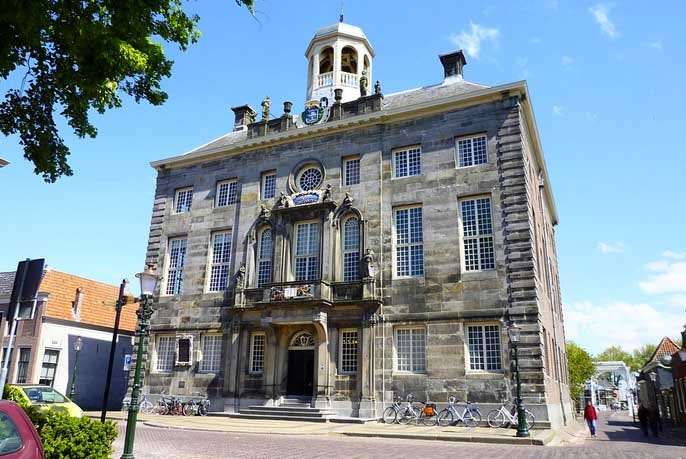
Questions to ask yourself: Does the town hall have an open arcade? Where does the civic belfry sit relative to the church tower? What story does the town hall facade tell about when it was built and under what ideology?
5. Water, the Engine of the medieval city
Every significant European city before the railway was a water city. Not necessarily a port, but positioned on, or connected to, navigable water. Rivers, canals, harbours. Water was infrastructure before infrastructure existed as a concept.
Look at where the water runs and how the city oriented itself to it.
In a river city, the oldest settlement is typically on the high bank: defensible, above flood level, and commerce occupied the lower bank or the riverbank itself. The wharf was the economic engine: goods arrived by water, were unloaded onto the wharf, weighed at the weigh house, stored in the warehouses behind, and moved into the market. The whole sequence is usually still legible in the urban fabric even when the water trade is long gone.
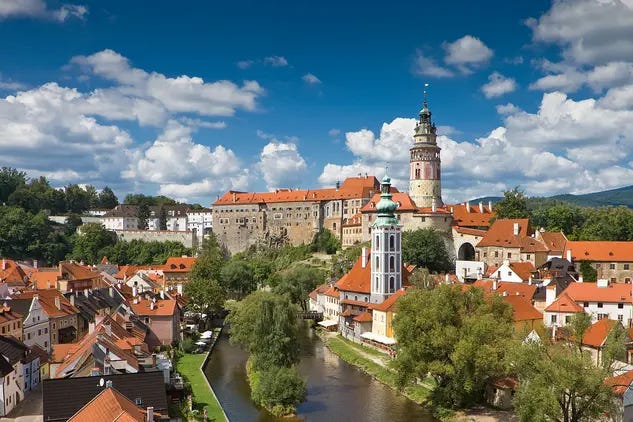
In canal cities, like Amsterdam, Utrecht, Bruges, or Ghent, the canals are not decorative. They were the road network. Every canal has a loading quay, and the buildings facing the canal typically have upper-floor hoist beams projecting over the water.
You can still see them, often preserved as hooks or beams even on buildings that have been converted to apartments. The narrow gables of Amsterdam canal houses were not an aesthetic choice, but a tax response. Property was taxed by street frontage width, so buildings grew tall and narrow, and goods entered through the top rather than the front.
Questions to ask yourself: Where is the nearest navigable water? Which buildings face it? Where are the warehouse districts? Can you see hoist beams on the upper floors?


6. Street widths and the logic of movement
In a city that grew organically before motor vehicles, street width encodes purpose.
The widest streets are processional: they connect the city gate to the cathedral portal, or the cathedral to the market square. They were not wide for traffic. They were wide for organised movement of people in community: the Corpus Christi procession, the royal entry, the funeral cortège of a bishop or a wealthy merchant who had paid for a public ceremony.
Secondary streets: one cart-width, two pedestrians passing comfortably are commercial. They connect the market square to the residential neighbourhoods, and their rhythm is the rhythm of daily trade: the baker, the tailor, the cobbler, whose customers lived a short walk away.
Lanes and alleys: single file, dark at noon, are residential back-access and servant routes. Every large house in a historic city has a back lane, usually with a different name from the front street. The front street was public and performative. The lane was functional and private.
Street names encode this too. In Dutch cities: Grote Marktstraat (main market street), Korte and Lange versions of streets (short and long arms of the same route), Steeg (lane, servant access), Dwarsstraat (cross street, secondary). The naming system is a map of function.
Questions to ask yourself: Which streets are wide enough for processions? Which streets connect the church to the market? Where do the lanes run, and where do they lead?
7. The position of the hospital and the almshouse
Before the welfare state, charitable care was Catholic infrastructure. Hospitals — the word comes from hospes, the Latin for guest — were founded and run by religious orders. The founding orders of European hospital networks include the Augustinians (the Hôtel-Dieu in Paris, founded 651 AD, the oldest continuously operating hospital in the world), the Alexians, the Brothers of Charity, the Beguines.


The position of the hospital and almshouse in a historic city is consistently on the city’s periphery… but a specific kind of periphery. Close enough to the centre to receive the sick from across the city. Adjacent to a watercourse, for sanitation.
Near a city gate, so travellers who fell ill on the road could reach care before entering the city proper. And always with a chapel at its centre, because the hospital was not merely a medical institution, but a house of the dying, where the preparation for death was as important as the treatment of the body.
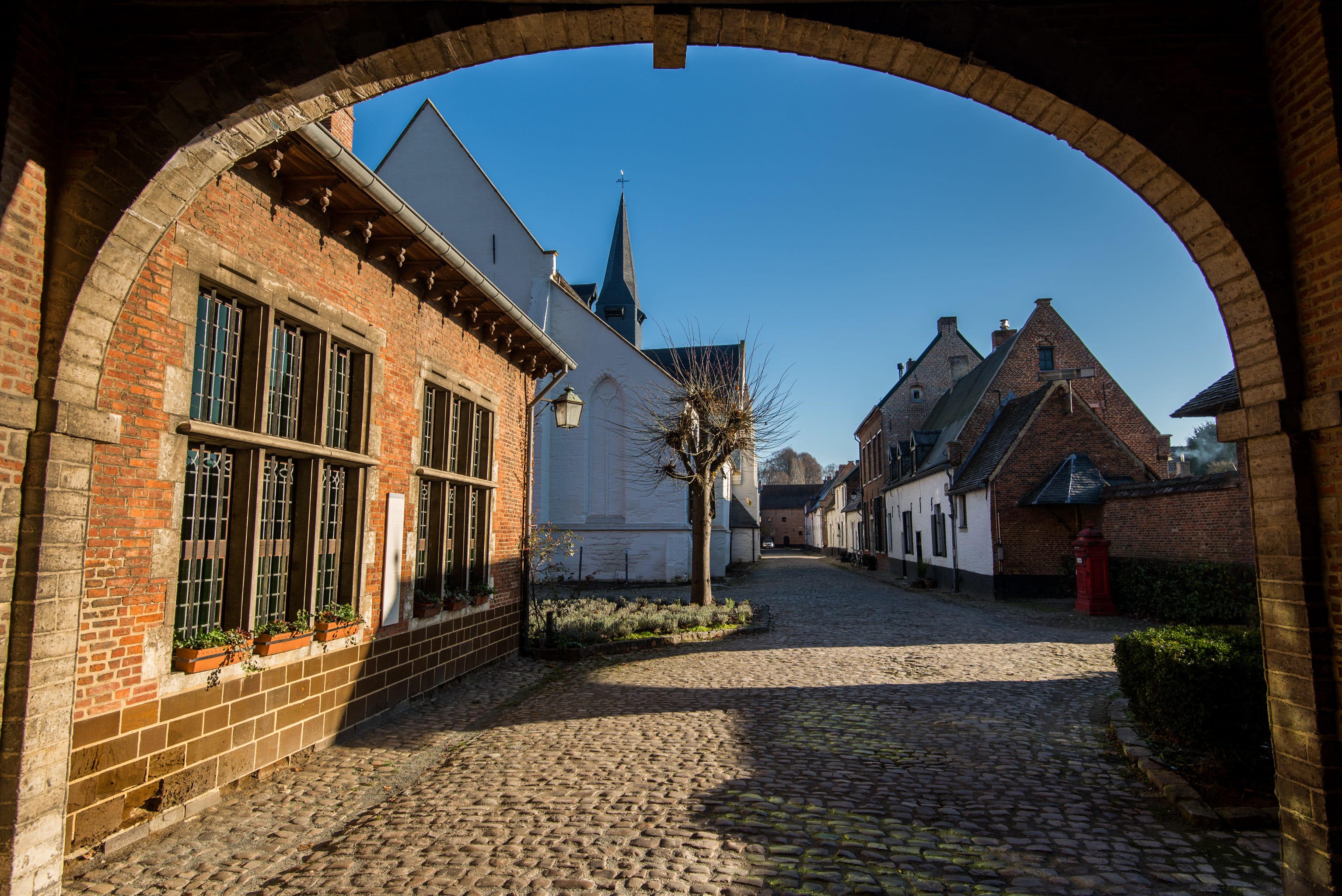
The Beguinages (Dutch: Begijnen) were communities of lay religious women who ran schools and hospitals. Their communities are some of the most intact medieval urban complexes surviving in Northern Europe.
The Bruges Beguinage, founded 1245, is still occupied by Benedictine nuns. The Amsterdam Begijnhof, founded around 1346, is still a residential enclosure, serviced by the Congregation of the Blessed Sacrament. Both are positioned at the city’s historic edge, adjacent to water, around a central chapel. The form is entirely legible once you know what you’re reading.
Questions to ask yourself: Where was the historic hospital? Is there a Beguinage? What religious order founded it, and does the chapel survive?
8. The defensive layer: Walls, gates, and what Replaced them
Every European city of significance was walled. The wall was not primarily military, but mostly civic. To be within the walls was to be a citizen; to be outside it meant you were a peasant, a traveller, a Jew, or leper. The gate was the customs point, the toll point, the identity checkpoint. You were from somewhere when you passed through a gate.
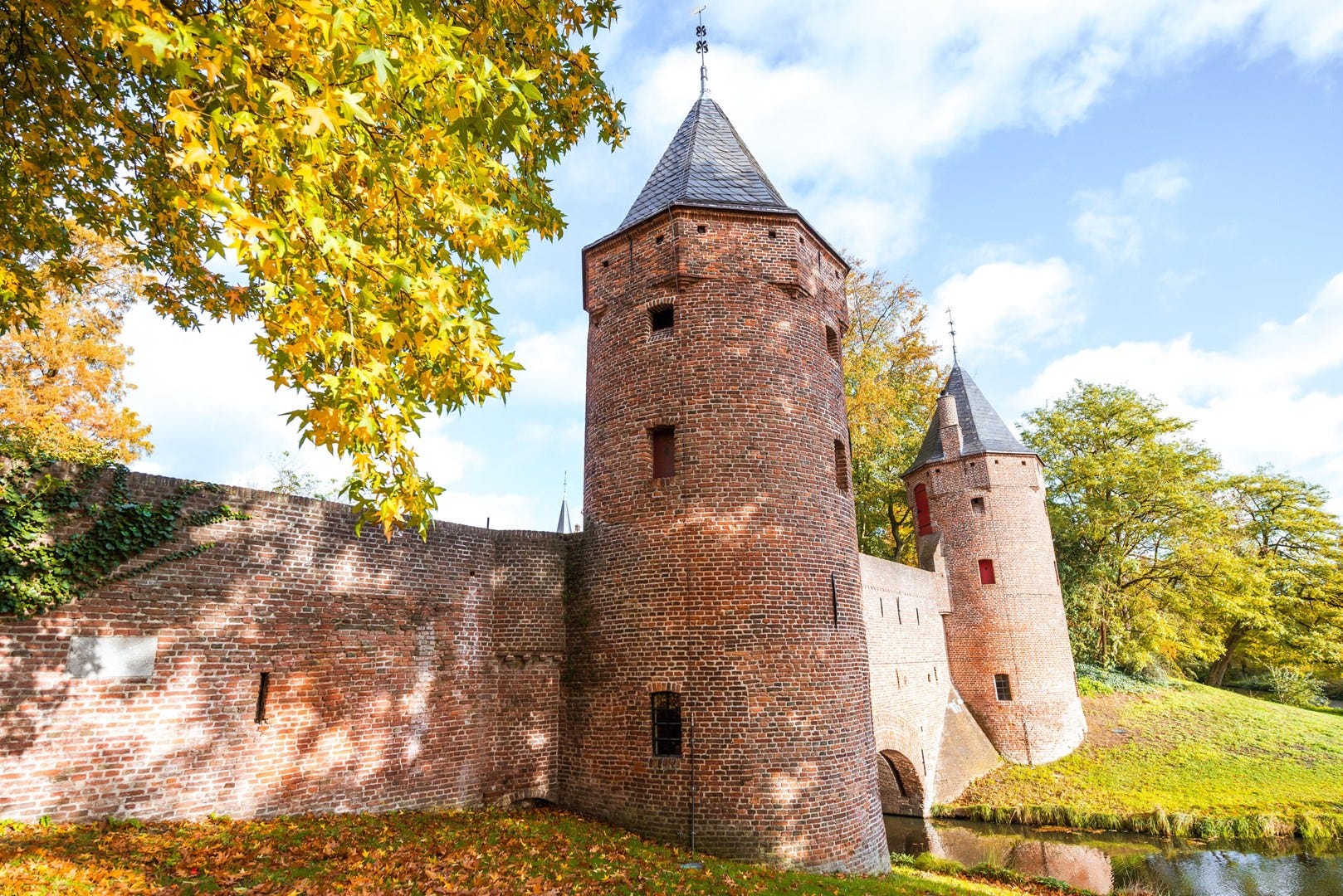
Most European city walls were demolished in the 19th century by civic engineers who needed the land for boulevards and railways. Vienna’s Ringstrasse is built on the footprint of the demolished walls and glacis. Paris’s grands boulevards replace the old fortifications. Amsterdam’s major ring roads follow the lines of demolished 17th-century walls.
What often remains are the gates: the most monumental points of the wall, too large and too embedded in the street network to remove easily. So… look for the surviving gates, and you have the outline of the historic city. The gates tell you the size of the medieval city, its cardinal directions, and which approach roads mattered enough to warrant monumental treatment.
The area immediately outside the historic gate is always interesting. It was the suburb in the original sense: the space below (sub) the city (urbs), where activities too noisy, too smelly, or too dangerous for the city were tolerated. Tanneries, slaughterhouses, smithies, brothels, and leper hospitals were there. The first thing past the gate was always the place the city did not want to look at directly.
Questions to ask yourself: Which city gates survive? Can you trace the wall line on a map? What was the historic suburb outside each gate?
You now see churches, markets, guilds, hospitals, and gates. You understand how authority, charity, commerce, and civic identity are written in space.
Yet this is only part of the story. The hidden layer that binds all these elements — the logic that structures the medieval city as a moral and social organism — is still unread. It is the secret almost no visitor notices, and it changes everything about how you move through and understand the city.
