


In 1747, a Parisian vinegar-maker named Antoine-Claude Maille registered his mustard method with the guild of vinaigriers-moutardiers.
The registration was not a marketing exercise. It was a legal act.
The guild examined the method, verified the grain, tested the acidity, and confirmed that the product met the standard required to bear a master’s name. His name was then legally liable for every jar produced under it. If his mustard failed, the master’s livelihood failed with it. The standard was not a marketing promise, but a constraint built into the conditions of production.


The jar of Maille in your refrigerator is descended from that registration. The French Republic has been replaced, revised, renamed, and rewritten fifteen times since 1792.
But Maille has not changed its basic method. The mustard survives because the chemistry enforces the discipline the guild once certified. Acidity either holds or it does not. Grain structure either produces the correct texture or it fails in use. The object itself resists degradation because the standard is physical, not administrative.
On the 14th of June 1791, the Assemblée nationale passed the Le Chapelier Law and abolished the guild system across France. The justification was liberty: the freedom of the individual craftsman from the constraints of his guild, the freedom of the market from institutional interference, the freedom of the buyer from the overhead of certification.
The law was presented as progress and experienced as liberation.
It demolished the only mechanism Europe had developed for making competence visible inside an object before you paid for it.
That inability did not appear gradually…. It can be traced to specific decisions, in specific sessions, and on specific dates.
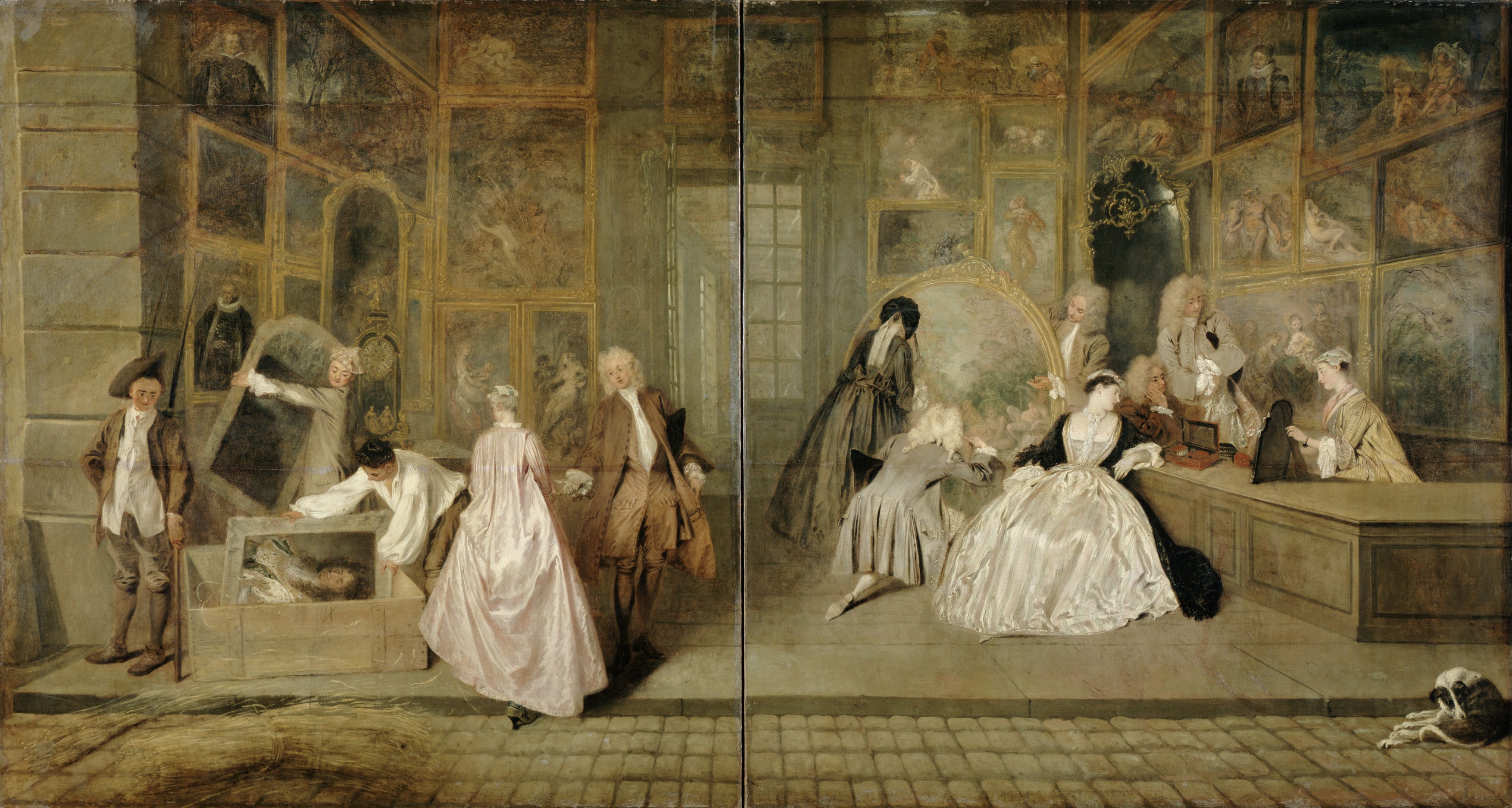
Before 1791, the question of whether something was worth its price was not primarily a matter of personal judgment. It was a matter of institutional architecture.
The guild system operated across every major craft in every European city from the twelfth century onward. To become a master tailor in seventeenth-century Amsterdam it required about seven years of apprenticeship under a registered master, followed by the production of a masterwork judged by existing masters.
The judgment was technical, not aesthetic:
Could the candidate cut to our quality standard?
Could he construct the seam correctly?
Could he select and finish cloth?
If yes, the candidate received his mastership and the right to bear his name on his work. If not, he could not become a tailor.
The customer buying a coat from a master tailor in Amsterdam in 1680 did not need to know how to evaluate cloth, construction, or cut. The guild had done that evaluation on his behalf, at the point of certification, and staked the master’s entire livelihood on the result. The customer needed only to know that the man behind the counter held a mastership…. Everything else followed from that.
The Le Chapelier Law dissolved this quality management in France in a single legislative session. The crafts it governed did not disappear. And the masters did not stop working. But the institutional architecture that had made their competence visible to the buyer was gone.
What eventually replaced it was the price, the brand, and the shop front…
The knowledge gap that the guild once absorbed landed on the buyer. And the buyer is still not equipped to carry the burden.
Every confused purchase since carries that weight.
The coat that looked right and felt wrong after six months. The chair that seemed solid and began to creak within a year.
The restaurant that charged restaurant prices and produced canteen food. The renovation quoted professionally and completed carelessly.
The market filled the space the guild left with three substitutes, each performing the function of quality signalling without carrying the information:
Price came first. The assumption encoded in modern purchasing is that higher price implies higher quality… that the market has already done the sorting. Price reflects manufacturing cost, brand investment, retail margin, and market positioning. It does not reflect craft standard unless the manufacturer has chosen to constrain his costs by maintaining it, which some do and most do not. A €400 jacket and a €150 jacket from the same brand family can share a factory, a fabric supplier, and a construction method while carrying radically different price points. The price is encoding the marketing budget. Not the quality.
Brand came second. A guild name meant that an institution had verified competence and remained liable for its continuation. A brand name means that an institution has spent money making you associate the name with quality. The association is real. The underlying competence may or may not be. Aquascutum made gabardine coats in England for a hundred and sixty years. It went into administration in 2012. The brand was acquired, the name continued, and the coats began to be made elsewhere. The label reads the same. The coat is not the same coat. Brand is the memory of quality, not its guarantee.
Aesthetics came third, and is the most consistently misleading of the three. The capacity to make something look good is entirely separable from the capacity to make something that works. Modern manufacturing has become extraordinarily skilled at producing surfaces. Grain-printed vinyl looks like leather until you fold it. Embossed laminate reads as stone until you tap it. A facade of handset brick sits in front of a concrete frame that does the structural work the brick appears to do. The surface tells you nothing about the interior.
The guild provided information. Price, brand, and aesthetics provide only signals: weak correlations between surface and substance that are accurate often enough to be trusted and wrong often enough to be expensive.
The buyer who cannot tell the difference pays for signals and receives them.
So… how can we solve this?
There is five questions that follow. They were not invented, but recovered from the implicit standards of pre-industrial craft culture: the criteria that guild masters applied when judging a masterwork, made explicit and portable.
They apply to buildings, products, brands, institutions, and experiences. And they require no specialist knowledge to ask. What they require is only attention and the willingness to stand in front of an object long enough to read it.
The five questions, with the specific diagnostic for each, the one thing to look at, and the verdict, are for Heritage Standard members only.
