


Last time I took the altar apart piece by piece, from the stone with a martyr under it to the cloths on top, to show how much of the Mass most of us were never taught.
Day 2 of the retreat moved from the altar to the men who stand at it, and ended on the sin that keeps a man from reaching it.
Every garment a bishop wears names a duty, from the deacon’s dalmatic under his chasuble to the crosier that drives off wolves, and the priests ended the day on one question.
The day began with goatskins. In Genesis 27 Jacob wants the blessing of his blind father Isaac, a blessing that belongs to his brother Esau, and his mother Rebecca dresses him for the task: ‘And the little skins of the kids she put about his hands, and covered the bare of his neck.’ (Genesis 27, 16)
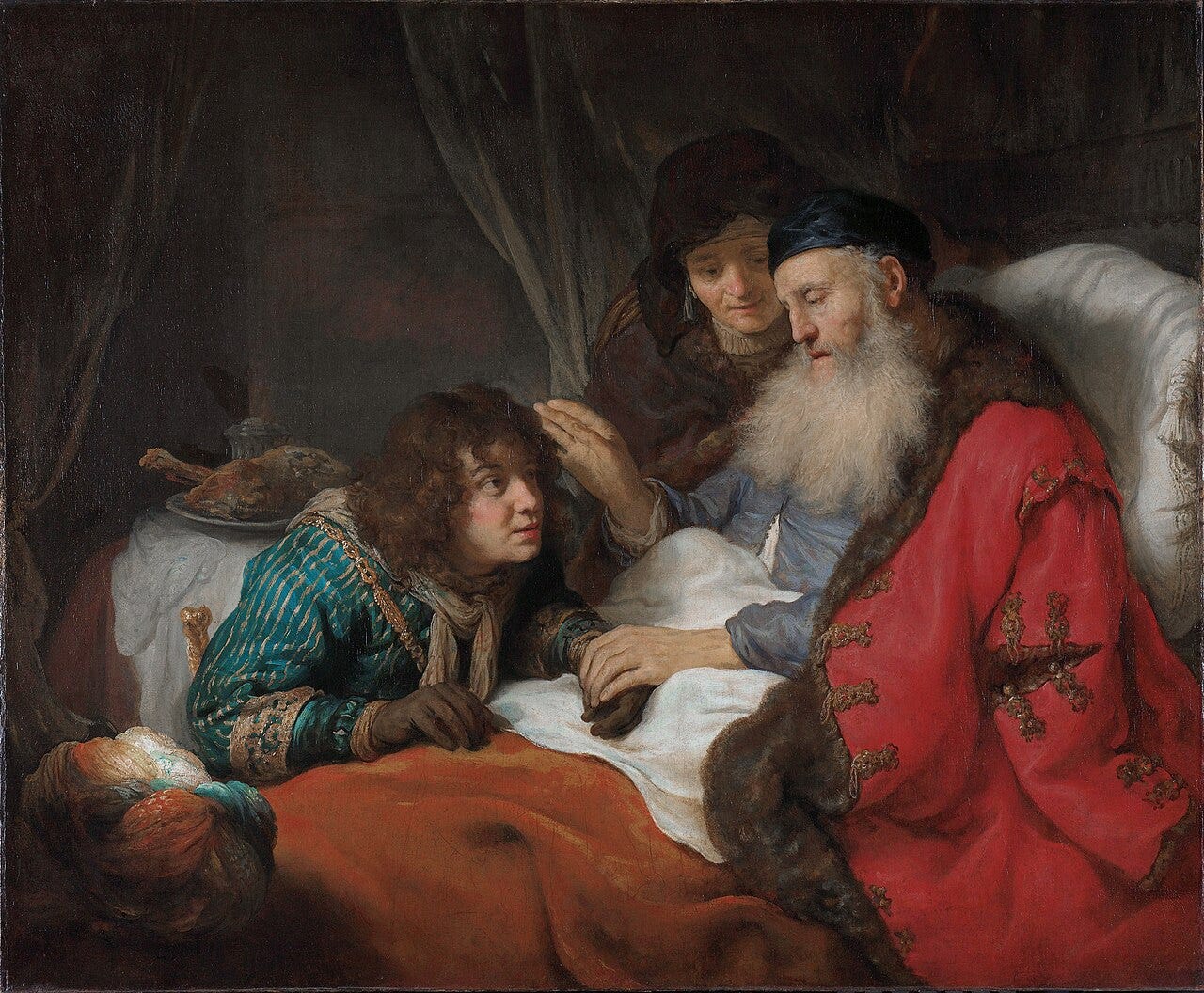
The priests taught me to read the scene as the Church has always read it, as a picture of Christ, the Innocent who wears what is not his own so that the guilty receive the blessing. An animal dies so that the man may pass, and the Man (Jesus) dies so that the world may live.
The next chapter holds the stone of Bethel that I followed in the last report, and from that stone the priests took us to the men who serve at its altar.
The ladder of the men who serve
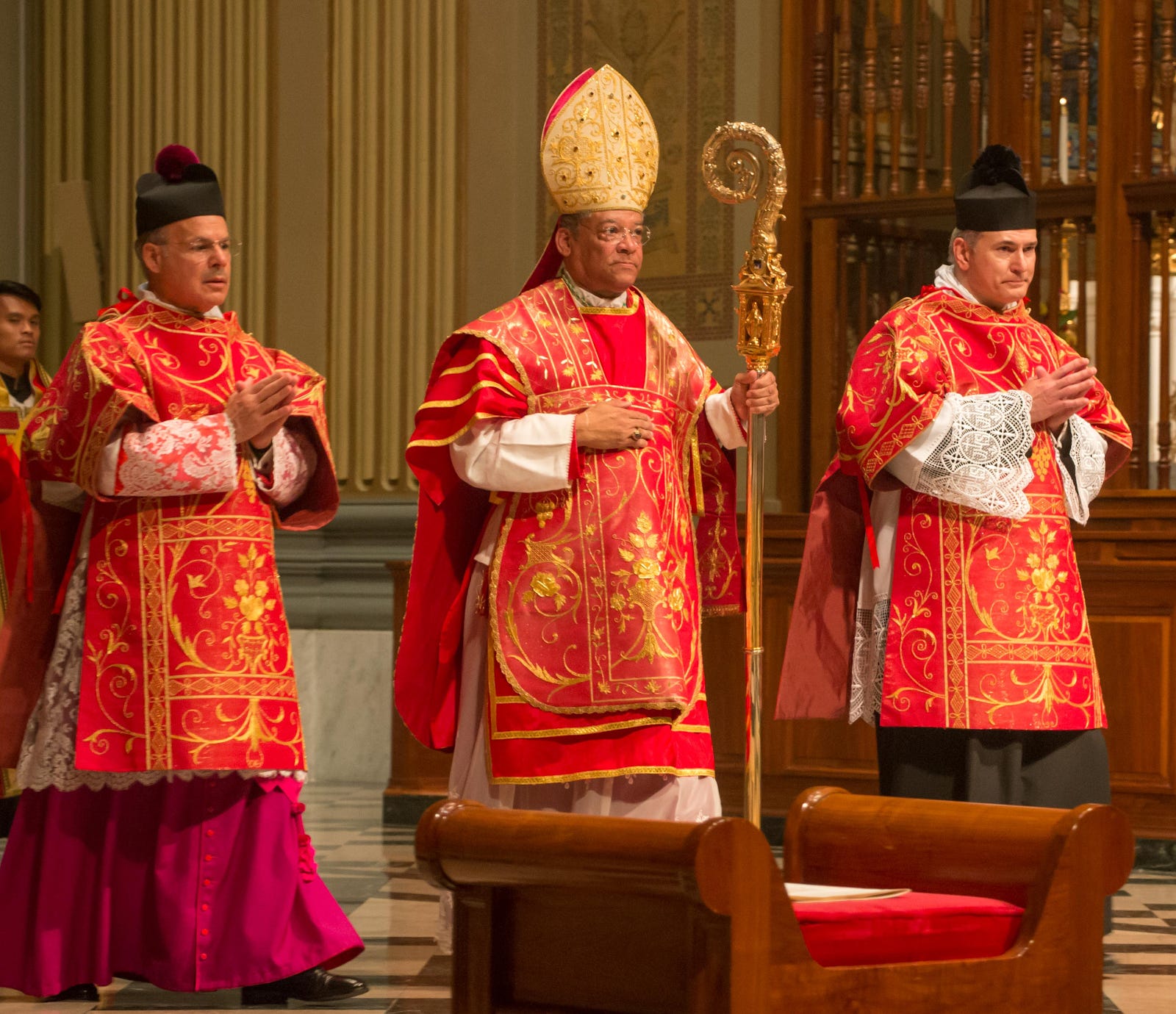
The garments of the clergy form a ladder, and each rung carries the ones below it. I learned that the subdeacon, the man who serves one step beneath the deacon, wears the tunicle, and that the deacon, the man ordained to assist the priest, wears the dalmatic.
Both are garments of joy, the priests told us.
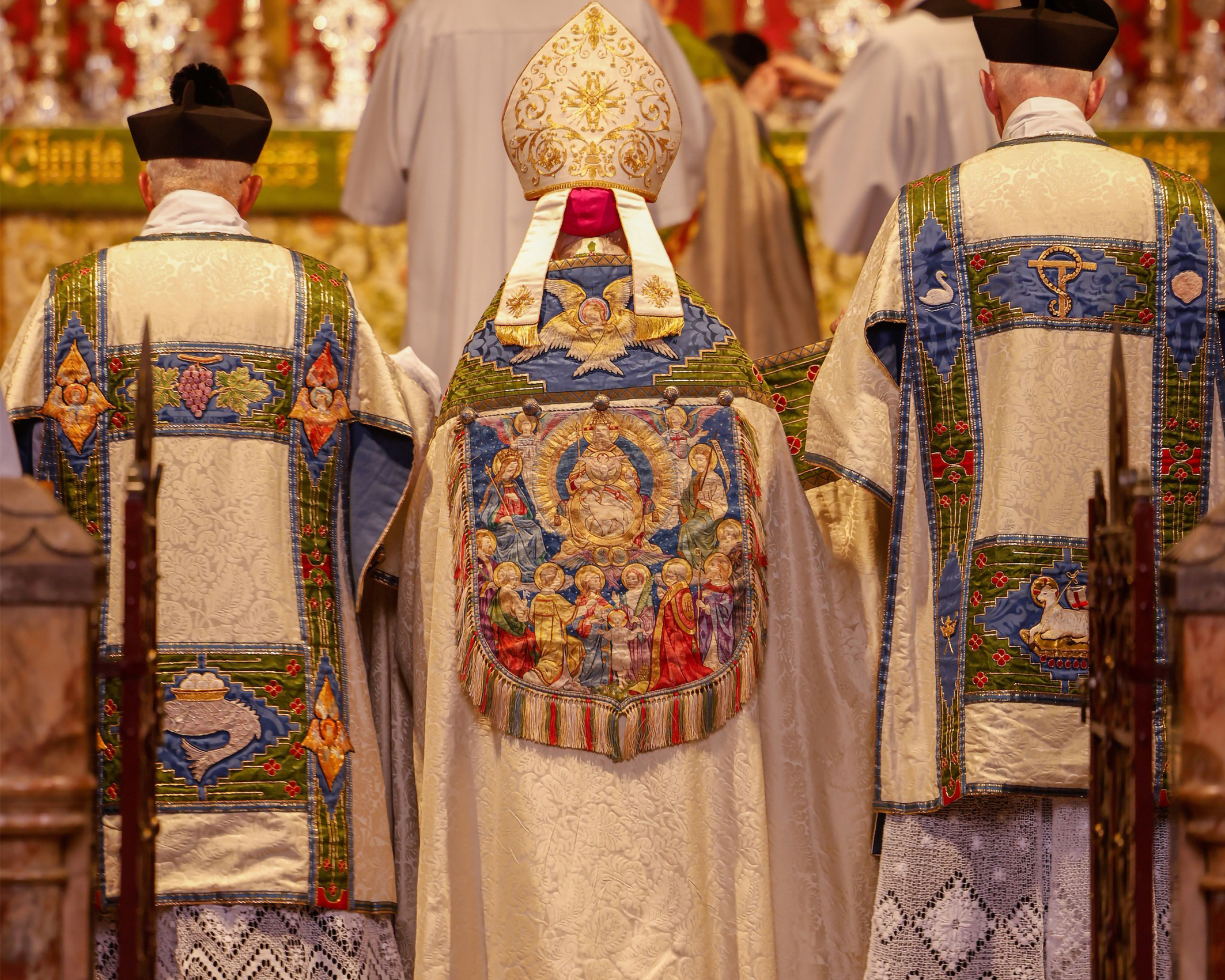
Bishops were often chosen from among the deacons, and for that reason a bishop still puts on the dalmatic under the chasuble, the outer garment of the priest. He carries the lower ranks with him. At a solemn Mass he wears all three outer garments at once, the tunicle, the dalmatic and the chasuble, because his order contains the fullness of the others.
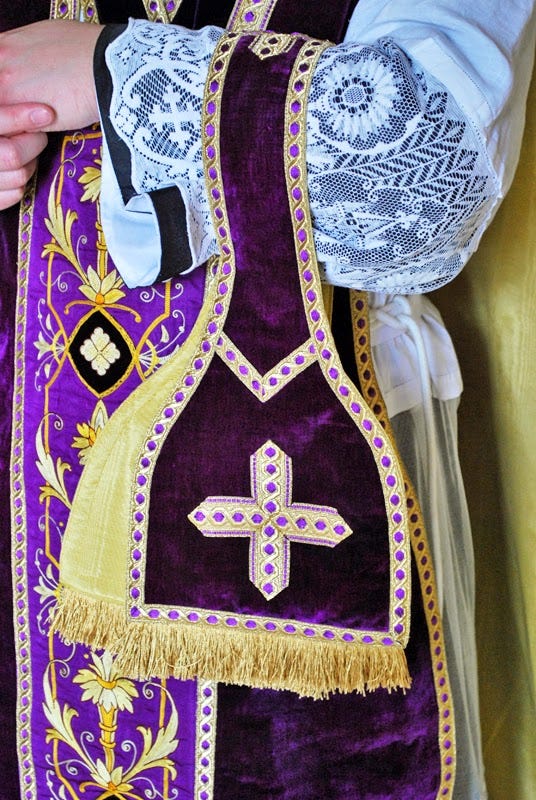
One small example showed me how exact such details are. The maniple, the narrow band of cloth worn on the left arm, goes on after the Confiteor, the prayer of confession, because of the prostration that belongs to that prayer. A bishop puts on his garments in a fixed order, and every step in the order has a reason that somebody wrote down.
What a bishop carries
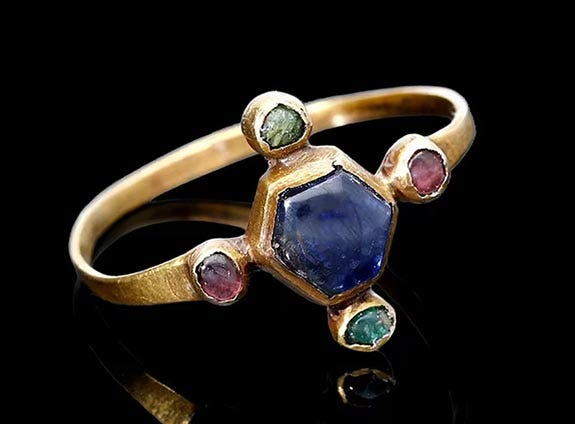
Each sign of a bishop’s office names something he carries for other people. The ring, which I learned is attested from the seventh and eighth centuries and widespread by the tenth, is a seal and a wedding ring at once, since the bishop is the bridegroom of his Church.
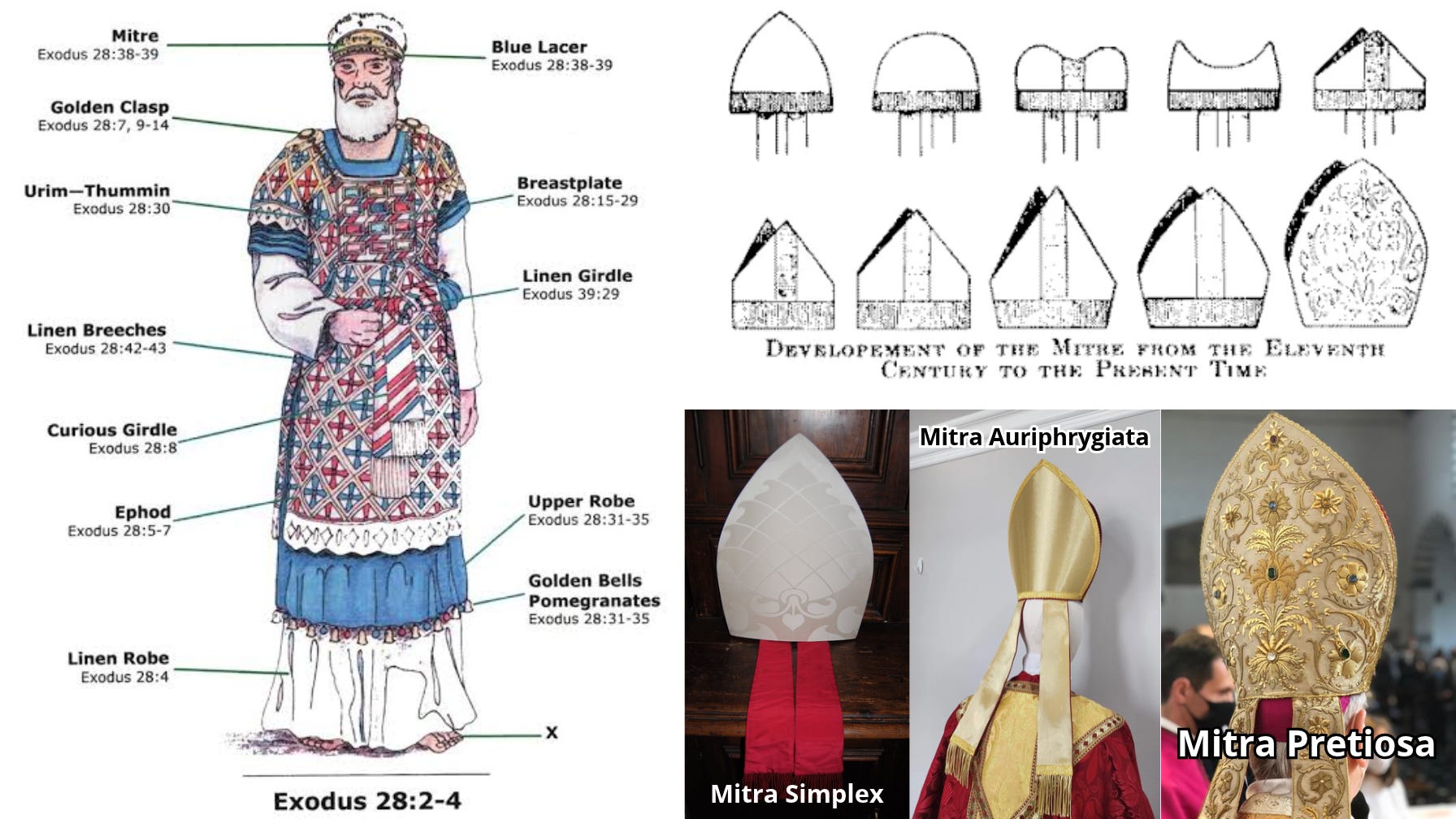
The mitre, whose distant ancestor is the headband of the high priest in Exodus 28, is a helmet for battle, and its two horns stand for the Old Testament and the New. Early mitres were low and pointed, and to my eye they look like rabbit ears. The form we know came later.
The tiara of the Pope began with two rings, for heaven and for earth, and received a third for the Church militant on earth, suffering in purgatory and triumphant in heaven.


The pallium, a band of wool laid on the shoulders, is cut from lambs blessed on the feast of Saint Agnes, marked with six black crosses and handed over after three oaths of fidelity to the Pope. A shepherd carries the lamb across his shoulders, and the pallium recalls that picture.


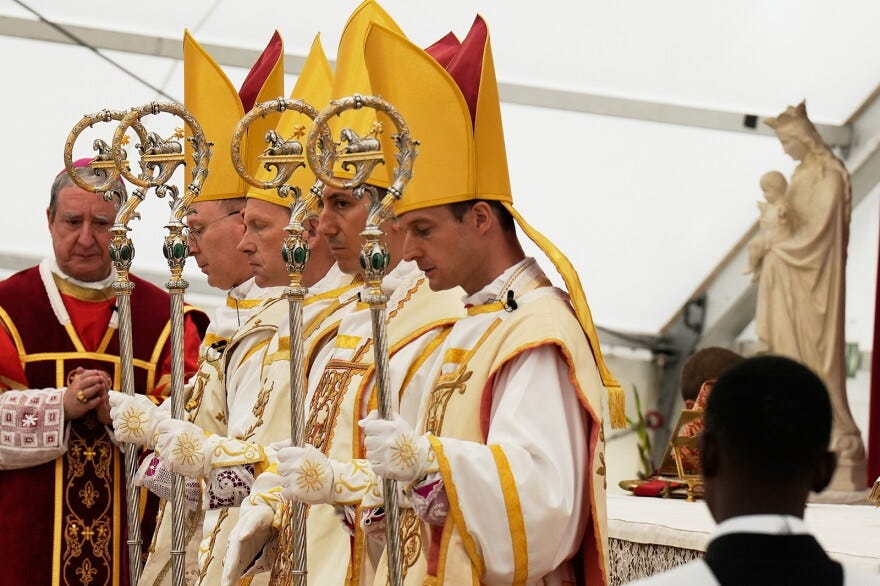
The crosier, the staff of a bishop, dates from the seventh century, and Isidore of Seville, a bishop of that age, explained its three parts. With the crook the bishop gathers, with the shaft he supports, and with the point he drives off wolves. Gloves of the day’s colour are worn at Mass and at no other time.
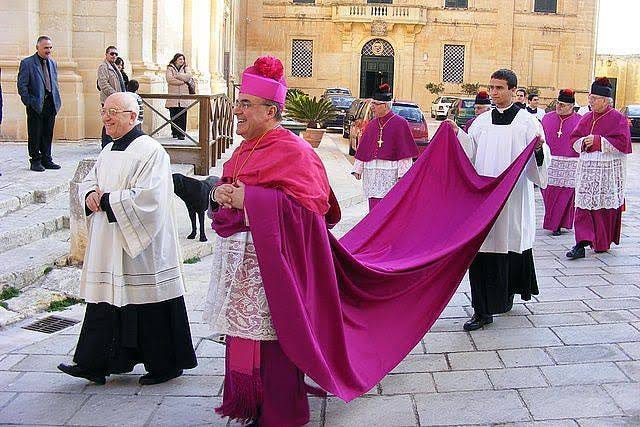
The capa magna, the long cape with its train, once ran to fifteen metres and was cut to seven and a half, and in practice Pius XII limited its use. I tried to picture walking into a church behind fifteen metres of cloth, and the priests put a question to us next that concerned neither cloth nor rank.
The books and the language
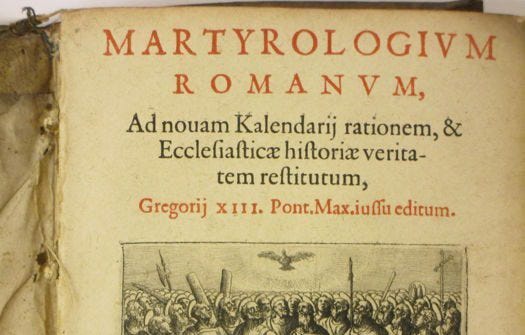
All of this is recorded in the Sacramentarium, the early books of the Mass, and the Council of Trent fixed it in 5 books: the Missal (1570) for the Mass, the Breviary of (1568) for the liturgy of the hours, the Pontifical for the rites of the bishop, the Rituale (1614) for the sacraments and blessings, and the Martyrology for the saints of each day.
The bishop’s Mass is the original form, and every other Mass derives from it.
Latin was kept, the priests told us, because it is the language of the early Church, of unity and of precision. The error lies in the belief that I must understand the Mass in full at the moment it is said. Christ prayed on the cross in words that some of those who stood nearest misheard: ‘Eli, Eli, lamma sabacthani? that is, My God, my God, why hast thou forsaken me?’ And ‘some that stood there and heard, said: This man calleth Elias.’ (Matthew 27, 46 and 47)
The people at the foot of the cross followed little of what he said, and the sacrifice was complete.

Our pride
Then the day turned inward, to pride. The priests asked us what we come to Mass to do. The Trinity is the life of God, and beneath it stands the creature, and I am the creature.
A third of the angels followed Lucifer, a traditional estimate that carries no dogmatic weight, and the Church reads it from the Apocalypse: ‘And his tail drew the third part of the stars of heaven and cast them to the earth.’ (Apocalypse 12, 4) Without original sin we could have stood with God at once, and with it we stand at a distance that we cannot cross alone.
At every Gloria Patri, the short prayer of praise to the Father, the Son and the Holy Ghost that closes the psalms, the question is simple: am I a glory to God?
Christ said over the cup that his blood ‘shall be shed for many unto remission of sins’ (Matthew 26, 28), and the priests took the words as they stand: the offering reaches the people who receive its fruit.
Holy Mass is the instrument of reconciliation, and of every virtue across the liturgical year. Every sacrament flows from it.
The steps before the altar…
The preparation for Mass begins before the Mass, and I wrote it down in the order the priests gave it.
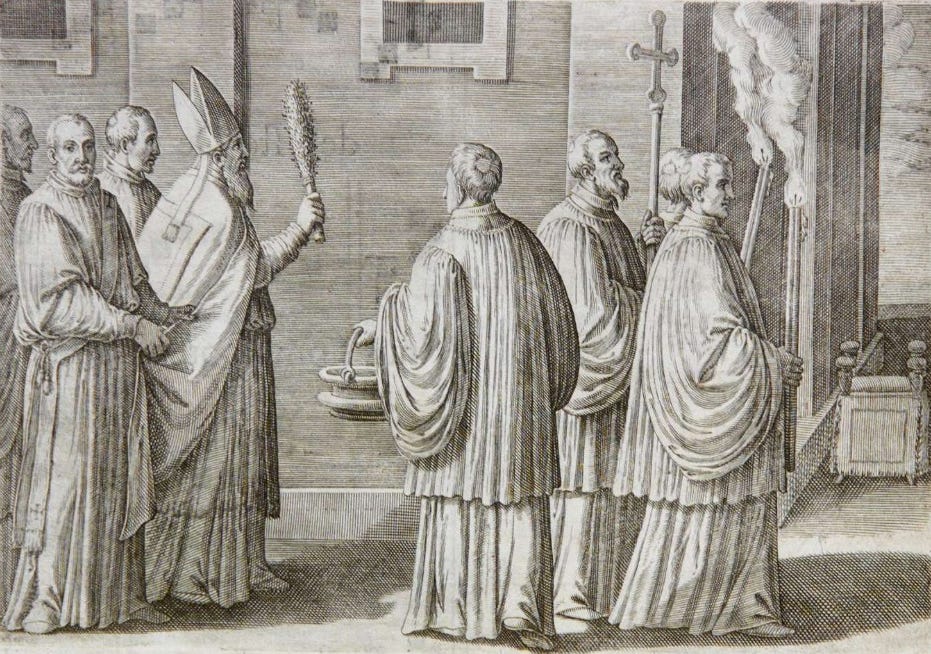
On a Sunday, before the principal Mass, the priest walks through the church and sprinkles the altar, the clergy and the people with holy water. The rite is the Asperges, Latin for ‘you will sprinkle’, and the choir sings words from Psalm 50, the Miserere: ‘Thou shalt sprinkle me with hyssop, and I shall be cleansed: thou shalt wash me, and I shall be made whiter than snow.’ (Psalm 50, 9)
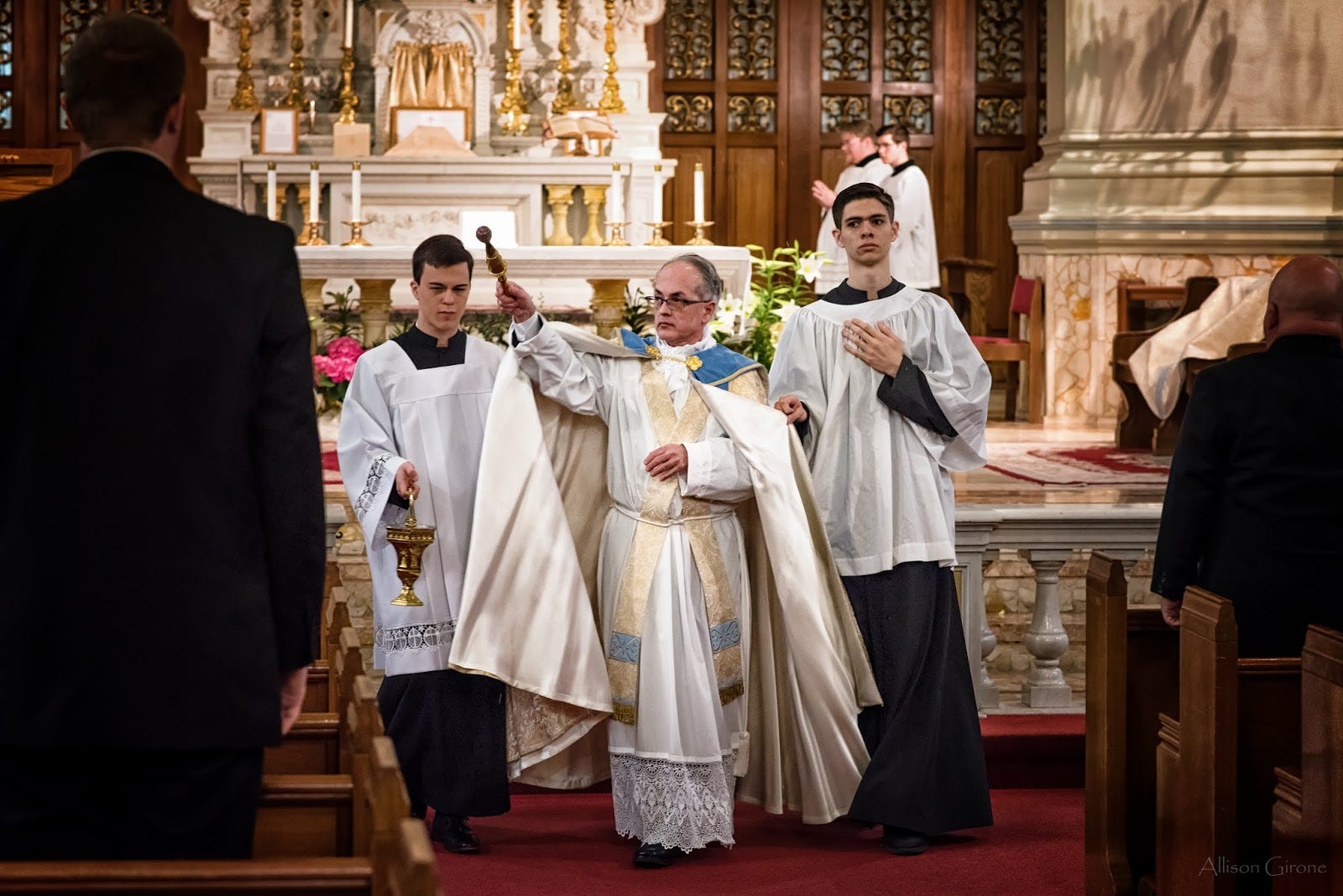
Hyssop is the herb that the priests of Israel used in their purifications. In the Easter season the Vidi aquam, Latin for ‘I saw water’, takes its place, with words from Ezekiel 47. In that vision the water runs toward the altar: ‘And behold waters issued out from under the threshold of the house toward the east... but the waters came down to the right side of the temple to the south part of the altar.’ (Ezekiel 47, 1)
Both rites wash the people before the priest reaches the altar, and that is the purification that opens the way.
At the foot of the altar the priest says the Judica, Psalm 42, the last preparation before he climbs the steps. It opens with a plea: ‘Judge me, O God, and distinguish my cause from the nation that is not holy: deliver me from the unjust and deceitful man.’ (Psalm 42, 1) The priests taught us that this psalm holds the three ways that run through the whole Mass: purification, illumination and union. I could follow them in the verses. The plea of the first verse is purification.
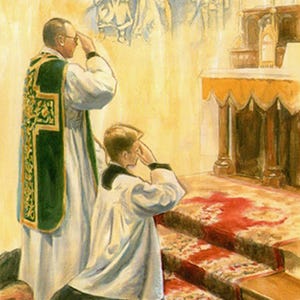
The third verse is illumination: ‘Send forth thy light and thy truth: they have conducted me, and brought me unto thy holy hill, and into thy tabernacles.’ (Psalm 42, 3) The fourth is union: ‘And I will go in to the altar of God: to God who giveth joy to my youth.’ (Psalm 42, 4) That fourth verse opens the Mass. The priest says its first half before the psalm begins, and the server answers with its second half.
The Mass of the Catechumens, the part open to those preparing for baptism, who left before the Offertory, runs to the Creed, and the Mass of the Faithful begins at the Offertory. Before he says Mass the priest prays Matins and Lauds, the night office and the morning prayer of the Church.
The sacristy takes its name from the Latin secretarium, a place set apart, and it is where silence begins and the priest washes his hands.
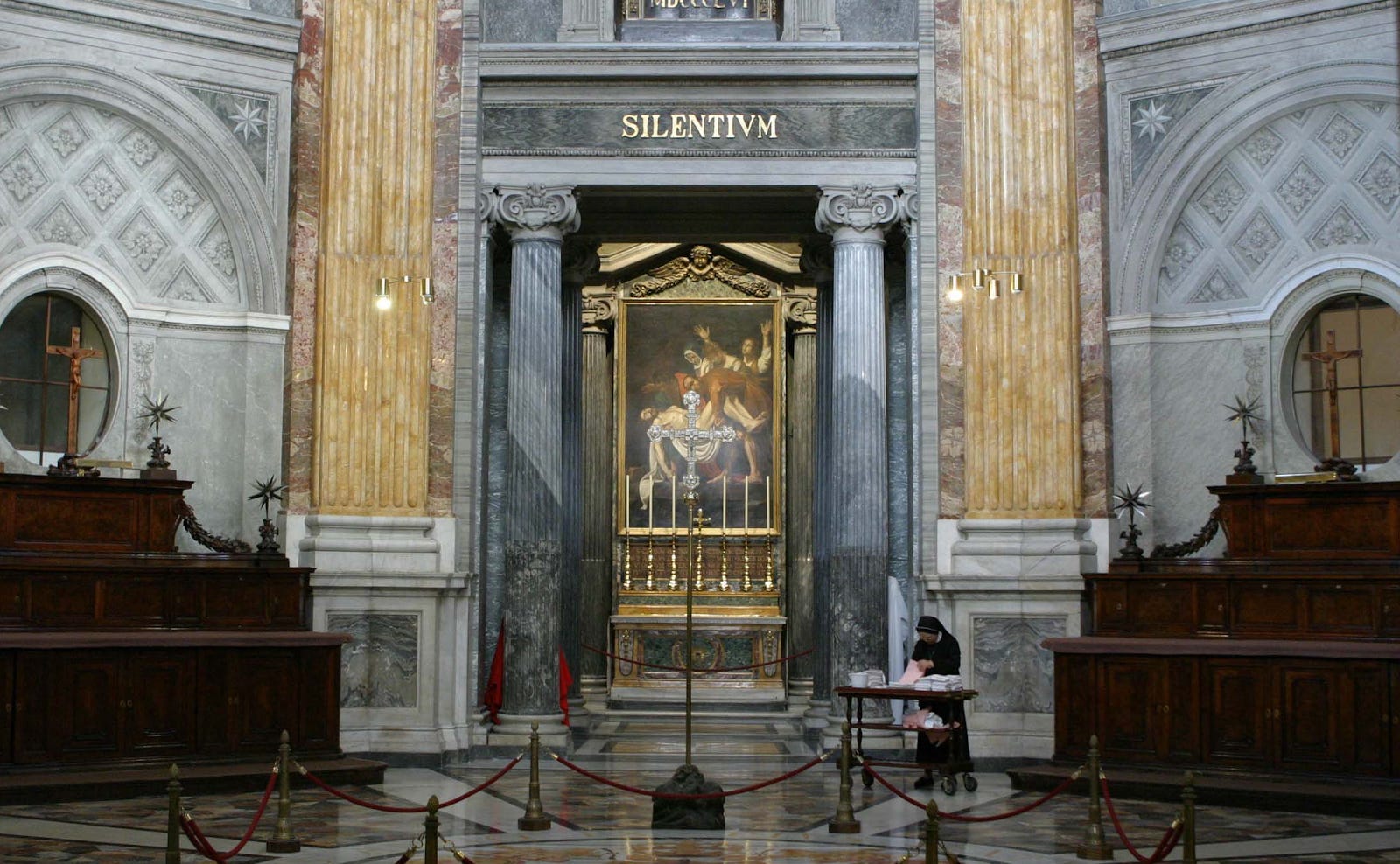
The Question of the Day
The final question of that day had nothing to do with vestments. The priests asked each of us to walk the Way of the Cross on the way to the sacristy and to answer it. The question was: Where do you stand at the cross?
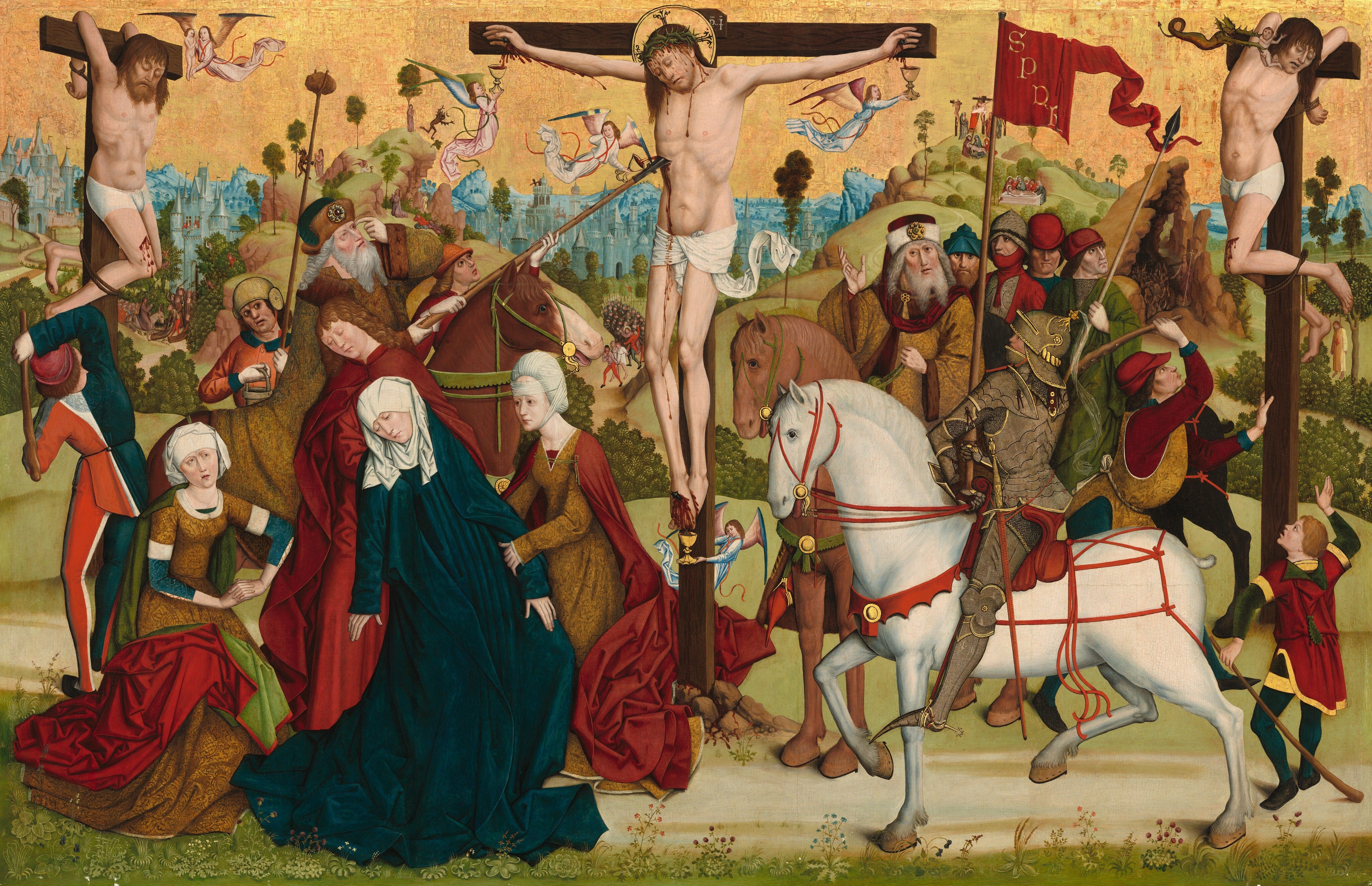
This is the most important meditation one can do before every Mass.
—Robbert