

Poland calls itself the last Catholic country in Europe. But it is not, and the evidence has been sitting in the census data for a decade. This is a 4-part series taking that myth apart with the actual numbers, the actual branding campaign, and the actual theology behind it.
Part I: what the 2021 census really said
Part II: how Poland turned a pope into a brand
Part III: the 1980 speech that moved a dogma nobody noticed move
Part IV: the parishes that survived without any of it
Pope John Paul II stood in a German synagogue in 1980 and told the Jews that they never needed his Church at all.
On 17 November 1980, in Mainz (Germany) Pope John Paul II stood before a Jewish community and described his visit as ‘a dialogue between two peoples’. The people of the New Covenant, he said, are meeting the people of the Old Covenant, a covenant, he was careful to specify, that God had never revoked.1 Catholics are the New Covenant, Jews the Old. A sentence that sounds like it comes right out of the gobbledygook dictionary of a diplomat that wants to ‘build bridges’ rather than ‘reopen old wounds.’
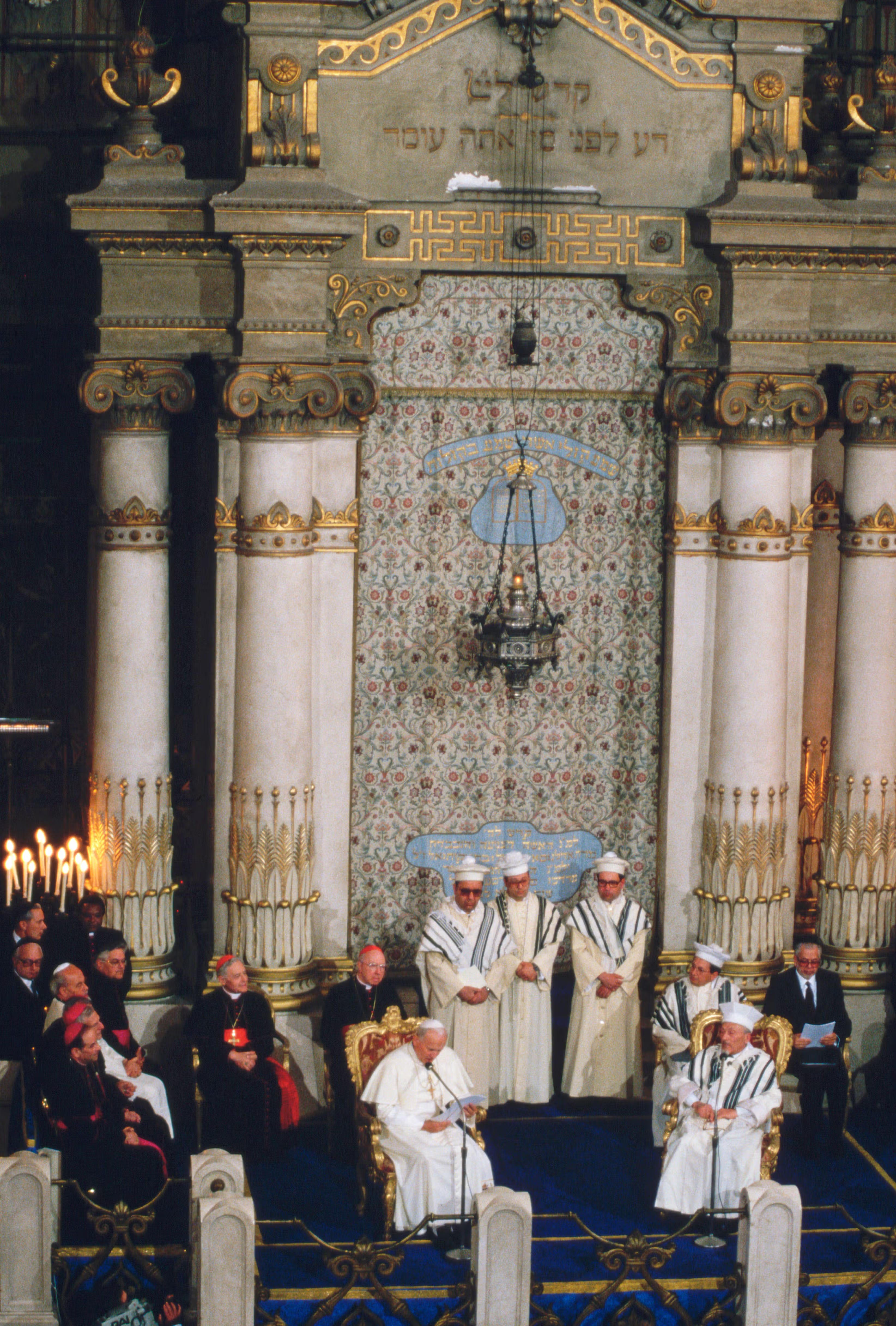
This diplomatic sentence read against nearly two thousand years of Catholic teaching on this exact subject. It was one of the most consequential sentences a Pope has spoken in the modern era, and almost no one in Poland, then or since, has been asked to reckon with what John Paul II actually claimed here.
To see why, it helps to know exactly what it was answering to.
‘The first dimension of this dialogue, that is, the meeting between the people of God of the Old Covenant, never revoked by God, and that of the New Covenant, is at the same time a dialogue within our Church…’
‘Whoever encounters Jesus Christ encounters Judaism. I would like to make these words my own.’
Excerpts from the Address to representatives of the Jewish community in Mainz, West Germany
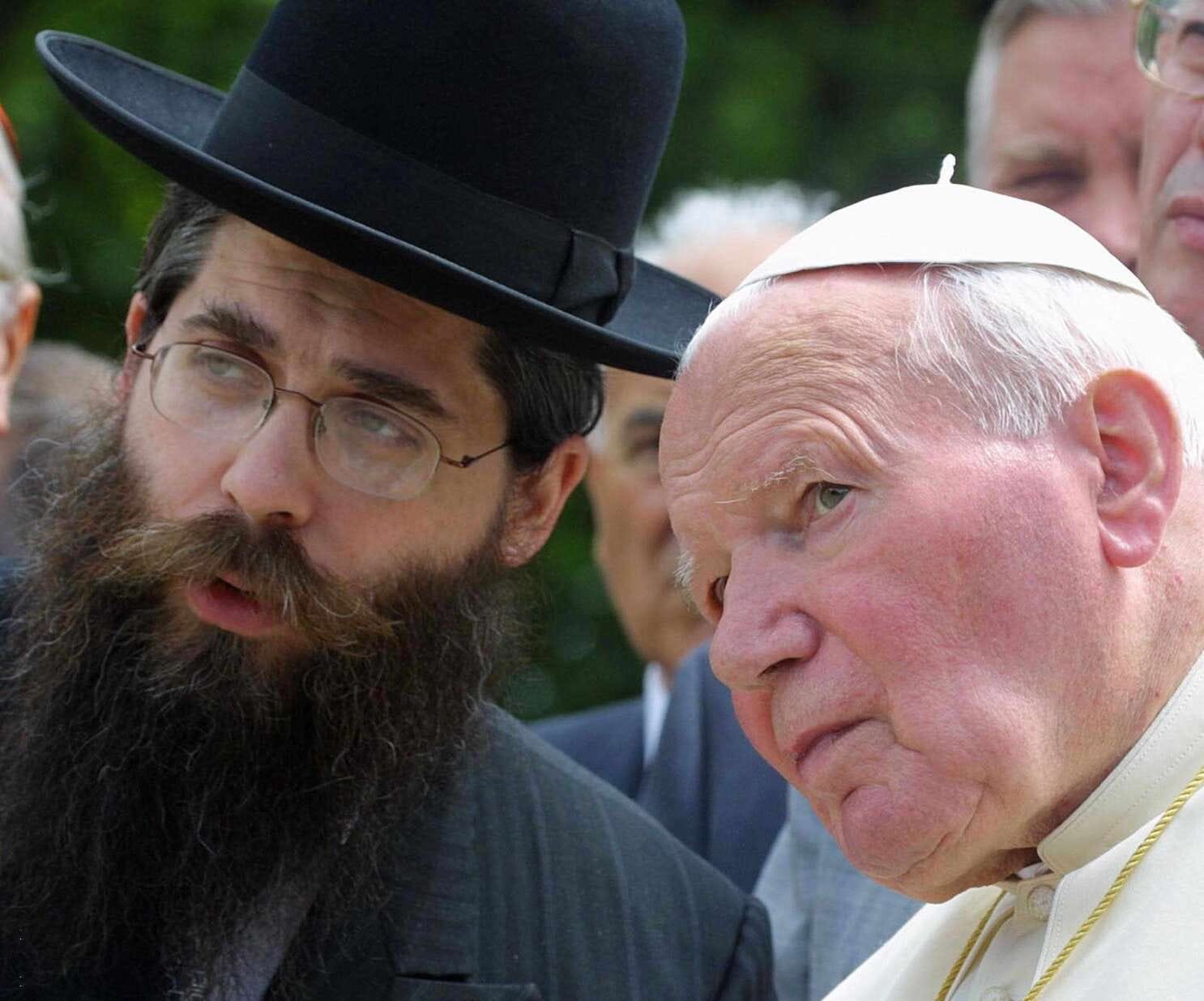
How John Paul II ‘changed’ a doctrine defined three times in Church history
As a Catholic you might (or might not) know that the Church did not arrive at the necessity of Christ for salvation in a casual way. Over the centuries the same fact has been proven again and again… Until modernia overruled it.
Why? Maybe because modern people are scared of hell. They cannot imagine it anymore, they think going to Church is enough. Or being a ‘good person’ without faith is sufficient too. And do not think it are only agnostics saying this, even in Traditional Catholic circles nonsense like that Charlie Kirk is in heaven, or that Orthodox go to heaven is preached by some.
And while God can do as He pleases, no is allowed to spread such false optimism. The Church never left open the question for later popes to revisit it, or that circumstances can change. The Truth does not change with times.
The Council of Florence, under Pope Eugene IV, declared as an article of faith that the ceremonies, rites and sacrifices of the Mosaic law, no matter their earlier standing, had ceased with the coming of Christ. And that those who continued to observe these rites after that point cannot be considered part of the Christian faith.
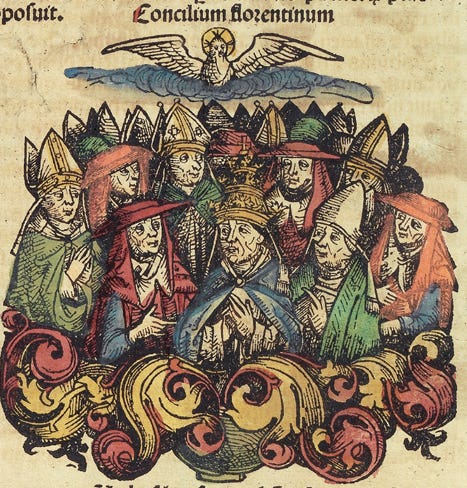
This article was not but a passing remark in a sermon. This was (and still is) a solemn profession of faith, issued by an ecumenical council, in the exact register Catholic theology reserves for its most binding and permanent statements. While the broader doctrine it rests on: that the Church founded by Christ is necessary for salvation, had already been defined with comparable force at the same council. And later reaffirmed again and again by popes and doctors of the Church across the centuries that followed.
But it was Holy Scripture itself that gave the doctrine its foundation, before any council had ever touched it. It was Christ Himself that addressed the Jews directly, and warned that those who did not believe He was the one they awaited would die in his own sins.
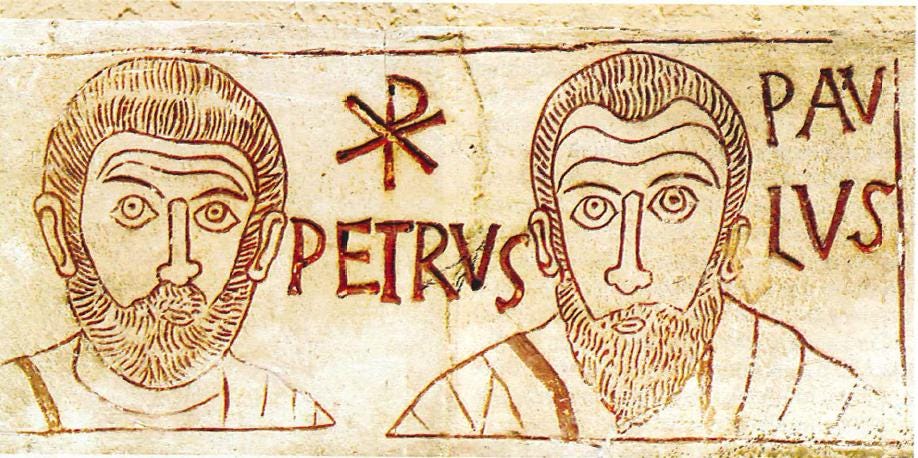
St. Peter, at the very first Christian sermon on the day of Pentecost, also did not tell the devout Jews that gathered to hear him that their existing covenant remained sufficient. He told them plainly, to be baptised
St. Paul, when writing to the Hebrews, said plainly that the new covenant had made the old one obsolete. None of these examples was ambiguous to the theologians who spent centuries systematising it.
None of these writings left room for a later pope (together with many Israel-obsessed Protestants) to describe the Old Covenant as still standing, untouched, and alongside the new one. That would mean that Christ’s arrival had simply added a second valid path rather than fulfilled and superseded the first.
Supersessionism (also called replacement theology or fulfillment theology) is the Christian doctrine that the Christian Church has succeeded or fulfilled the role of the ancient Israelite nation as God’s covenanted people.
The doctrine of supersessionism is what Wojtyła’s sentence in Mainz set aside. He did not attack it directly, which would have provoked exactly the resistance a modern pope had every reason to avoid. But by speaking past it, very gently, and warmly, in a sentence that simply assumed the Old Covenant’s ongoing validity as though the question had already been settled in the other direction.
Many of the John Paul II idolisers now teach this doctrine like it has always been taught this way:
The non-Catholics who noticed exactly what had happened
My clearest evidence for that this was not just a rhetorical accident, but a real and legible shift, comes from the reaction of the Jewish people who had every reason to read it correctly, because it was being said for their own benefit.
For example Abraham Foxman of the Anti-Defamation League: he praised Wojtyła specifically for rejecting what he called ‘the destructive concept of supersessionism'.’
The Jerusalem Post ran a tribute when John Paul II dies asking who would follow ‘the best pope the Jews had ever had.’
The Boston Globe called his outreach to the Jewish people ‘remarkable’, and praised him for insisting the Old Covenant was never revoked.
These were not hostile critics looking for something to attack. They were sympathetic observers, on the receiving end of the gesture, confirming in their own words exactly what traditionalist critics inside the Church would go on to say had happened.
When the people the doctrine was changed to accommodate are the ones telling you it changed, the argument that nothing shifted becomes very hard to sustain.
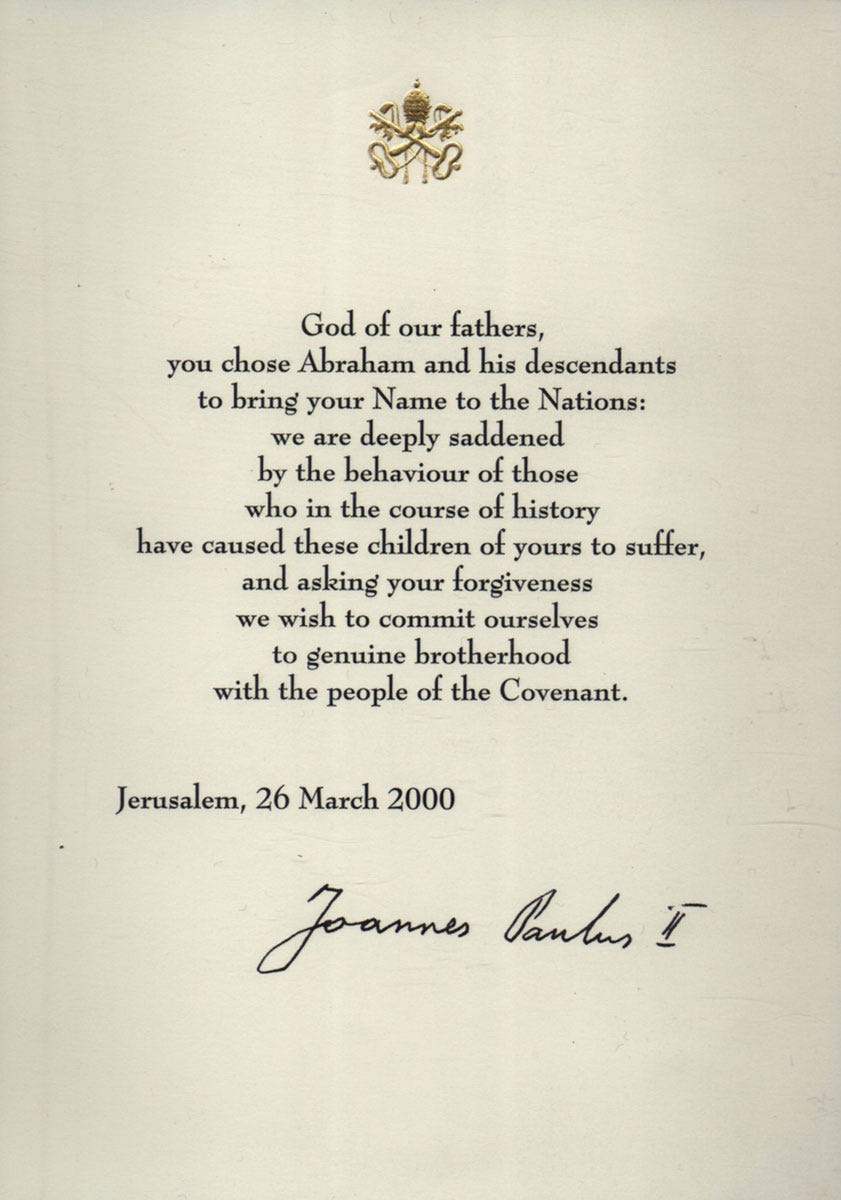
But instead of slowly restoring this error, Rome did not walk the sentence back either.
No, they doubled down on it! In 1985, the Vatican issued Notes on how Judaism should be presented in Catholic preaching and teaching. The document pointed readers specifically to a passage instructing that Judaism shall be treated as a living present reality rather than a superseded one, quoting Wojtyła’s own Mainz sermon directly to make the point.
John Paul II later described the document as proof of the Holy See’s ‘continuing commitment to the relationship it established.’
He also said that it would help to free Catholic teaching from what he called ‘a negative and inaccurate presentation of Jews and Judaism.’
The Pope who said his Mainz sermon had been misread by the ADL, The Jerusalem Post and The Boston Globe had an opportunity, five years later, in an official Vatican document bearing his own commentary, to correct this own record. But instead he confirmed exactly what these journalists said five years prior.
The Anti-Defamation League praised John Paul II for exactly the theological move traditionalists have spent four decades calling heresy.
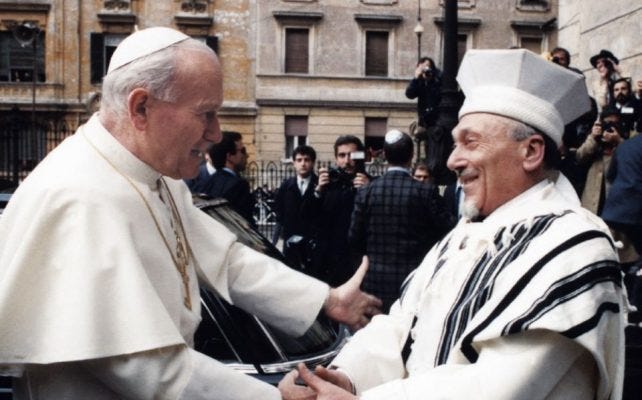
His sentence in Mainz was not a one-off…
What is important to understand here is that none of this happened in isolation. So it is is worth tracing the sentence in his Mainz sermon back to where it all began.
The flawed theology that produced it was already visible in Wojtyła’s very first encyclical, more than a year before he ever set a foot in that synagogue.
Redemptor Hominis, published in March 1979, the encyclical got framed as an one about the Holy Redeemer.
In a close reading of its first six sections what one finds, according to the theologian Fr. Johannes Dörmann’s extended study of the text, is something closer to a theology of universal salvation rooted in the Incarnation itself. In the sole fact that the Son of God took on human nature, rather than in the specific redemptive act of the Crucifixion.2
And that difference is much more important than one would guess… and also the reason why the Catholic Church told as to not ‘proselytise’ and stop the missionary work. It explains Assissi in 1986 and the obsession post-Vatican II popes have with human dignity.
If Catholic theology begins with the Incarnation, meaning: Christ became human, it can argue that Christ is connected to every human being simply because all people share human nature (or human dignity) with him.
On this view alone, a person might receive the benefit of Christ’s Redemption without first having faith or being baptised, because such an argument does not depend on the person responding to the Crucifixion through faith.
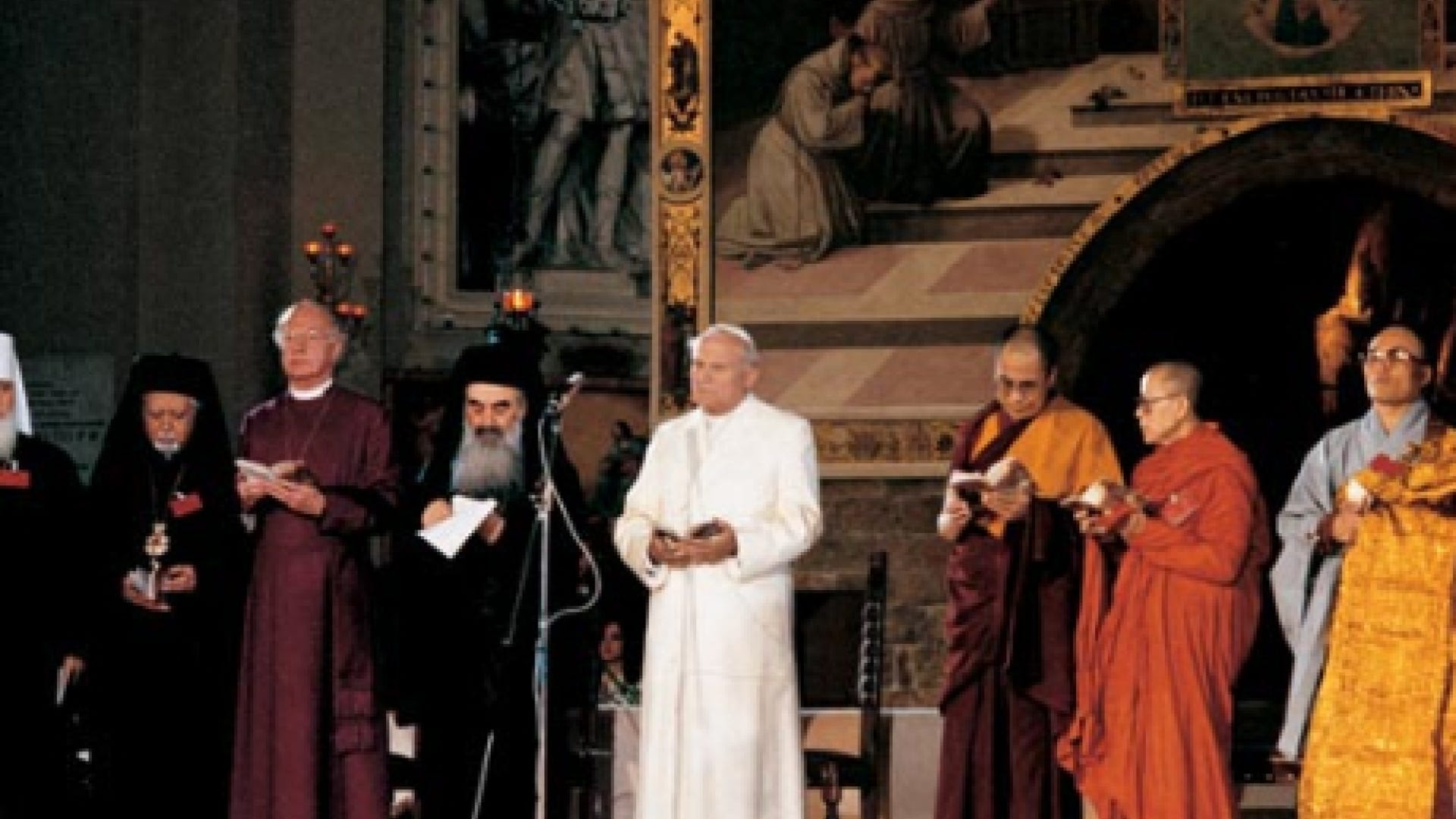
Dörmann then makes an important observation about this: in Redemptor Hominis, there is strikingly little emphasis on faith and baptism as the normal ways in which a person receives redemption.3
For a papal document specifically about Christ’s saving work that silence speaks volumes. The fact that faith and baptism are not presented as necessary means of receiving redemption reveals all about the flawed theology in the document itself.
Then again, Redemptor Hominis was not an isolated example that John Paul II later overtuned. In a broader reading of his theological writings, the same pattern appears again and again throughout his pontificate: John Paul II repeatedly presented the Incarnation as the place where Christ is united with humanity and where God and human beings meet. 4
So, what John Paul II said in Mainz in 1980 about Judaism was not a sudden change in his theology. It was an application of the same flawed theological ideas already appearing earlier writings.
When Cardinal Karol Wojtyła, the future Pope John Paul II, took an active role in the Second Vatican Council he helped with the drafting of Gaudium et Spes.
Paragraph 22 of that document became especially important because it says that the Son of God, through the Incarnation, somehow united himself with every human being.
22. The truth is that only in the mystery of the incarnate Word does the mystery of man take on light. For Adam, the first man, was a figure of Him Who was to come,(20) namely Christ the Lord. Christ, the final Adam, by the revelation of the mystery of the Father and His love, fully reveals man to man himself and makes his supreme calling clear. It is not surprising, then, that in Him all the aforementioned truths find their root and attain their crown.
This became an important starting point for Wojtyła’s and among him many other post-conciliar prelates’ and Popes’ thinking about the relationship between Christ and humanity.
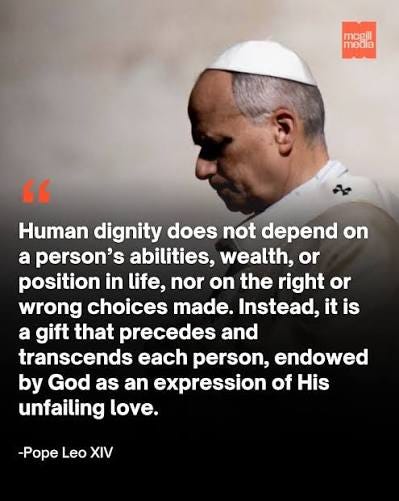
The study of humanity was becoming closely connected with the study of God, because God had united Himself to humanity by becoming man.
The Philosopher underneath the ‘Theologian’
It is worth explaining what kind of thinking lies behind Wojtyła’s anthropocentric theology, which is still widely taught in Poland and many other places. And yes: even ‘TLM’ seminaries like the one of the Fraternity of Saint Peter.
John Paul II is often described as a Thomist, but that description is too simplified.
His early studies at Rome’s Angelicum, especially under the Dominican theologian Garrigou-Lagrange, were genuinely Thomist formation. He continued to use Thomistic vocabulary throughout his life. E.g. ideas such as act and potency, nature and person appear again and again in his writings.
The deeper structure of his philosophy comes from non-Catholic sources. His habilitation thesis focused on the ethics of Max Scheler, a philosopher in the phenomenological tradition that developed from Husserl and, further back, Kant.
His major philosophical work that followed, Person and Act, also begins with human experience and consciousness. Rather than starting with a Thomistic metaphysics of being, he asks how a person experiences himself, makes choices, acts, and becomes aware of himself through those actions.
It represents a much bigger shift in where philosophy begins. Descartes famously began with the thinking subject: ‘I think.’
Kant likewise focused on the mind and the way the mind structures human experience. Hegel went further, treating consciousness, and human ideas and doctrines, as things that develop and change throughout history.
The argument, then, is that Wojtyła’s theology uses the language of Aquinas but is structured around a more modern focus on the human subject. That is why on a superficial level people consider them to be ‘conservative’ or ‘orthodox.’
But when you read his writing you will discover how he places great importance on human experience and consciousness rather than beginning with metaphysical realism: the idea that reality, including being itself, exists independently of how we experience it.
This then allows for doctrine to develop rather than treating every formulation as permanently settled in exactly the same form.
This is closely related to Cardinal Ratzinger’s own description of Gaudium et Spes as introducing a ‘new type of anthropocentric theology.’ In other words, Ratzinger was identifying the same basic movement from within the Council itself.
My central point is therefore: a theology that begins primarily with man’s experience of himself, rather than with God as He exists in Himself, is structurally different from classical Thomistic theology, even when it continues to use Thomistic words and concepts.
Call it Novusordoism, Vatican Twoism, John Paul II’ism or whatever you want, but it does not constitute Catholic doctrine.
Even sympathetic observers called it a revolution
It is always assumed that only ‘the Lefebvrists’ read John Paul II’s pontificate this way, and what everyone else experienced was continuity, yet dressed in a friendlier tone.
The record does not support that assumption.
Weeks before John Paul II beatified Popes Pius IX and John XXIII together, the progressive Catholic journal Commonweal observed, with something close to admiration, that both men (John Paul II and John XXIII) would have been condemned for their own ideas had they voiced them while Pius IX still held the office.
‘If then I had been forming seminarians as they are being formed now in the new seminaries I should have been excommunicated. If then I had taught the catechism which is being taught in the schools I should have been called a heretic. And if I had said Mass as it is now said I should have been called suspect of heresy and out of the Church. It is beyond my understanding. It means something has changed in the Church...’
-Mgr. Lefebvre, Lille, France, on August 29, 1976
James Carroll, writing in Time and openly critical of the Catholic Church’s institutions, went even further. He challenged the common picture of John Paul II as simply a conservative pope trying to protect the Church’s old ways.
It took a Time magazine atheist to see what princes of the Church, buried in lace and reciting the old rite, still cannot bring himself to say out loud.
Carroll argued that John Paul II’s pontificate brought about two major changes. The first concerned the Church’s attitude toward war, and the second its relationship with the Jewish people. Carroll considered these changes among the most important developments in the modern history of Catholicism. He believed that these changes created the possibility for even more changes in the future, most of which John Paul II himself may never have intended.
Joe Sobran of the National Review however, approached the issue from a very different angle. He was more sympathetic to traditional Catholic teaching rather than hostile to it. He questioned whether John Paul II had really solved the problems that had emerged after the Second Vatican Council.
He pointed, for example, to declining Mass attendance and to what he described as ‘a homosexual subculture’ in some American seminaries. A problem that would later be connected with some of the Church’s most serious sex scandals, many of which were not dealt with effectively until it was too late.
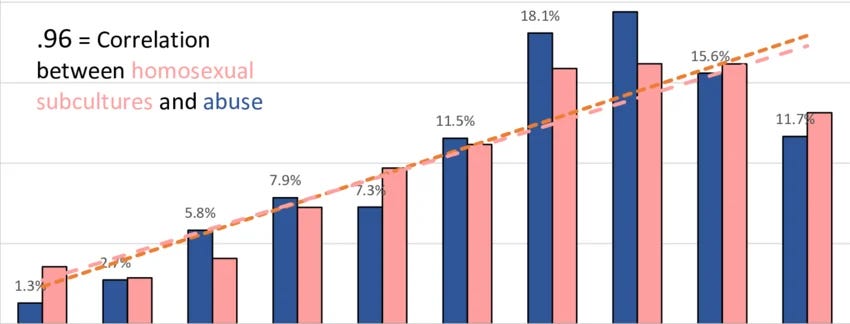
My point here is: these writer were not all Lefebvrist conspiracy theorists trying to discredit a Pope they disliked already.
Both the liberalist and traditionalist reached the conclusion: something has changed in Catholic thought and practice during John Paul II’s pontificate.
The change was not simply a pope using different words or having a different style of communication. Something deeper had shifted in the Church’s understanding of the dogma’s of faith.
What the John Paul II monument was never going to tell you
This piece is what the cake and the statue in the previous essay could never carry. Both are part of a brand, but neither one can hold an argument about whether the covenant God made with Israel was fulfilled or simply left standing beside a second one, and neither one was ever built to try.
Yet it does shows you the flawed theology behind all the glitz and glamour of John Paul II. Catholicism is not a personality cult for the Pope. Never was and never will, yet John Paul II introduced exactly that.
Poland spent four decades building public shrines to a man whose actual theological project, on the specific question of who needs Christ for salvation, was contested at the time by his own sympathisers and celebrated at the time by people the traditional doctrine had explicitly excluded.
Both things happened in full public view. Neither one required the average Catholic to read a single page of Redemptor Hominis to keep venerating the man who wrote it.
The last essay in this series will be about the places where the reading of his flawed ideas never stopped. The chapels that kept the old calendar, a journal that made my argument decades before it was fashionable to make it. It includes a network the census was never built to count.
If the theology in this essay is right, it explains why those places exist at all. They are what is left when a country stops asking its saints to actually mean what they said.
Vennari, J. (n.d.). A proper look at the pontificate of Pope John Paul II. Catholic Apologetics.
Priestly Fraternity of St. Pius X. (1997). Motyw przewodni papieża Jana Pawła II (cz. I). Zawsze Wierni, 5(18).
Dörmann, J. (1994). Pope John Paul II’s theological journey to the Prayer Meeting of Religions in Assisi (Vols. 1–3). Angelus Press, as summarised in Priestly Fraternity of St. Pius X (1997).
Branicki, A. (2000). Teologia papieża Jana Pawła II. Zawsze Wierni, 2(33).