


On Holy Saturday, the tomb is sealed. The tabernacle is empty. The altars are bare. There is no Mass taking place, no Blessed Sacrament visible, no organ or bells heard until the Vigil after dark.
It is the one day in the liturgical year when the Church herself is structurally silent, holding the interval between death and resurrection without resolving it prematurely.
What you wear on a day like that is either a response to it, or not.
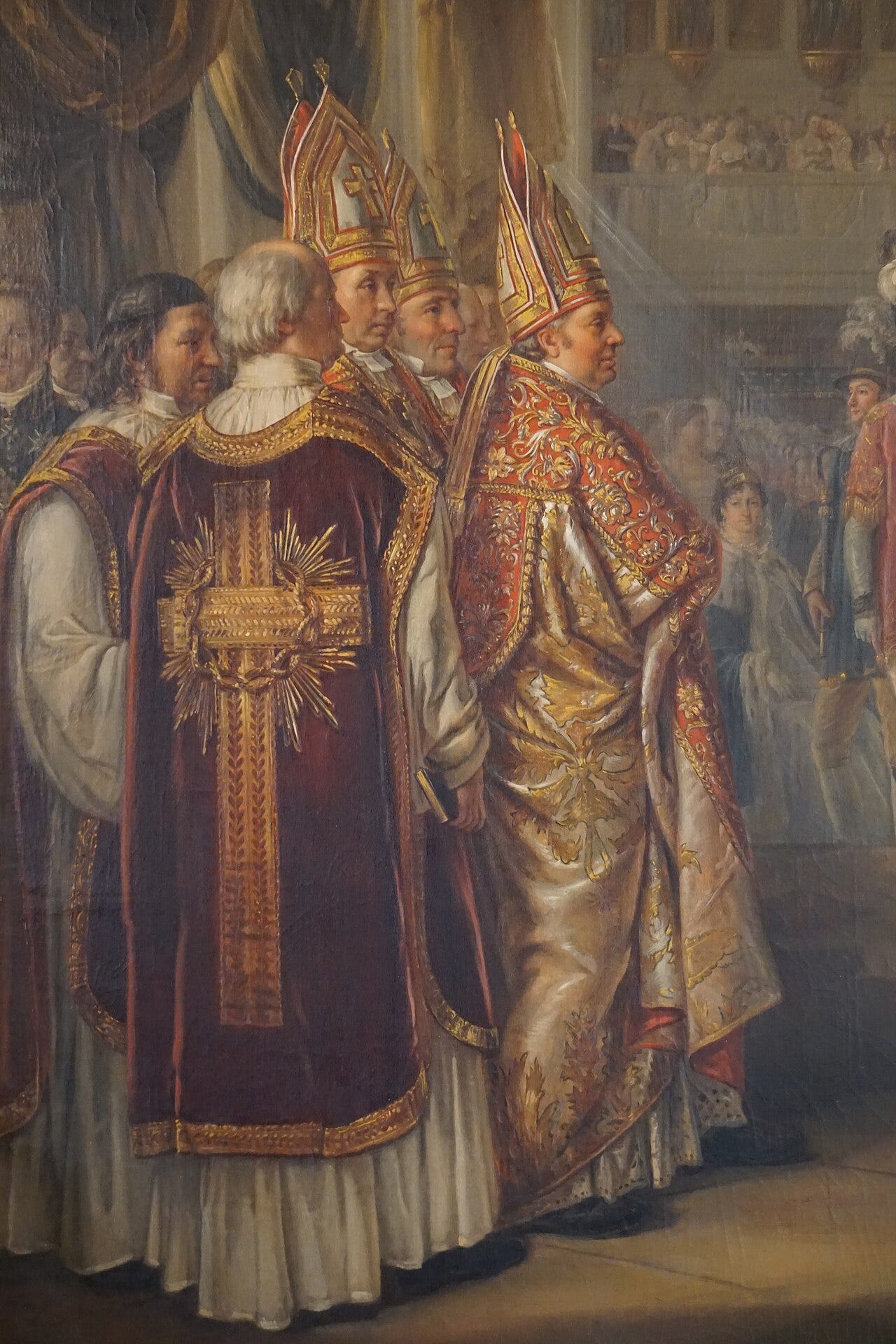
And this is not a metaphor. The Catholic Church has always known that dress is a theological act before it is an aesthetic one, and she encoded that knowledge in silk, wool, and colour with a precision no secular institution has matched.
Vestment colours change by season and feast. The weight of silk and wool varies by occasion. The specific symbolic register of each liturgical garment communicates the nature of the day to anyone who walks through the doors. You can read the liturgical year from the colour of the celebrant’s chasuble. The clothes tell you where you are in the story of salvation.
That logic did not begin with the Church. It ran through every functioning culture in history.
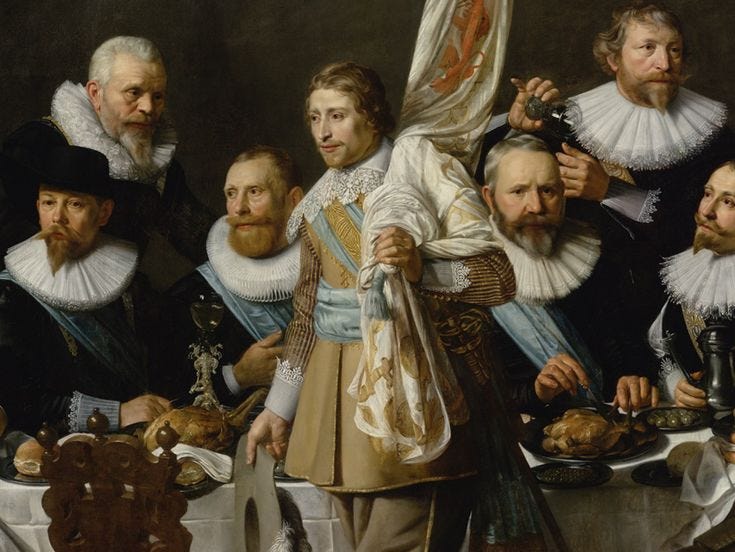
The Dutch burgher of the seventeenth century dressed with a sobriety that was not poverty and not Puritanism. It was deliberateness: dark wool, clean lines, absence of unnecessary ornaments. These were not the result of not caring. Every choice communicated something about the man’s relationship to his work, his community, his God. The clothes were legible, and that legibility was not accidental. It was the point.
Something destroyed that legibility. Three things, in fact. And understanding what they destroyed is the only way to begin recovering it.

What destroyed it?
Three diseases, at different price points, but with the same pathology.
Before you judge your own wardrobe, consider this: all three of these diseases operate in the same way. They ask nothing of the wearer.
The first is casual dress as cultural surrender. The normalisation of casualwear as the default register of public life did not happen because people became more comfortable. It happened because the obligation to dress, to present yourself to others as someone who had considered the occasion, was reframed as an imposition. Casual dress is the sartorial equivalent of the therapeutic culture’s approach to obligation: if it costs you effort, it is not worth keeping.
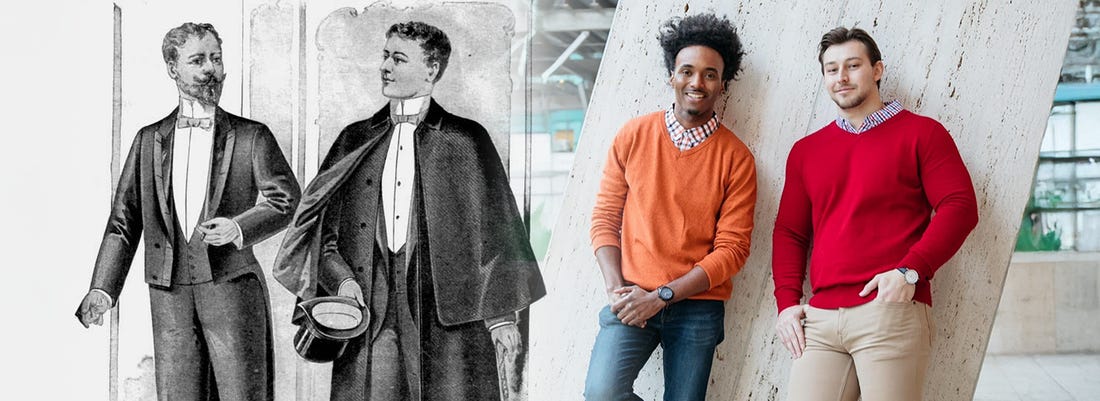
The consequences are visible and precise. A man who wears the same clothes to a funeral, a job interview, a first date, and a Saturday morning errand has not achieved freedom from convention. He has achieved the condition of a person to whom no occasion is distinct, which is to say, a person for whom nothing is serious. The clothes communicate that before he opens his mouth.
The Dutch word deftig once described a quality of bearing: serious, considered, appropriate to the weight of the moment. It did not mean formal, but meant that the person before you had registered what the moment required and responded to it. A deftige man dressed accordingly. The concept has been laughed out of the language. What replaced it is the word gezellig: cosy, convivial, without edges. The country chose comfort over gravity and got both wrong.
The second disease is fast fashion and disposability. The average European now buys roughly sixty-eight new items of clothing per year. The average item is worn seven times before it is discarded. These are not statistics about poverty. They are statistics about a broken relationship with objects. A garment worn seven times is not a garment. It is a prop for a photograph. It is the physical embodiment of an attention span.
Fast fashion did not only corrupt taste, but abolished the conditions under which taste can develop. Taste requires repetition: the same garment worn across different occasions, seasons, contexts, until you understand what it does well and what it does not. When the garment is gone in a few months, that knowledge never forms. The person who buys sixty-eight items per year does not have a wardrobe, but a landfill in waiting.

The third disease is luxury kitsch, and it is the most insidious because it mimics the cure. Heritage brands understood thirty years ago that the market for authenticity was growing. Their response was not to become more authentic. It was to perform authenticity more convincingly.
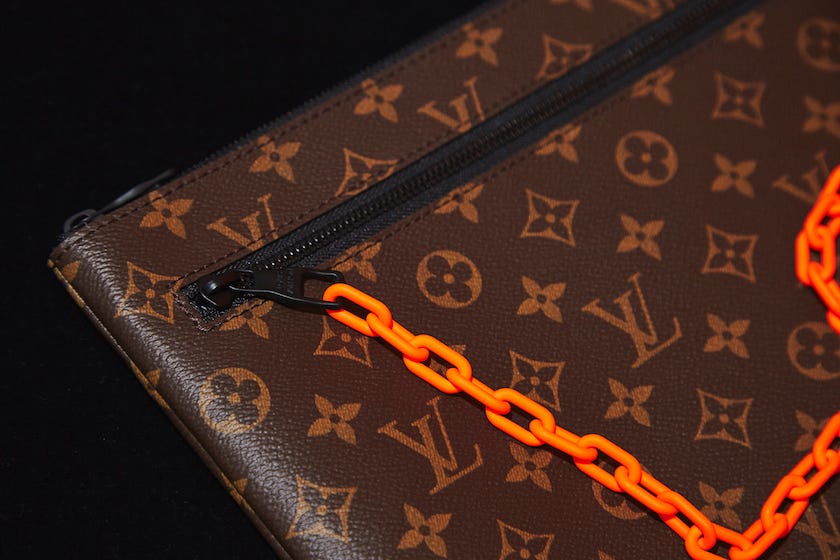
Burberry, which I worked for, produces a coat that carries the same tartan and the same name it has carried since 1856. The coat is now made in Thailand, cut to a fit designed by a committee, finished to a standard that no Castleford mill worker of 1920 would have recognised. Yet… the price has tripled, but the quality has halved. The brand has invested the difference in advertising that communicates heritage.


This is kitsch in its precise definition: the form of excellence without the structures that made it possible. The trench coat pretends to be a trench coat. The brogue pretends to be a brogue. The man wearing them performs being someone who cares about quality, while neither he nor the brand has submitted to the actual discipline that quality requires.
The three diseases are not separate problems. They are the same abdication operating at different budgets. The man in athleisure, the man in a Zara suit, and the man in a twenty-five-hundred-euro Burberry coat are all, in different registers, wearing clothes that ask nothing of them. The first has given up entirely. The second is performing effort without making it. The third is paying to borrow the appearance of a standard he has not actually met.
There is a standard that does ask something of you. It always existed. It has specific requirements for how to handle a garment before you buy it, for how to build a wardrobe across years rather than seasons, for what it means to dress for an occasion rather than for yourself.
That standard is recoverable. The formation framework below sets out exactly how to apply it, beginning with a single garment in your hands.
If you are a member and want to talk through what that looks like in your own wardrobe, your own life, your own context, I am offering every paid subscriber one 30-minute 1-1 call with me.
