


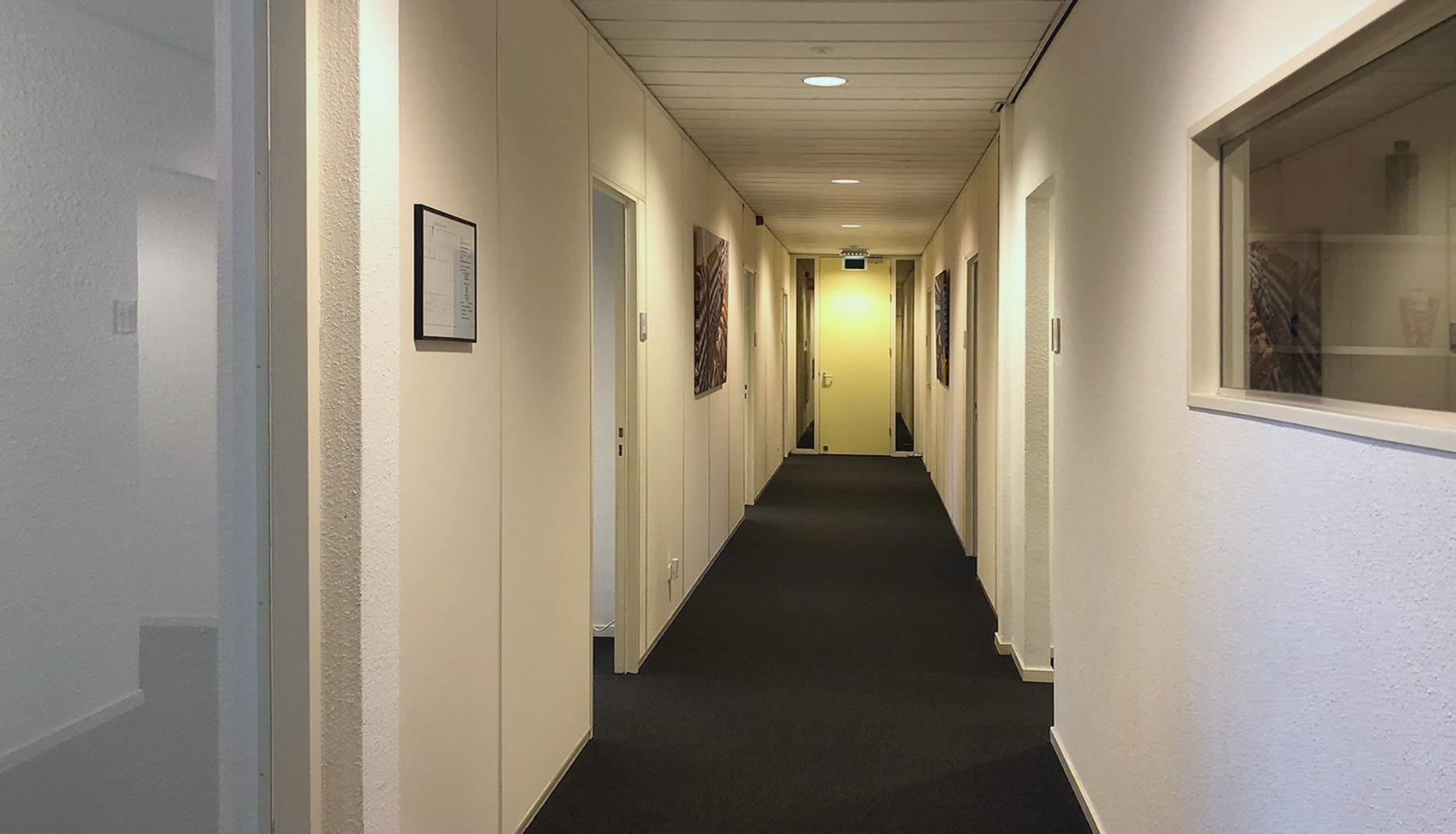
Stand in the nearest room you did not choose.
It might be your office, the doctor’s waiting room, or the corridor in your apartment building.
Look at the ceiling, and notice the junction where the wall meets the floor.
Then look at the material on the surface closest to your hand.
Now ask yourself : Does this look like someone thought about you as a user?
Not in terms of function, the budget, or the planning approval or the fire exit requirements or the acoustic rating.
But: You… the person who would stand here every day and have to inhabit this space.
Most people sense the answer before they can articulate it fully. Rooms like these feel indifferent. Not necessarily hostile or failed, but indifferent. Which is the more precise word and the more damning verdict.
See, you are not being sentimental. You are just detecting what others chose to ignore.
In 1865, the engineers building London’s Crossness Pumping Station, a structure whose entire purpose was to move human waste, installed ornamental ironwork in red, cream and gold. Painted arches, and cast iron columns with decorative capitals. They did this not because someone important would see it, but because the workers inside it would see it every day.
The ornament was not decoration applied after the fact. It was the structure itself, built by people who believed the men working there deserved to work somewhere that had been thought about.
That belief did not require a design philosophy. It was the default position of European craft culture across four centuries. You built for the person who would use the thing. You built it to last. You built it to belong to the world it entered.


What replaced it was not a failure of imagination. It was an evolved doctrine: misread from a correct idea, standardised through architectural schools, embedded in planning systems and repeated so thoroughly that most people alive today have never inhabited a building built for them in the full sense of that phrase.
You can detect the difference: You already do.
In How to read a city we spoke about the exterior, now we will dive into the interior.And what you are missing is the vocabulary to tell what exactly is off.
In this guide we use five questions to give you that vocabulary. They are the field test.
You can apply them standing up, in real time, to any built thing: a room, a street, a façade, a public bench, a piece of furniture.
Each question has one criterion. Provides one thing to look at. And gives one verdict.
There is no middle category. Indifference is not a compromise position, it is a deliberate decision.
Question 1 — The Maintenance Question
Was it built to be cleaned?
Look at the junction where the wall meets the floor.
The point where dirt accumulates. Where water settles, and where a mop head reaches or fails to reach. The point where the building’s relationship with time becomes visible.
In a building made for you, this junction has been resolved using: A skirting board, coved tile, or a recessed strip. (Old architecture is surprisingly ‘efficient’)
Some decision has been made about what happens here, because someone thought forward to the day when the building would need to be maintained by a person with ordinary tools and ordinary time.
In a building made despite you, the wall meets the floor at a sealed right angle because the specification ended at handover. Dirt accumulates in corners that cannot be cleaned without damage. The building begins to look degraded within a year, not because it was structurally unsound, but because maintenance was never part of the design logic.
Cleanliness is not a minor point, but a diagnostic of intention.
The craftsman’s relationship to material always includes time. Richard Sennett, in The Craftsman, distinguishes between work that is finished and work that is complete. Finished means the job is done. Complete means the object has been thought through to the end of its life in use:
A building whose maintenance was designed in is complete.
A building whose maintenance was ignored is merely finished.
The Crossness engineers did not install ornamental ironwork because cast iron is easy to clean. It was installed because cast iron, properly maintained, improves with age. The maintenance routine was part of the design. The building they built still stands.
The office block beside your nearest ring road will probably be demolished within forty years of its construction because nothing about it was designed to age well.
Now back to the junction….
If someone thought about what happens there over time, the building was made for you. And if no one did, you are inhabiting the outcome of a system that never considered you essential.
For members only
Questions 2 through 5:
The Material Question
The Inhabitant Question
The Time Question
The Belonging Question
