


Before shops learned to stay open, Sunday was the single weekly hour the market could not enter, and nothing built since has replaced what it did.
Walk through a Dutch city centre on a Sunday morning now and you will struggle to guess the day. People are waiting in front of the Albert Heijn (supermarket) to open. The bakery has its lights on. A delivery van idles outside a clothing shop while a boy in a branded vest carries in the week’s stock.
Somewhere a phone buzzes with a promotional email timed for maximum weekend engagement. It is like a quite Wednesday.
But this was not always the case, and the distance between then and now marks the disappearance of a mechanism that once did real work in a society: a day that stopped everyone, all at once, by force rather than by choice.
What Maria von Trapp Noticed
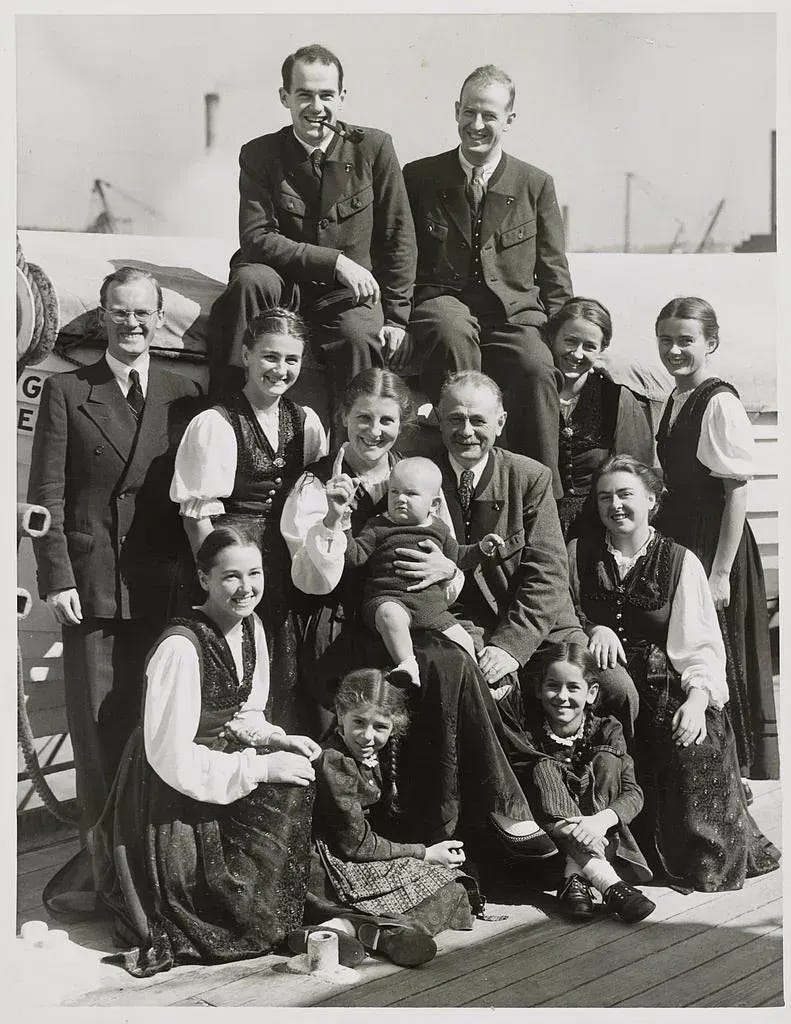
In 1955, Maria von Trapp published an account of the year in Austrian and American life titled Around the Year with the Trapp Family. One chapter carried a title: ‘The Land Without a Sunday.’ In it she describes what struck her family hardest after fleeing Austria and encountering accounts of Soviet Russia. It was not the labour camps, or the poverty, but the absence of a Sunday
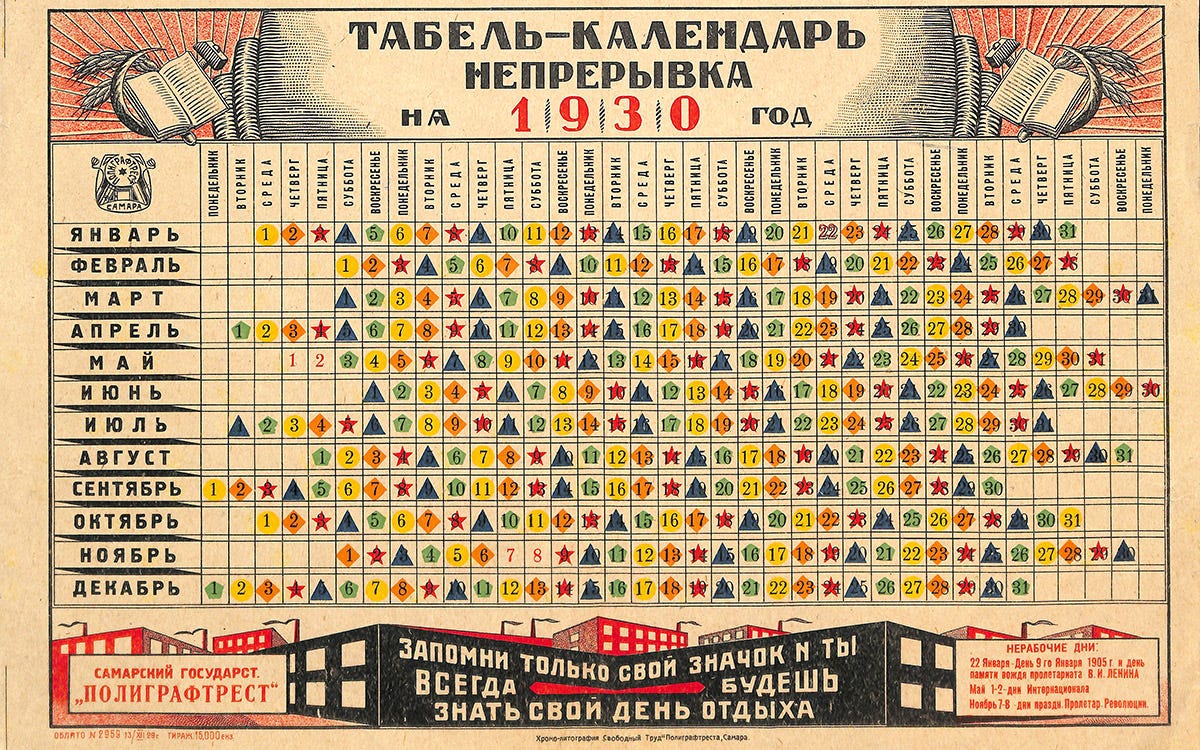
The Soviet state had not banned rest. It had banned the shared day. Workers were assigned to rotating schedules: first a five-day week with every sixth day off, then a nine-day period with a tenth day free, then an eight-day cycle.
The effect was precise and deliberate. While one shift rested, the next was in the factory, the field, or the shop, which never closed. Nobody’s day off matched his neighbour’s. The state had converted a communal interruption into a private, staggered entitlement, and in doing so had removed the one thing that made rest visible: the fact that everyone was doing it together.
Von Trapp wrote that after everything else they had witnessed, what she and her companions found themselves missing most was neither food nor comfort but: ‘a quiet, peaceful Sunday with church bells ringing and people resting after prayer.’
Sunday rest was not private rest. It was public rest. A day the whole society kept, whether it wanted to or not.
When she arrived in the USA she found something closer to the Soviet pattern than she expected, yet minus the ideology. Church bells were muted so as not to disturb the neighbours. A woman confided that she hated Sunday, calling it a bore, and explained that a rigid Puritan childhood had left her determined never to observe it properly as an adult.
What von Trapp saw around her was Saturday night revelry followed by a slow, private Sunday of lawns mowed and cars washed. No Church bells or shared rest. Only individuals, each managing their own patch of free time as they saw fit.


The slower death of the Sunday: The Dutch Case
The Soviet method was fast and brutal, a decree from above. The Netherlands offers the opposite case: the same destination was reached through sixty-six years of careful, incremental, entirely legal reform.
In 1930 the Winkelsluitingswet (Shop closing law) closed Dutch shops on Sunday as a matter of national law, with narrow exceptions for perishable goods and religious minorities. In 1951 that closure was reinforced. The public shape of the week held for over half a century, not through custom alone but through statute.
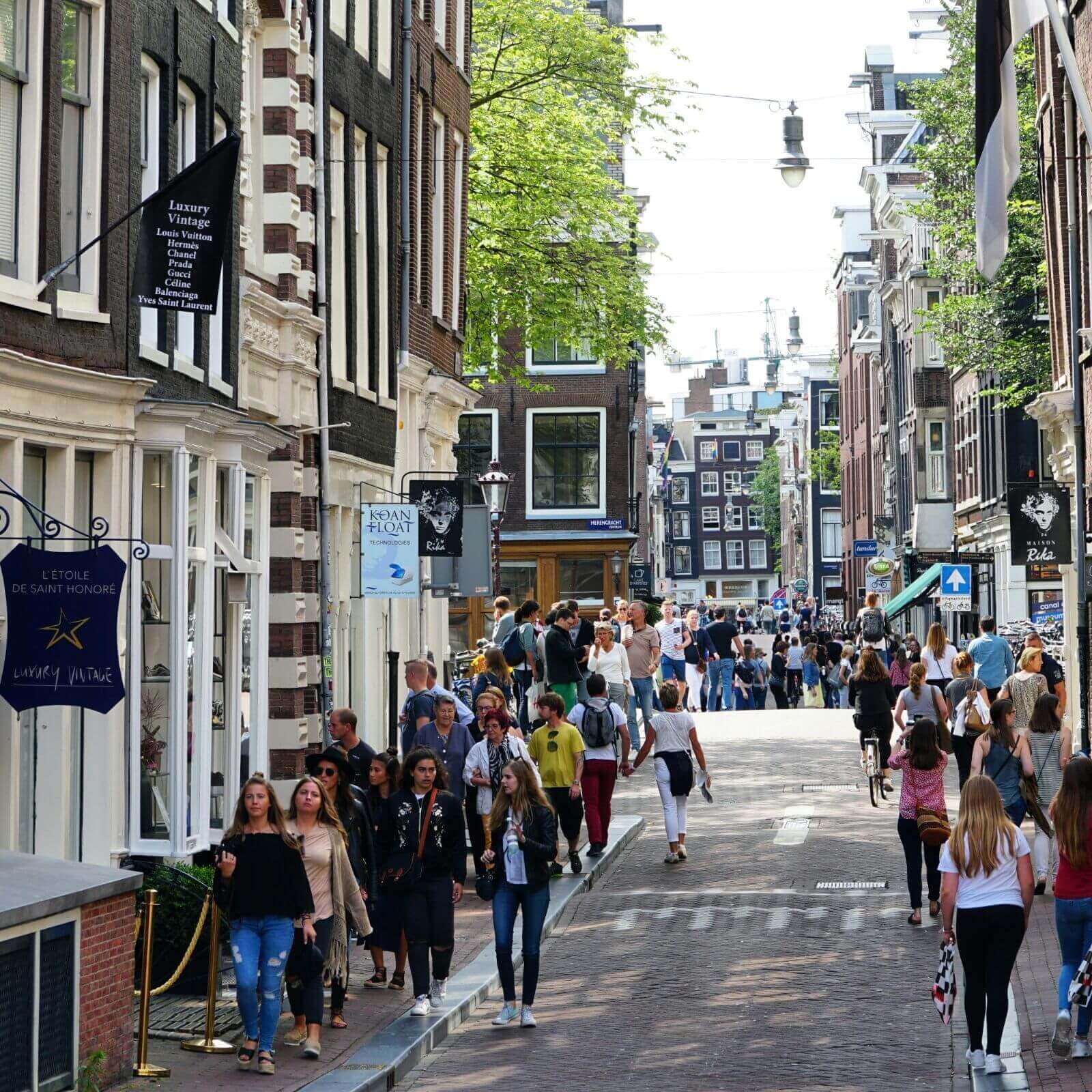
Then the retreat began. In 1984 municipalities were permitted 4 koopzondagen; shopping Sundays, a year. A rounding error against fifty-two weeks of closure. But 4 became a foothold, and a foothold in Dutch commercial law rarely stays a foothold.
In 1996 the Winkeltijdenwet (Shopping hours law) handed the decision to local councils entirely, and the councils, facing retailers who wanted the revenue and consumers who wanted the convenience, did what local councils facing that pressure do. City after city moved toward weekly Sunday opening.
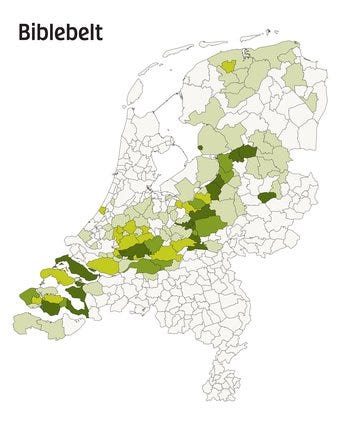
Today the Zondagswet (Sunday Law) still exists on paper, holding a narrow window of stillness before one in the afternoon near churches, but its cultural force has all but evaporated in the cities. Only in the Bible Belt towns does anything like the old pattern persist, treated now as a curiosity rather than a norm.
Compare this to Germany, Austria, and Switzerland, where large-scale Sunday trading remains restricted by law to this day. The contrast is not sentimental or nostalgic. It shows that the Dutch outcome was a choice, made in stages, by people who could see exactly what they were trading away and decided the trade was worth it.
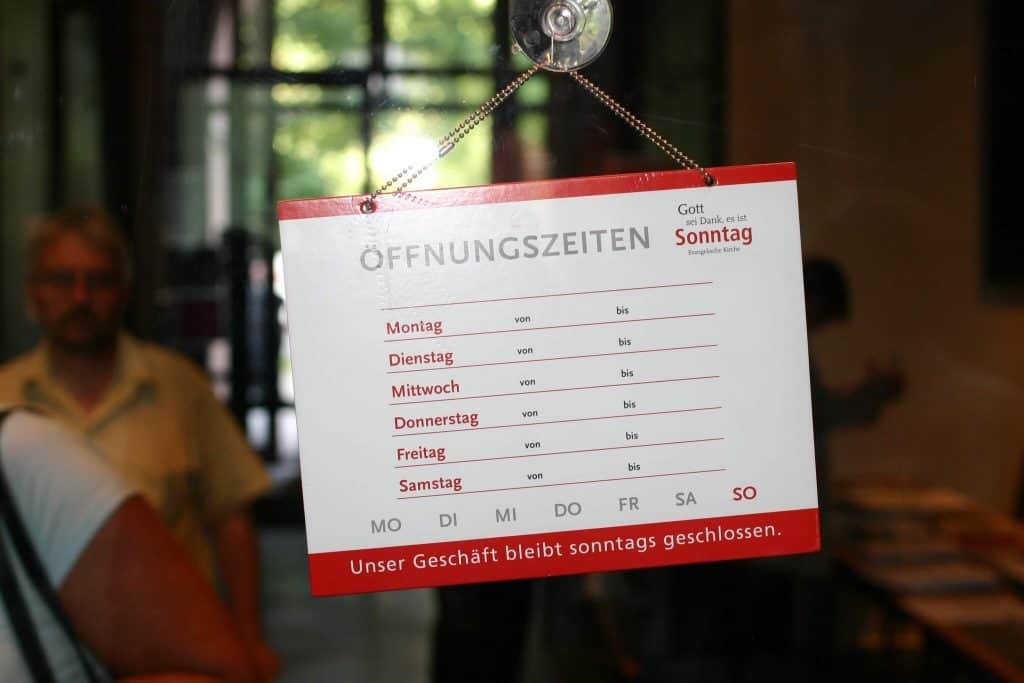
The root the Church named 13 centuries earlier
None of this would have surprised the 49 Christians tried at Abitene in North Africa in the year 304, under an edict from Diocletian that forbade Christian assembly on pain of death.
Asked why they had gathered anyway, one of them, a man named Emeritus, gave an answer that the Church has repeated for 17 centuries: sine dominico non possumus. (Without the Lord’s Day we cannot exist.)
He did not mean he could not rest without it. He meant something the same as what von Trapp meant and what the Dutch councils, whatever their intentions, dismantled piece by piece: That a society organised entirely around production, with no fixed point where the market yields to something it does not control, ceases to be a society with a shape at all. It becomes a continuous shift.
Josef Pieper named the underlying logic in 1948, in Leisure: The Basis of Culture, calling it total work: an outlook in which every hour is potentially productive, every silence potentially wasted, and rest survives only as the recovery period the worker needs before returning to output.
Under total work, a day off is not the opposite of labour. It is a labour’s maintenance schedule.
The Sunday we lost
What disappeared was not leisure. Leisure is everywhere now, more abundant and more marketed than at any point in history. What disappeared was synchronisation: the fact that rest, on the old Sunday, was not a private negotiation but a public event, visible in closed shutters and silent streets and a Church bell that rang for the whole town whether any individual wanted to hear it or not.
The Soviet worker on his rotating tenth day off was resting. So is the Dutch office worker doing his laundry on a Sunday morning while the shop two doors down does its weekly turnover. Both have free time, but neither honours the Sunday. Both are alone inside their rest, indistinguishable from a man taking a personal day in the middle of any given Tuesday, because nothing external marks their hour as different from the rest of the week.
This is the substitute now sold back to the modern man as recovery: the self-care Sunday, meal prep laid out, laundry folded, a slow curated morning before the errands, all of it scheduled with the same discipline he brings to his working week.
It looks like rest, but functions as maintenance. It restores him for Monday rather than interrupting the logic of Monday altogether, and it asks nothing of the society around him, because the society around him is not resting.
It is open, lit, staffed, and running exactly as it did the day before.

What remains, for now, is only the noticing. A city centre on a Sunday morning that looks, sounds, and moves like a Wednesday.
A bell that either does not ring or rings for no one in particular. A calendar with weeks in it, but no day inside those weeks that the market has agreed, by law or by custom, to leave alone.
As a small Church remnant we cannot change this capitalist hell. We can only decide to not shop or do conspicuous consumption on Sunday. And live with natural order.
—Robbert
This is the best explanation, without saying it, I have read concerning the spread of Communism throughout the world. This plan and outcome was so subtle and targeted that no one, or almost no one noticed, even today it completely seems normal.
Of all of the Catholic Masses I have assisted in the one priestly order still to this day opposed to “Sunday as just another day” is the order of priests I follow, the FSSPX. Truly the priest hearing confessions probably hears the sin of not keeping holy, the Lords day most often. Not because the faithful in the pew are evil people but because they have been taught that to do anything unnecessary on Sunday is a sin against the Commandment to keep Holy the Lord’s Day.
This world now, much the same as the Modernist approach toward Holy Days of Obligation, ignores the Law to fulfill the snake’s whispers of “He Understands,” “your living under a new law now, go ahead and stop at the ‘drive through’ on your way home from The Holy Sacrifice and grab a bite.” It, as is the New Church Order, easy to slip on, “just this once”. “Everyone is doing it,” so to speak, or “God will understand, we are hungry after our Long fast before Mass.”
Communism is the snake in the tree of life! Fatima 1917 confirmed that for us. Russia has spread these errors through out the world. The Consecration of Russia will end all of this as our Lady said.
Thank you for your reply…..I have also succumbed to this “error of thought” and will dutifully confess this to my FSSPX priest… funny, all along deep inside my soul, I knew I was committing a sin…..Deo Gratias!