

Poland calls itself the last Catholic country in Europe. But it is not, and the evidence has been sitting in the census data for a decade. This is a 4-part series taking that myth apart with the actual numbers, the actual branding campaign, and the actual theology behind it.
Part I: what the 2021 census really said
Part II: how Poland turned a pope into a brand
Part III: the 1980 speech that moved a dogma nobody noticed move
Part IV: the parishes that survived without any of it
Poland spent 40 years building John Paul II shrines large enough to be seen from every roundabout, and in the same time Poles stopped reading his books….
The first pilgrimage in 1979 of John Paul II contained the habit of a purpose-built stage: a crowd, a stall selling mugs and pens, a camera crew, but almost no mechanism for carrying home the sentences this Pope actually spoke. While a lot of modern seminarians and internet priests often quote making him look like a brilliant figure, while ignoring the heterodoxies, interfaith prayers and even intercommunion with Protestants and Eastern Orthodox.
Poland in the 1970s was a country starved of a figure it could be proud of on the world stage celebrated the way countries celebrate at the time of his ascend: Loudly, and with merchandise.
With John Paul II Poland found the hero it could be proud of, and turned him into a huge national symbol. Vendors sold t-shirts, mugs, pens, commemorative albums, small devotional objects meant to be carried home and kept on a shelf.
Over time Polish people became more interested in celebrating him than in listening carefully to what he was actually saying.
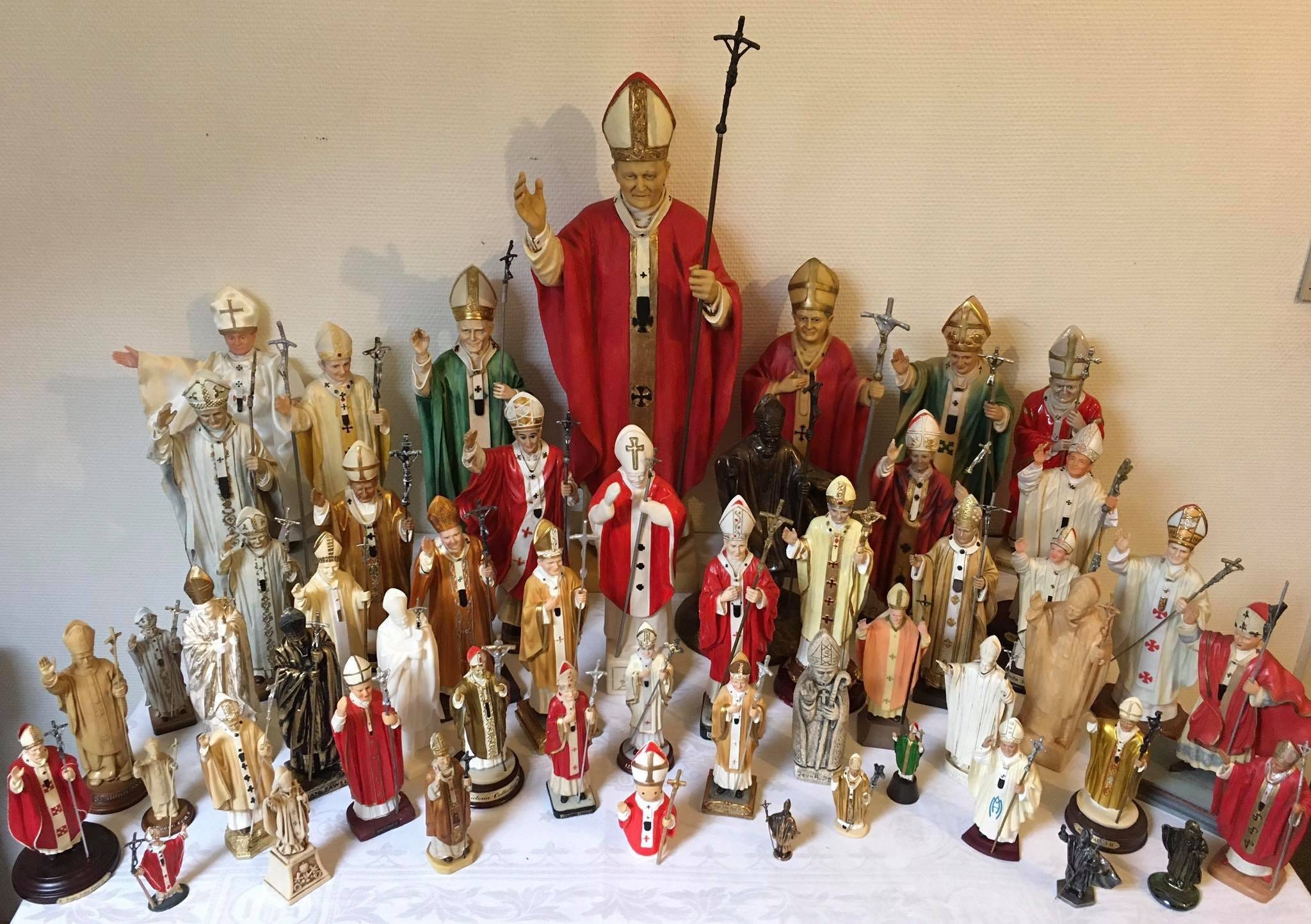
Every time he came back to Poland this pattern continued. Like during his visits in the 1980s and 1990s. Each visit was shaped like a show: he spoke on stage, large crowds, souvenir parlours, an paparazzi en TV crews recording every move.
The Poles got creative: new souvenirs were invented, and people bought them, eventhough they already had plenty. Every object he walked across was treated like a relic. And it is understandable that people need physical memories: a medal, rosary etc. to remember a Papal visit. But now, almost 40 years later people remember the brand John Paul II™ better than his actual message.
‘Conservatives’ like Cardinal Burke even makes him into a fierce defender of the Catholic faith. Yet somehow never mentions Assissi in 1986.
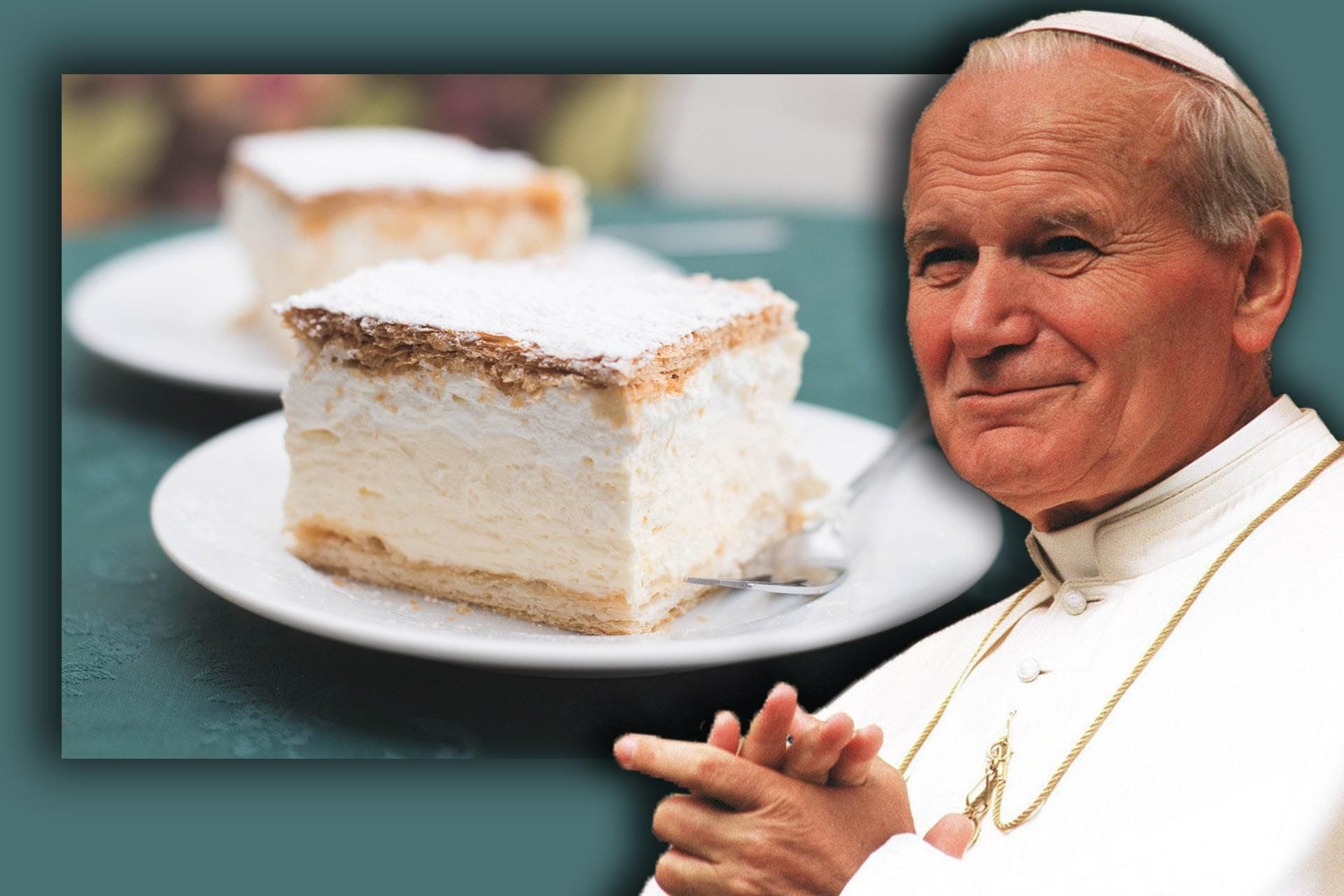
Writer Konstanty Pilawa described1 how Poland’s relationship with Karol Wojtyła (Pope John Paul II) changed over time he divides this relationship into three stages:
He calls the 1st stage ‘The Kremówka,’ in which he refers to the cream cake John Paul II often mentioned when he returned to Wadowice, the small Polish town he grew up in.
Over time, the cake became a symbol of Wojtyła himself and even of his entire time as Pope. It represented a cheerful, familiar, and distinctly Polish side of him. It was something people could easily enjoy and connect with. But, importantly, the cake had almost nothing to do with Wojtyła’s actual religious teachings or ideas.
Exactly his religious views is what political scientist Krzysztof Mazur was criticising in 2011 when he wrote that when capitalism replaced communism in Poland, ‘the Holy Ghost got replaced by a cream cake.’2
The point of his joke is that after communism ended, John Paul II’s deeper spiritual and religious significance was supposedly replaced by a much simpler, more commercial image of him: a beloved Polish celebrity associated with nostalgic memories, national pride, and souvenirs.
His essay was called ‘We Killed the Prophet.’ And by ‘killed,’ Mazur did not mean physically killed. He meant that Poles had, in a sense, destroyed the real prophet and his message by turning him into a harmless, popular cultural icon.
While I disagree with the fact that John Paul II is a prophet, researching him makes it clear of what mould he was cast.
From a pastry to a monument
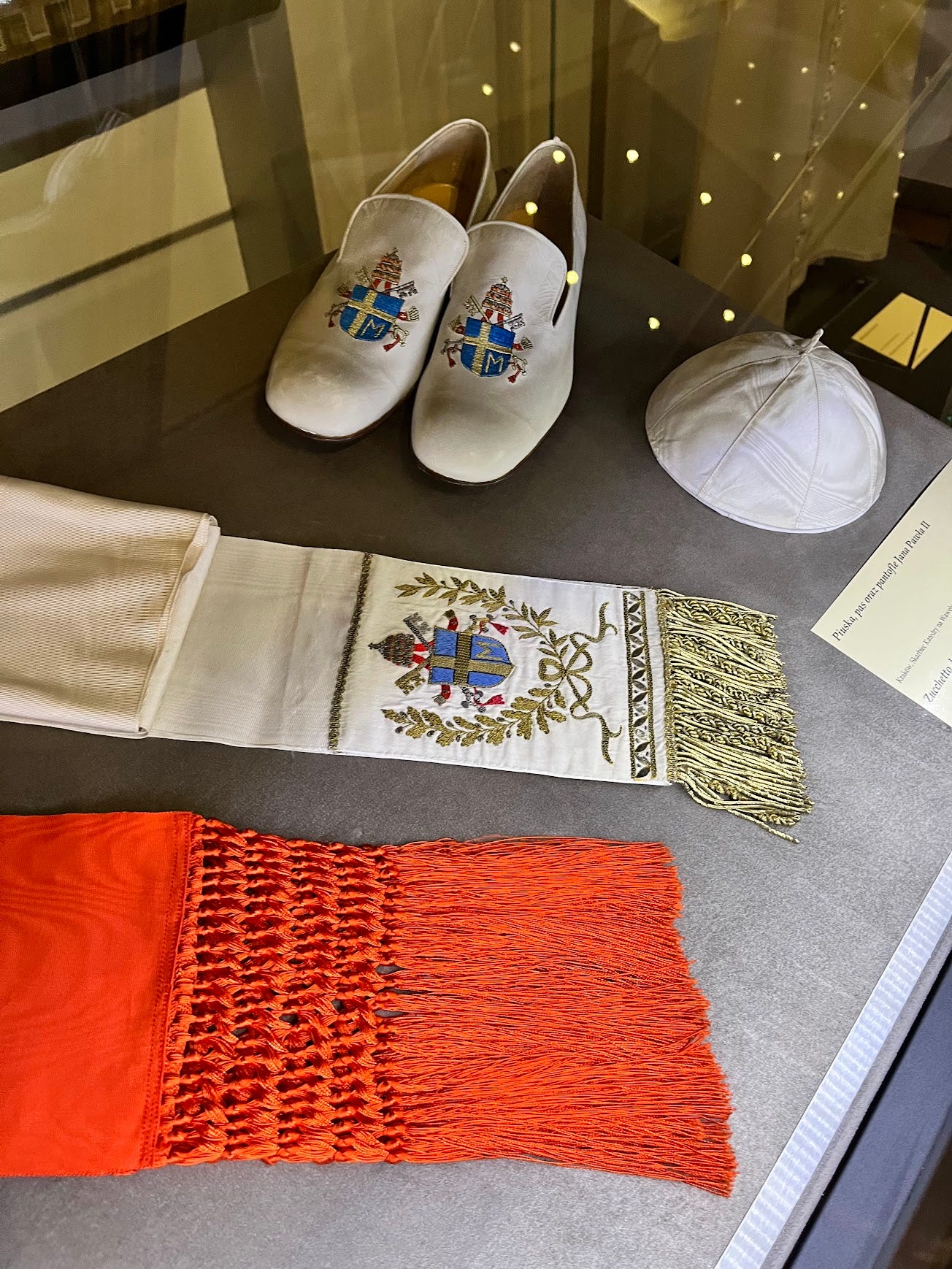
But kremówka phase could not last forever. A joke about a cake will eventually lose its power, and was inappropiate when they ‘canonised’ Wojtyła in 2014. Wheather or not we accepts the significance of that canonisation process, it did mark a change in how he was presented publicly: he was increasingly treated not simply as a Polish celebrity, but as someone to be placed on a pedestal.
So Poland built monuments for him. Pilawa calls this second stage ‘monumentalisation.’ Meaning: the growing number of statues, plaques, street signs, and other public memorials dedicated to the Polish pope.
But the habit of naming things after John Paul II became so widespread that, in Pilawa’s estimate, it could feel as though every second parish hall, third roundabout, and fourth street in the country carried his name.
I do not care if those numbers are meant literally or simply express how overwhelming the density of these memorials felt to someone living among them, the broader trend is clear…
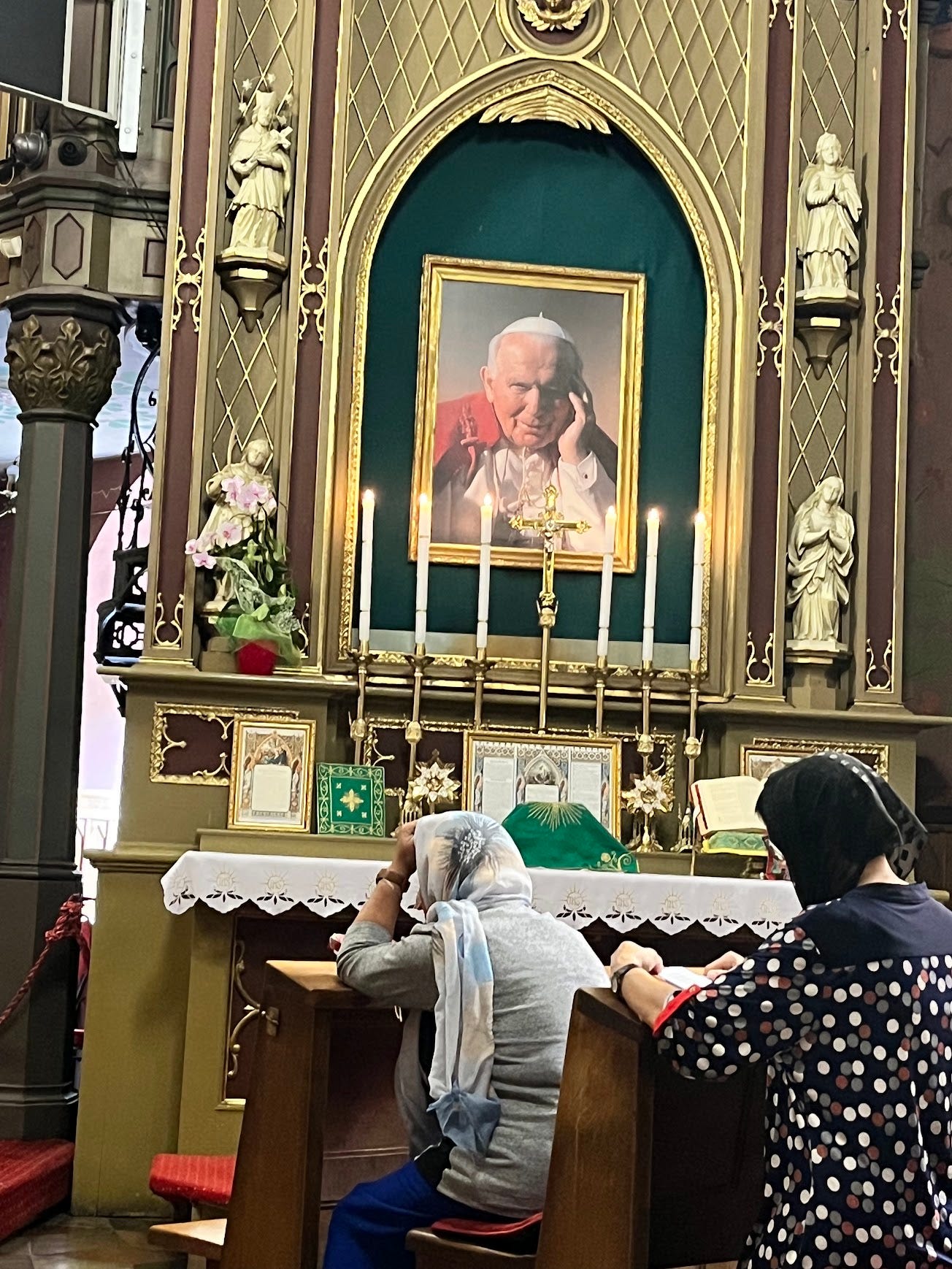
What is interesting is what was happening alongside this growing number of monuments, and what did not happing.
Poland was building a kind of national monument industry around Wojtyła’s image at during the same time that religious participation was declining. During the same period, Mass attendance fell from 37 percent to 28 percent, while the number of new priestly ordinations also began to decline, heading toward the 196 that the country is expected to manage in 2026.3
These developments are closely connected. Countries can continue to admire and revere a person even when fewer people are interested in his actual teachings and legacy. When that happens, reverence will only take a physical form: statues, plaques, street names, and monuments.
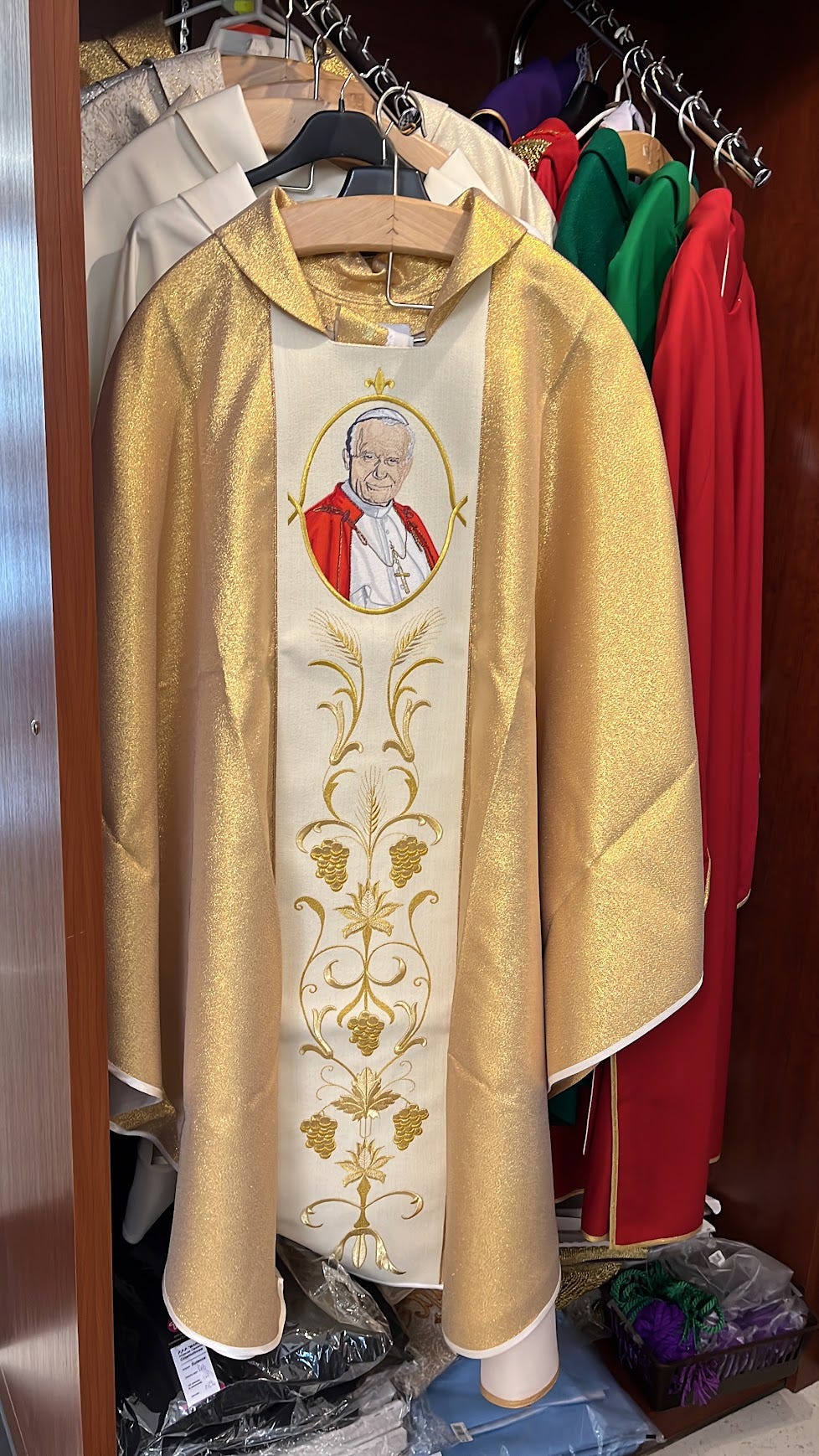
Pilawa’s explanation for why the monument phase became stronger instead of fading is interesting. The generation now in their late thirties and older, so people for whom John Paul II’s time as pope and his death were defining experiences largely see him as an unquestionable authority. To them, he is the one person who should still be able to unite the country, much as he once seemed to.
But since young people began to become noticeably less religious, the older generation turned to Wojtyła’s image again. He was used as a weapon against secularisation, hoping his authority could help bring young people back to the Church, and as a shield for Catholicism, protecting it from criticism and from the claim that the Catholic Church itself had become corrupt.
As Pilawa puts it, his legacy became less important than his monument. Almost nobody read his stuff, but he is often deployed for political ends.
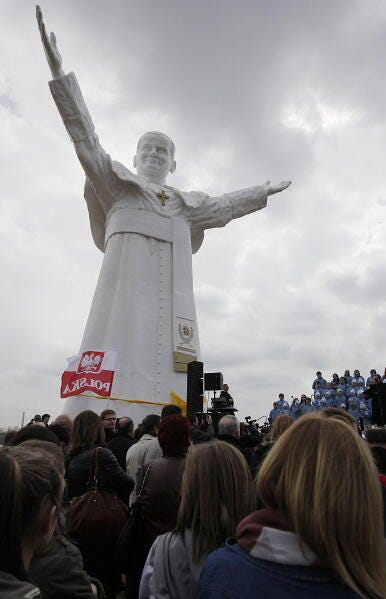
But monuments do not require faith, regular church attendance, or a change in how someone lives. A monument asks for recognition: a glance, a photograph, or simply recognising a name on a street sign while driving past. It is a display of what a nation stands for… or at least pretends to stand for.
Poland therefore filled its public spaces with symbols of acknowledgement and respect while its Churches are becoming emptier. For a while, these 2 things can co-exist without people noticing the tension between them.
And Poland spent roughly a decade doing exactly this: preserving and displaying the image of John Paul II while religious participation rapidly declined.
The emptying of Wojtyła’s legacy
It would be too easy to treat this as a story about one particular person and Poland’s unusual fascination with him. The same pattern appears elsewhere in Polish public Catholicism. The problem was never really about John Paul II alone.
Writer Marcin Kędzierski describes what he calls the collapse of Poland’s ‘Catholic imaginarium’,4 which is a shared set of images, ideas and assumptions through which Catholicism once shaped the public life of Poles.
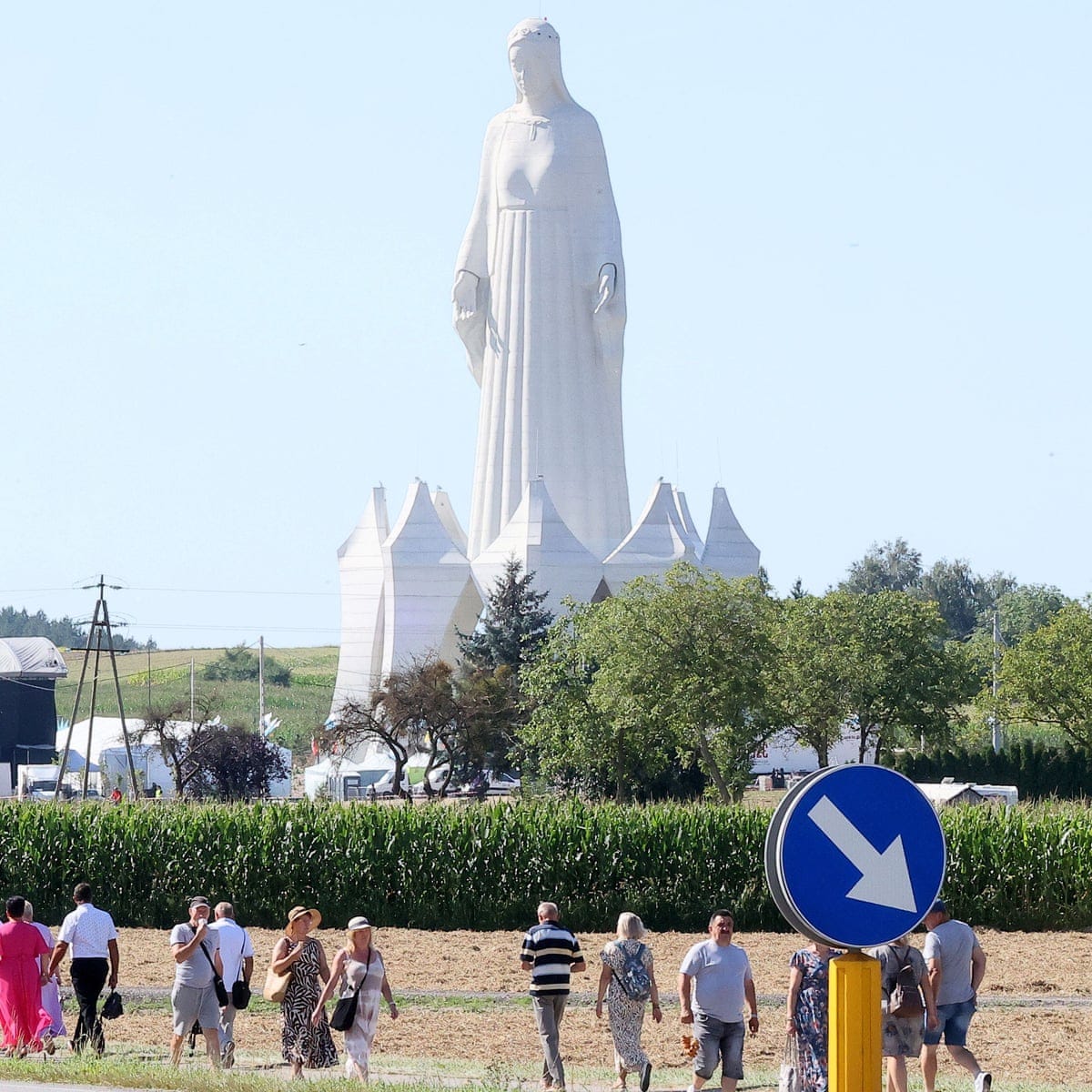
When he looks at conflicts over LGBT rights and organisations such as Ordo Iuris, Kędzierski argues that Polish Catholic identity increasingly survives through symbols, public gestures and a sense of grievance, rather than a shared theological/catechetical foundation underneath them. People cannot distinct real for performance anymore, so that is why a humongous Mary statue translates to: ‘based Catholic stronghold’
For two decades, this pattern was applied first to their own pope and then to a series of public issues that the Church chose to fight over. Each time, the result was similar: an image began doing the work that belief and religious conviction had once done.
I described the mechanism of this hollow symbols in my article ‘Death to Nationalist Kitsch’ so I am not going to waste too much time explaining why it fails.
For a while, these religious worked surprisingly well for Poland. The symbols could create a sense of identity and solidarity even when the underlying religious commitment was becoming weaker.
But eventually these image stop convincing people, especially those under thirty.
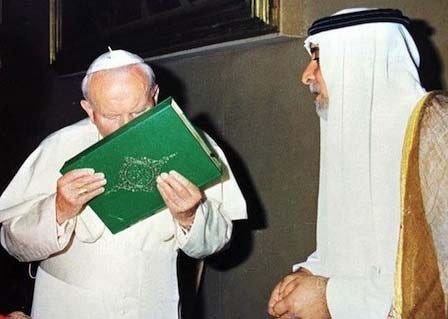
Now, it is also important to say that John Paul II’s legacy is genuinely contested, rather than simply being forgotten or ignored.
In 2018 a collection of Polish perspectives on his significance brought together many different and often conflicting opinions. Some people viewed him with deep reverence, while others were strongly critical of him; sometimes these opposing views existed even within the same generation.5
My claim is not that John Paul II himself was void or meaningless. My argument is narrower: the public version of him that Poland chose to preserve, the cream cake first, and the moments afterwards, are empty of much of the substance that had originally made him an interesting figure… People do not actually care too much for the heterodox things he taught. Simultaneously he is treated as the holiest of holy Doctores Ecclesiae.
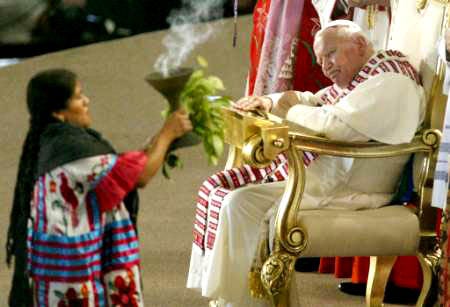
Even his opponents wanted the branding, not the doctrine
The clearest evidence that John Paul II’s public image had become completely separated from his religious teaching came from the most unlikely place: the Polish left.
For decades the Polish left had been one of Wojtyła’s strongest ideological opponents, but they never quite managed to let go of him. So in Krytyka Polityczna in 2014, the essayist Michał Tomaszewski asked what use the pope could still have for the political left.6
A little more than a year later, in an interview with Kontakt, Tomaszewski went further. Being Catholic and being politically left-wing, he argued, were not necessarily incompatible.7
The same argument now runs across Europe: the Catholic Church can be treated as a left-wing NGO whenever political elites need it to be one.
Poland had spent decades presenting John Paul II and Catholicism as belonging naturally to one political and social camp. And while Tomaszewski’s pieces were not a defence of Wojtyła’s teachings, they showed how valuable the public image had become as cultural territory. Even people who wanted to reject him could not walk away from the question of what he represented for the nation.
That is what a monument can do that a living teaching cannot. It can become whatever people can claim and use. And everyone wants a piece of it! But almost nobody, whether on the left or the right, religious or indifferent, feels the need to analyse the man or institute in order to argue about what he meant.
They find the most shallow, surface-level things: Christian charity (pro-immigration), anti-faggotry (against wokism), or whatever the politicians need to convince the sheeple.
But again, the numbers of John Paul II’s legacy do not lie. In 1979, he called on God to renew the face of Poland. By 2022, only 29.5 per cent of Polish Catholics attended Sunday Mass. And of those who still attended, just 13.9 per cent received Holy Communion. That means that fewer than half of those present received the sacrament at the centre of the Mass.
The image of Poland as the last great Catholic country in Europe and the reality of a Sunday in Poland no longer describe the same country.
That is why the left can still argue over Wojtyła. The monuments of a past times are there to be used. Whatever the Church once stood for (and technically still does if you reject Novusordoism) does not matter.


The End of the John Paul II Myth
Pilawa’s third stage is the one that the previous two were always likely to lead to, and it is also the stage Poland seems least prepared to deal with. Once an image has been repeated so many times that it begins to lose its meaning… first as a cake, then as a statue, a street sign, or the name of a parish hall… the next step is often to turn it into a joke…
In the early 2020s, a distinct meme culture had developed around John Paul II online. The most visible example was a recurring format known as ‘cenzopapa’. Much of this was created by people younger than Pilawa, who were too young to remember Wojtyła himself. Their main experience of him was not as a living religious figure, but through the statues, street names, souvenirs, and other symbols that their parents’ generation had already created.
![Question] What is the most obscure meme or joke in your country that would be pretty hard to explain to people from other countries? : r/GlobalTalk](https://substackcdn.com/image/fetch/$s_!Pf-p!,f_auto,q_auto:good,fl_progressive:steep/https%3A%2F%2Fsubstack-post-media.s3.amazonaws.com%2Fpublic%2Fimages%2Fc6cc08a6-c040-4771-b4f8-4355dda270dd_600x595.jpeg "Question] What is the most obscure meme or joke in your country that would be pretty hard to explain to people from other countries? : r/GlobalTalk")
And that brings the argument back to the first essay: The same generation that created this meme culture also experienced the sharpest decline in religious practice, with participation falling from 69 per cent to 23 per cent over three decades.8
At the same time, they grew up during years when reports of clergy abuse appeared in the news again and again, sometimes almost every month.
Pilawa is honest enough to include himself in this story. He says that his own experience of the Church as a teenager was shaped by all this cultural noise surrounding the pontificate. Instead of bringing him closer to the Church, it helped push him further away from it.
This should be a lesson for Traditional Catholics raising kids nowadays too: do not make the TLM into an idol, not your ‘trad life’, your kids will respond in a same way. They will be repulsed by it eventually, and never learn to truly love God… just know every SSPX vs. FSSP vs. Novus Ordo argument.
The young generation that grew up surrounded by the image of Wojtyła rather than his actual teaching, then encountered the abuse scandals on top of that, indifference was not necessarily an act of rebellion.
It was the most understandable response available to them. It felt like something of the past.
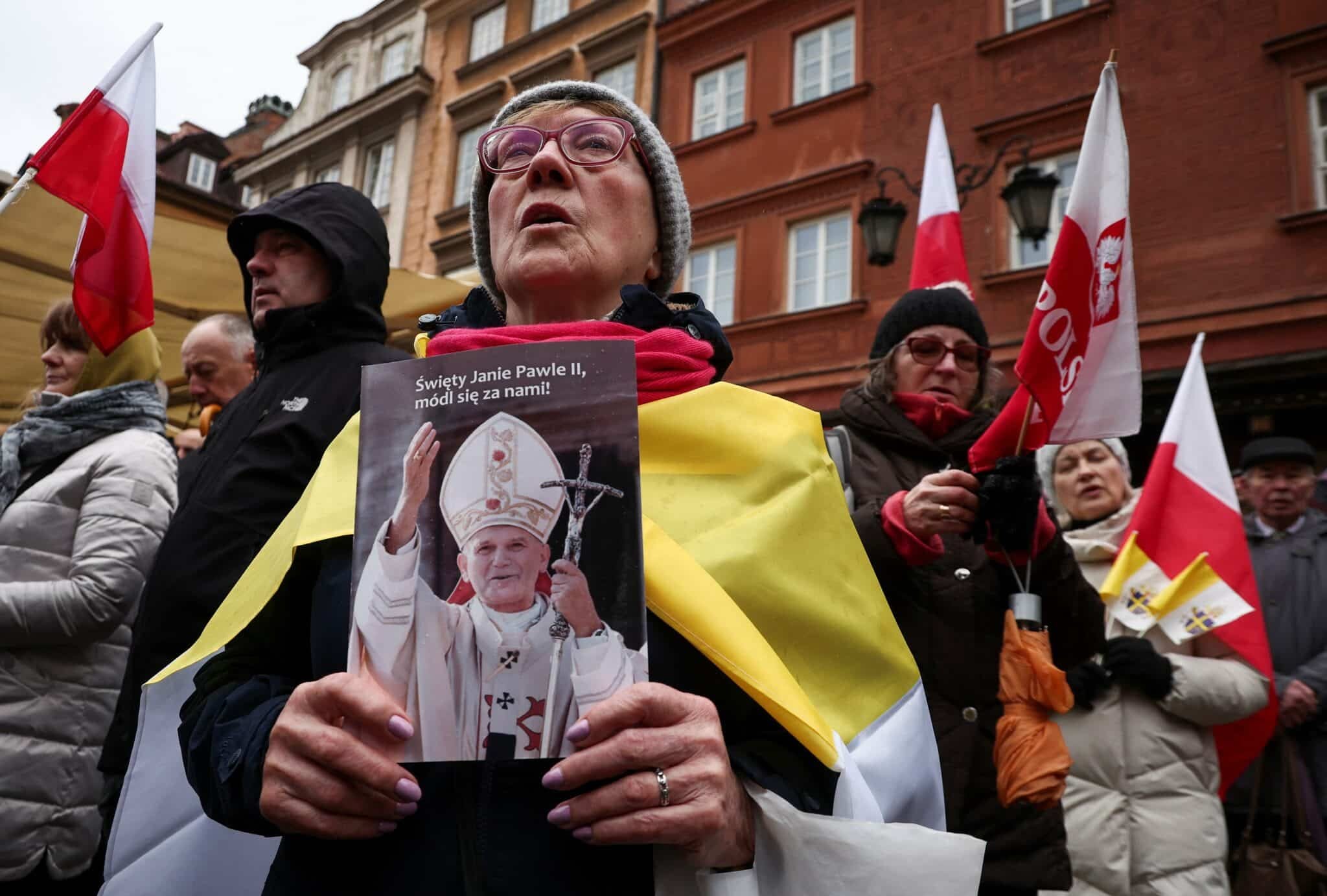
When Poland stopped listening
Line up the three stages and the pattern is not really about John Paul II character or his record, which remain, as my previous section noted, genuinely disputed. This what happens when a person (representing an institute) who once seemed to hold a country together begins to lose that power.
For one generation, John Paul II was not just a pope or a religious figure. He was the prophet that held Poland together during and after communism. His image gave the country something to rally around, and came to represent a unity that was larger than a single political argument.
But his magic began to weaken, and nobody is ready to admit that the thing holding the country together might no longer be working.
None of the three stages described required anyone to engage with what the heterodoxies John Paul II preached, taught, and the Catholic doctrine he broke down, together with the infallibility of canonisations (his new process introduced the Vatican II Saint Factory),
A Pope Pastry means nothing, but is the most logical consequence of the emptiness the Polish Golden Calf left behind. It is the answer to his request when he asked his entire country to be renewed: completely nothing, zero, nada.
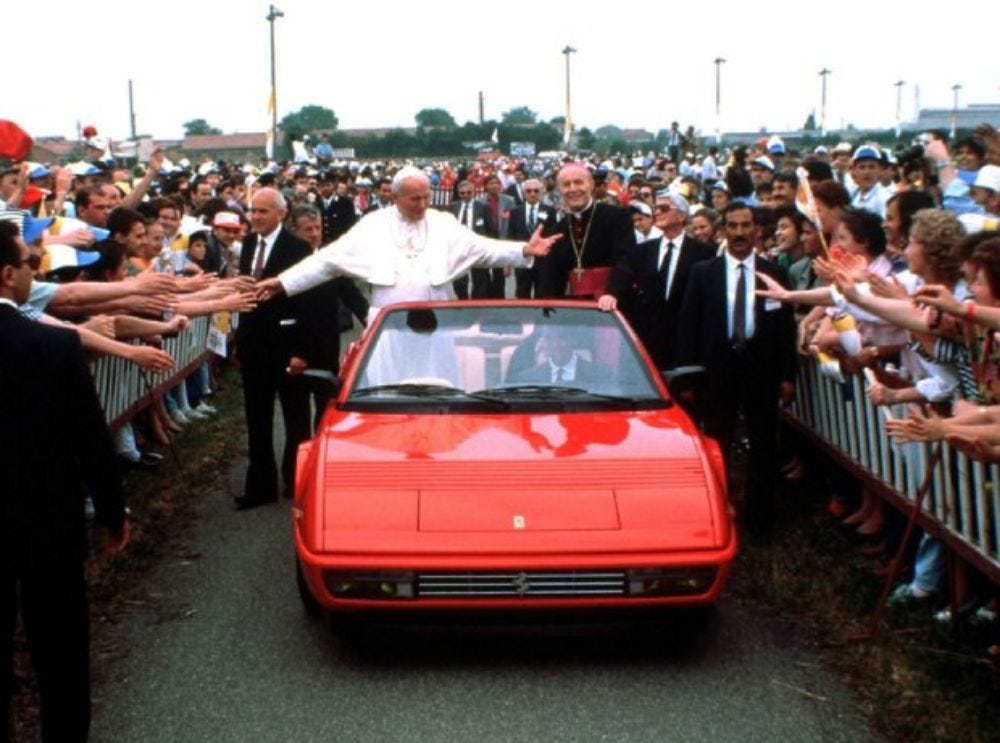
Which leaves us with the harder question underneath this story. Which is: if Wojtyła really had become one of the things holding Poland together, what does it mean that his authority could be preserved in monuments even as his religious teaching lost its hold?
Perhaps the problem is not simply that Poland stopped listening to him. I believe the authority that had once seemed capable of renewing the country had itself become inseparable from the image built around it.
That is where this series goes next… Underneath the cake, the statues and the memes sits an actual theological argument, made by the man himself, in his own words, in places such as Redemptor Hominis and a synagogue in Mainz in 1980.
Poland spent forty years building a public image of a man it had almost entirely stopped reading. The next essay is about what he actually said…
Pilawa, K. (2022, December 6). Pokolenie JPII zamiast “odnawiać oblicze tej ziemi”, zabija w Polsce katolicyzm. Stacja7.
Mazur, K. (2011). Zabiliśmy proroka. Pressje, as cited in Pilawa (2022).
Coppen, L. (2026, June 16). Priestly ordinations still declining in Poland. The Pillar; Niechciał, P. (2025). Is Poland still Catholic? Glimpses of the changing cultural and religious environment. The Skalny Center Newsletter, University of Rochester.
Kędzierski, M. (2020, August 8). “Przemija bowiem postać tego świata.” LGBT, Ordo Iuris i rozpad katolickiego imaginarium. Klub Jagielloński.
Redakcja Kontaktu. (2018, January 2). Wieloma głosami o Janie Pawle II. Magazyn Kontakt.
Tomaszewski, M. (2014, May 2). Co lewicy po papieżu? Krytyka Polityczna.
Tomaszewski, M. (2015, November 9). Katolik może być człowiekiem lewicy. Magazyn Kontakt.
Niechciał, P. (2025). Is Poland still Catholic? The Skalny Center Newsletter, University of Rochester.
Interesting, thank you. I came into the Catholic Church over 30 years ago. All I knew was the NO Mass.
Deeply immersed on our Catholic culture through work, kids school and hubby's family, I had never heard of Traditional Latin Mass until about 6 years ago. And it was sweetness to all of my senses.. I felt present w the angels
I still dont know what it all means, Im kind of on a lone journey. I have been concerned about what I see happening..I am still learning and dont see from all sides, so taking in what I can and bringing it to God.
If my ship is having sone problems and my community is on board, I (hope I) wouldn't flee but help to rebuild.
Thank you for this perspective. Being part Polish and growing up through JP’s era of the 1980s he was a bit of a superstar and made the Catholic Church almost cool and relevant again. Bear in mind that this came after the dreary and chaotic 1970s and a particularly grim time for Poland. We bought the hype and the optimism and JP was good at meeting the demand. Looking back with greater hindsight I would take this era back to Vatican 1 and the loss of the Papal States and therefore the need for celebrity popes to keep the show on the road. Sadly the times have moved on and the celebrities, like the pictures, have all got smaller.